

Luxman L-100 Centennial Review. Class A Returns.
By Steve Huff
Around 12 years ago, I owned an integrated amp that became a favorite—one I adored and missed for years after it was gone. That amp was the Luxman 590 AXII, and it was a very special piece for me. When I placed it into my system, I was treated to gorgeous Class A sound from one of the best-known audio brands around: Luxman. It was magical with my Sonus Faber Guarneri Tradition speakers, and I couldn’t get enough of that sound.
That 590 AXII integrated produced 30 watts per channel of Class A power into 8 ohms. Measurements showed that it could deliver more than 90 watts as it transitioned into Class A/B operation beyond those first 30 watts. When I owned the 590 AXII, I especially appreciated the sound it produced within those first few watts. A pure Class A amplifier delivers a certain richness and sweetness that other designs cannot quite replicate, as hard as they may try.
My original 590 AXII

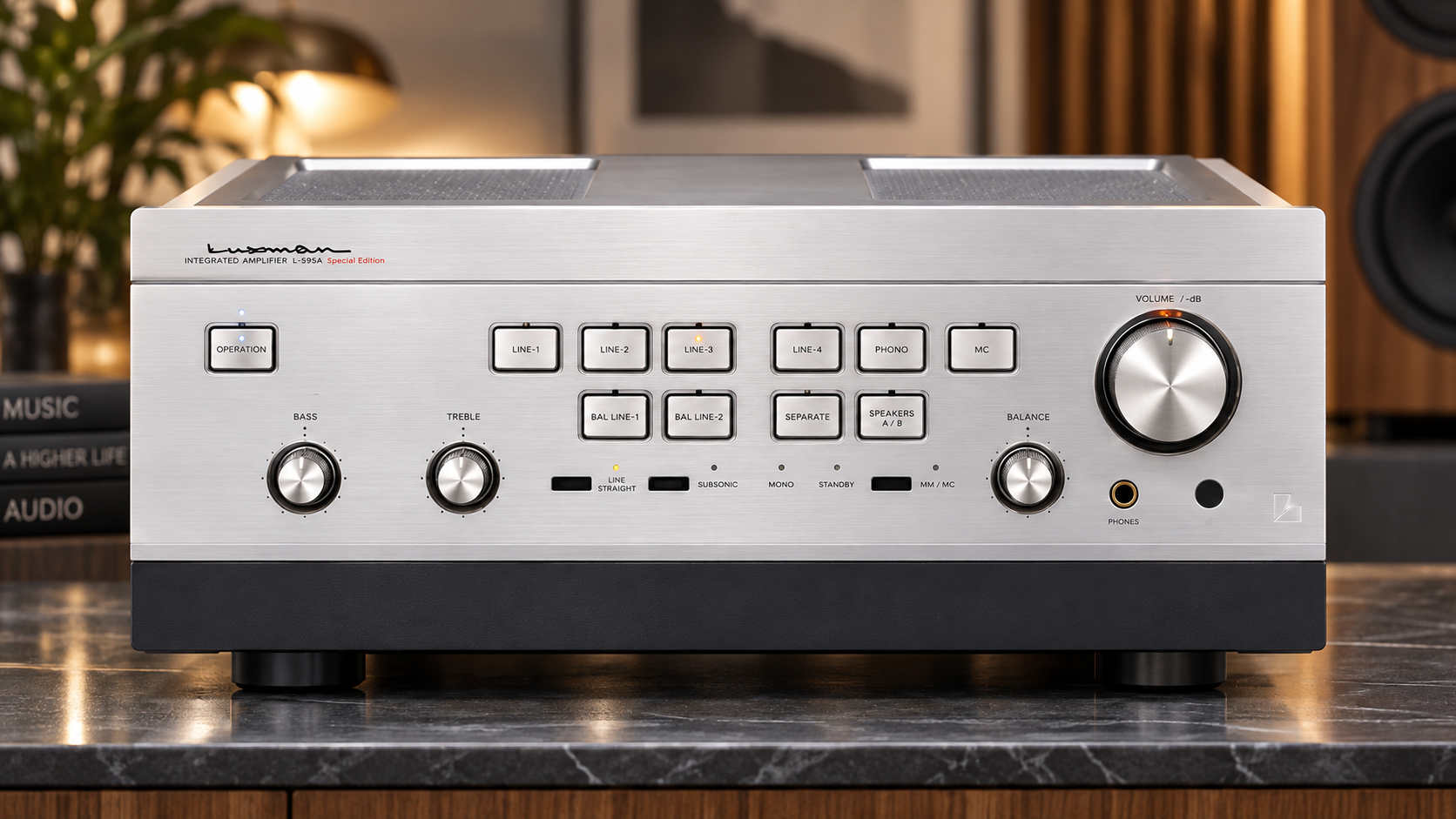
A few years ago, I picked up the Luxman 595 ASE (see below), which was said to be “the last” Class A integrated from Luxman—ever. Two dealers told me this at the time. Who knows? Maybe it was simply a way to market the 595 ASE, but I believed this was it. No more Luxman Class A? It sounded crazy, but it was said to be true. I was recently told that Luxman ultimately decided Class A was too important to the customers who loved that sound. I am glad the company chose to continue making this type of integrated amp.
After spending some time with the 30-watt-per-channel 595 ASE, I noticed some transformer hum and a more tipped-up (brighter) sound than I was accustomed to from Luxman. Maybe it was me, my room or my gear at the time, but the 595 ASE did not sound quite like the 590 AXII to me. As always, many variables were at play. Synergy is a real thing as well.
The 595 ASE’s design was a throwback to the ’80s

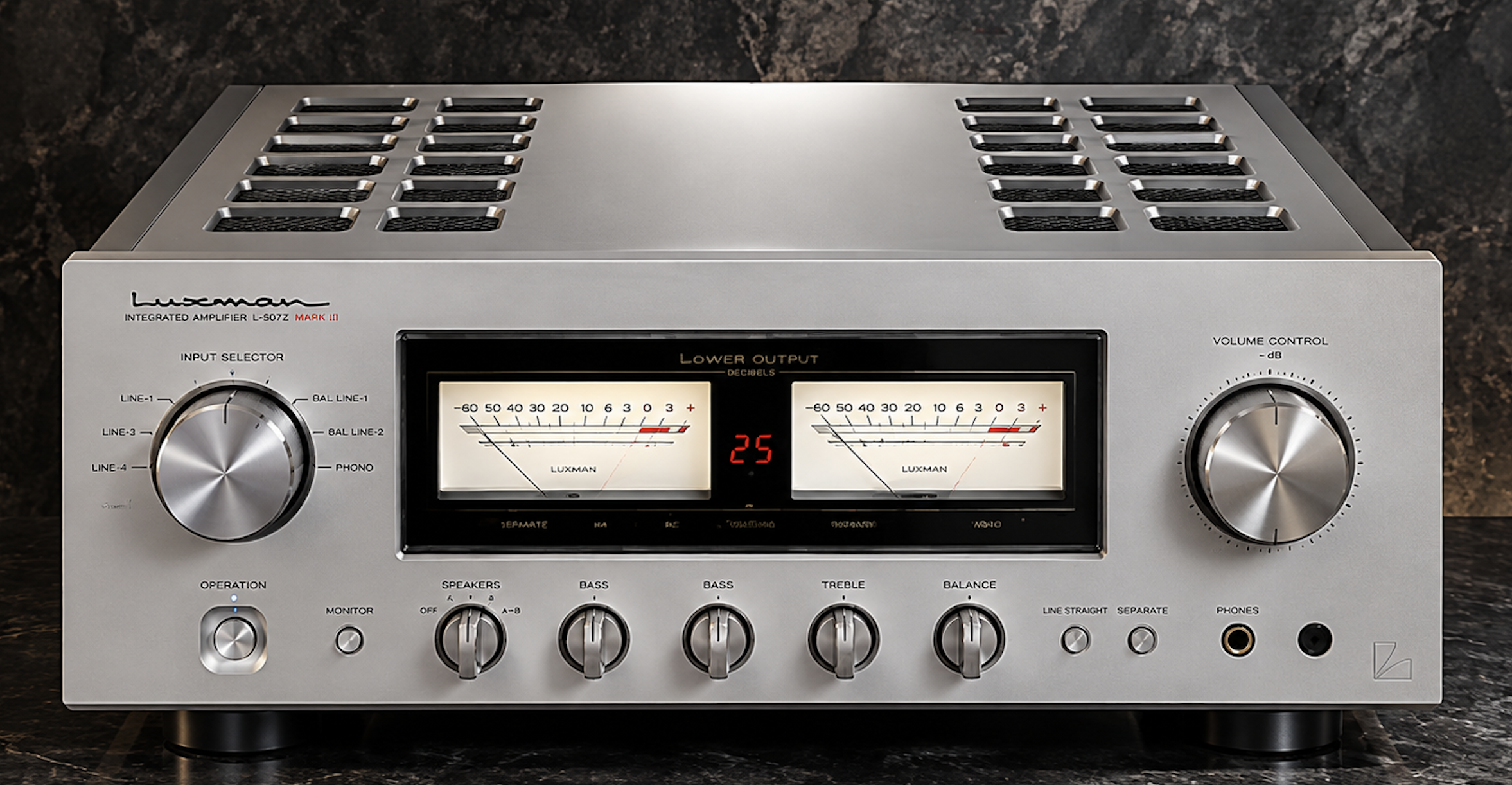
Sometime over the last couple of years, I was able to get the newer 509Z here for review, thanks again to Dedicated Audio over in AZ. As amazing as the 509Z is, it is a Class A/B design and doesn’t have quite the same sonic character as the new L-100 Centennial. They are a bit different: the L-100 is a touch richer and, for me, more spatial and three-dimensional. The 509Z, of course, has more power, dynamics and punch. Class A versus Class A/B. I was super impressed with the 509Z, and at the time of that review, I called it the finest Luxman integrated amp I had experienced. I meant that in every way, from design and build quality to performance. Yeah, the Z is an incredible integrated amplifier.
The Luxman 509Z is a stunner

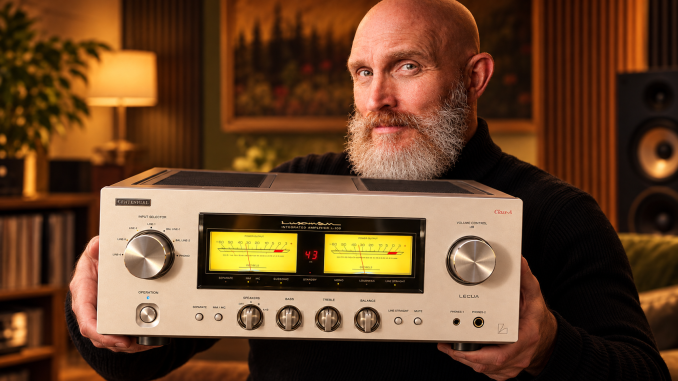
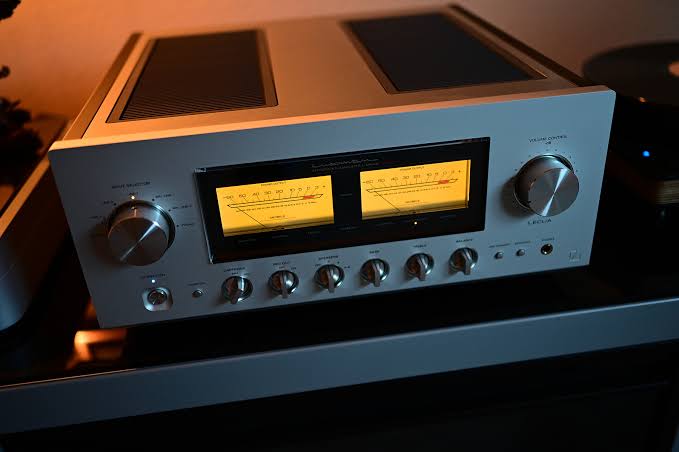
The new L-100 Centennial, seen below, is part of Luxman’s 100th-anniversary celebration. One hundred years is crazy indeed! I assumed the 20-watt-per-channel L-100 would be a limited run because of its place in that celebration. It turns out the L-100 C is a regular-production model, not a limited edition, and now stands as the only pure Class A integrated in the Luxman lineup.
I may have heard rumors of a future Luxman Class A model with even more power than 20 watts per channel, but for now, this is it. It is interesting that the L-100 C offers 20 watts compared with the 30 watts of the older models. I think there may be more to come, but we will see how that plays out—if at all. For me, though, the most “end-game” brands for integrated amps in 2026 are Luxman and Accuphase. Pass Labs is also up there in the Class A realm, so there are many great brands to choose from. Even so, I have a soft spot for Luxman and Accuphase these days. Having amps from these two legendary brands here at the same time was an amazing gift.
Both brands offer Class A and Class A/B integrated amps with amazing build quality, high-current operation and gorgeous design. Both have been around forever, and both make drool-worthy audio gear. You can spend more on an integrated amp in the ultra-high-end price range, but I do not feel you will necessarily get “better” sound—just something different. That is my opinion, of course, after more than 40 years in this hobby. I have reviewed a ton of integrated amps across all price ranges, including models costing $20k or a bit more. I have heard some that cost twice as much, though not in my own space. Many are spooky good, but few can match Luxman’s 100-year heritage or the looks of this iconic brand.
For many in this hobby, a Japanese-made Luxman is as good as it gets.
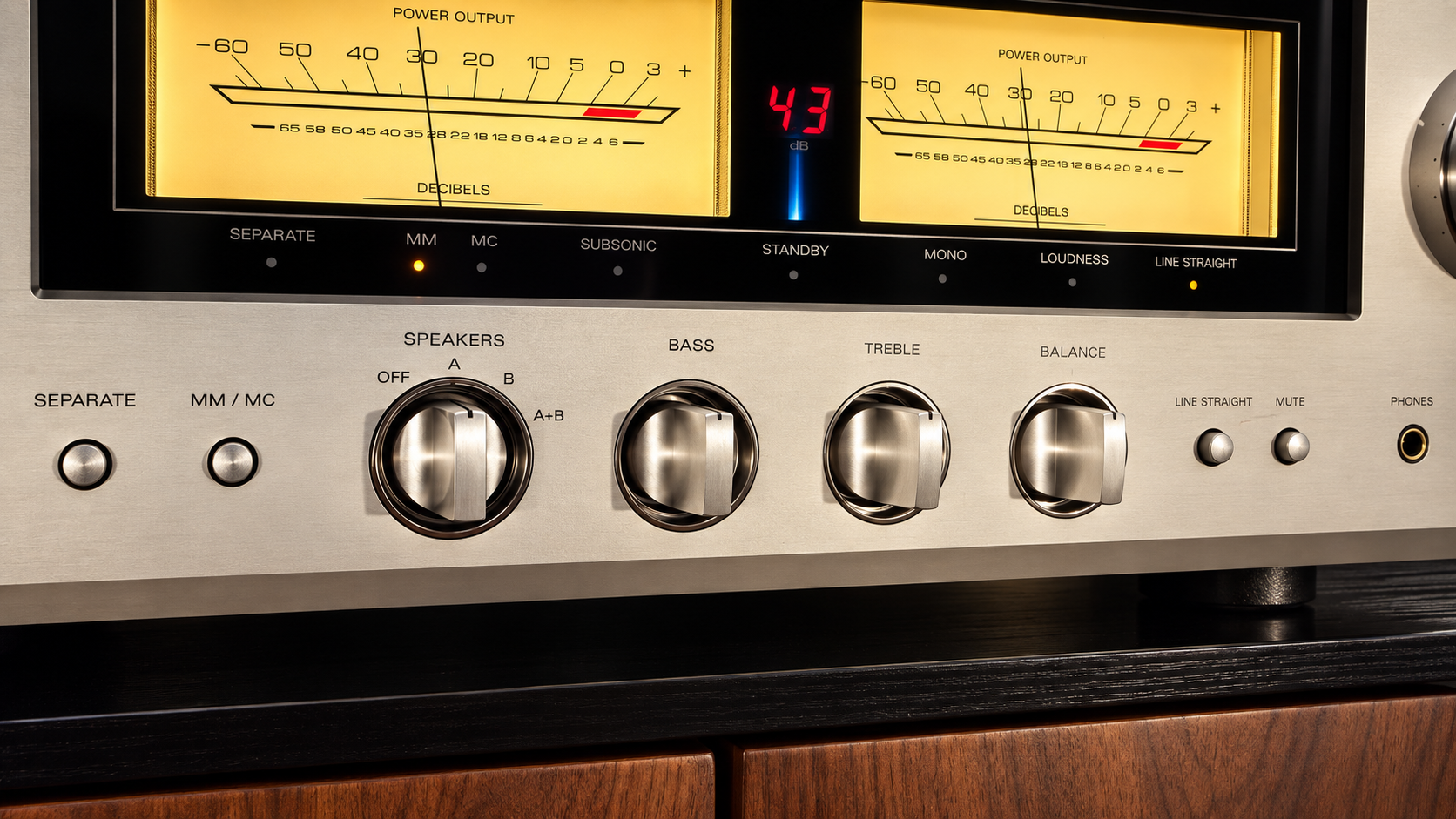
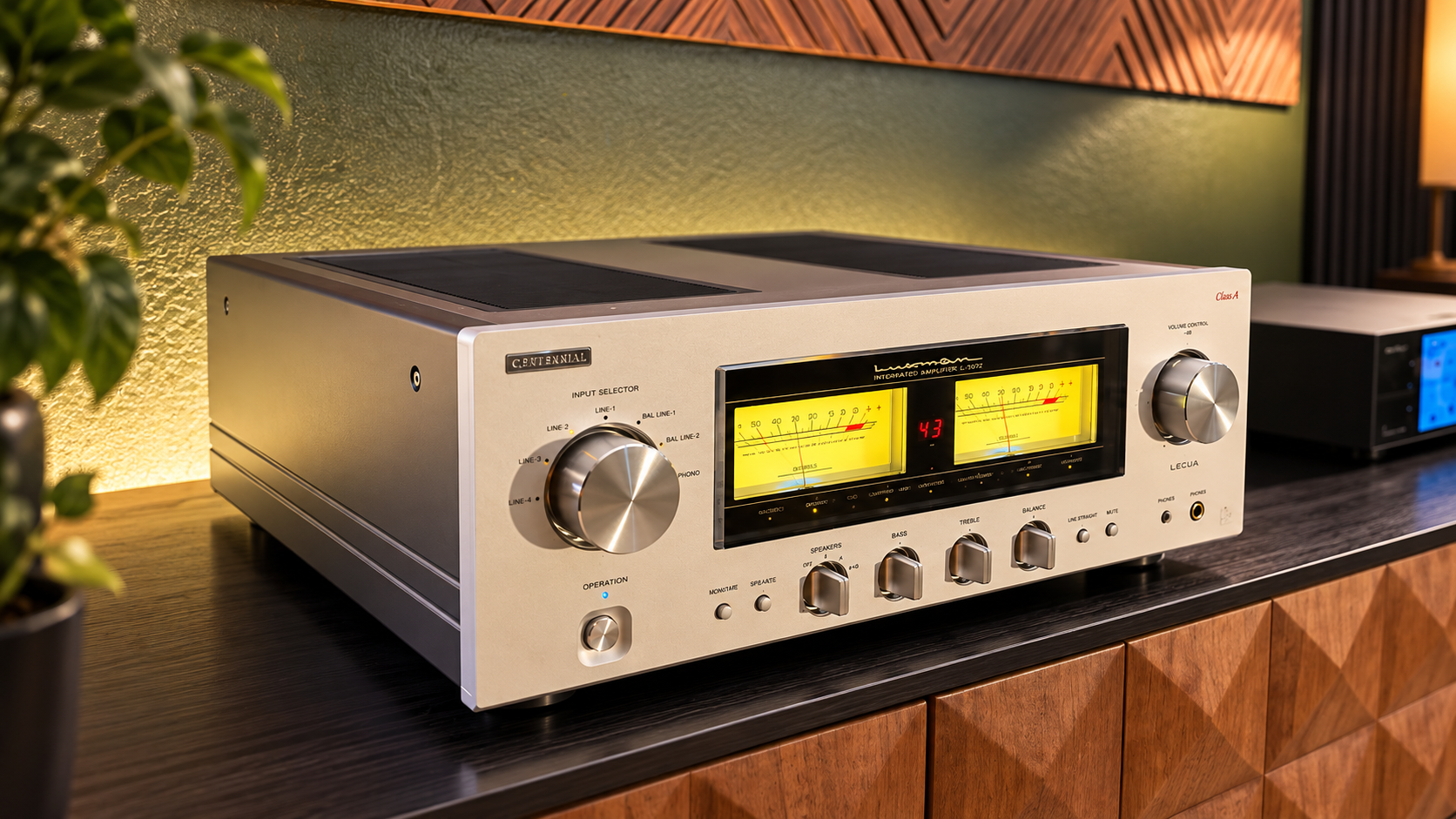
The L-100 Centennial has yellow “Class A” VU meters rather than the white meters of the Class A/B models
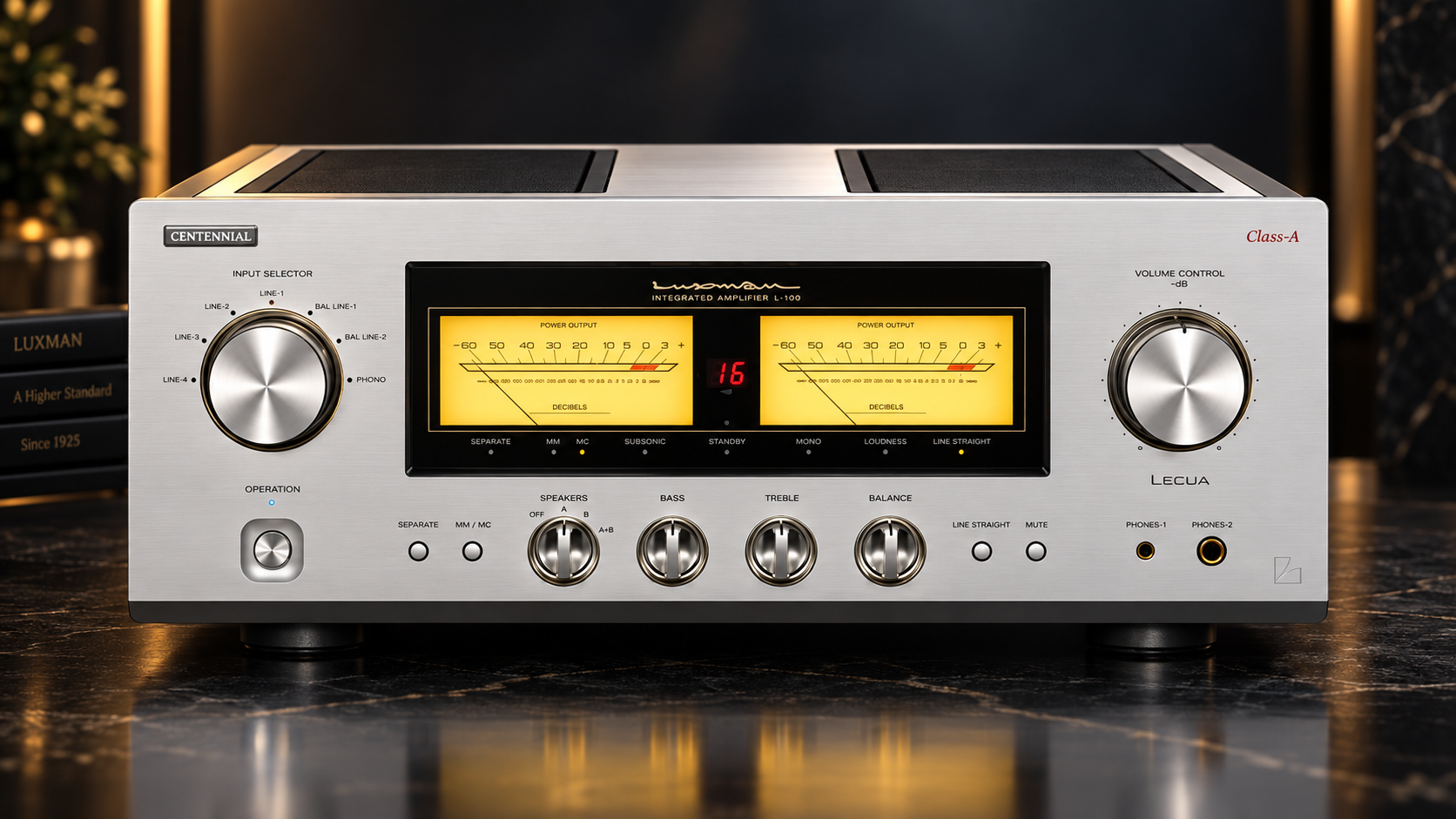
Today I will focus on the L-100 C, and I will say right out of the gate that it improves upon the old 590 AXII in several ways. That is pretty exciting. The new model costs a few grand more—around $3k—but inflation is not the only reason. The Luxman L-100 C has been absolutely incredible during my time with it.
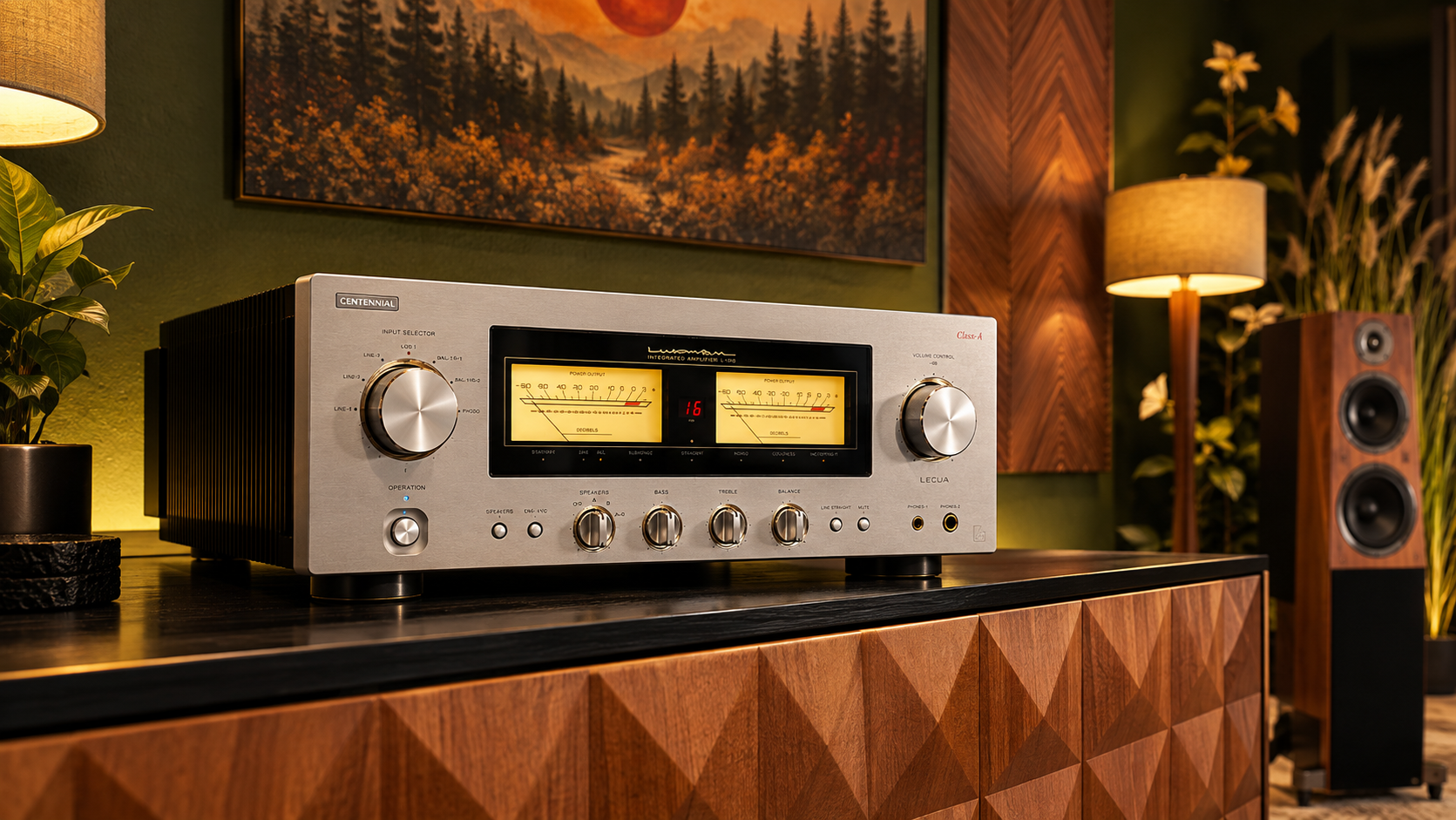

Why is the L-100 C $3k more than the older 590 AXII?
The new L-100 C is $11,995, while the 590 AXII was around $9k at launch. That was way back in 2015—11 years ago. The fact that the new model is “only” $3k more is surprising, as inflation has hit us hard here in the USA over the last several years. The extra three grand is worth it, though, if you are looking for a brand-new Class A integrated from Luxman. The company has made substantial improvements since the 590 AXII, and those changes have also elevated the sound quality.
Here is what has changed since the 590 AXII.
- Luxman redesigned the transformer and changed how it is mounted inside the chassis. This mechanically decouples and isolates the transformer, reducing the chance that it will resonate through the chassis. The L-100 C is MUCH quieter than previous Class A integrated amps from Luxman.
I can state that the L-100 C is very, very quiet. My old 590 AXII and the 595 ASE both produced a faint transformer buzz that I could hear while standing near the amp. The L-100 C still has the slightest buzz, but I can hear it only when my head is close to the chassis. It is quieter for sure. Many Class A amps do this; my old Pass Labs XA60.8 did it as well. I am happy to say the L-100 C is about as quiet as any Class A integrated amplifier I have heard. Because a Class A amp draws substantial current even at idle, here is a quick explanation of why its transformer may buzz:
- Constant High Current Draw: Class A amps run their output transistors at full power all the time, even when playing quiet music or idling. This heavy, continuous load heats up the power transformer.
- Magnetostriction: As alternating current flows through the transformer, the changing magnetic field forces the iron core to microscopically expand and contract twice per cycle. This physical movement creates an audible 50 Hz or 60 Hz hum.
Most Class A amps I have had here produced some slight transformer hum, and it seems to be the nature of the beast. I mention it only because I can hear it with my head close to the amp. It is not loud or noticeable from my listening seat. Luxman has gone to great lengths to almost eliminate this faint noise in the L-100 C.
What else has changed since the 590 AXII?
- The new L-100 C shares many similarities with its big brother, the 509Z. It uses the same capacitor bank, circuit design and output devices, along with the next-generation LIFES 1.1. The way the L-100 C passes the preamp signal to the power amp section is also the same as in the 509Z.
These changes give it refinement similar to that of the 509Z. See my 509Z review HERE if you want the lowdown on everything that went into that piece, because much of it is now in the L-100 C as well. In my experience, this makes the L-100 C a more refined, quieter and more spatial version of the 590 AXII. I feel it is better. To be 100% honest, I slightly prefer the sound of the L-100 C to the 509Z. The mighty Z may still look cooler to you, and of course, it offers much more power on tap. I feel the L-100 C will appeal most to those who truly adore the Class A vibe.
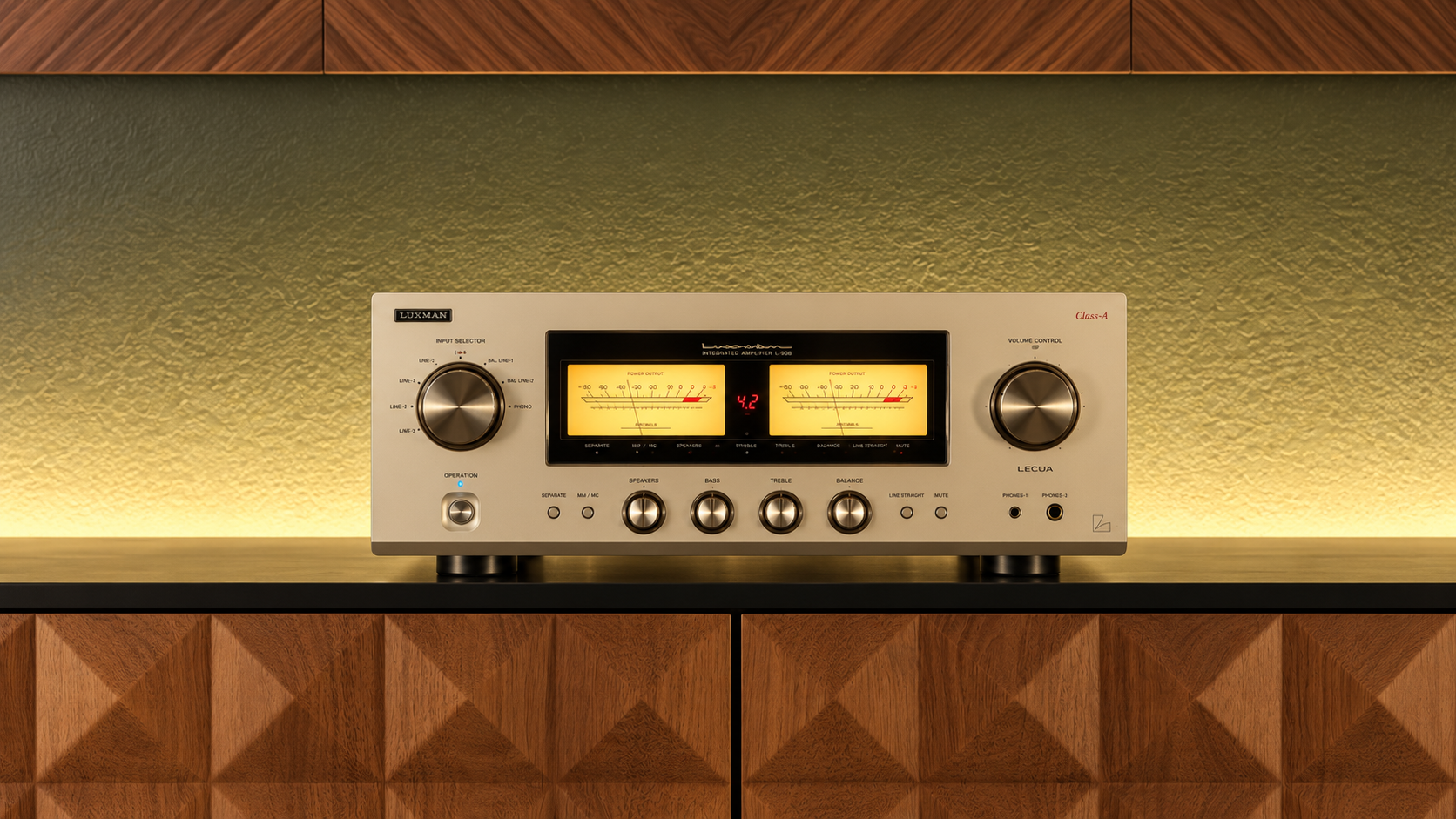
More specs of the L-100 C
- Rated Output Power: 20 W + 20 W (8 Ω), 40 W + 40 W (4 Ω) (Pure Class A)
- Amplification Circuit: LIFES 1.1 feedback engine
- Volume Control: New LECUA1000 electronic attenuator
- Input Sensitivity / Impedance:
- PHONO (MM): 2.5 mV / 47 kΩ
- PHONO (MC): 0.3 mV / 100 Ω
- LINE: 180 mV / 47 kΩ
- BAL. LINE: 180 mV / 55 kΩ
- MAIN-IN: 450 mV / 47 kΩ
- Output Voltage: PRE OUT: 1 V
- Frequency Response:
- PHONO: 20 Hz to 20 kHz (±0.5 dB)
- LINE: 20 Hz to 100 kHz (within –3.0 dB)
- Total Harmonic Distortion: 0.005% or less (8 Ω, 1 kHz), 0.015% or less (8 Ω, 20 Hz to 20 kHz) [1]
- Damping Factor: 300
- Max Power Consumption: 260 W
- Dimensions (W x H x D): 44.0 x 17.8 x 45.4 cm
The front panel also includes controls for bass, treble and balance. A line-direct mode bypasses the tone controls for the purest possible sound. There is an onboard headphone amp as well. The input selector sits on the left, while the volume control is on the right. As usual with Luxman, the volume dial has a wonderful feel.
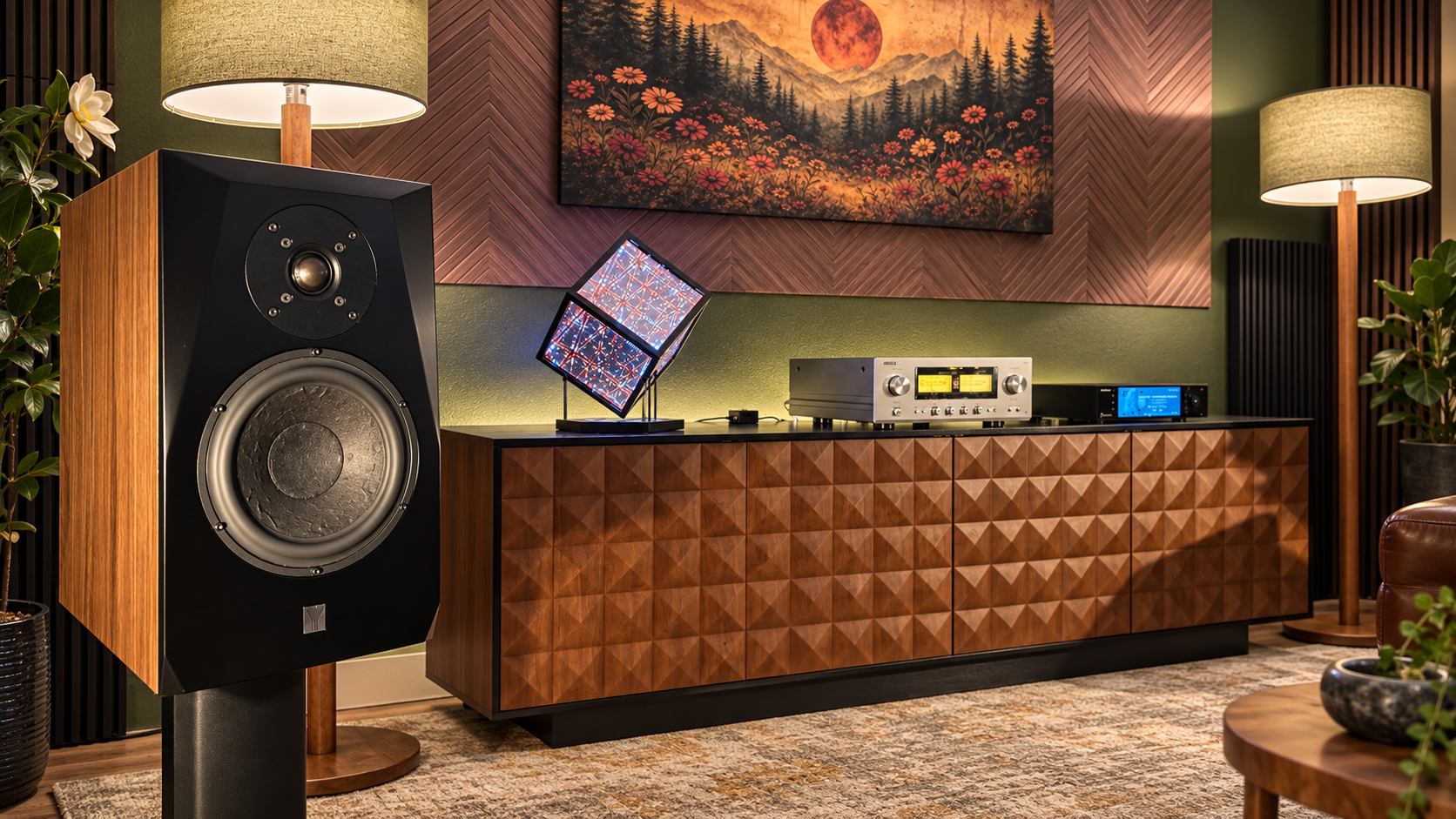
Only 20 watts?
So this $12k integrated amp puts out only 20 watts? Yes indeed, but what a wow factor those 20 watts have. The L-100 C does not feel limited in power at all in my room, though this will depend on the speakers being driven and the size of the space. With every speaker I tested, the L-100 C sounded big, bold, beefy, dynamic and sweet as a pecan pie on a cool fall day.
I have had no issues driving any of the seven sets of speakers I have here with the L-100 C, even when listening “loud.”
I have always believed there is no need for massive 500-watt power amps, as I have never personally heard a benefit from having that much power. It looks impressive on paper, but these 20 watts of Luxman power are all I would ever need in my space. Again, though, we are all different. I compared the L-100 C with a 300 WPC Class D GaN amp I have here now. The Luxman sounded as though it had more power because it delivered greater body, drive and richness. The Class D amp offers 15 times the rated power, yet it does not seem to control the drivers any better. In fact, it does not sound as good, IMO.
I use about 3–12 watts on a normal day and listen at around 78–83 dB in my room. The Luxman L-100 Centennial never breaks a sweat, whether I am driving the Fleetwood Helios, SV Audio Gro, Yzebel Audio Classic 1 or any other speaker I have here.
In fact, very large speakers that are hard to drive and need massive power do not sound any better to me than normal or efficient speakers driven with lower power. I much prefer efficiency to power hogs, but that is me.
So let’s settle this now. The Luxman L-100 C delivers 20 watts of Class A power, then substantially more as it transitions into Class A/B operation. In reality, that will be more than enough power for most speakers made today and for perhaps 80% of listening rooms. Unless you have a large, hard-to-drive speaker or a massive, wide-open space, the Luxman may provide all the power you need. Class A watts do seem to hit differently, and the L-100 C is also a high-current amp, which really matters. Would 40 watts of Class A be better? Sure—maybe, possibly. With 40 watts of Class A, I would venture to guess it could drive almost any speaker, but the amp would probably cost much more as well.
If you can get by with 20 watts of Class A, the L-100 C is a superb successor to the 590 AXII.
Why Luxman?
So why would someone pay a premium for Luxman rather than choose a more affordable option? I mean, you can spend much more than Luxman charges, but to me, the brand represents the part of HiFi that is still “normal”—before you go over the insanity cliff. The integrated-amp world offers countless options, including some very nice models in the $3,500–$5,500 range. Look at Heaven 11, Michi or HiFi Rose. They will not match the Luxman’s appearance or build quality, nor will they sound like a Class A Luxman. They are very good, though.
None of those more affordable options will give you pure Class A operation along with the Luxman’s abundance of inputs and features. The L-100 C is an all-analog amp with no digital circuitry inside—no DAC or streamer. It does include a phono stage for MM and MC cartridges. I did not test it here, but I have always enjoyed the phono stages built into Luxman amps.
Many people also buy Luxman for its heritage. The company builds its products in Japan, has been in business for 100 years and is known for legendary power amps, preamps and integrated amps, including both solid-state and tube models. Luxman is a “no-compromise” brand that delivers top-tier build quality, engineering, design and sound. It has its own sonic character, just as Accuphase, McIntosh and every other higher-end brand does.
The L-100 C mixes life, warmth and musicality with neutrality and air. It delivers depth, layering and refinement, along with gorgeous transparency that never overdoes it. There is body and soul. While it is not as dynamic, fast or sharp as the 509Z, it brings the Class A sound that so many people seek. It is a special piece, and I have never known anyone to be disappointed by a modern-day Luxman amp.
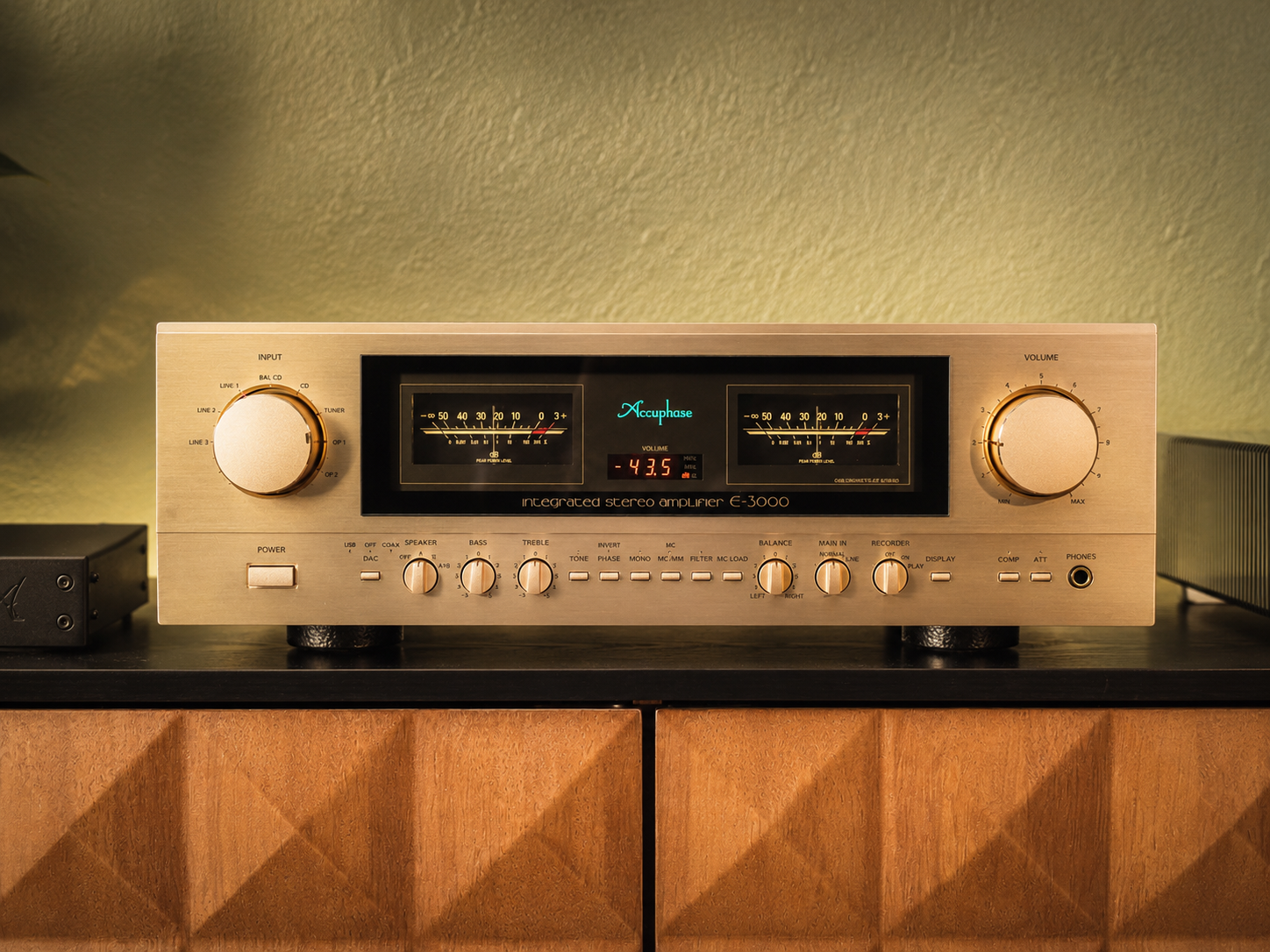
The Accuphase E-3000 is Class A/B

Luxman vs Accuphase?
I still have the $9k Accuphase E-3000 Class A/B amp here and will keep it for at least a few more months, as it is on long-term loan following the review. It is warmer and plumper through the midrange, which means it is less neutral than the Luxman. The treble is smoother as well, yet the E-3000 paints a gorgeously elaborate soundstage. Both are end-game, destination integrated amps, even though the E-3000 is the “starter” Accuphase.
Some will prefer the silver Luxman, with its more illuminated and slightly more three-dimensional sound and brighter yellow meters. Others may prefer the extra body and flow of the Accuphase, with its champagne finish and darker meters. I have been listening to both, and whenever I put the Luxman back in after a day or two with the Accuphase, I hear that extra glow and light from within. It also sounds a bit more open.
The Luxman will set you back $3k extra but you will gain Class A operation and all that comes with it.
The sound and experience of the Luxman L-100 C
Sound Impressions — Four Speakers
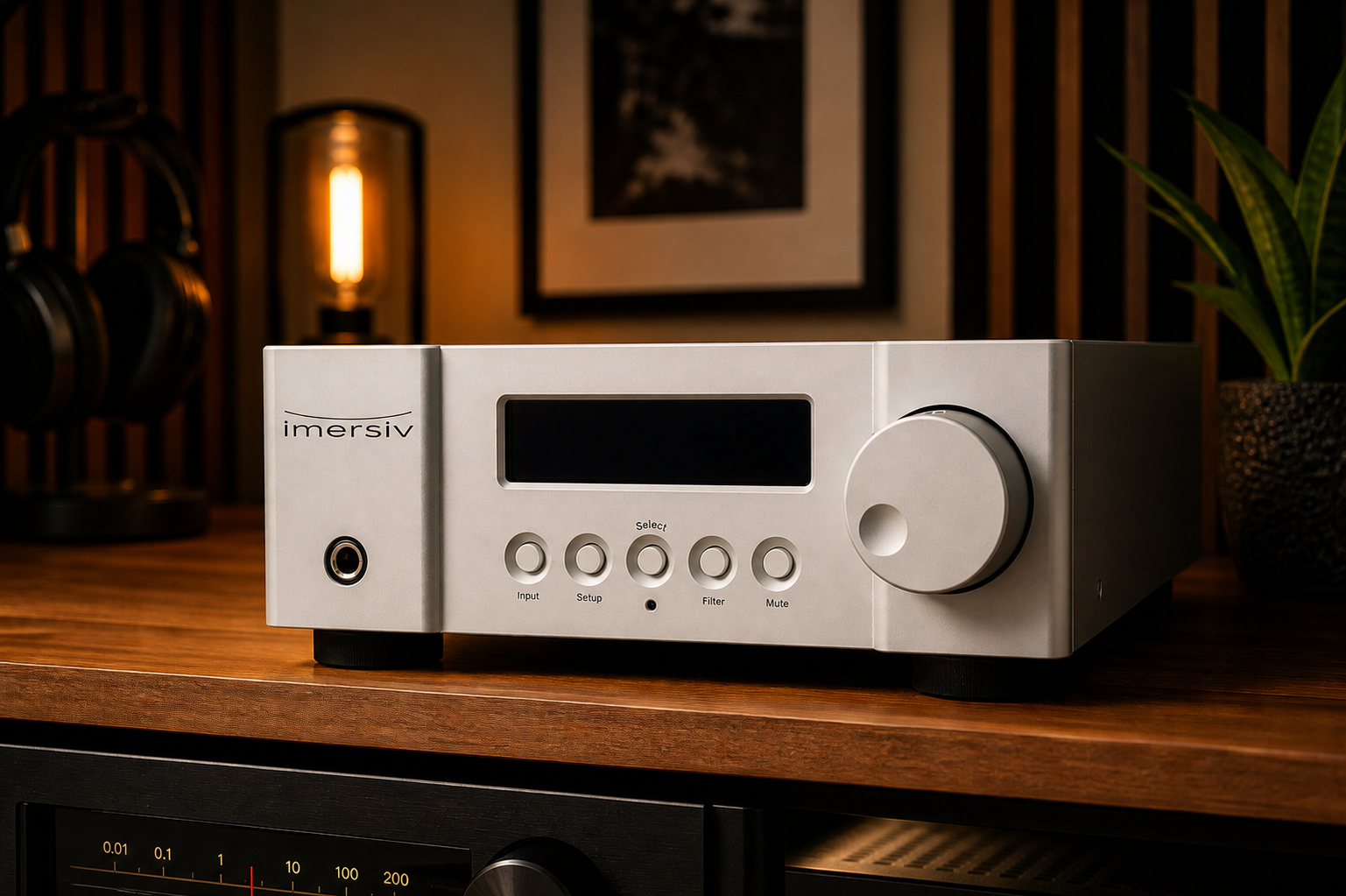
Fleetwood Helios & Fundamental. Incredible—and the best sound I am getting in my room at this time, full stop. The presentation is very open yet still has warmth, body and huge scale. This setup paints the largest sound I have ever heard in any of my rooms, with breathtaking instrument separation and reproduction. I ran the Luxman with an Eversolo T10 streamer feeding either the Immersiv D1 or the Benchmark DAC3, and both brought incredible music reproduction to the space. The Benchmark was warmer and gave me amazing density and life, though it was not as three-dimensional, holographic or spatial as the D1. Live recordings felt real and alive, with a big, beefy sound. The D1 was lighter on its feet but created a much more immersive soundstage—one you could almost swim inside. Voices were unreal, emerging into the room in three-dimensional space, and drums kicked just right. I could feel a big kick drum in my chest. The Helios and Fundamental will cost around $15k. Add the L-100 C and D1 DAC setup, and you are looking at a $45k system. The Helios and Fundamental are my favorite music makers. See why here.
Yzebel Audio Classic 1 — I have been enjoying these two-way stand-mount speakers from Canada for a couple of weeks. The upgraded model costs $3,300 USD or $4,500 Canadian. These may be the best stand-mount “bargain” I have found all year, and I have heard some very nice ones. They use Scan-Speak drivers and claim bass extension down to 30 Hz. With the Luxman, they sound super sweet and deliver remarkably realistic vocals, though their soundstage is more recessed than that of the Helios. Voices sit behind the speakers rather than in front of them. The Classic 1 also offers less midrange and midbass body than the Helios and Fundamental. There is less punch, and drums are not as solid or full. These speakers cost $12k less than the Helios setup, so no, they do not reach those heights. For $3,300 USD, however, they are a crazy bargain, offering superb build quality and a nicely fleshed-out, refined sound.
SV Audio Gro — These very expensive Danish speakers cost $33k and are quite small for towers, yet they sound big, detailed, open and alive without ever becoming lean or small. With the Accuphase, they have body, warmth and glow. With the Luxman L-100 C, they sound more open and three-dimensional, with a crystalline treble. The presentation is cleaner and more neutral. I can easily hear the Class A signature through these speakers, and the sound is downright spooky at times. This is another stellar setup, but it is very costly, so you must love the Gro’s looks and design. These speakers captured my heart earlier in the year, and they are still here because they make an excellent reference for comparisons. The L-100 C has no trouble driving them in my nearly 14 × 19-foot room.
DALI Sonik 3 — These $1,200 speakers are not exotic or high-end in their build or design, but they are affordable and sound like great $3k speakers for less than half the price. They have a big, beefy and warm midrange with a touch of sparkle up top. They definitely deliver a warmer, more musical presentation rather than an analytical one. The Luxman L-100 C brought them to life with greater clarity than the Accuphase, which was almost a touch too warm for them. The Luxman made every speaker I had here sound alive and open, with warmth through the midrange and a nice, big soundstage.
All in all, the Immersiv D1 DAC was amazing here as well, making the music more immersive indeed—more holographic and projected farther into the room.

This is a dream amp, pure and simple. My conclusion.
The Luxman L-100 C is another home run from Luxman. Prices are higher than they were more than a decade ago, but much has changed since then. Luxman now builds these amps better than ever, while inflation and tariffs have also driven prices upward. The Luxman L-100 C is made in Japan, a country known for producing some of the finest audio gear in the world. Accuphase and SoulNote products are also made there, along with gear from many heavy hitters in the tube realm.
Internally, the L-100 C is engineered and built to the level of the flagship $15k 509Z, and it is drop-dead gorgeous. It comes only in silver, uses more electricity than a Class A/B amp and runs warmer. The good news is that the L-100 C never ran hot for me—just warm. It is not a room heater.
If you seek the finest and newest Luxman Class A integrated available today, and 20 watts of high-current power will work for you, the Luxman L-100 Centennial is the only choice right now. It is the kind of amp that will stick around and deliver enjoyment for years to come—what I would call an “heirloom-quality” integrated amplifier. Sometimes you get what you pay for, and this is one of those times.
Some will ask me, “Which is better, Luxman or Accuphase?” The answer is neither. Both are amazing; they are simply different. Choose a brand based on your needs, wants and style. It depends on your speakers, room and tastes. I always say, “Go with your heart.” You can’t go wrong with Luxman, my friends!