
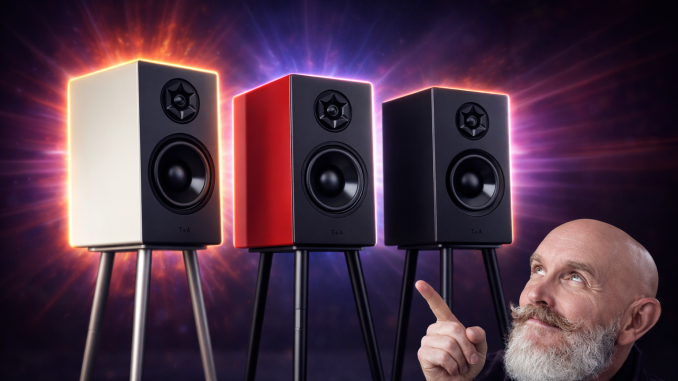
Scary Good. The Starke Sound Halo M1 Speaker Review.
By Steve Huff
A few weeks ago I was sent a flagship speaker from a brand who makes a certain $500 speaker that really impressed me for what it cost. In fact, I called that little speaker the “Best $500 Speaker In the World” and it came from a company I never heard of before. This company who is based out of California is called Starke Sound. After that little $500 “Beta 5” Speaker review left me so impressed they asked me if I would like to hear their current flagship speaker called the M1. The M1 sits in their line of speakers called “HALO” which will feature their finest creations, as in, the best they know how to make. The M1 is a two way design with a high end build and design but this one costs less than the competition. Who doesn’t want a speaker like this?
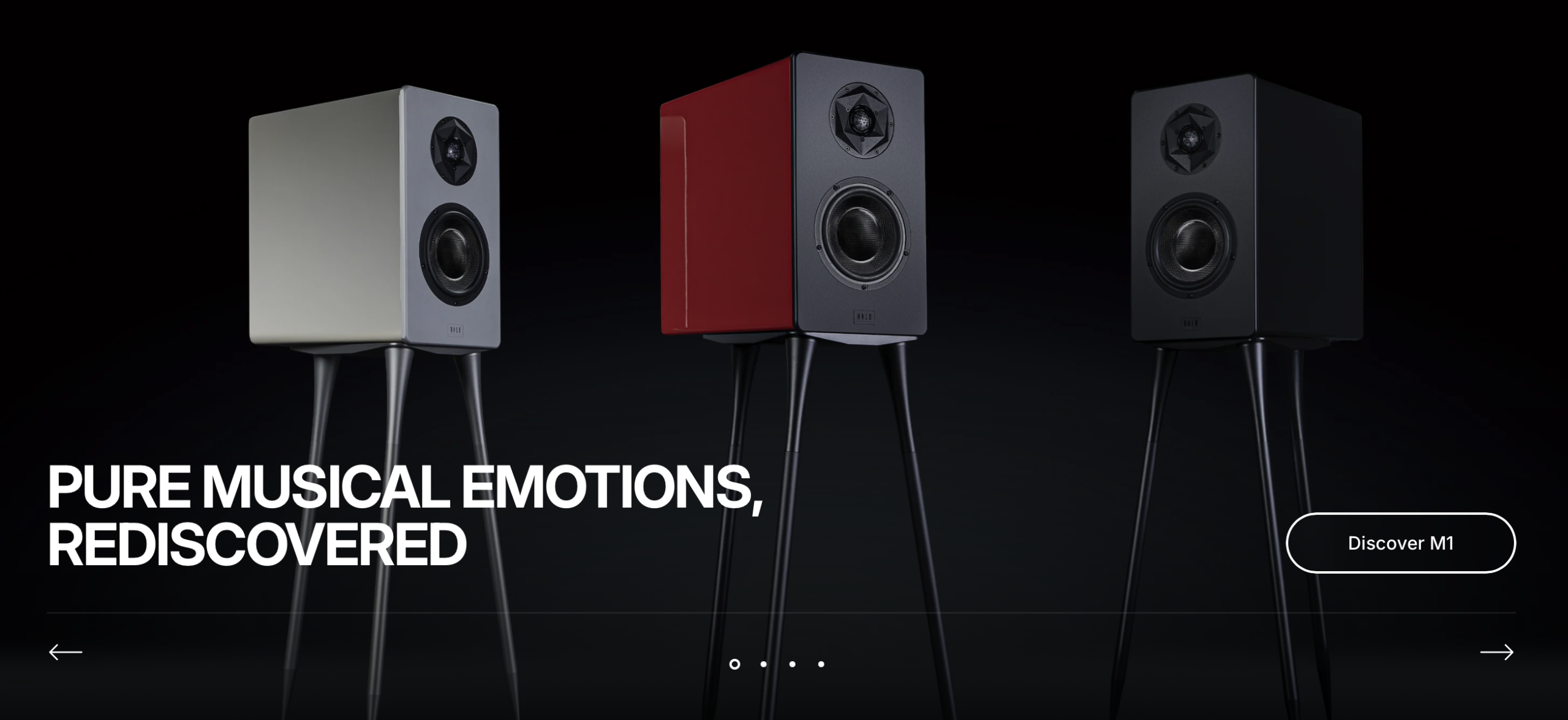
I said yes of course to the review request as I had to hear what this company could do when making something they call their best small speaker. If the little Beta 5 is so good for $500, how will the M1 do priced at $5600? Well, Starke Sound told me with the M1 they are looking to compete with the big names that sit in the very expensive realm of audio. Makes sense as their Beta 5 competes with speakers that sit in the $1500+ range IMO. Could the M1 really compete with $10-20k speakers? Hmmm.
SPOILER ALERT: I once owned the Focal Diablo speakers for a while and while these $25k speakers are superb in build, design and sound the Diablo seriously lacked with low bass and also had a treble that was super revealing/resolute. I enjoyed them with certain types of music but could not enjoy them with all music due to lack of low bass. The Halo M1 for me, which also employs a Beryllium tweeter like the Focal, sounded better to me right away in bass and was more smooth up top vs the Diablo that cost $4-5X as much as the M1. Yes indeed, this was going to be a fun review.
Those who read my reviews know that I love talking about and reviewing products that punch well above their cost and while the Halo M1 speakers are not what some would call “affordable” these are really high quality/high end speakers meant to deliver high end sound that sit with speakers from brands that cost more. I will be clear here though. The speakers from Starke sound are fully designed in California but assembled in China. Even so, these are remarkable speakers that look like they cost more than they do and everything about them is fantastic in looks and build. Being made in China is why these cost $5600 vs $10k.
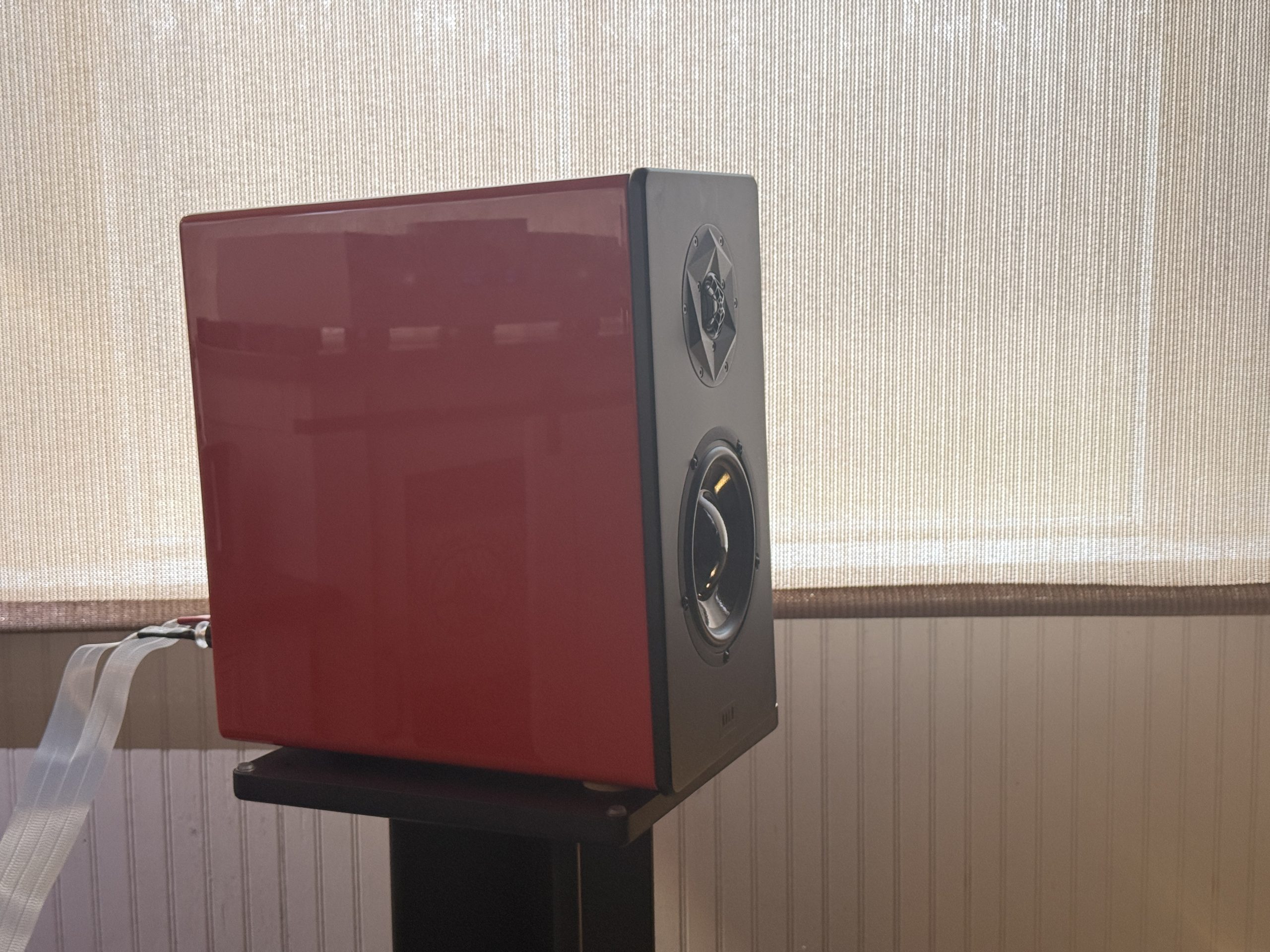
I have the Ember Noir Red model here and it is striking with its deep red cabinet and black front/back. I am sitting here now as I write this review listening to the M1’s with a yet unreleased Woo Audio tube amp that puts out 25 WPC and the sound is rather “otherworldly” so yea, these can even be driven with lower power tubes depending on your room size and tastes but they will ultimately sound more complete with more power. More on this later.
So let’s talk about the Starke Sound Halo M1.
What do they sound like? What kind of parts quality is used? Do they REALLY sound as good as a $25k Focal speaker and if so, in what ways?
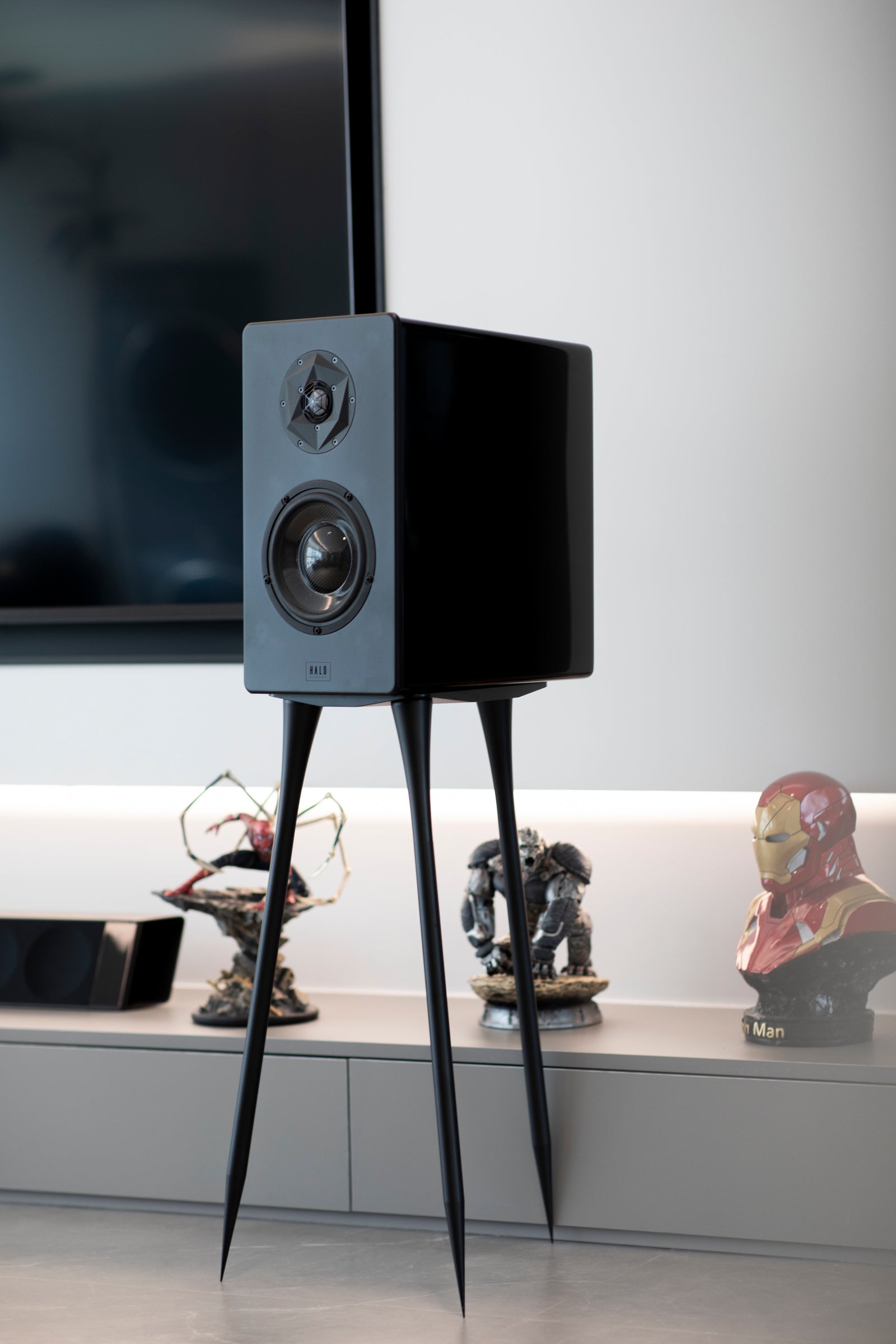
My Review of the Starke Sound Halo M1 Speaker
First, here is what Starke Sound says about their Halo M1 speaker:
“The M1 is the inaugural masterpiece of Starke Sound’s new HALO series, a speaker that flawlessly embodies our vision of “pure musical connection.” With an unwavering dedication to detail, it merges groundbreaking innovation with the essence of music, setting a new benchmark for high-end audio.
At the heart of the M1 lies a seamless fusion of advanced materials and exceptional engineering. It features the Diamaze28™ Be Tweeter, delivering exquisitely refined highs, and the MaxCarbon65™ Woofer, offering expansive and richly textured low-frequency extension. These state-of-the-art drivers are harmoniously integrated through a premium-grade first-order crossover, ensuring low distortion and perfect phase coherence. The result is an awe-in-spiring musical texture and immersive soundstage.
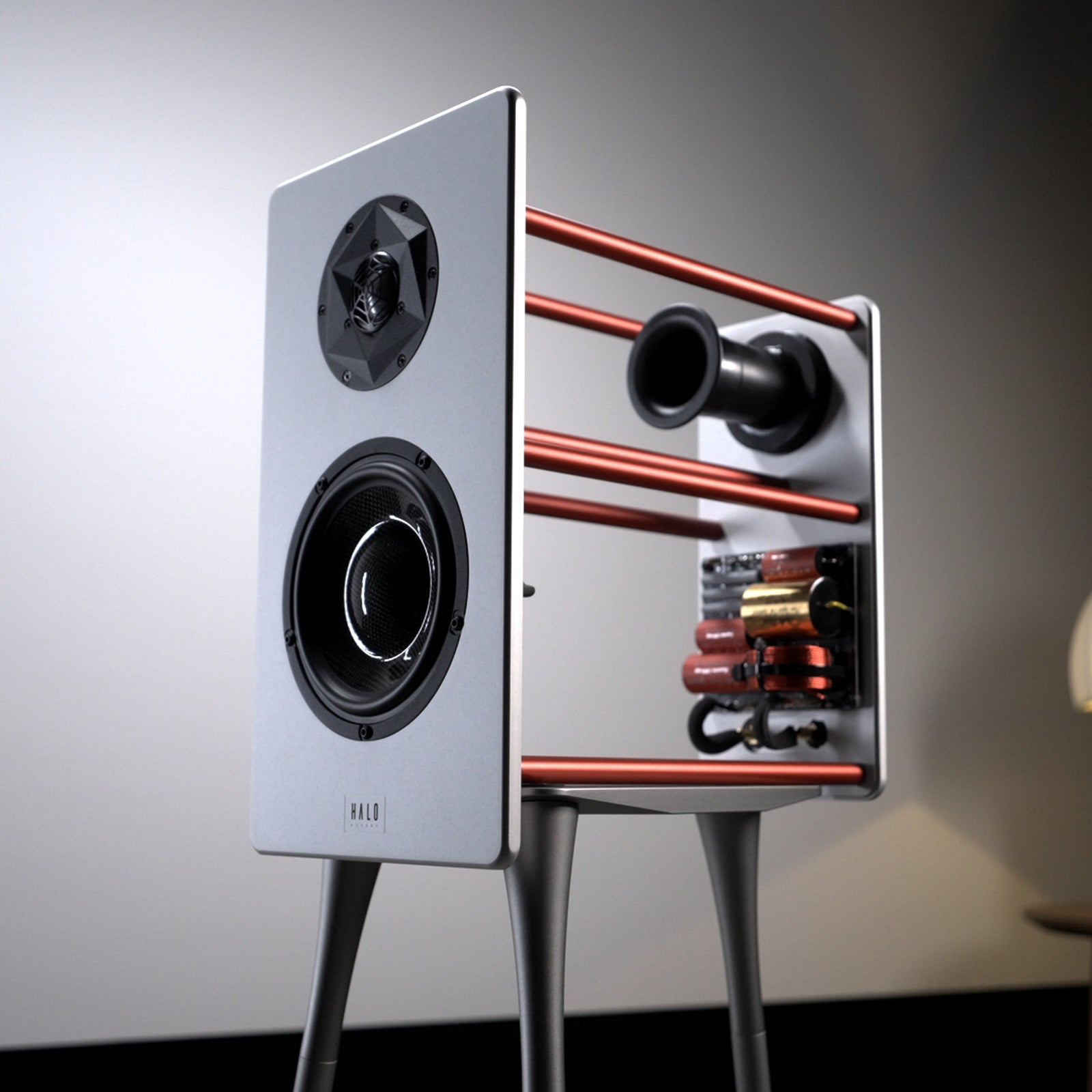
The M1 also introduces a pioneering design foundation, combining the Rogrid™ Aluminum Frame with a reinforced aluminum cabinet. This synergy provides unmatched structural stability and acoustic precision. The robust metal frame eliminates unwanted vibrations, allowing every note to flow with purity and authenticity.”
An inside look at the Halo M1 with its “Rogrid” structure to allow for what Starke says is pure uncolored sound.
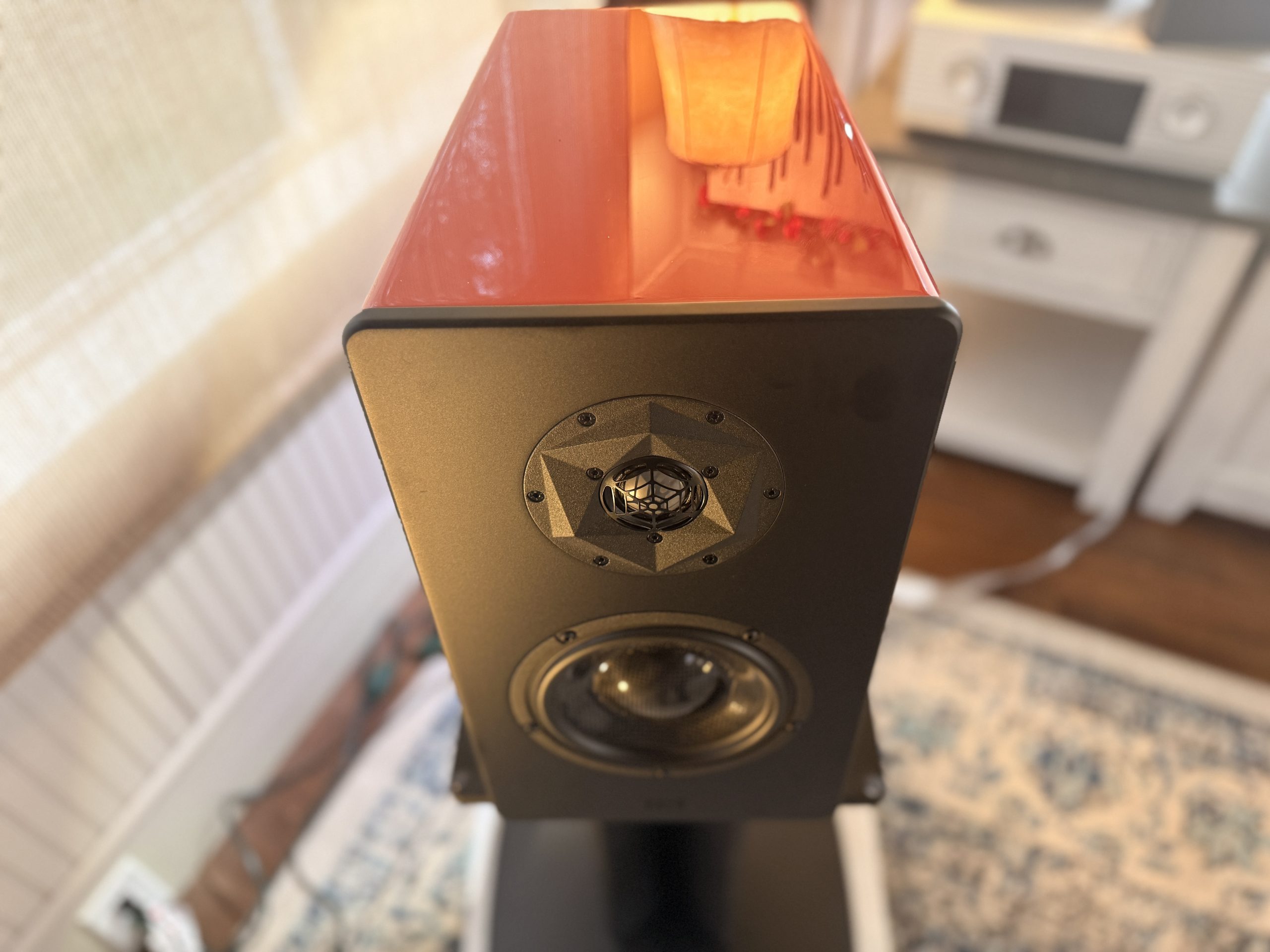
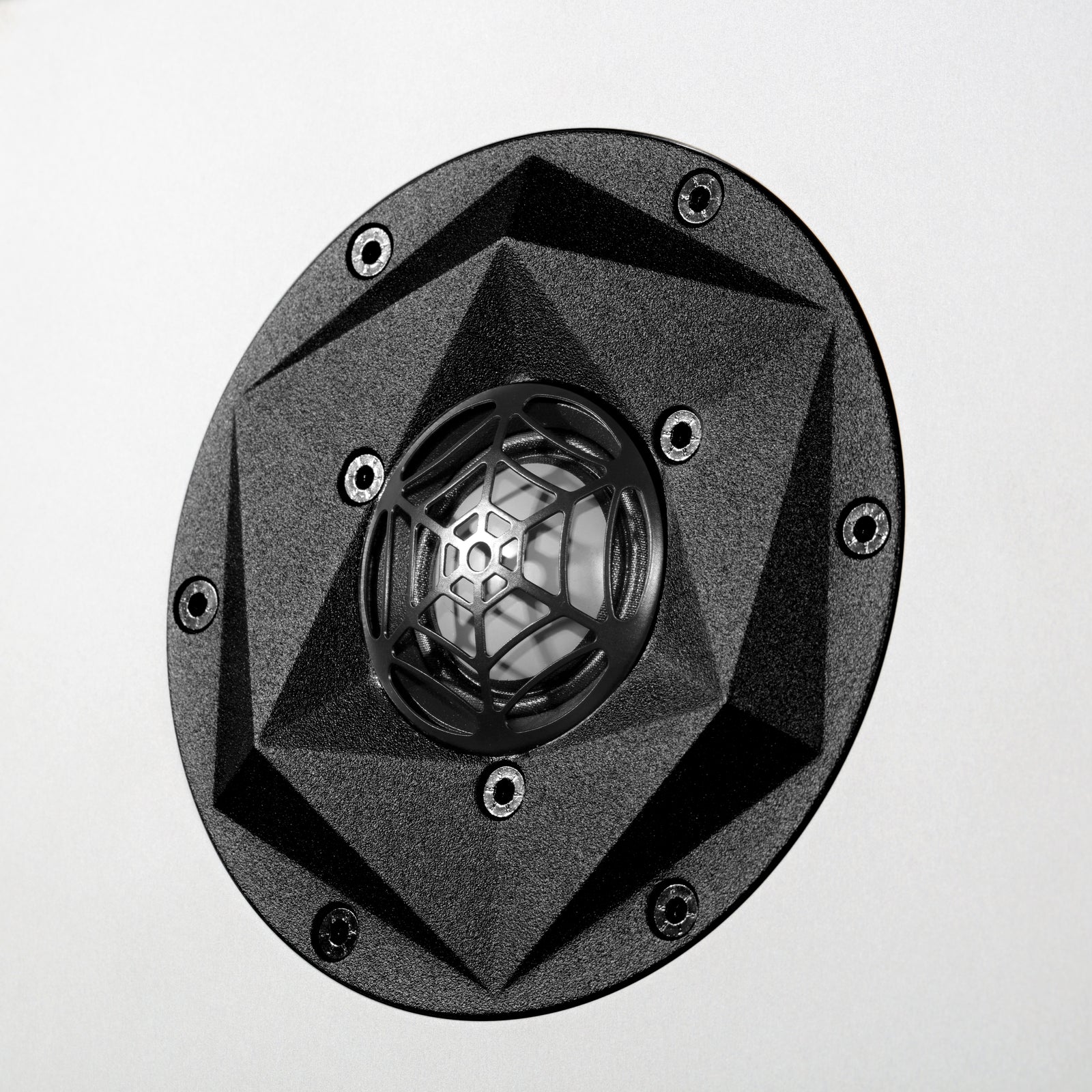
One thing that I found to be nice about the M1 is that these speakers are using a beryllium tweeter like some of the more expensive speakers on the market within this hobby of ours. This is something I am used to seeing in very high end speakers, such as those from Focal for example.
Starke calls this their Diamaze28 Be tweeter and it extends up to 28khz. The tweeter here is said to bring airy highs (as most in this class do) but I will say now that over time I grew a bit tired of the tweeter in some other speakers that use a Be tweeter as I found them just a little too extended or “hot” for my tastes. As I admired the Halo M1 looks and design I wondered to myself if I would like the tweeter in use here when I pressed play.
Starke says this tweeter brings sweet, pure highs with the enlarged beryllium tweeter diaphragm.
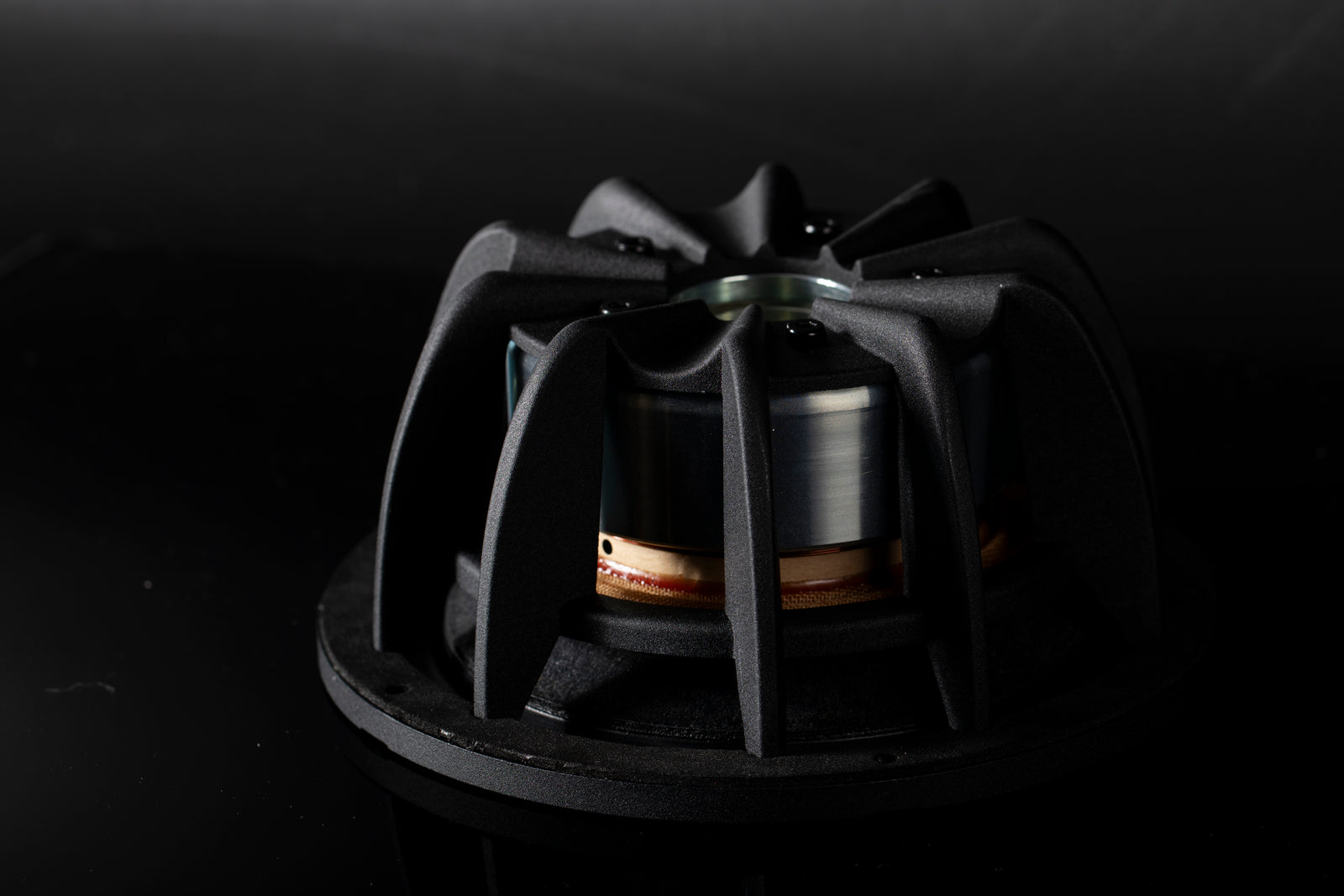
What about the Bass? The M1’s feature a MaxCarbon 65 which is a carbon ceramic dome mid woofer. This woofer allows the M1 to go down all the way to 33.5 Hz according to Starke Sound. I was excited to test this as well, to see if this speaker could provide the amazing world class bass of my T+A Talis R330 Speakers ($11k retail) that cost double of the M1. The T+A go down to 35Hz so the M1 have them ever so slightly beat here, at least on paper.
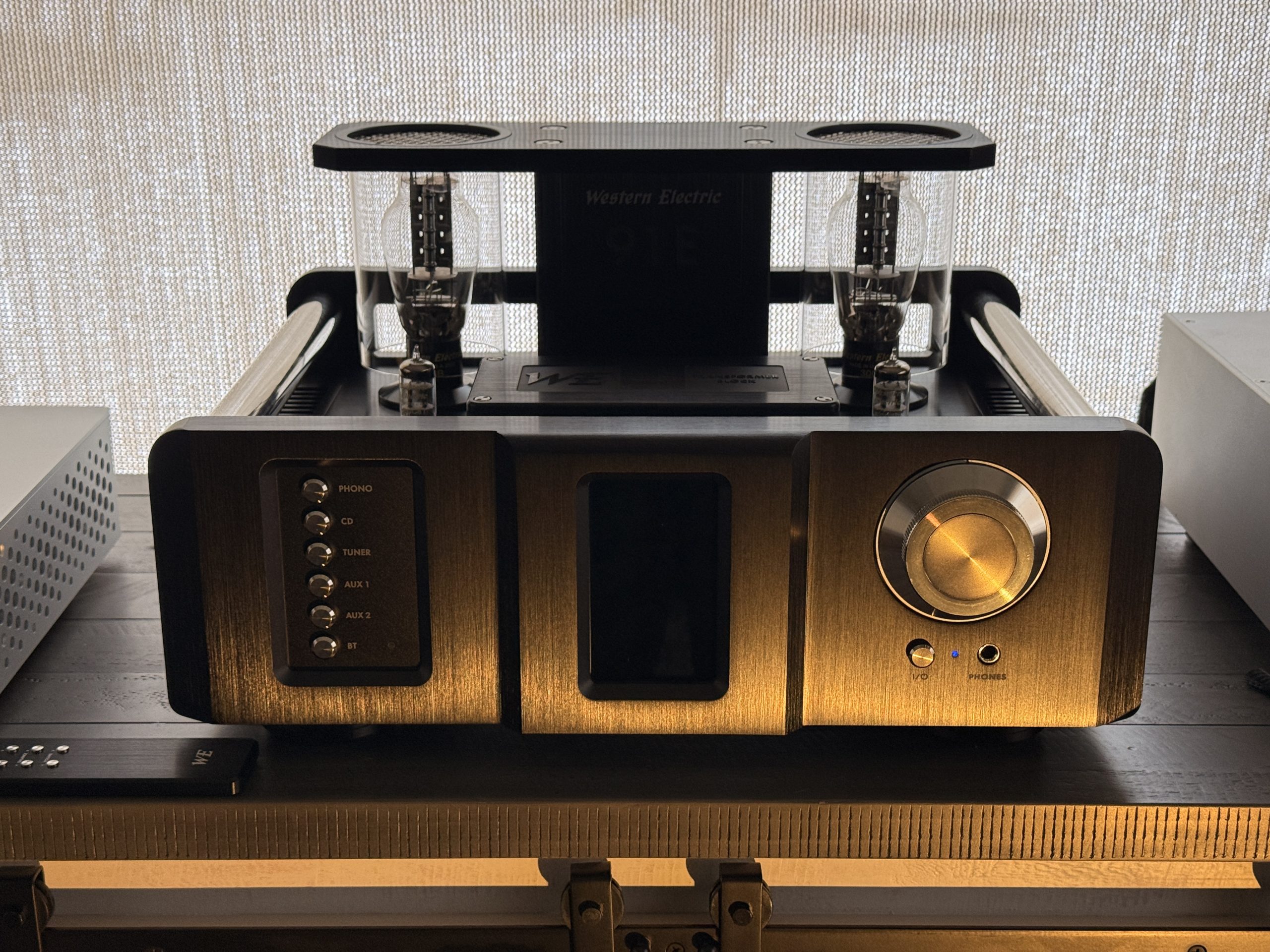
The M1’s are 4 ohm speakers and recommended amp power for them is 50-500 watts. I tested them with 20 watts up to 580 watts and will discuss the best matches here that I found for powering the M1 and how these sound with different power levels. I will say now that while you can run the M1’s with tubes they will do best with a solid 80+ watts of Class A/B power. Even so, depending on your tastes these can do remarkable with lower power tubes. With a Woo Audio tube amp or a Western Electric 91E 300B amp putting out 20-25 WPC the sound was ethereal, heavenly and even had some warmth but these amps are not good for turning it up or rocking the house down, of course.
Overall though, most will want to power these with some good old fashioned Class A/B power for them to sound their best. Class D also sounds superb as I tested them with a Devialet Astra as well, a touch smoother as most good class D is these days.
The mid driver up close and personal. Check out the way this is crafted. All high quality parts reside inside of the M1.
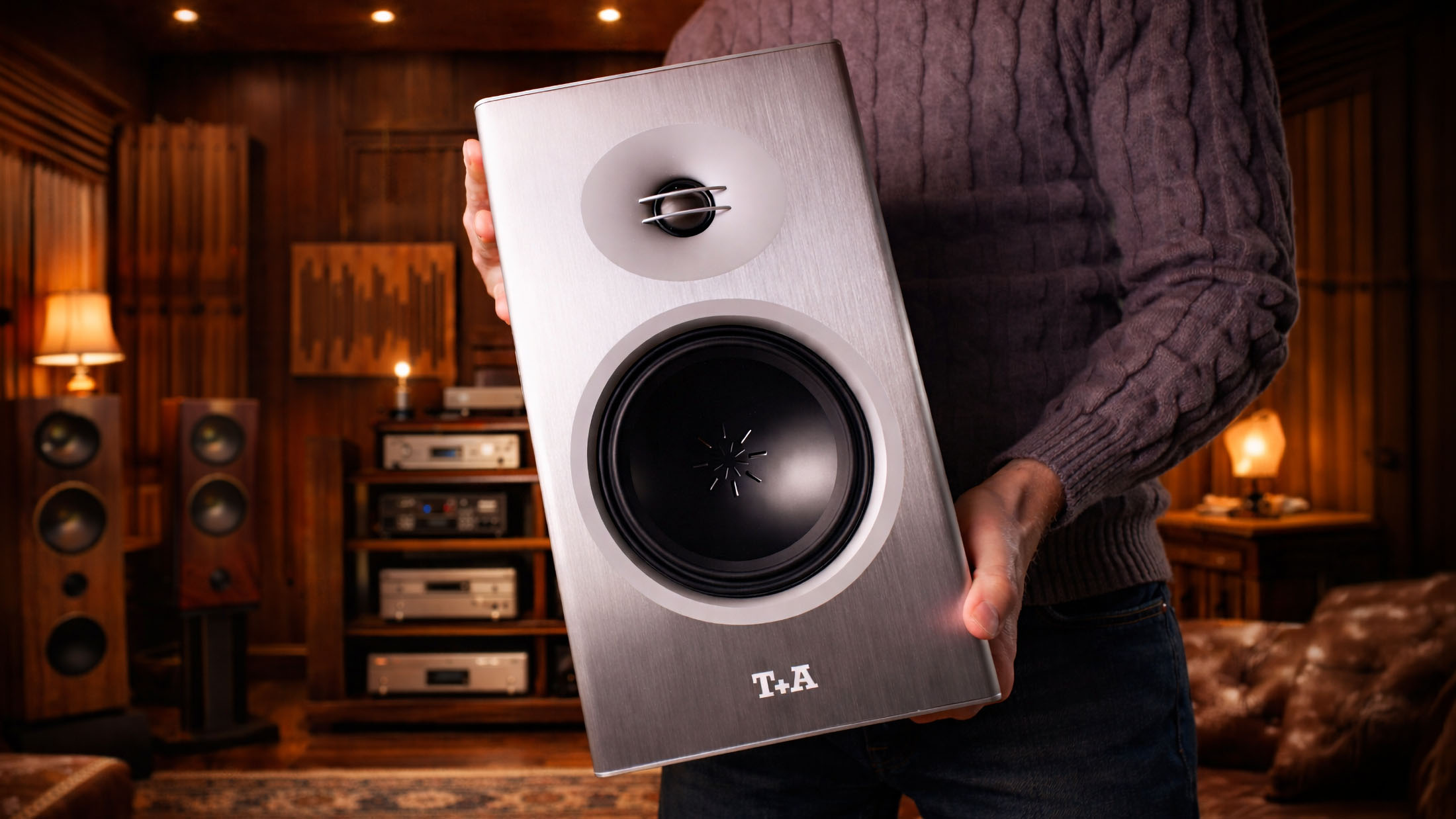
So after I admired the beauty of the M1 I installed them in place of my T+A Talis R330 that have been getting a ton of listening hours on them lately. For me the Talis R330 have been the all out finest 2 way small size speaker I have heard in my space for me. They really do sound a lot like some $20k boxes I have heard. They also look like a million bucks with the all aluminum enclosure though the M1 also uses an Aluminum enclosure, which is awesome to see.
Not a fair comparison you say? A $10,990 speaker vs one that costs $5600? Well, let’s see how it goes as I will compare them because the M1 want to do so. They have the confidence to take on more expensive speakers so we will see how close they get to a set that costs double. What I mean is I believe these will stand toe to toe in sound with the pricier speakers.
I was so curious as to how the Halo M1 would do here as I was used to the sound of the T+A which is revealing and resolute yet somewhat full bodied (yet clean) in the midrange with a tight clean authoritative bass in the mids and down below. For me, the R330 deliver world class small speaker sound but these will set you back $10,990. Phew, that’s a boatload of cash for a small speaker. These have went up in price due to Tarrifs recently or so I was told. Even so they are remarkable for the size.
My T+A Talis R330 speakers that I adore in silver. This image was made with AI.
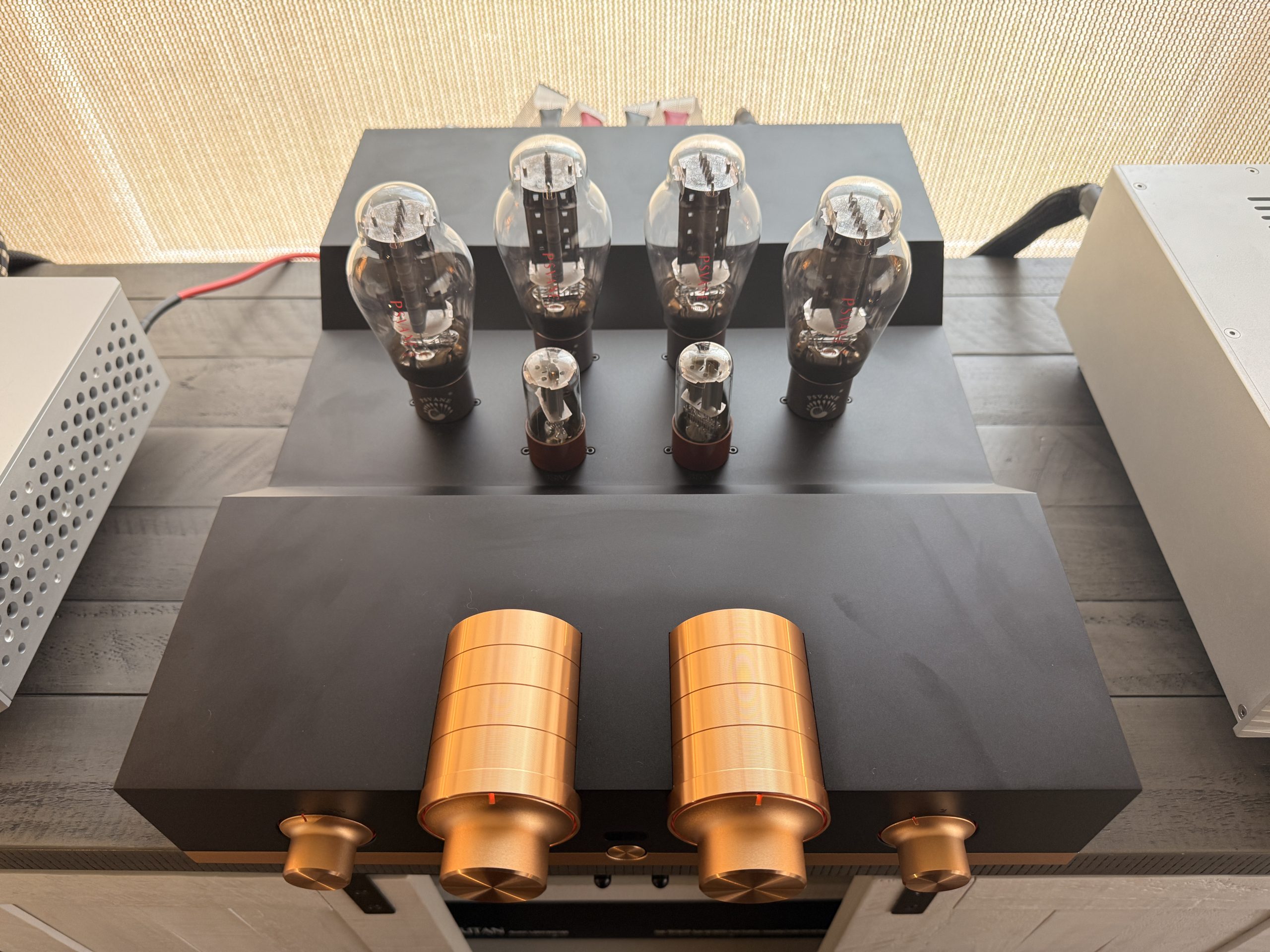
So I removed the German boxes from T+A and placed in the Starke Halo M1. I had a few amps on hand such as my Vinshine/Kinki Studios Dazzle which pumps out nearly 600 WPC into 4 ohms. I also had a SoulNote A2 MKII integrated amp here that puts out 90 WPC and a Western Electric 91E that sends 20 WPC to the speakers. The Woo Audio amp puts out 25 WPC and the Devialet Astra Class D puts out over 200 WPC. All sounded very good with the M1 but a couple of these options were superb synergistic matches.
This new tube amp sits in the exotic lane and sounds sublime from Woo Audio. It will drive the M1 in small rooms or mid room that do not want to play loud. An ethereal kind of vibe.
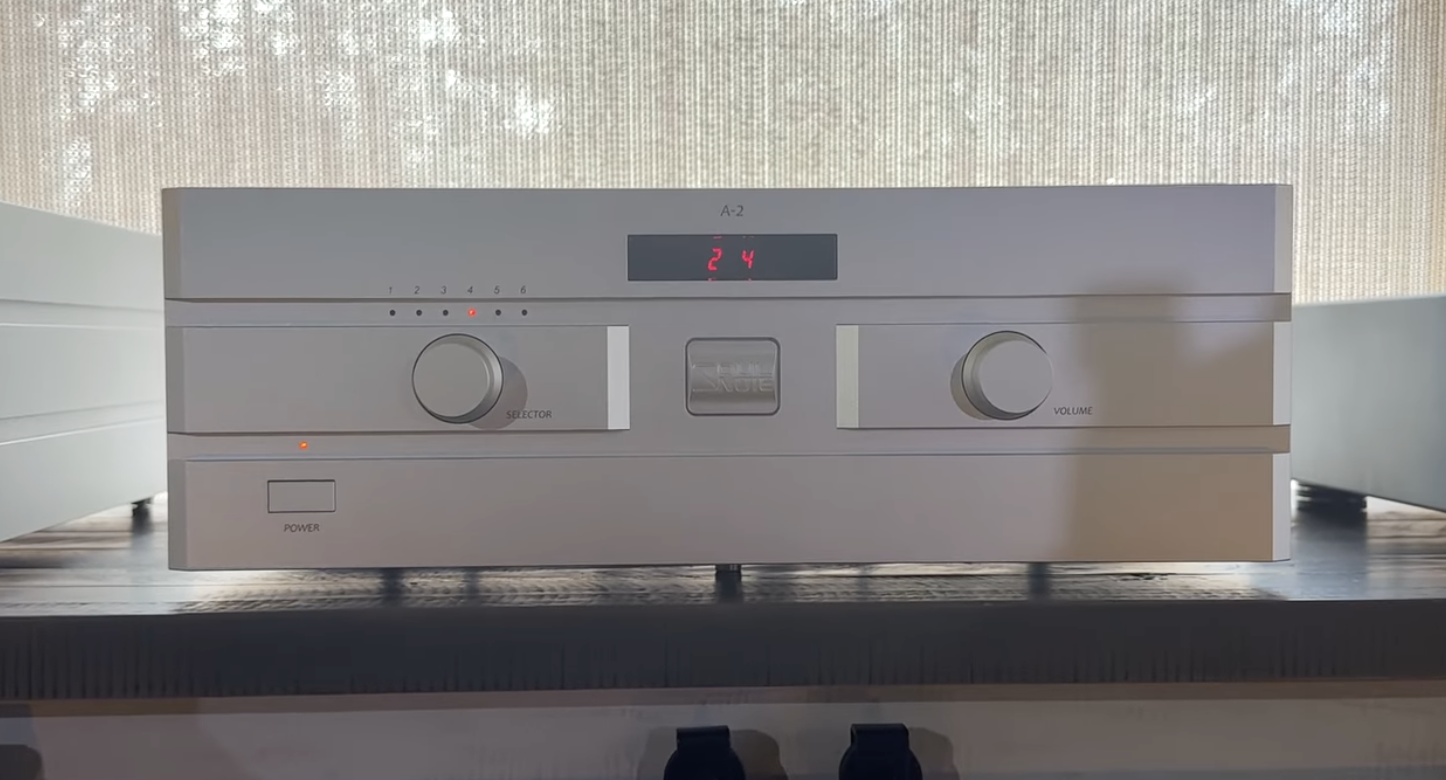
I tested all amps I had on hand and for me my all out fave with the M1 was the SoulNote A2 MKII amp which did sound better vs my Dazzle with the M1. With this amp the sound was very extended, open, sweet and yes, even with some “soul” injected into the sound. Nice resolution, details and a soundstage that was wide, tall and with a bit of depth as well. Layers were heard as well, within the soundstage.
The M1 can sound beautiful with many amps but for them to be all they can be, they do like some power behind them. Even so the 91E by Western Electric also drove them at lower volumes and mid volumes nicely, albeit with less bass slam.
Many have large rooms that will need power and drive for these to open up. So with that said, the best amp I have for these here is the SoulNote A2 MKII integrated which is pretty amazing in its own right. It brought enough power to bring down the roof if I needed, lol. The M1’s loved this amp.
I ended up keeping the SoulNote A2 MKII in as the power solution for the M1 speakers during my evaluation, sharing time with the Dazzle integrated amp that brought more heft, density and power. The Kinki Studios Dazzle is a powerhouse amp indeed that can drive any speaker but it does have a slightly darker midrange vs the SoulNote. The Dazzle truly sounds amazing with the M1 but with direct comparisons, the SoulNote A2 MKII was more airy and open with the Dazzle more powerful and darker/smoother. All depends on your likes. Both are fantastic options with the M1.
The Halo M1 is not as “resolute” in sound vs my T+A so they have a slightly darker treble than the German speakers which are more extended sounding in the room. Even so, the M1 with the Be tweeter does resolution very well indeed if not a bit more 3D than my T+A. I mean instruments that chime or are airy seem to float out more into the room with the M1, which is super impressive.
Weiss Dac 204 MKII
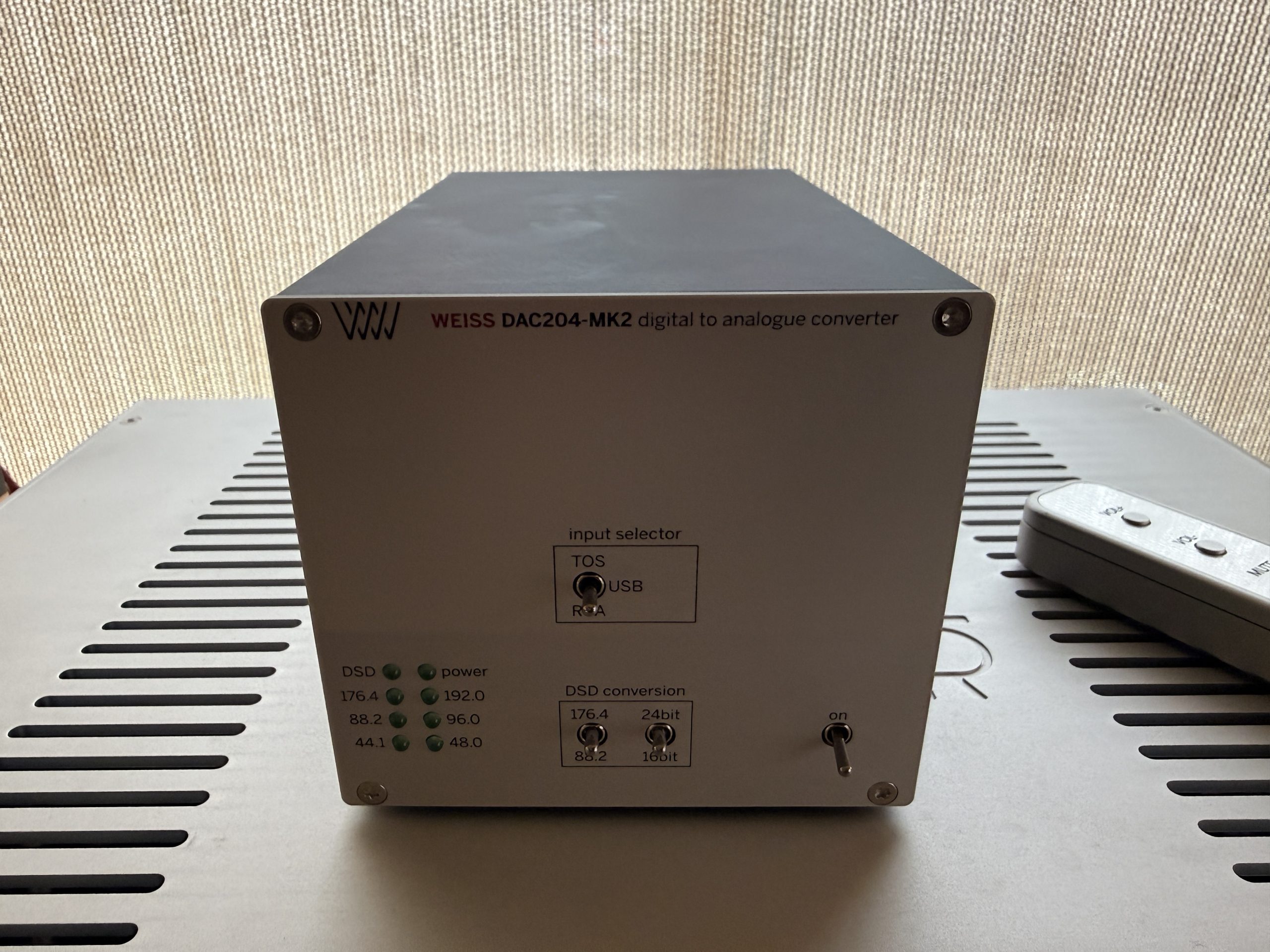
So with the SoulNote A2 MKII in I had the Matrix NT-1 steamer going full time along with the Matrix SC-1 clock, SS-1 Pro switch and SI-1 Purifier. The DAC in play was both the Weiss DAC 204 MKII and the Audio Mirror Wave Tube DAC. The Wave is magic but a very costly DAC. The Weiss is more in line with the cost of the M1 so I mainly listened with the 204 MKII from Weiss which comes in at $3999 and on occasion would slip in the Audio Mirror, which brought me one step closer to audio nirvana. The Weiss is as usual, a fantastic DAC and designed by a grammy winner.
The Audio Mirror Wave DAC is my fave DAC of all time.
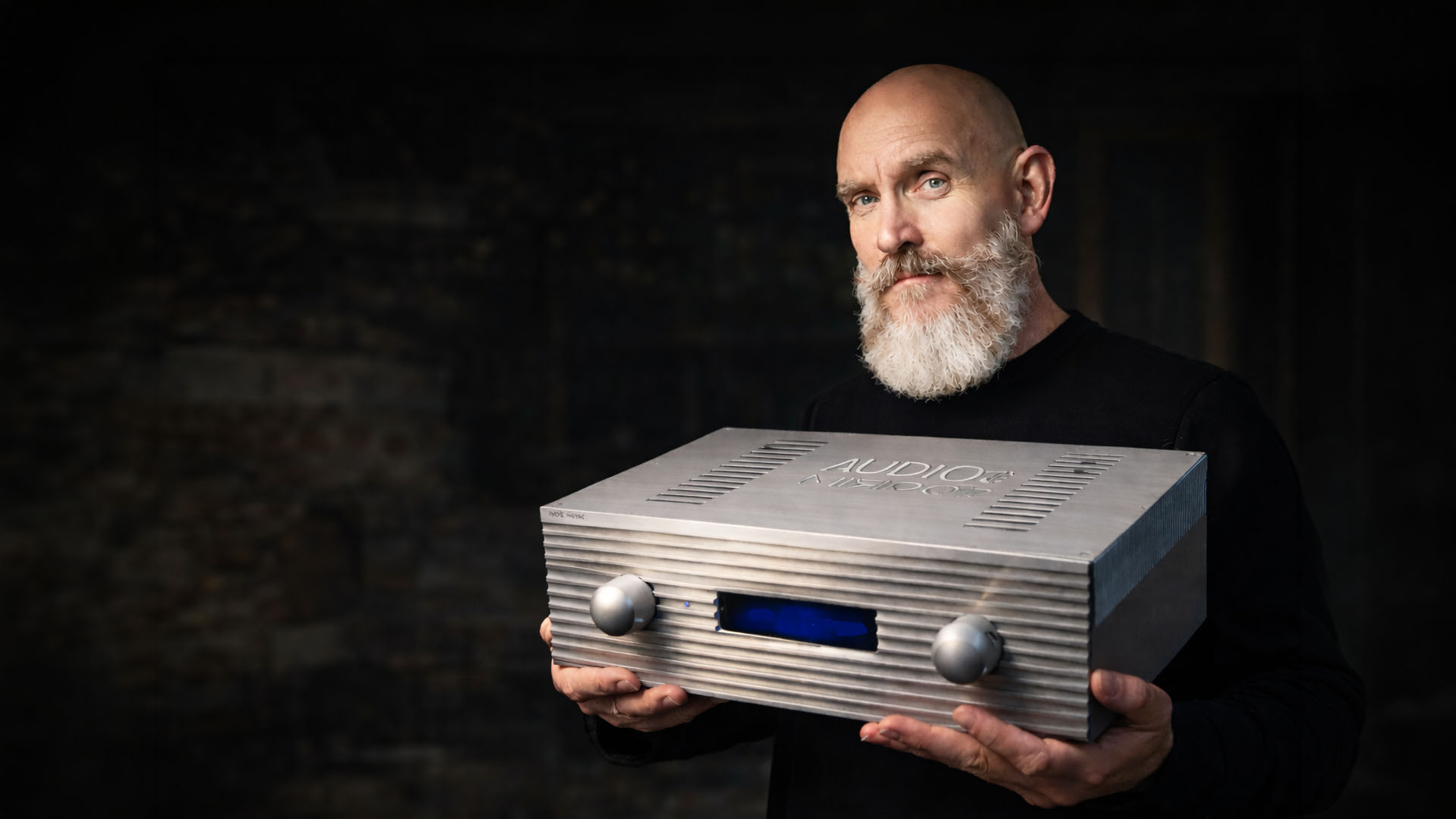
So away I went and my first impression after opening Tidal and streaming some tracks from my playlist was that these sound quite different from my T+A Talis R330 and in some ways the M1 did better while in other areas the T+A won. Right out of the gate this says a lot. It says that these M1’s that cost half of the R330 are incredible already for even posing a challenge to some $11k speakers that I have here.
Keep in mind that the M1 did take a good 20-40 hours to open up as out of the box they were a bit dry sounding. This changed over the days until I sat down to listen critically. When I did, they were fully broken in and opened up beautifully.
LISTENING
So when I settled in for many a long winters night of listening over several weeks with the M1 I made sure I tested them with all kinds of music from modern day recordings to old 70’s and 80’s music. I also tested them with 50’s music, classical, bluegrass, EDM and metal/rock. Jazz standards and vocals as well as some Miles Davis. I will say now that the M1 is not a speaker that sounds good with only certain styles of music, they can do it all easily and are quite special in the way they present music. They had me addicted to their sound the entire time they were here and they sound much bigger in my space than they look.
From my Tidal playlist which is public and can be seen HERE.

With the SoulNote amp in place I started with a good one. From the new album by Dominique Fils-Aime the song “Sea of Clouds” popped up and wow, what a sound this track has. It starts out with some wind chimes, ocean waves and all kinds of sounds in a large holographic soundstage that has width and height.
When her voice hits I hear it right down the middle between the two speakers and her voice is floating right between them with warmth and some nice body here as this track has it. The voice is not projecting out really but I hear everything here as there is a nice transparency going on but not of the lean variety, there is body here but “clear body”, that is how I would describe what I hear. The M1’s allow me to hear the details while still providing a smoothness to the sound. The SoulNote A2 MKII has a sound that lights up the top end ever so slightly and this allows the Be tweeter here to open up and again, sound airy and delicate without hardness. There is none of that here with the M1 so nothing sterile, nothing lean, etc. These have a gorgeously balanced sound that brings forth an amazing open soundstage with layers and texture.
The depth of the stage is also nice but overall very clean yet smooth, open yet not quite analytical. Musical but not bloated. The T+A R330 sounds somewhat richer in the mids, as her voice is a bit more realistic with the Talis. Still, the M1 creates this track with some magic of its own that is very addictive and hard to describe. It’s good man. Really.
When I switched to the Woo Audio tube integrated amp OMG…I was in heaven here. The sounds floated more through the space between the speakers with this track and I felt more connected … more interested now and marveled at the organic humanity that hit the sound. A shade darker than the SoulNote so there was a bit of warmth now as well. At low to mid volume this was a magical setup indeed.
Even so the SoulNote was more airy, powerful and open so I enjoyed both presentations. Going to the Dazzle brought a smoother sound still with a slightly darker midrange but more all out OOMPH. Sounded wonderful and musical with more dynamic heft but overall the SoulNote did it for me allowing the M1 to shine to their best ability.
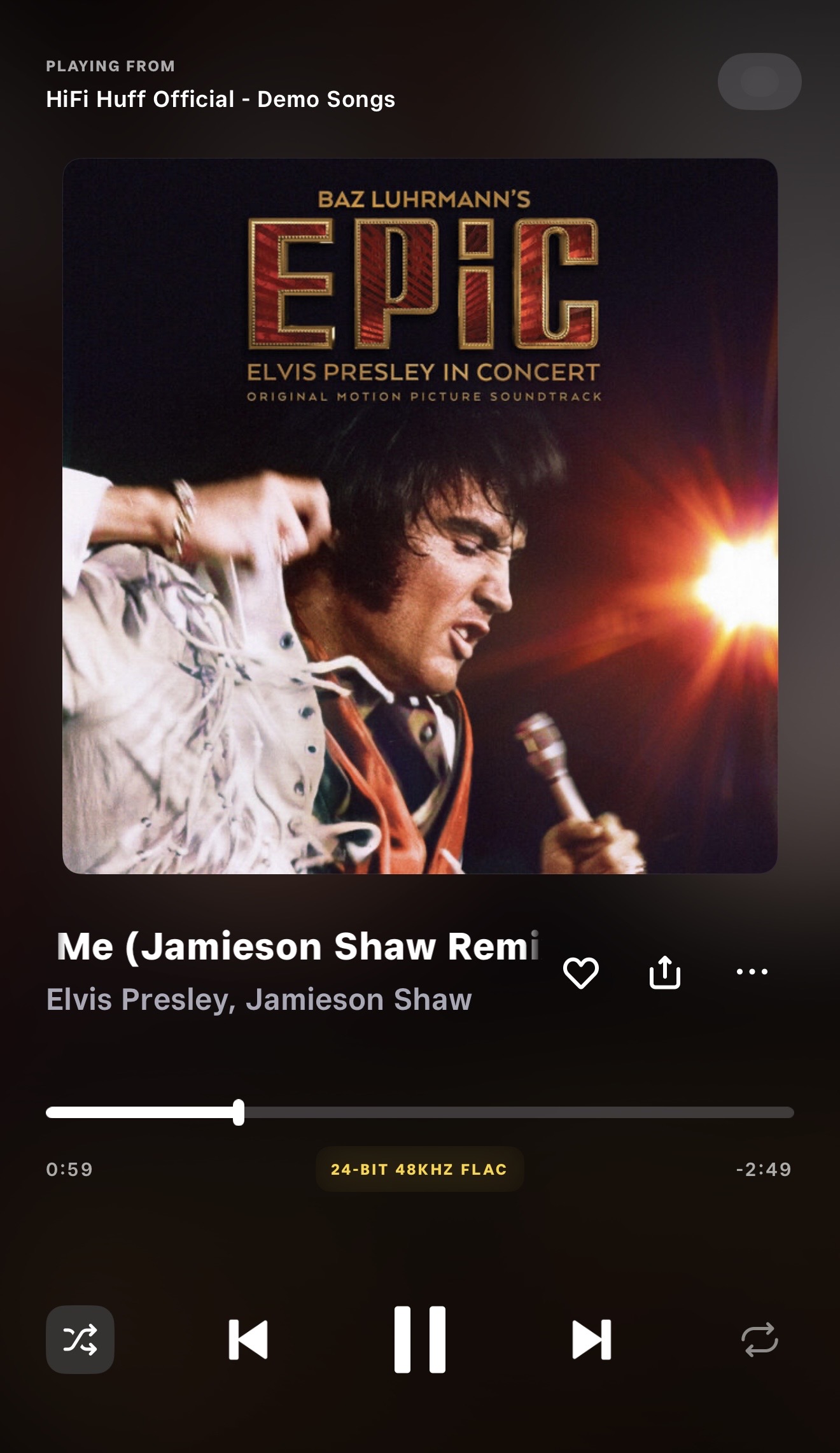
Going to some new Elvis I pulled up the new EPIC live album with the Dazzle amp this time. The track “Love Me” has been remixed and this version brings a modern day take with some ethereal like spatial elements with screams, haunting backup vocals and the main vocal is literally floating down the middle of the room as drum beats start to swell. I turned it up loud as these M1’s can play loud without stress or struggle.
With the screams projecting out up top into the air above the speakers the music continues to swell and get larger. The clean midrange is on point here as it paints that picture with pretty sweet imaging as everything is laid out in front of me as I sit in my seat. This allows me to hear how this track was mixed and I am hearing it how it was meant to be heard with the M1. The effortless power drive of the Dazzle impressed me here as there was seemingly no limit as to how loud I could go. The louder I went the bigger the sound, without hardness at all. The sound stayed refined even when played loud and I was jamming this entire album throughout the day as it sounded so good. This is where the Dazzle did well with the M1.
Again, the M1 was blurring the lines between itself and more pricey speakers. They had the refinement I normally hear in those $10k and up boxes. Super impressed and each day I grew more fond of the M1.

I have heard this track from Yosi Horikawa many times but this time “Fluid” was a treat for the senses. The M1 has a way of easily dissecting a recording yet again, it is doing it here with humanity as there is nothing really analytical here but instead a smooth kind of vibe. Each instrument is portrayed in its own micro space within the soundstage, separated masterfully. Bass is solid here but again, that midrange stays pretty open and clean yet just one half or one shade darker than the Talis R330 in this area.
This track flows with a beat and rhythm that had me moving in my seat. There was a great depth to the sound of the M1 as well with layers sounding beautiful. I started to appreciate the midrange of the M1 as it was bringing some extra impressive imaging to the stage as well. I will say the sound was less thick with the M1 vs the Talis but very open. An audio treat indeed.

I put on a track with some electronic backbone and one that is recorded very well. In some systems this track can sound very 3D with the way some of it was mixed. It also has some deep bass and this track loves a speaker that can reveal the details and the bass both. The M1’s did this track justice and brought forth a treat for the ears and senses with the way this track can do 3D with the synths at times. The kind of thing that make you sit up and say “whoa”!
Again, the twice the price Talis R330 did this track with a bit more gusto, impact and even more energy up top but the M1 were not far behind, they sounded just a little more subdued overall but supremely refined. The M1 brought forth a big wide stage and imaging was equal vs the T+A here. Again, wide open stage, clean in the mids if not a touch dark vs the slightly more lit up T+A. I listened to this track with both speakers and loved the M1 for what it was doing with how it arranged the layers of the music. I loved the T+A for the impact and “juice” it had during the swells and the German boxes also seemed to be more about precision. The M1 was more about being smooth and musical while still exposing the musical details just in a different way vs the slightly more resolute T+A. Phew, it was fun and enlightening listening to both side by side.
All in all the M1 was showing me it was a serious contender to much more expensive speakers. The M1 truly sound gorgeous in the right setup. Keep in mind I was mainly using a $4k DAC (Weiss DAC 204 MKII) and a super streaming source in the Matrix NT-1 and SC-1 ($10k). I also use good cables and power conditioning which all help a system be all it can be, really. When set up with the SoulNote or Dazzle it was always a memorable listening session with the Starke Halo M1.
AMPS and POWER
As I tested the M1 over the weeks they were here I did enjoy them with other amps. The SoulNote A2MKII is a perfect mate to these if you value air, detail and a wide open stage. This amplifier is amazing in this regard and make magic with the T+A as well. The Kinki Studios Dazzle from Vinshine Audio has more power and drive but the M1’s sounded a shade darker (as stated) with the Dazzle and this for me made the top end smoother as well. While the M1 sounded gorgeous with the Dazzle the SoulNote brought more “soul” to the sound with the M1.
The Western Electric 91E 300B amp brought all out magic at lower volumes and even mid volume in my 13X18 space but it did not have the juice to go loud or create a dance space in my room. It was beautiful with old Jazz and vocals though and for those who like too “see into the music”. The new Woo Audio was “OMG GOOD” and really immersed me deeply into the music in a way I rarely hear but this amp sits in the exotic lane so it should be doing this. It had more warmth/inner detail retrieval and glow vs the 91E. Again, the 300B amps were limited in the volume they could produce with the M1 due to the low power output but they did sound pure, sweet and magical with the M1. In a small room or low to mid volume…would be so so good.
All in all though to experience all kinds of music from jazz to classical to metal I feel the M1’s prefer Class A/B power. The SoulNote is not a crazy powerful amp but has more finesse than my powerhouse Dazzle when it comes to the “house sound” of the amp. Each amp brings its own sound, and no, they do not all sound the same. Synergy is real and when you hit the synergy jackpot it really pays off. You know you hit it when you can’t stop listening to your system and do not tire of it. This happened with the M1 for me when using the SN A2 MKII integrated as it threw a balanced large stage that was open and holographic yet sweet and never offensive.
While the SoulNote sounded best to me with the M1 and Talis R330, the Dazzle sounds best to me with the Fleetwood Helios and Starke Beta 5. The Western Electric sounds best with some Emotiva LB12 speakers I have here. Synergy.
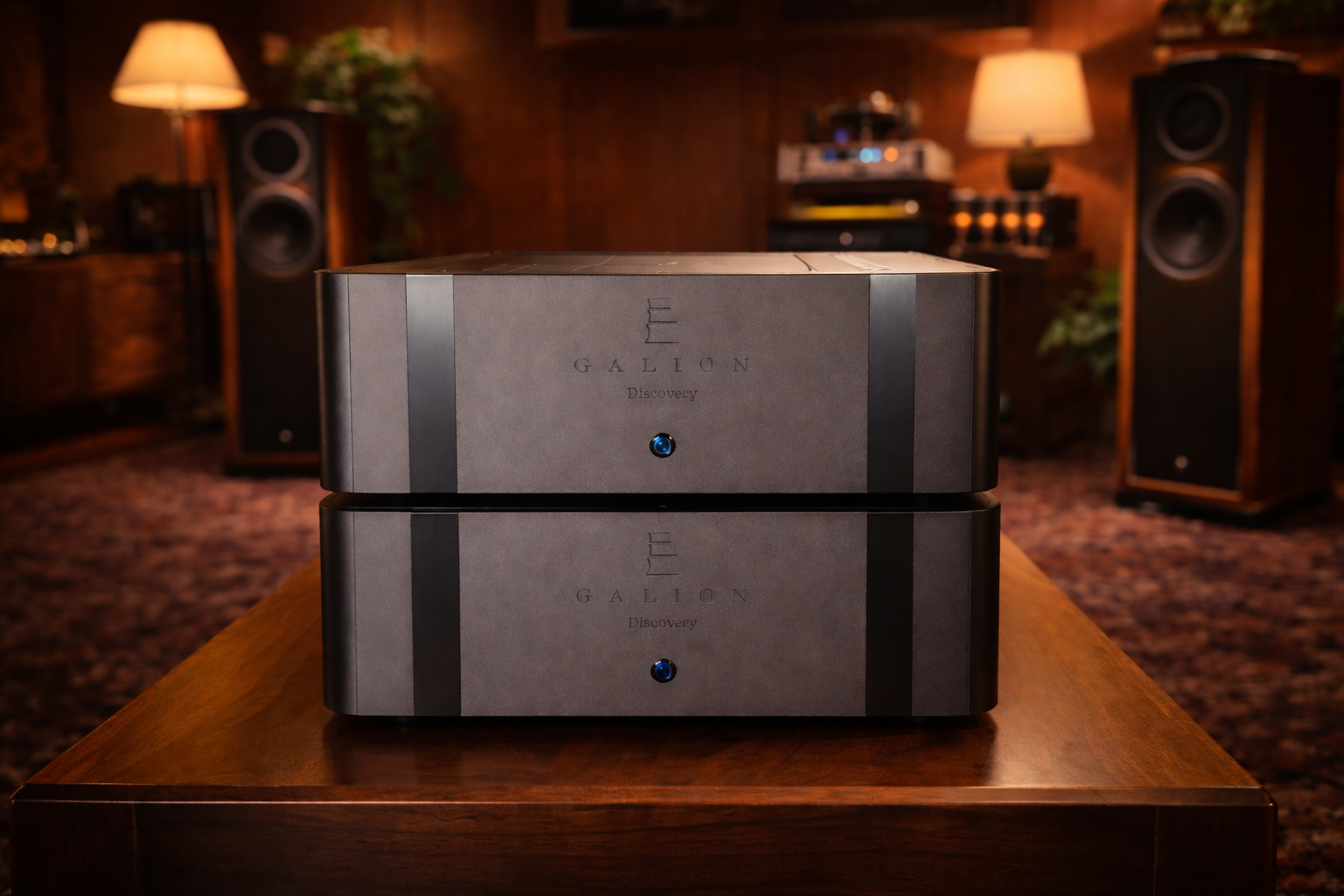
One thing I also tested was hooking up the Galion Discovery mono amps (above) to the M1 with the Galion Nave preamp, This was an awesome setup as well because it brought a sense of power (80 watt Class A/B mono amps) and a sweet sound that was warmer than the SoulNote and the dynamics were fantastic. This was a powerhouse combo and the Galion amps are super good for lower cash. Pay less, get more kind of things. Sort of like the M1 itself and yes, these were also a fantastic mate to the M1.
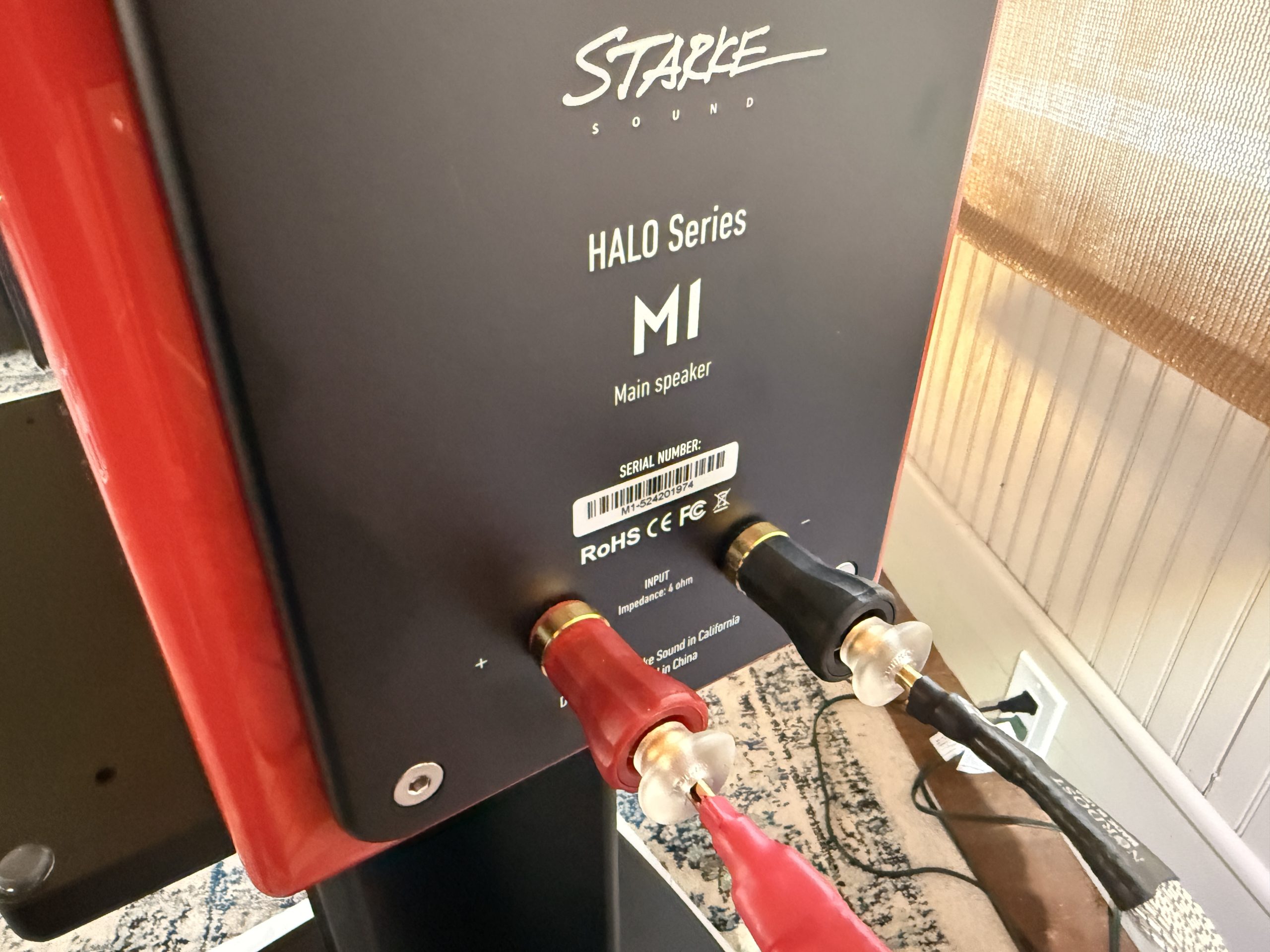
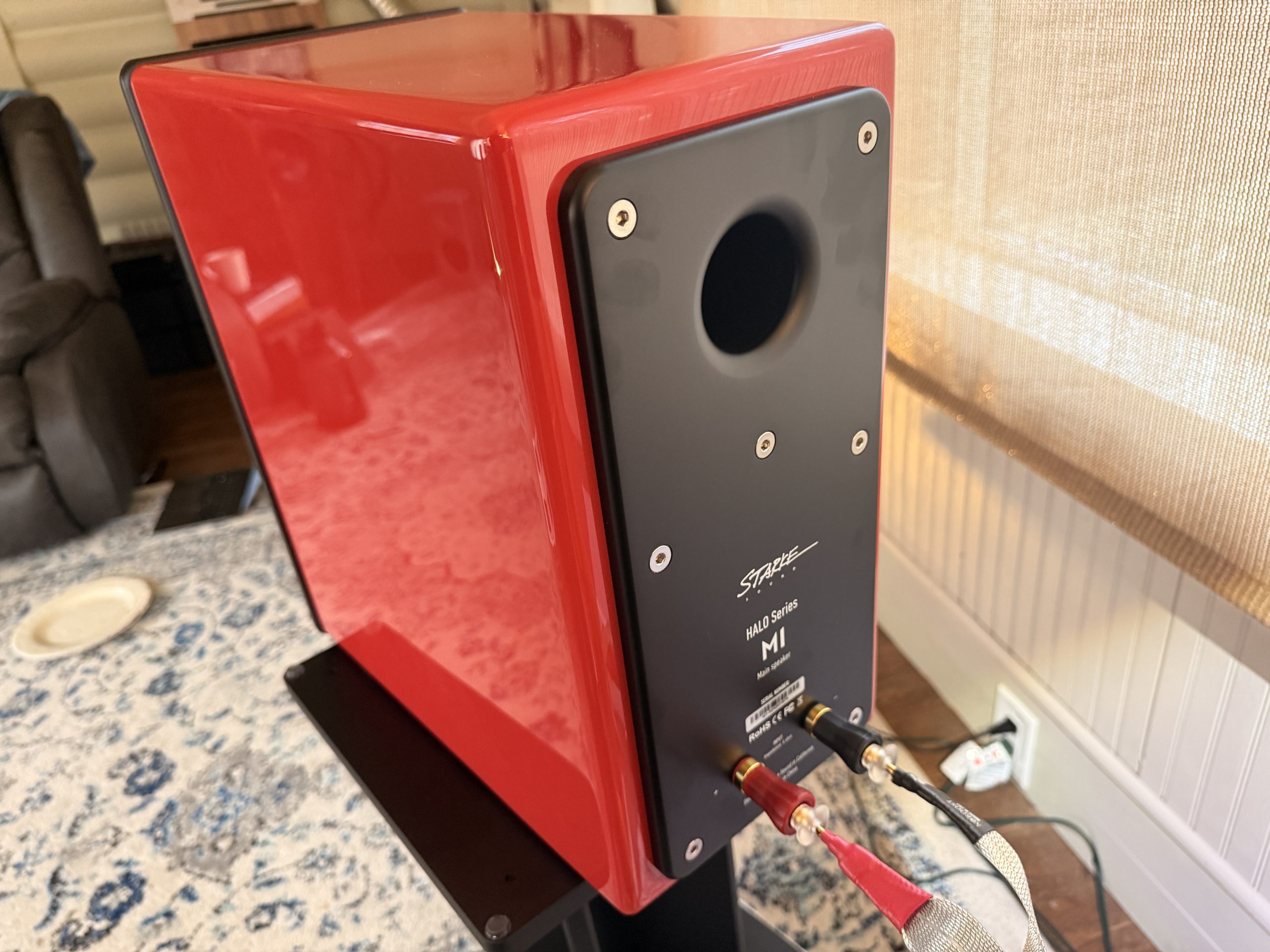
The M1 have a rear port and very high quality speaker binding posts
Conclusion
After many weeks with the Halo M1 I grew fond of the sound that they crafted in my listening space. I was in awe of the low deep bass performance and the way the soundstage was superbly open and holographic. Spatial ambient music was amazing with the M1, and matched my T+A in this regard. While the treble was airy, it was not harsh or hard but rather smoother than most Be tweeters I have come across. This was and is good IMO as these are speakers that are easy to listen to yet still provide many of the benefits of speakers that cost much more. Yea, these could cost more, maybe $7500. At $5600 they are bringing a bit more to the experience than some of the others I have heard in this price range so they do punch above their price class for sure.
I love my T+A R330 for their low bass, punch, solidity, resolution and pretty much full range performance. The M1 do things just as well with low bass but quite differently. The T+A have a slightly plump but tight midrange with body and impact where the M1 are not as bass present in the midrange so they are not really a “punchy” speaker so to speak. This sets the voices back a bit more in line with the speakers or even behind them at times with the M1 and out into the room more with the R330.
So the midrange of the M1 is not as meaty, beefy or impactful as the double the price T+A yet the very low bass, say down in to the 30’s is a bit tighter and more impactful with the M1 vs the R330. When low bass hits with the M1 it really hits. The T+A does as well but the M1 just hits different, cleaner and even tighter still. The T+A sound a bit more resolute as well in the top registers but again, they are double the price and my guess is some would prefer the M1 vibe vs the Talis vibe. Personal preference.
What I am getting at is that it was closer than it should have been vs the T+A and mostly just differences vs being “better” when it comes to sound. When I placed in my $5k Fleetwood Helios it was a completely different presentation yet again. The Helios is unique in sound, more of a source point speaker really. It excels in details and how it presents said details. The Helios doesn’t do very low bass but has a super pure mid and top end that sets it apart. I would guess more would prefer the M1 for its more complete sound top to bottom. The audio geeks like me will appreciate the Helios for how different it is, yet super immersive and holographic while keeping some warmth. Just differences so we must make our choices as to how we like our sound served up.
Speakers are such a personal kind of thing. I go for looks and style, build and parts quality and sound. The M1 has a cool design and comes in three colors. The Red, Black or White. They come with a solid and thick magnetic grille as well, which are nicer than many I get with super high end speakers. The parts quality here looks solid as does the crossover design. Sound is refined and of the higher end variety but not thick or punchy.
The overall sound of the M1 is open, airy, holographic and smooth at the same time yet with a somewhat smooth treble that is extended and open but in no way harsh or overcooked. It’s a true flagship in regards to style, build and sound but costs much less than the speakers it is taking on, or challenging. Yes, $5600 is costly to many but in the grand scheme of things these M1 are priced very right as they will allow more people to experience a higher level of sound for less.
There were nights I was listening to the M1 and was flabbergasted at the sound, refinement and immersion they delivered. Goosebumps on many nights and this is the kind of sound I am used to hearing in speakers that cost more.
Starke Sound blew me away with their $500 Beta 5 as it performed to a level I have not heard a $500 speaker perform to as of yet. The Halo M1 for sure is a much bigger, more refined, open, smooth and more musical speaker than that little $500 speaker but it should be as it costs $5100 more. In this case we get much more for the money spent with the Halo M1. I will say that while I do slightly prefer my T+A R330 speakers to the M1 (I like big body to the midrange for big EDM or Rock music) they cost double… yet they do not bring double the sound quality of the M1. It’s called “Diminishing Returns” were we pay thousands more for small incremental improvements or “changes”. My wife likes the sound of the M1 as well, saying “these are so easy to listen to and sound so big”. This is true as they scale up nicely in my space, sounding like a larger speaker.
If buying today I would take a serious look at the M1 as they deliver a cool vibe while being musical as well, so yea…the emotion can hit with the M1 and they are well worth the asking price. I just hope they do not raise the price once the word gets out about how good these are.
Fantastic speakers that I enjoyed more than the usual $5k box. The Halo M1 are stunning flagship speakers that compete with some big guns but are accessible to more of us who want to build an awesome system but feel let down by the crazy prices in this hobby. The M1’s are the cure for this. There are many speakers to choose from these days in the $5-$6k price range but believe me when I say that the smaller more unknown brands are making some of the finest audio gear I have come across and usually at better prices. I love unique and high value HiFi and Starke Sound is a great example of both.
There is a reason I mainly compared the M1 to an $11k speaker as this is what they wanted to compete with. The M1 may not be giant killers but they can run with and hang with some giants indeed. If you have a $5k budget I implore you to take a serous look at the M1 as they may bring you more for less.
Feed the M1 well with nice clean power along with a great source as they deserve it. Remember the mid bass is not fat or punchy but of the clean yet ever so slightly dark variety which allows for the big open holographic stage it throws. Also these will not fatigue you…ever. These are 100% bonafide high end speakers for less cash outlay and for that I give the Starke Sound Halo M1 my highest recommendation.
You can order or read more on the Starke Sound Halo M1 HERE.

Be the first to comment