

The SoulNote A2 & D2 MKII are GORGEOUS! HiFi Review.
By Steve Huff
I love a good integrated amp and prefer them to separates 98% of the time as a really good integrated amp can sound just as good as any separate preamp and amp configuration. In fact, I have owned several preamps and power amps (and still have a couple) but for me the good old fashioned analog integrated amp reigns supreme. It merges preamp and amp in one box saving costs on cables and separate boxes.
The Video Review off the SoulNote A2 and D2 MKII
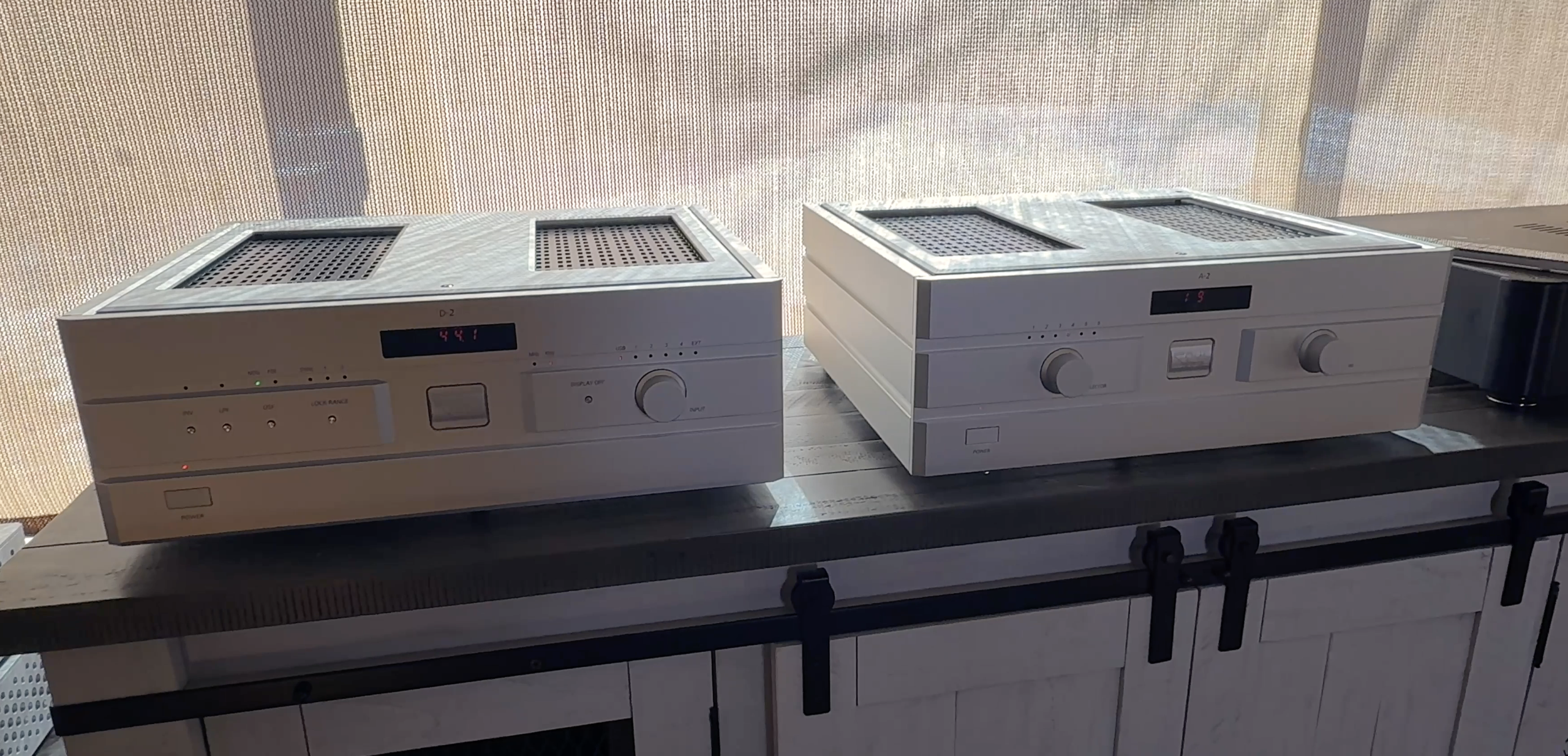
The SoulNote A2 MKII integrated amplifier. What do you think of the style and design?
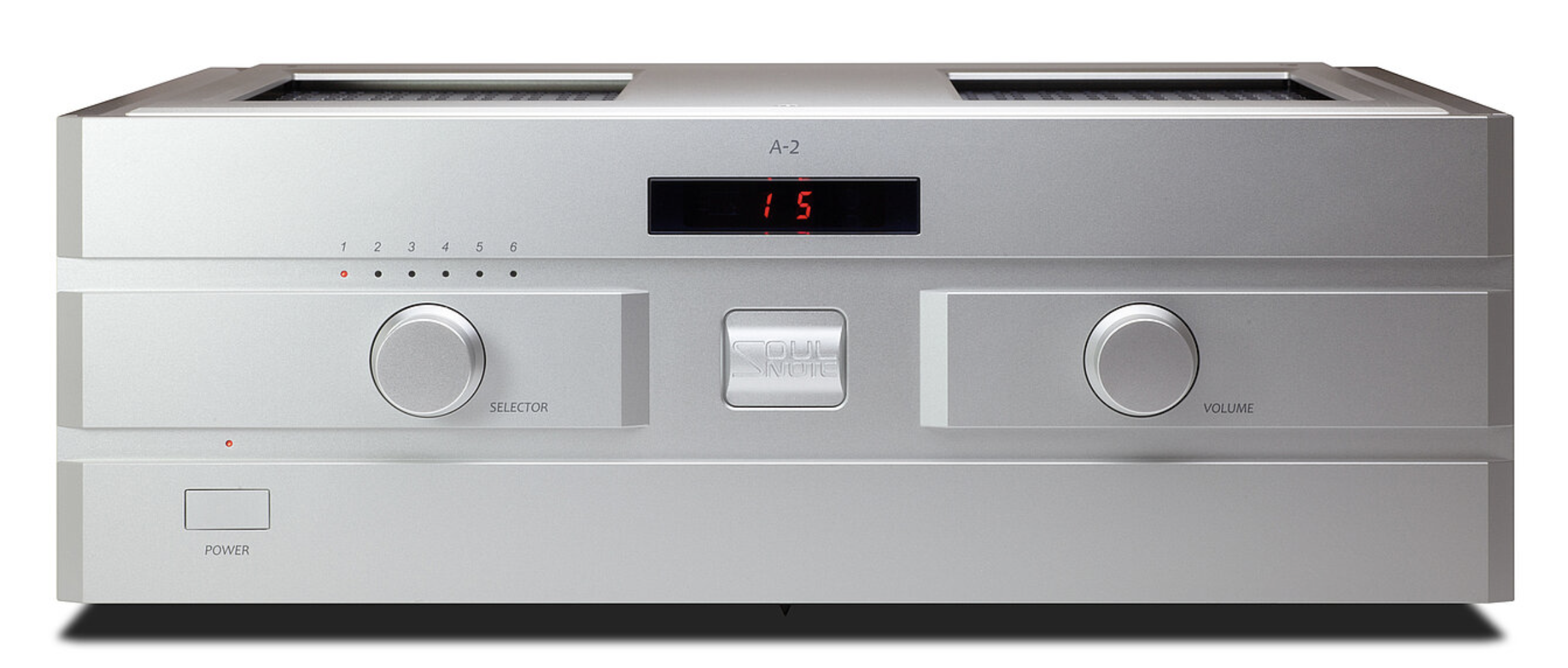
I will say that I became quite fond of these SoulNote pieces for the unique way they are designed as well as how they sound, which is quite different from my reference amp (The Dazzle) and DAC (Wave) duo. I mean, quite a bit different. I will get to these differences within this review but will say now that the A2 and D2 MKII make for one hell of a pairing and while they sit in the high end of audio in regards to pricing they may be just what some have been seeking. Synergy and Beauty in one set of boxes that deliver quite the high end level of sound.
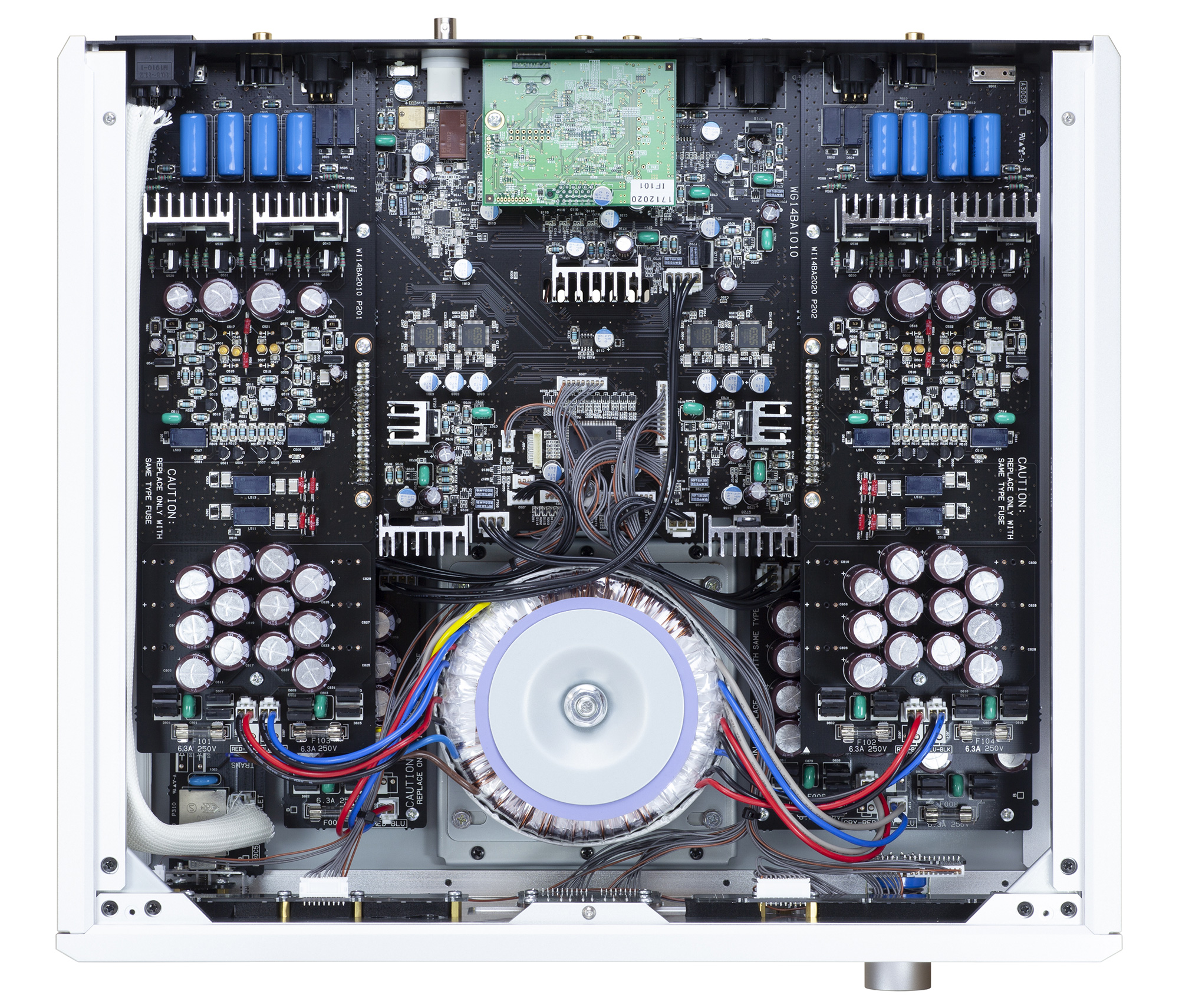
Inside of the A2 MKII Integrated Amplifier
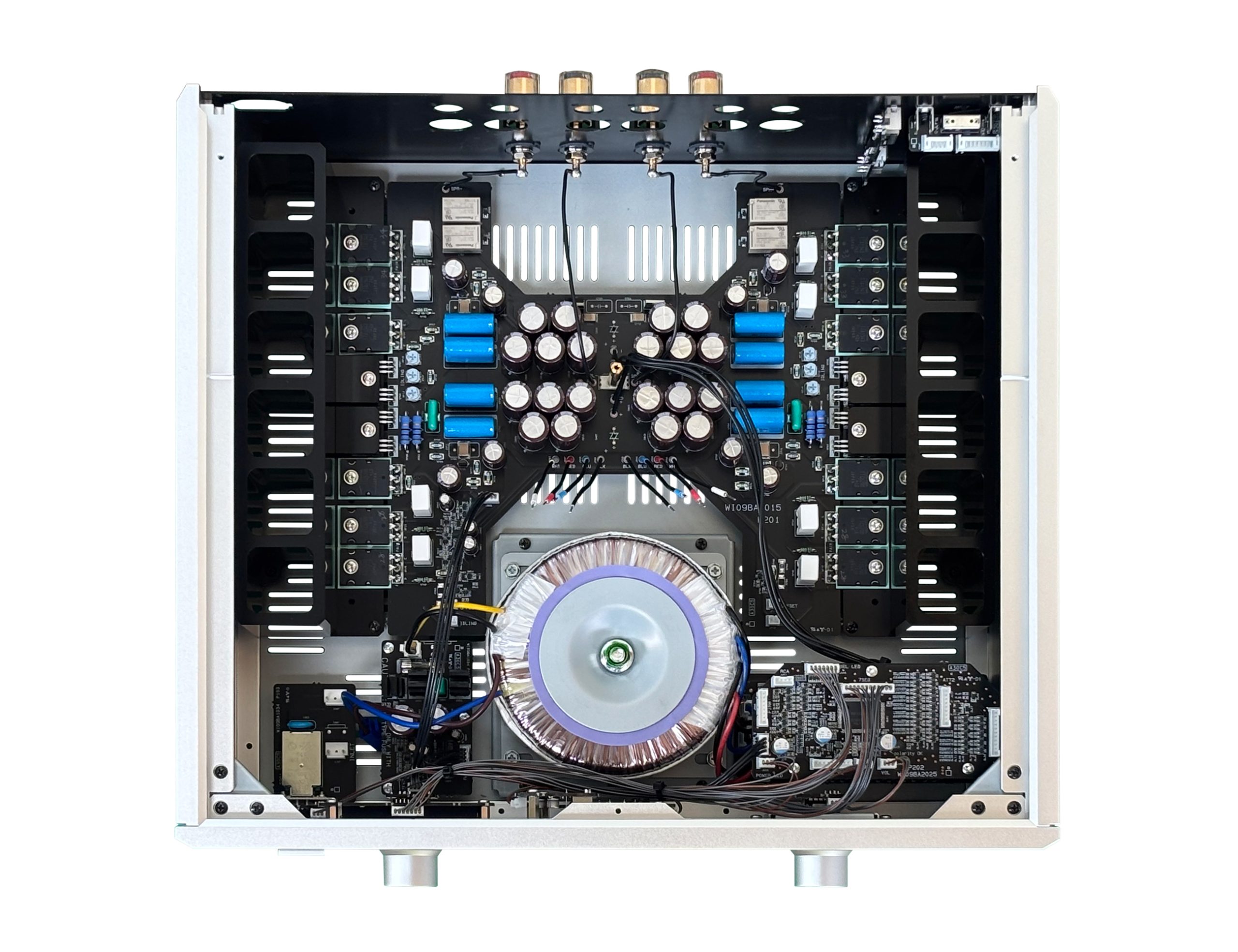
Before we get rolling I must thank Unveiled Audio for setting up this review for me. They are a site sponsor here and fully vetted by me (I bought some big money gear in 2025 from them and it was a flawless experience). Unveiled is a high end audio dealer who also carries SoulNote. Check them out HERE.
The A2 MKII – Made In Japan Integrated Amp.
On paper this Japanese made integrated amp sounds like most integrated amps when it cones to power output. While my Dazzle goes big in power (560 WPC into 4 ohms, 300 into 8 ohms) the A2 MKII keeps it to 100 watts of power per channel into 8 ohms or 200 wpm into 4 ohms. Still plenty of power to drive almost any speaker out there. This is also a non negative feedback design, which is good. In my years of experience with audio amplifiers I have always enjoyed those most that use a non negative feedback design as it does improve the sound quality overall. At least for these ears.
I discovered this decades ago with a set of Audio Electronics Supply (Cary Audio) SIX PAC mono amps. They had a switch do you could hear for yourself what negative feedback does and it wasn’t good for the sound of those amps. They sounded so good in the “no negative feedback” setting. Dennis Had designed those amps with this switch only to show how negative feedback changed the sound for the worse.
These amps here, the Six Pacs, showed me that negative feedback added was not good for sound.
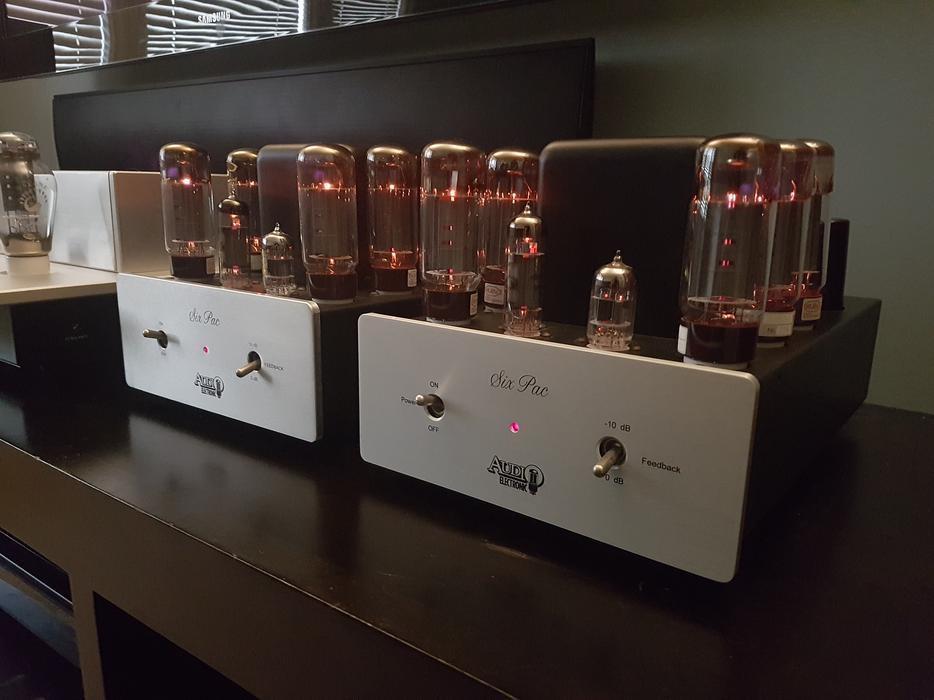
In fact, this is what AI tells me Negative Feedback does to an amplifier and I have to say that I agree:
“Negative Feeback (NFB) in amplifiers – where a portion of the output signal is inverted and fed back to the input – often “hurts” of changes the sound by making I feel less dynamic, stiffer and more sterile. It reduces gain and lowers distortion, which can result in a “Hi-Fi” sound, losing the aggressive, organic or “tuber” sound many prefer”
The SoulNote A2 MKII starts off right for me by not using negative feedback and as I discovered more and more about this amplifier I found it to be exceptional in so many ways when it comes to the design itself, which is quite interesting.
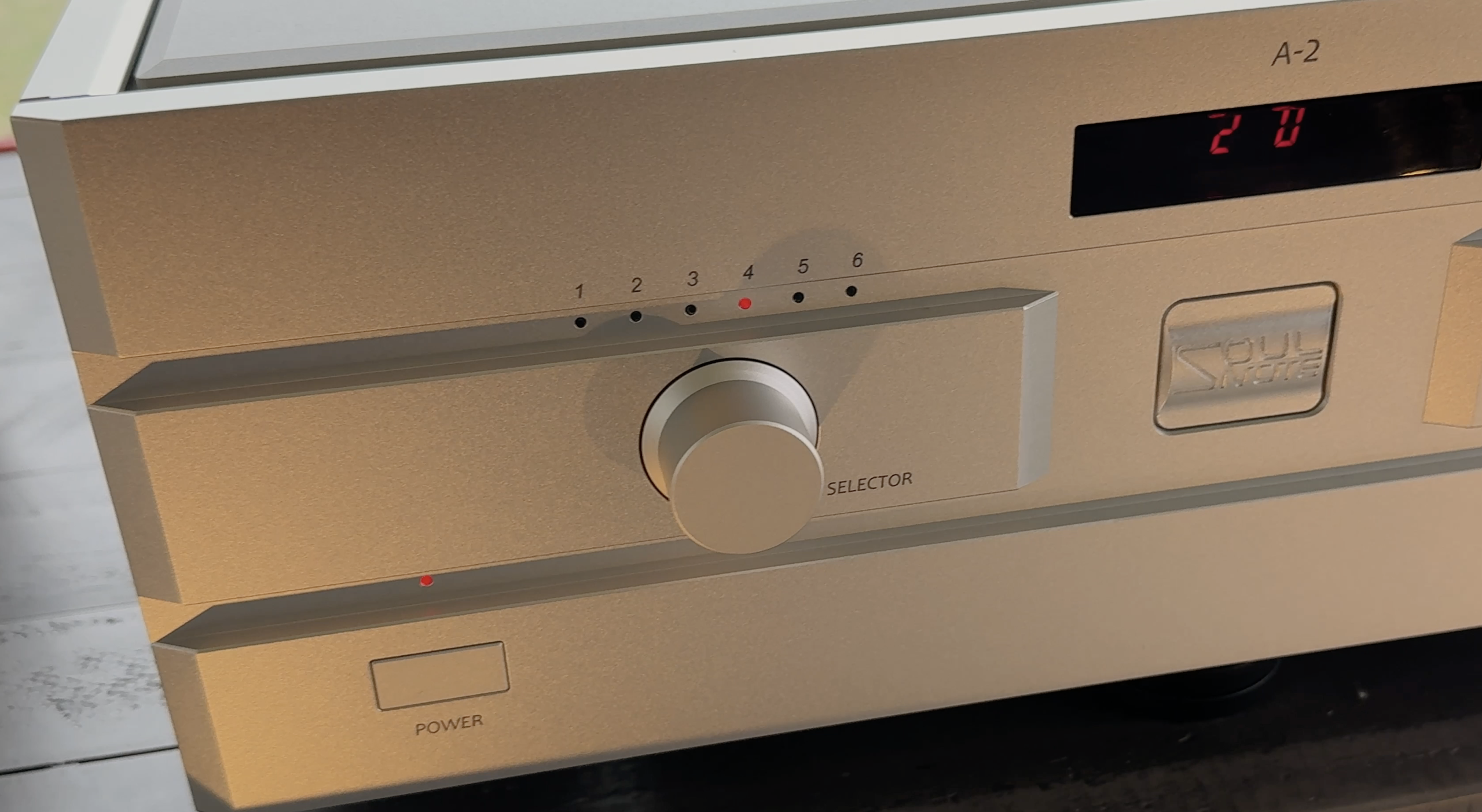
How so? Well when you open the box for the A2MKII you will see a booklet that describes how this amplifier was designed. The thought process behind everything… and it’s truly like no other brand or amplifier I have seen in how it was designed.
One example is that on the top of the A2 and D2 MKII (the D2 is the DAC I will also review here) there is a metal panel that feels loose and sounds like it is ready to fall off even though it is held I place by four screws on each corner. I inspect…I see four screws holding in the top panel but when I push in on it I hear clanking and it feels a little loose as it slightly moves up and down! It will rattle if you push it and I thought I had a defect when I pulled it out of the box. This was before I read up on it via the included booklet.
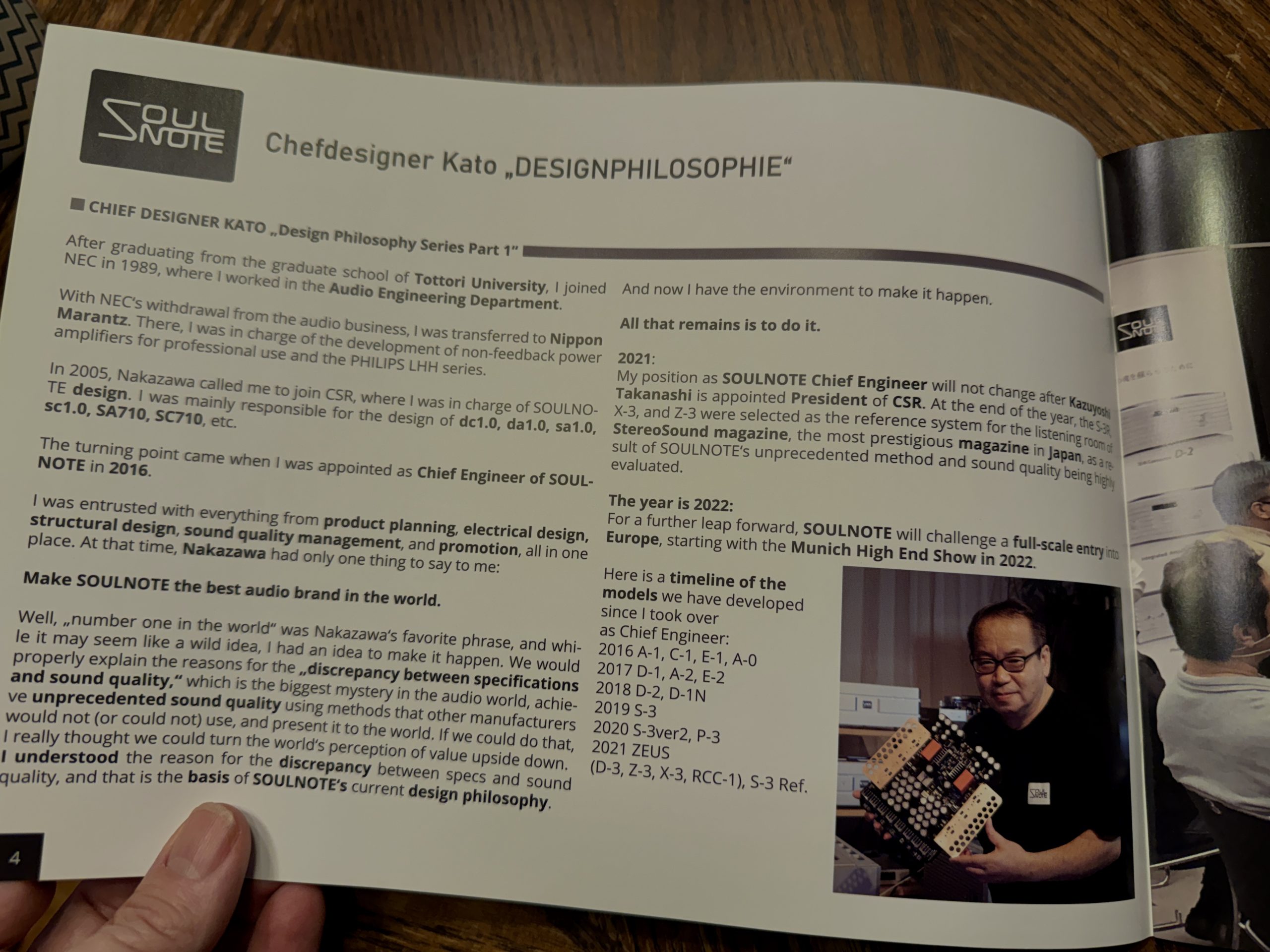
This is not a defect at all but these are designed this way all in the name of sound quality. Sounded strange to me util again, I read the booklet that describes how everything was thought of here and all of it was to max out the sound quality of the amplifier. The D2 MKII DAC is designed in the same way, with the same belief of “better” with “less”.
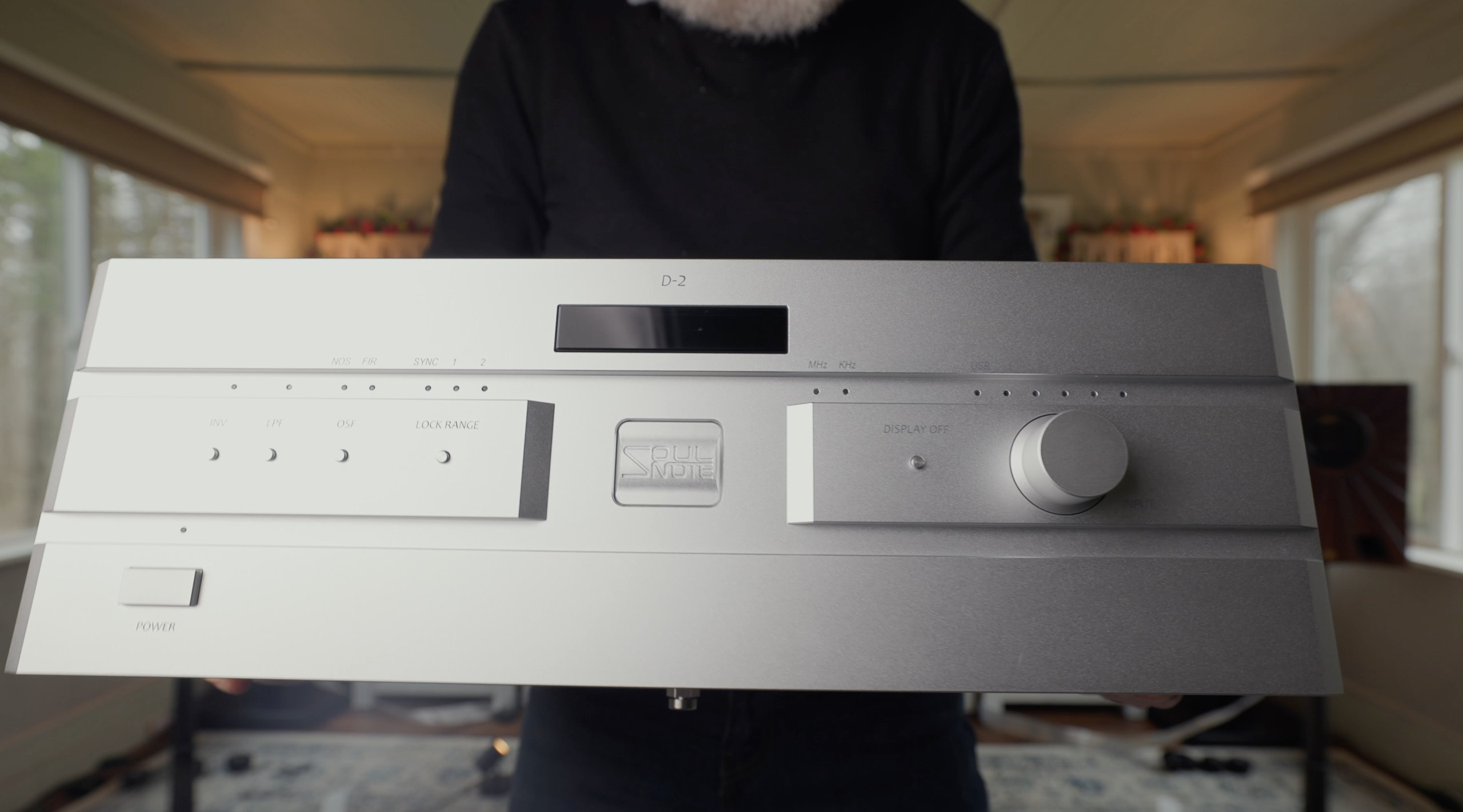
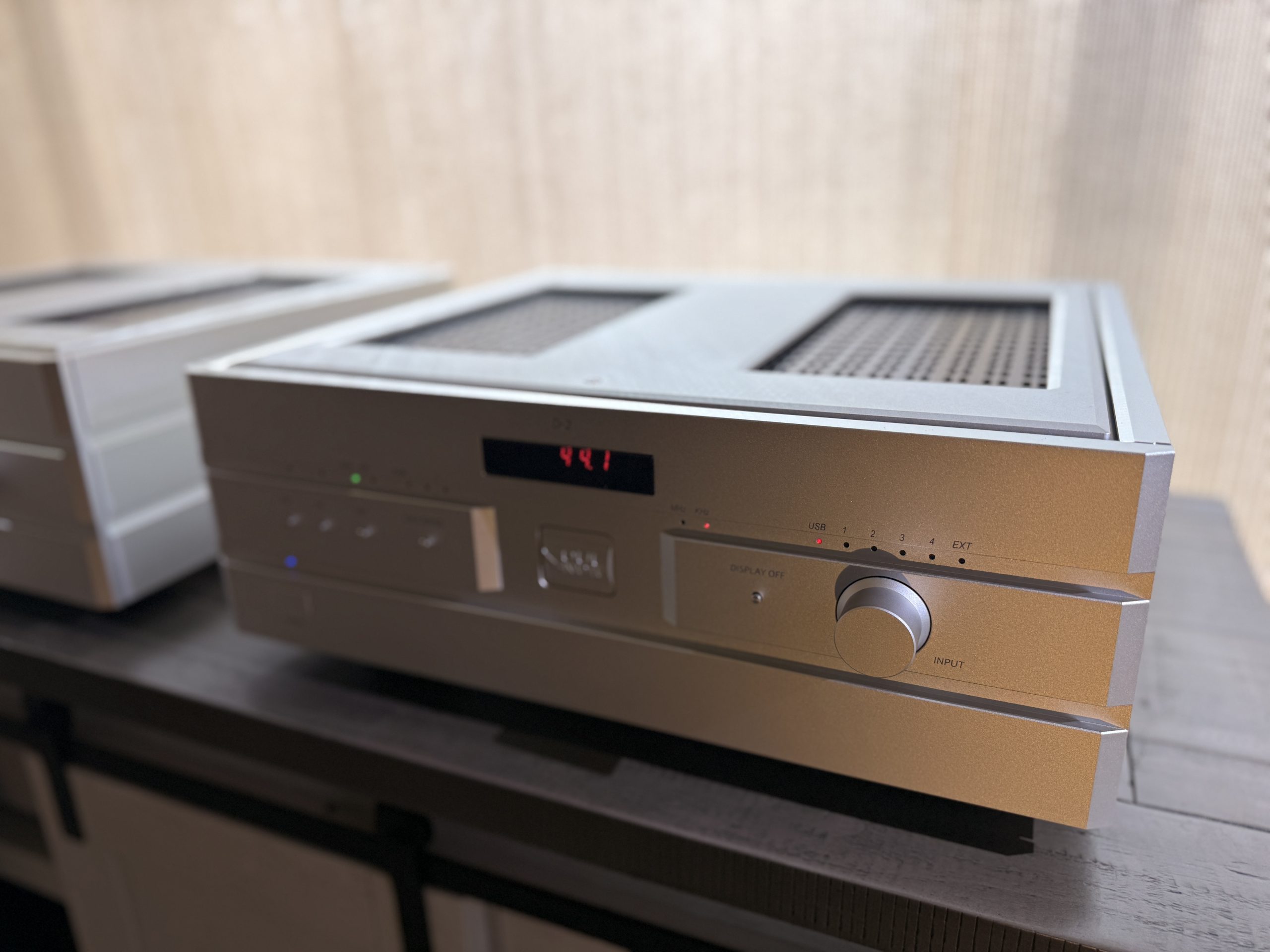
The D2 MKII DAC looking sweet
Some of the tech specs of the A2 MKII from the SoulNote Website before I get to sound impressions and comparisons.
Simple configuration featuring a fully non-NFB discrete circuit
The amplifier circuit employs a completely non-NFB design without feedback loop of any kind. Its structure is deliberately simple — essentially a power amplifier equipped only with a selector and volume control. This approach is essential to prevent any degradation of the audio signal and to preserve its absolute freshness and purity.
Parallel push-pull configuration using high-speed, high-power TO-3P transistors
The output stage employs the same parallel push-pull topology using high-speed, high-power TO-3P transistors as used in SOULNOTE’s flagship integrated amplifier A-3. The output transistors are precisely paired based on their hFE characteristics, effectively eliminating the tonal smearing that can occur in conventional parallel push-pull designs.
Ultra-powerful driver stage
The driver stage also employs the same TO-3P transistors used in the output stage. The major difference from the original design is that a large standing current is applied to the driver stage. By doing so, it instantly compensates for hFE variations in the output stage caused by current fluctuations, generating exceptionally strong driving capability. This advancement represents a true breakthrough in the circuit design.
Four-stage Darlington circuit
To fully drive the final output transistors, a four-stage Darlington configuration using high-frequency transistors is employed. The current levels in each stage are carefully optimized. This design provides ample driving capability, delivering control over any loudspeaker.
Newly developed voltage amplification stage
The voltage amplification stage has been newly developed. It has been significantly simplified, and the bias circuit has also been completely refined.
Non-impregnated large toroidal power transformer
The output voltage has been intentionally lowered. By doing so, priority is given not to maximum output at 8 Ω, but to the ability to deliver instantaneous current under low-impedance loads. This enhances perceived power and grip, resulting in far more powerfulness and grip.
Relay-switched balanced attenuator
The volume adjustment employs SOULNOTE’s original relay-based attenuator system, which switches high-precision resistors in a balanced configuration. Transparency is dramatically enhanced, allowing the soundstage to emerge with three-dimensional clarity. It also is significantly improved quality in a low volume level without concern for gang error.
The ideal construction
The input terminals, input selector, volume control, and non-feedback voltage amplification stage are all concentrated onto a single multi-layer board. This minimizes the input signal path. Factors contributing to sound quality degradation, such as vibration in connecting cables, inductance components, and the effects of radiated noise, have been eliminated without employing any shielding or filters that could negatively affect the sound. This construction was only achievable through the relay-switching balanced attenuator.
Four-layer board with 70-micron copper foil thickness
Composed of the output stage and the main power supply, the power block features an inner layer of 70-micron thick copper foil substrate inner layer plane as the power supply busbar.
The high-current loop – “rectifier capacitor → output transistor → loudspeaker plus terminals → loudspeaker minus terminals → rectifier capacitor “– is minimized. Eliminating inductance components in the high-current lines creates exceptional frequency response and stability.
Direct wiring without connectors
Connectors have been eliminated in the power supply as well as the signal lines, and cables are instead soldered directly to the boards for direct connections.
Chimney-type heat sink
The heat sink is applied chimney type that pursues a shape with high cooling efficiency and low intrinsic vibration.
Structure for highest sound quality
The entire structure is designed with sound quality as the priority. This includes the floating top cover and unsecured circuit board. Furthermore, the foot positioned directly beneath the power transformer serves to release its vibrations.
Power amplifier mode
This mode interrupts the power supply to the microcomputer and bypasses the selector and volume. This increases the S/N. XLR and RCA inputs can also be selected in this mode.
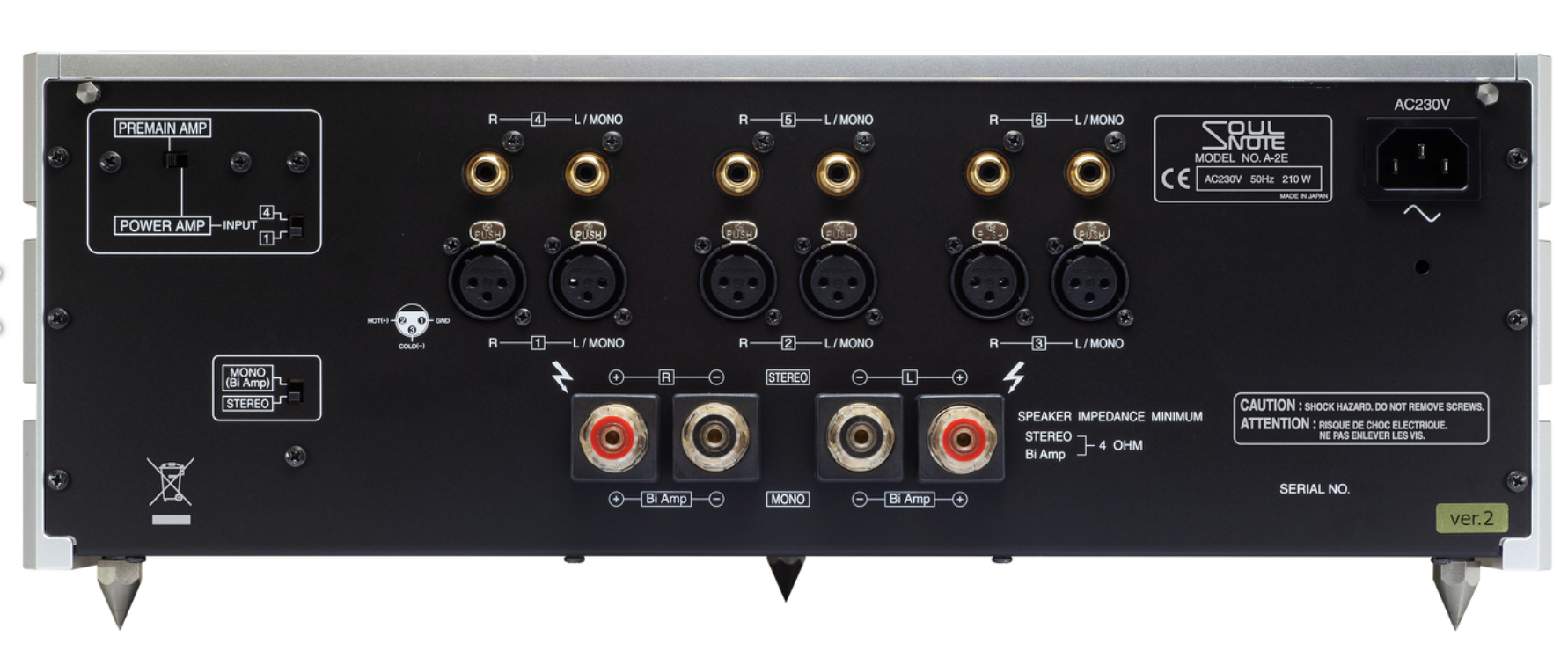
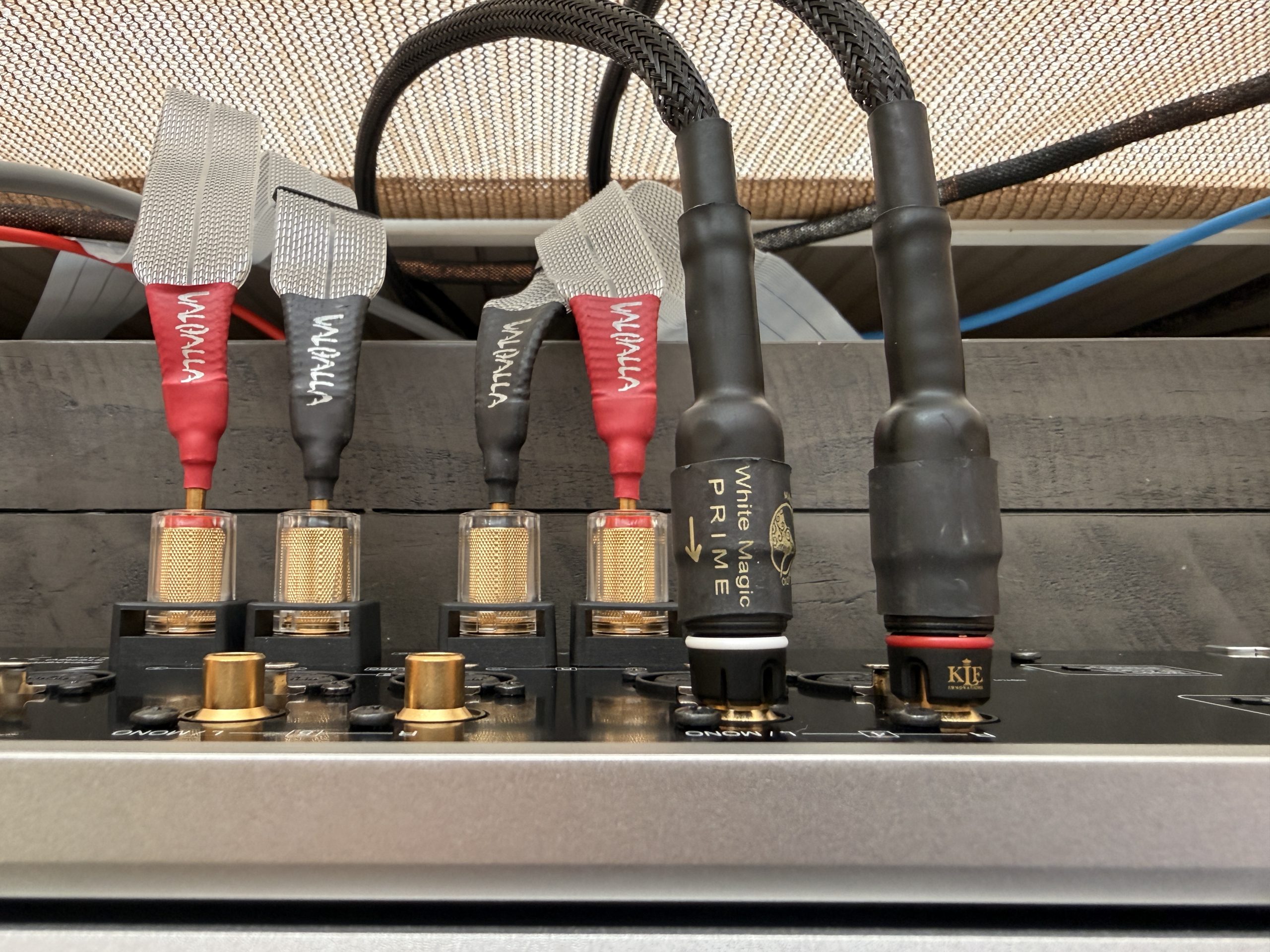
The back panel of the A2 MKII. I would have liked to have seen a thicker metal plate on the back but other than this I just fell in love with amp for how it is crafted and how it sounds.
Phew, that’s a lot of attention to detail which I have discovered is what SoulNote does. This brand came about after all when former director and engineer at Marantz decided to go out on his own and start his own brand. Mr Norinaga Nakazawa created SoulNote in 2004 but for me it was just in the last few years that I heard of the brand. I love the name as well as it just sounds “feel good” as in the sound will sooth the soul.
As for the sound quality, well this amp sounds so much different from my Dazzle.
When I placed in the A2 MKII I started with my main DAC (Audio Mirror Wave) so I could hear the change in sound from the amp only. I mean, this is all I changed at first and later added the SoulNote D2 MKII DAC as well. Out of the gate with my Audio Mirror Wave DAC the sound was instantly transformed.
VS the $8500 China made Vinshine/Kinki Dazzle
Build? The Dazzle wins here in the traditional sense of the word. Meaning the Dazzle is heavier, sturdier, and has thicker panels on the sides, top and back. The back panel of the Dazzle feels as solid as a steel wall so when you push in your cables you will not feel any flex at all. Just solidity. In many ways the Dazzle is made in an entirely different, more old school way. It’s solid, tank like and heavy.
The SoulNote A2 MKII is lighter in weight but still hefty and with a less “solid’ approach to the build when it comes to thickness of metal and overall solidity. With that said, SoulNote builds them differently than others as they say this improves the sound.
When it comes to sound, the Dazzle has a powerful sound, effortless. Somewhat smooth up top, some warmth and body in the mids and thunderous low bass. There is a nice refinement here as well but overall the sound is solid, big, effortless and with big body.
The SoulNote brought forth quite a change in sound, ultimately for the better but it really depends on your speakers and setup as synergy is always important. The A2 MKII had a sound that was immediately more open and alive. There was more sparkle in the treble and the midrange had some warmth and body but less than the Dazzle. The low bass on the SoulNote is also quite excellent and not far behind the bombastic levels of the Dazzle. Both amps produce tight clean bass so there is no slop here just as there is nothing aggressive about either amp. Both are refined but the SoulNote is more airy a touch more holographic and 3D but there is less density and body in the midrange, though not by much.
I did feel the SoulNote sounded best with most speakers I have here but build solidity goes to the Dazzle for sure. Design? That depends on you. I like both but prefer the SoulNote design and looks and with the D2 MKII DAC this is a super nice setup in looks and sound.
All in all the A2 MKII was just beautiful in sound and will pair well with neutral to warm speakers the best. For what this amp costs, right around $10k, the sound is indeed of the higher end variety. I would love to own both of these pieces from SN.
The SoulNote A2 MKII delivered quite the experience with the T+A Talis R330 and Fleetwood Helios Speakers. It also drove the Icon 12 with ease and grace. It delivered the best sound with the Starke Sound Halo M1 as well. Every time I placed the A2 MKII back in I heard the SoulNote sound and what a sound it is.
The D2 MKII DAC
Also sent for review was the SoulNote D2 MKII DAC and this one is a beautiful DAC indeed. After many weeks/months with the D2 MKII I can easily say that if I didn’t buy the Audio Mirror Wave DAC this would have been my choice for my reference.
One thing to note. I have never heard the first gen A2 and D2 but have heard good things about them. The MKII versions here are my first go round with SoulNote. I am happy I was finally able to experience this brand as it showed me they sit up there with the likes of Luxman, Accuphase and others for beautiful design and sound. They also sit in the same price range as Luxman and come in for less cash than Accuphase. I have had the pleasure of hearing all of these brands and enjoyed them all. They each bring their own style and flavor of sound.
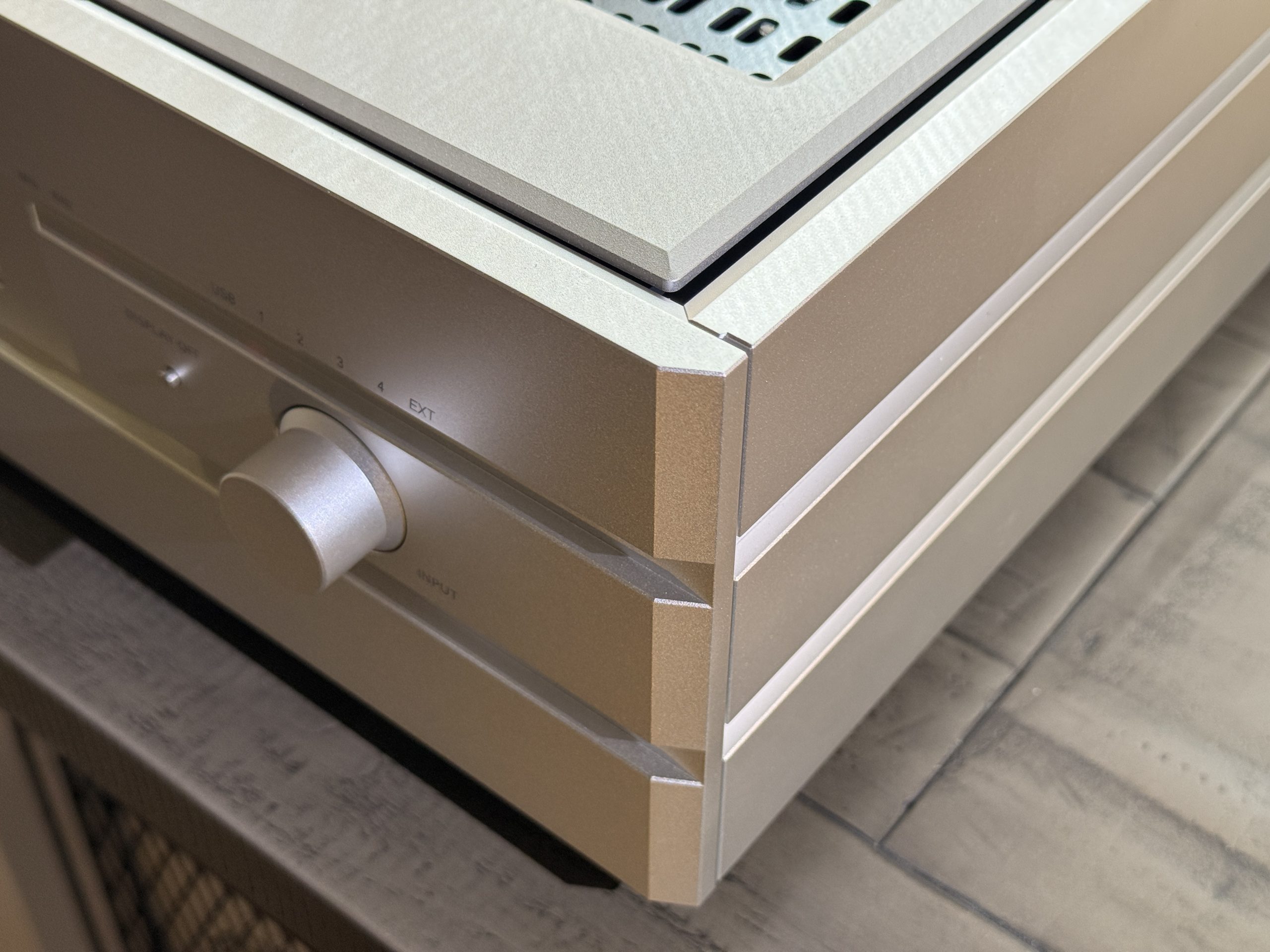
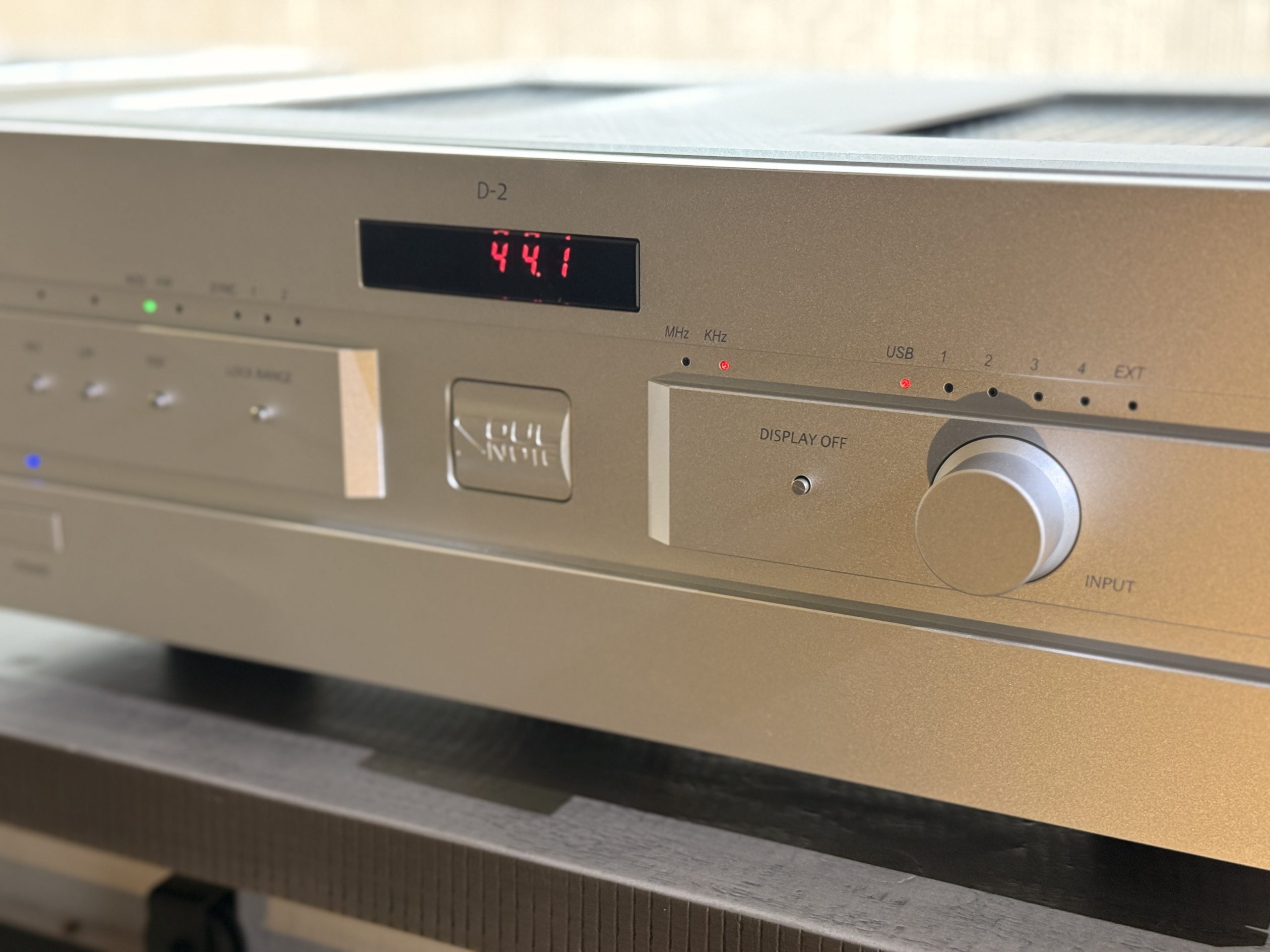
The D2 MKII DAC from SoulNote is built in the same chassis as the A2 MKII amp so they look perfect sitting next to each other. I love the small red displays for the info and the D2MKII has a variety of options including NOS (non over sampling) and upsampling modes. My advice? Keep it in NOS as it does sound better in this mode. The booklet that it ships with insinuates the same thing… and yea, NOS is the way to go for the most organic non digital sound signature.
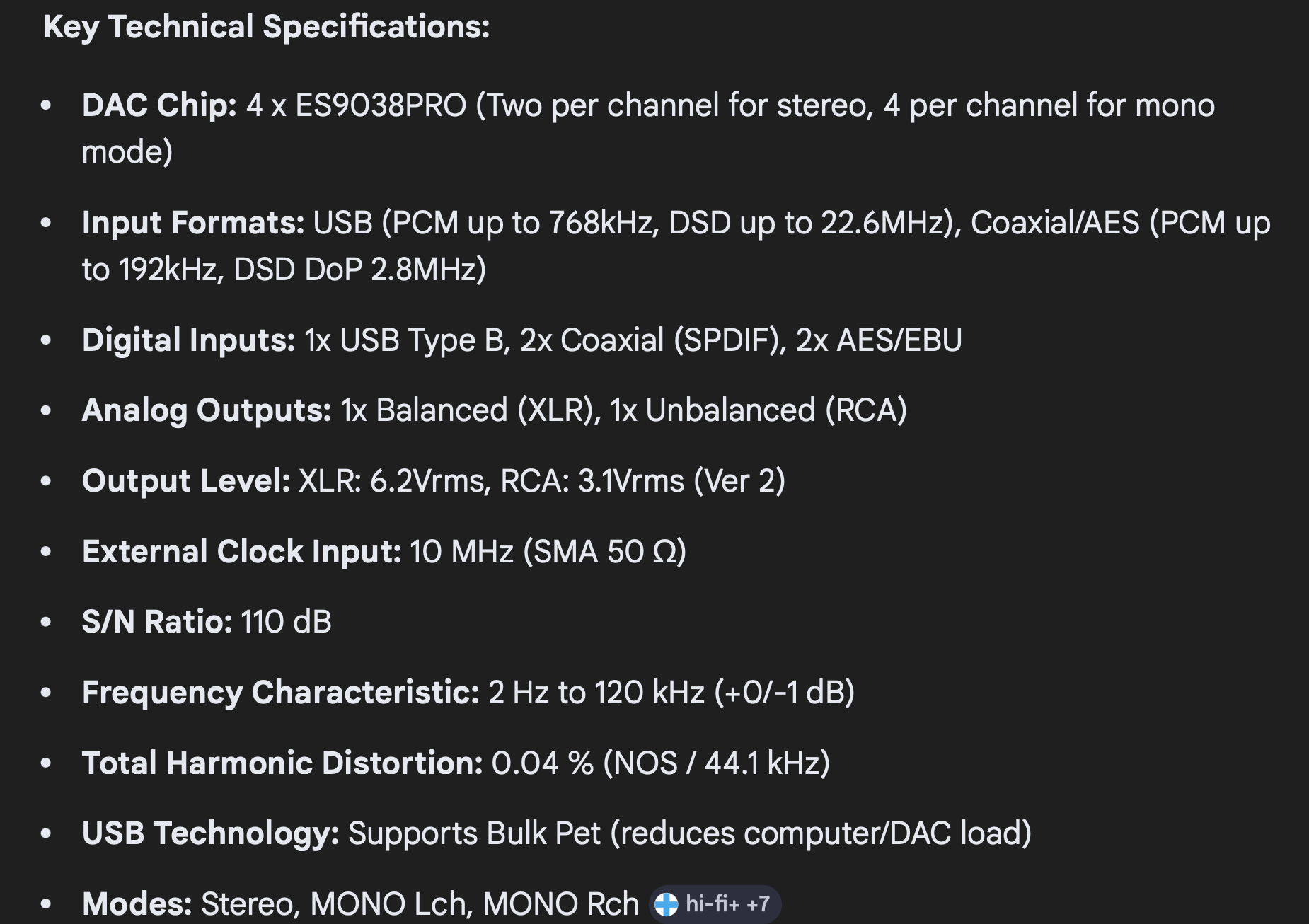
The D2 MKII does not use some exotic FPGA chip when it comes to digital conversion of the audio bits but it does use four ESS SABRE ES9038 PRO chips which in this DAC sound supremely refined, airy and open but also with some slight warmth injected in the middle…I like to say “Organic”. I am not usually one to purchase a DAC that uses ESS chips but the sound does really depend on implementation as these chips can sound drastically different depending on the DAC they are built into. The D2 MKII sounds sublime and while it doesn’t quite best the $22k Audio Mirror WAVE tube DAC it is a superb DAC in its own right and comes in for $13k less.
The D2 MKII is just a superb DAC for a few reasons. It doesn’t require a warm up like a tube DAC so it is pretty much instant on. It also features a clock input so I was able to test it with the Matrix SC-1 external clock as well. I was told by SoulNote that the D2MKII houses quite a nice clock and lo and behold it does as I did not hear a major improvement with the SC1 external clock here. They sounded almost the same which tells me the clock in the D2MKII is indeed top tier. As it sits it sounds beautiful in timbre, tone and how each sound is alive, beautiful and smooth. Let me be more clear. I did hear a slight change in sound but for me it wouldn’t be worth adding a $5k clock to the D2 MKII. Maybe the SoulNote clock will make a more drastic change but as is, on its own, the D2 MKII sounds absolutely beautiful, and yes even magical at times.
THE INPUTS
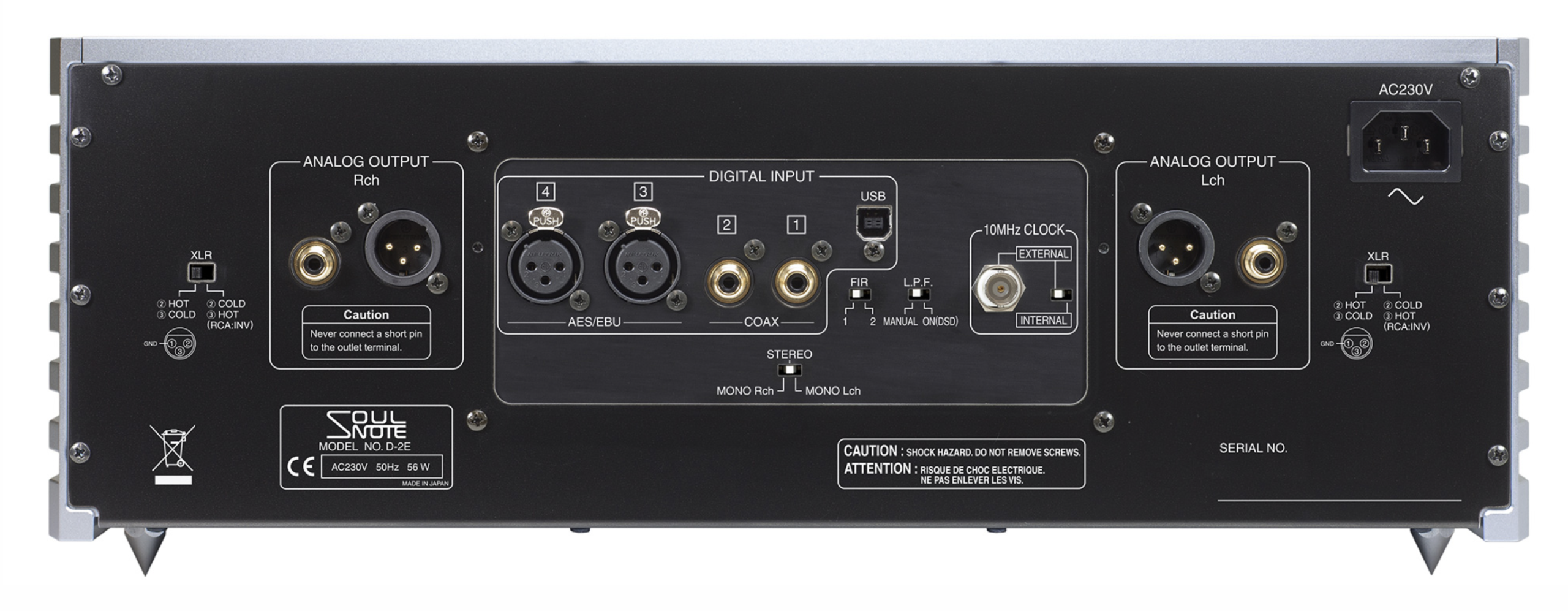
The D2MKII houses one USB input, two COAX inputs and two AES inputs but the specs can be seen below in this graphic.
I love that it has RCA and XLR outputs as well as using enhanced circuit design to eliminate noise vs using filters. The D2 MKII utilizes 70 micron thick copper foil boards to reduce noise. I can say that I have heard zero noise from this DAC. None from the chassis (hums, buzz) and none from the speakers, at all. Both the A2 and D2 MKII are deadly silent in operation, and that for me is what I love to see. I can’t stand buzzing amps and I still see amps come in that do this, even in 2026 which is crazy to me. I wouldn’t own an amp that buzzed, hummed or hissed today as I find no excuse for it now that I know manufactures can eliminate this annoyance all together. The silence here shows me that SoulNote designed the A2 and D2 MKII very well.
TECHNOLOGY of the D2 MKII
The tech inside of the D2 MKII is quite nice indeed and this is just some of it listed here…
From the SoulNote Website: “D/A converter formats that recreate the required master clock from standard clocks typically use a DDS (Direct Digital Synthesizer). The performance of external clock generators in this format guarantees extreme frequency accuracy (e.g. how many seconds of deviance will occur over tens of thousands of years), but jitter (fluctuations in waveform width arising in the clock) and the resulting phase noise are highly dependent on the performance of the DDS. By convention, audio equipment generally uses DDS-specific ICs with 10 ps (picosecond) jitter functions, but the D-2 is the first device to use Texas Instrument’s PLLatinum™ RF LMX2594 synthesizer for an audio DDS. The LMX2594 synthesizer was developed for radars and measurement instruments and boasts the world’s highest specifications with an efficiency index of -236 dBc/Hz and jitter of 45 fs (femtosecond, 1/1000 of a picosecond). This ultralow jitter DDS results in an overwhelmingly clear and deep spatial presentation when inputting the high-precision external clock and using the built-in TCXO.”
Uses 4 ES9038PRO (an industry first)
“2 ES9038PRO circuits are employed in each channel for the upper and lower differential complimentary inputs in this SOULNOTE original fully symmetric non-NFB discrete amplifier, completely driving the initial stage in the non-NFB differential amplifier. The IV circuits are extremely simple IV circuits with only one resistor to eliminate TIM distortion that can be so problematic with feedback type IVs. With an extremely powerful 120 mA, the two ES9038PROs are used in each channel to allow natural music playback bursting with life. The ES9038PRO operates in synchronous mode to obtain the highest sound quality.”
Dual mono construction using fully discrete non-NFB differential amplifiers
“The SOULNOTE original discrete fully symmetric non-NFB differential amplifiers are arranged in a dual mono construction that fully isolates each channel, including the power supply rectifier. Connecting cables have been eliminated for sound signals and in the power supplies. Wiring from the transformer has also been shortened, since this is a major cause of current loops.”
400 VA bifilar wound high regulation toroidal transformers with eight windings on the secondary side
“The D-2 incorporates the newly developed power transformers with eight windings on the secondary side that are capable of regulation similar to that of very high power amplifiers. Independent rectifier circuits in each stage prevent interference. Because transformers are a source of vibration, SOULNOTE has used only one in each unit to simplify the vibration type and has constructed the unit body so that any unwanted vibrations are transmitted away from the body through a spike placed directly under each transformer.”
Noise countermeasures that don’t rely on filters
“The D-2 uses 4 boards wrapped in 70 micron thick copper foil that eliminates noise by optimizing the printed circuit board layout. Noise countermeasures that don’t rely on filters that can impact sound quality like flight, etc. are employed throughout, and each mode keeps unwanted radiation below the noise floor.”
An independent digital board layout with consideration of future upgrades
“The digital boards are independent structures with one portion connected to the rear panel, allowing for upgrades in the future. Analog circuit connections use soldered pin heads, eliminating sound quality deterioration caused by contact resistance in connectors”
Expandable to dual mono DAC
“You can select between STEREO, MONO Lch, and MONO Rch modes on the D-2. In MONO mode, the ES9038PROs in the opposite channel are disabled, thus doubling the power margin and making channel separation practically infinite.”
SOUND OF THE D2 MKII
I have heard over 100 DACs over the years and can say that many DACs sound similar but once you get to a certain level of DAC, or “class” of DAC I should say…the sound does get much better, more refined, deeper and more analog like. I have heard DACs that cost $50 and DACs that cost $85k. The SoulNote D2 MKII is under $10k but sounds like every cent that it costs and possibly more. It really is a gorgeous DAC in the flesh to look at as well.
When listening to music with the D2 MKII I hear an open sound with slightly airy highs and nice big bass down below that stays tight and controlled. The midrange here of the SoulNote is where I hear the soul whether I am listening to the amp or the DAC or both. I did test them each separately and then together but the sound of this DAC is heavenly indeed even with my Dazzle integrated amp.
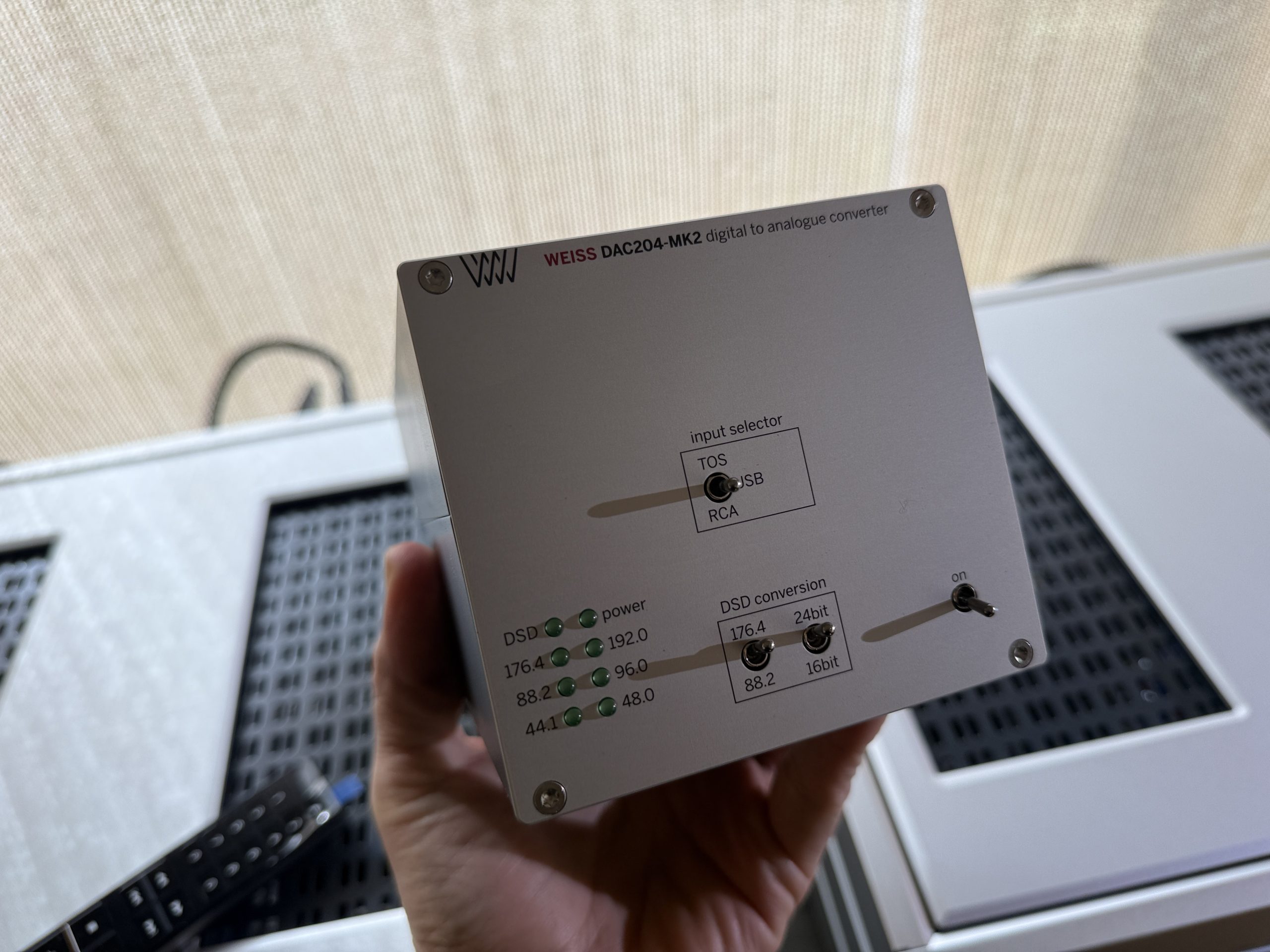
I also compared it to a new $4k Weiss 204 MKII 4 CHANNEL DAC and while the Weiss is amazing for the cost, the D2 MKII was instantly more refined, bigger in soundstage scale, more sweet and analog like and with a better imaging performance. It does cost almost $6k more than the Weiss but for the extra cash you get a full size chassis, clock input and a gorgeously made DAC that sounds like a true high end DAC. The D2 MKII is one of the better DACs I have heard over the last few years.
I even compared the D2 MKII to the Audio Mirror Wave Tube DAC, which is the best DAC I have ever heard but ouch, the price is insane at $22k for the Wave. The D2 MKII when direct compared to the Wave Tube DAC has a flatter soundstage, so the sound doesn’t project into the room as the Wave does. Instead the stage is more in line with the speakers but the soundstage of the D2 is large in scale and the way the sound is drawn within it is beautiful.
The new Weiss 204 MKII DAC
The Audio Mirror Wave DAC is different in presentation. I will say it has a bit more depth, more immersion and is a little more holographic with the way instruments come out in a 3D space with authority and dynamic energy. It does a thing with details that projects into the room with some speakers and with others it offers up a supremely juicy and rich presentation. Yes, this is a DAC anyone can hear the difference with and I prefer it to the $85k DAC I heard in this space last year.
The SoulNote may be over $10k less in cost (under $9100) but in its own way is really just as beautiful in sound, just different. The SoulNote sounds as big and refined as the AM but it’s just a touch flatter and maybe a touch lighter in bass vs the Wave. Instruments are not as 3D or separated and there is no tube magic going on but a nearly $13k savings is no joke. The Wave is for those seeking true end game for digital and can afford it. The SoulNote is for those who are picky enough to want a high end system and sound but maybe do not have the funds for an exotic level DAC.
I will say this. The SoulNote D2MKII could be my reference. It is also a DAC I can not stop listening to as it is really and honestly a bit “soulful” and I love soul to my sound. It is clean, rich and dynamic. It is smooth yet open and fluid. A lovely DAC no matter how you dissect it.
I even tested the SN D2 MKII side by side with the Eversolo Z10 DAC and it was no contest. The SoulNote was easily more refined, larger in scale, richer and warmer and brought forth eerily realistic images of instruments and vocals into my room. The Z10 was sharper, flatter and sounded like good digital where the music with the D2 MKII sounded more like real life with an “aliveness” and refinement that I rarely hear unless I am listening to a mega DAC like the Wave. For sure the D2 MKII was more analog in sound than the Z10, and not by a small margin.
So the D2 MKII easily bested the Z10 and Weiss 204 MKII and it is different from the Wave but yea, if you want that “extra” be prepared to pay dearly for it as DACs an get crazy these days. The D2 mKII sits in a nice lane price wise for what it offers.
AS A TEAM
I was listening to the A2 MKII and D2KII on their own for a few weeks. The A2MKII with my Wave DAC and the D2 MKII with my Dazzle amp. In this way they each sounded so so good and either would be an end game option for me if I were just a dude assembling a system I wanted to keep for years to come.
When I placed these two pieces together though…wow. I heard a little more magic, a bit more depth and a more 3D stage. As a pair, these two shine big and bright and have a sound like a golden sunset is shining down upon them, allowing every glow and tone to be heard with authority and also delicacy. The duo have an effortless quality about them. The amp provides the soul and the DAC pro0vides the notes, lol. Really though, the company name really does fit the vibe and sound of the products here and while these are the mid level products from SoulNote they sound like some brands flagship pieces.
CONCLUSION
If I had $20k to spend on an amp and DAC right now and had speakers that were slightly warm or even neutral I would probably buy this set and call it a day. The A2 MKII Integrated amp is a stunner in design and sound and that sound? Wide Open, airy and detailed with a slice of being musical and soulful. This delivers the best of both worlds as it brings a high end sound that can startle and wow you. The A2MKII is not what I would call an analytical amplifier but it is not one of warmth or bloated bass. It’s sort of neutral really and allowed me to really hear “inside” of the recordings I would listen to. Details emerge organically but separated from the mix. Vocals are not fat or warm but neutral and this makes them of the “real sounding” variety. Not puffed up, not leaned out. In fact I would say Luxman is more analytical than the SoulNote sound these days with the 509 Z having more sizzle and energy in the top part of the sound frequency.
When the A2 MKII is paired with the D2 MKII DAC this setup makes for one very special system. The Amp and DAC seem like they were designed together and I am sure they were as they sit in the same line, A2 and D2. I never heard the MK1 versions but can say with confidence that the MKII versions of these pieces are extraordinary and while they sit in a higher end of price they are beautiful to look at as well as listen to. They deliver the goods for what they cost and again, I would have easily made these my reference if I heard them last year. They are fantastic together.
What about the cons? Well, I will say that the A2MKII is not as hefty or solid FEELING in build as my Vinshine Dazzle or even a Luxman 509Z. Nor is it as powerful in watts as the Dazzle. Nor does it bring quite the full body sound that the Dazzle brings. In build, for example, the back of the A2 MKII where you attach your interconnects, it seems thin. As in, the metal here can be pushed in with your fingers somewhat and flexes when pushing in a cable. I have seen this on many amps but my Dazzle is thick solid metal everywhere. It seems the SoulNote takes a different design approach as the entire piece is lighter in build with that floating top plate for example.
SoulNote says all of these design choices improve the sound and that is their all out goal here. To make gear that not only looks gorgeous but sounds it as well. I can’t argue with them as the sound of the A2 MKII is truly one about bringing forth all of the music within a recording and doing so in such a way that soothes the soul . More air, more delicacy and more open. The Dazzle does this as well but to a lesser extent. The Dazzle sounds thicker than the SoulNote and I still love my Dazzle as it’s truly a flagship analog integrated amp. The A2 MKII though just has that “something” to the sound in the upper registers that makes my speakers come alive a bit more.
The D2 MKII DAC interior
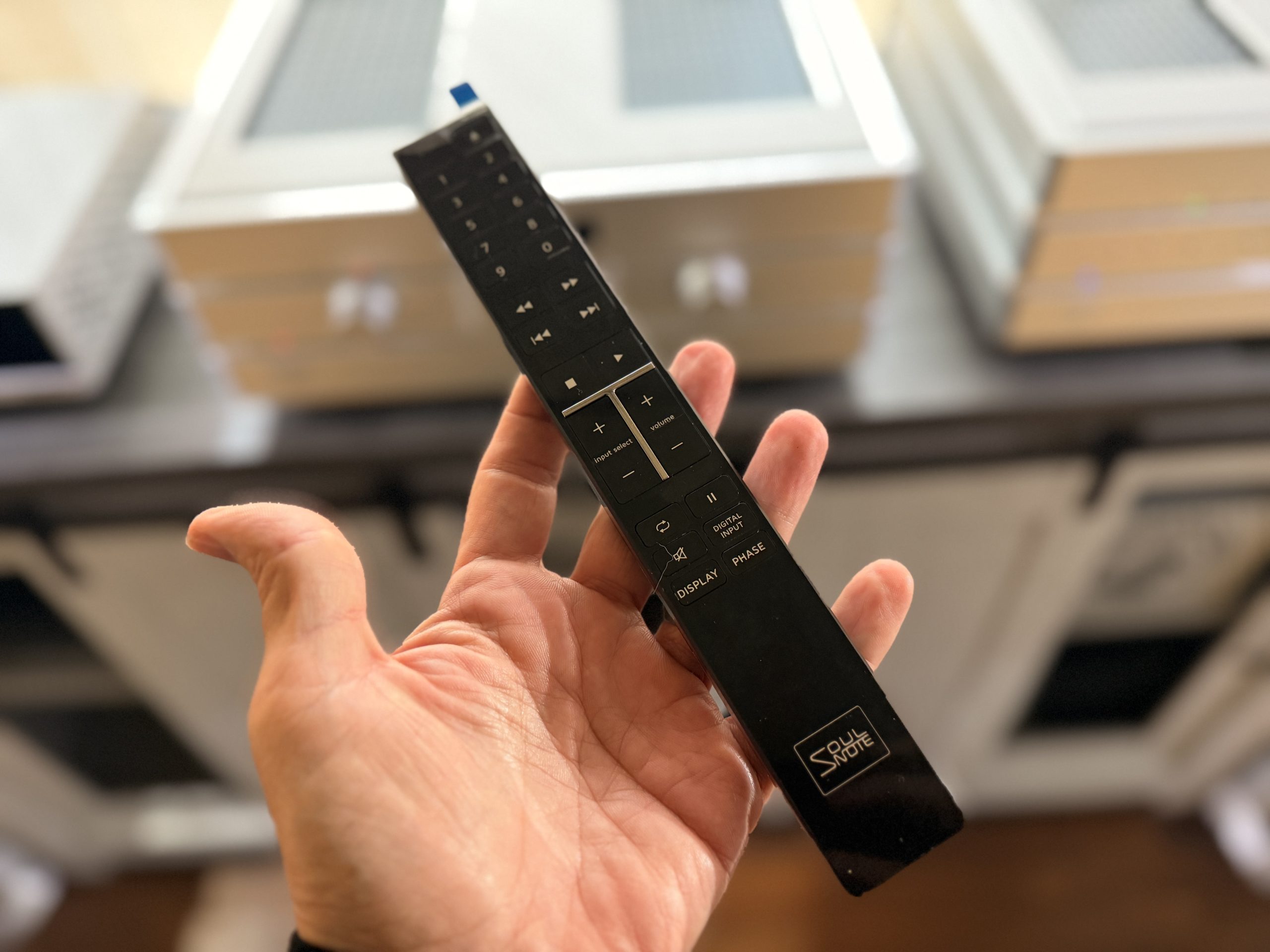
The remote is nice. It’s a long one, shiny black and feels like a nicely done remote but it has too many buttons that do nothing here. I would have liked to have seen a smaller all metal remote with minimal buttons that was made for the amp. I could do without the numbered buttons here as they do nothing at all, just take up space.
Finally the last con I found is with the feet. There are three rather tiny metal feet on the A2 and D2 MKII and for me these are not my fave for looks or setting on my cabinet as the pieces slide around easily, no grip. The good news is these also shop with spikes so you can swap out the small metal feet with spikes. I would have liked to have seen normal feet with rubber bottoms or some kind of anti vibration feet. With this said, maybe these feet were used due to all out sound quality as yes, they have thought of everything with the build of this amp. As is now I use Stack Sound Auva EQ’s under the amp and DAC and noticed a small improvement to the focus of the sound. The Stack sound Auva EQ’s are the finest anti vibration tweaks I have ever tested and work well. See them here. I have four sets and use them with my streamer, clock amp and DAC.
All in all the A2 MKII bested the sound of my Dazzle when hooked up to my main small reference speakers which are the T+A Talis R330. They come alive with the SoulNote and are a shade darker with the Dazzle but yes, the SoulNote sounds a little better to me with the T+A speakers. It also sounded glorious with the big Icon 12 from O Audio as well as the Starke Sound Halo M1. These two speakers have a rich meaty mid bass and pairs well with the SoulNotes more airy highs and clean midrange.
Do not get me wrong though, the Dazzle has its own sound signature that many would prefer. Darker, denser, depth and more power vs more open, more lit up and soulful.
This A2 MKII integrated may not have the power of the Dazzle (and is about $1k more in cost retail USD) but it has more finesse to the sound. Both integrated amps are stunning but the Dazzle wins in all out tank like construction for sure, as well as being more meaty and hefty in sound.
As always synergy is key but as I sit now and listen to the A2 and D2 MKII with my R330 Speakers I am in awe and wish that they did not have to be packed back up and sent back. Everything is just clicking.
This is synergy any its finest for me in this room and it’s sounding glorious. These two pieces from SoulNote are true audio art. I mean in both looks and sound. I am so happy I was able to hear these as I now know the sound of SoulNote, which is all out beautiful if you like open, airy, detailed yet organic and this sound is also injected with some musical soul as well. I will miss you SoulNote but maybe one day we will meet again.
Oh, and I just saw this tidbit from SoulNote which explains the construction a little bit more in just one sentence: “SOULNOTE products place the highest emphasis on sound quality, so the top cover, chassis, and other components do not employ vibration isolation”.