The Contax G2, Travel Companion by Ibraar Hussain

Dear Steve, I thought I’d write in again, just to relate some of my experiences with the Contax G2 around Northern Pakistan and the Punjab. I’ve been there a few times over the last five years and have had my trusty Contax G2 with me at all times. I know most people shoot with Digital, and finding an almost full time Film shooter is quite a rarity.

In Pakistan, my Contax was a rarity – people were constantly wishing to view the image on the rear panel, and much to their chagrin they were disappointed. The strange thing is that even in the most remote parts, the most remotest and rustic people expected digital cameras and an LCD screen! I was surprised at first and then realised that it’s been over a decade since digital cameras became popular, and many years since Film has ceased to be in use in places such as Pakistan.

Pakistan, as Flickr will show you, is rife with native photographers, and I’ve yet to see ANY photographer anywhere in Flickr, of Pakistani descent, using Film. In Pakistan and India I think Film IS DEAD, you may find the odd mini-Lab but trying to find a lab of any sort which develops E6 or even sells E6 Film stock is impossible in my experience. In 2007 I had to be driven all around Islamabad and Rawalpindi before I found the Headquarters of Fujifilm Pakistan – the only place I could pick up a few rolls of Fujichrome Sensia 100 – rolls which had been sweltering in the heat for Christ knows how long. in 2009 and 2011 I made sure I was well stocked up BEFORE I left England! :)

So I felt a bit privileged in a way, sure, it’s foolish feeling, but it was a feeling which had much of pride in it. I had to rely on the characteristics of the Film stock and my rudimentary ‘experience’ to try and grab the shots I wanted, with a long wait to see my results. I know digital gives a higher resolution and pixel peepers will probably get annoyed at the fact that I don’t care, I don’t think that’s important, I’m more concerned with contrast, colour and latitude, and trying to be more creative and artistic. (note the word ‘trying! :) )

I also use B&W and the Zeiss G lenses give fantastic results, though they are sometimes a bit too contrasty and sharp for nice gradual BW tone!! :) haha! I prefer the look of Film, and the fact that I’m beholden to the Film stock and have the option of choosing what I’d like to load up to fit the occasion. For example, trips to Pakistan always ensure my G2 is loaded up with either Kodak e100vs or Fuji Velvia, so I know what to expect from my Slides. I’ll get heavy contrast, vibrant colour and will have to be careful with exposure. That’s where I reckon experience comes into it, experience with the Camera in use. I tend to use Exposure lock on the G2 very often, and can judge the correct exposure by looking at and locking the shutter speed after noting the difference between shadow and highlight in a scene, and I never have any focus problems, any blurred shots are the result of camera shake (using slow film is a pain at times).

But ultimately, the Film stock gives me the results I want, the tone and graduation, the gentle granularity, the pop of colour and it’s all so pleasing to the eye. The colours also add to the ‘exotic look’ of the places, the dust, the red earthy tones, the dress – everything.

I use both Film and Digital, I currently own a lovely Olympus XZ-1, and am looking with lust at the OM-D (I like Olympus colour) I’ve been using a mix of cameras over the years; from Canon, Nikon and Konica Minolta DSLR’s to various Compacts, 35mm SLR’s and 35mm Compacts, but one thing has remained constant: when I wanted to capture something important and special I always resort to using my G2.

It’s about as perfect a travel camera as you can get, it’s solid (I’ve knocked it, dropped it many times and it has survived!), well-built and is fairly compact. Battery lasts a good long while – in heat and cold,, focussing is quick and accurate, it has a really good meter, ergonomics are as sound as you can get and the lenses are stellar! With the G2, I find I can lift the camera focus and shoot in a quick movement, and if I wish i’m able to zone/pre focus using the (crappy but effective enough) Manual focus.

I have a couple of manual focus cameras, and a manual focus RF – I’d love to own a Leica and perhaps one day I shall, but to be honest, it’s the AF which gives the G the edge when travelling, as time is usually of the essence.

FLAWS.

Firstly, the smallish VF, it’s not bad, things are clear enough, but one always wishes for a larger brighter VF. It’s a bit silly, as Kyocera put a perfect VF in the Contax T2, why couldn’t they replicate the size and brightness in this? Filters, using Polarizers can be a pain, and the thing about mountain environments, a Graduated Filter is a MUST, but square filters are a pain to use on a Rangefinder. And finally, the G2 is so quick with a nice snick and zippy shutter that it’s easy to blow your way through Film! So have got to slow down a bit!

I hope my, as well as others use of Film, and such tools as the Contax G2 encourages people who use or have been brought up on Digital, taken up photography fairly recently, during this last 10 to 12 years and others who long ago abandoned the medium and ‘went digital’, to use this beautiful medium and utilise fantastic Film cameras which are at bargain prices these days; such the G1 and G2 and T series, Contax SLR’s, Olympus OM, Nikon F’s and others including Yashica/Rollei TLR’s, and MF gear (and Olympus Pen Half frame – I have a splendid Pen F which I have bought recently and am loving using it) , and I hope exposure on your superb site encourages photographers to use Film, enjoy and create using the characteristics of this medium along with their usual Gear.

Keep up the excellent site, the reviews are brilliant, as are the offerings and contributions from Site users! Love it!

Local lad with striking eyes. Minapin, Nagar Valley, Gilgit-Baltistan, Karakoram mountains. 2009. Fuji Velvia 50, 45mm Planar T* @ f2.8
-
A local lad trying to sell me some snacks, Malam Jabba, Swat Valley. NWFP Pakistan. 2007.
Fuji Sensia 100. 45mm Planar T* @f2

-

The strain and tension of life shows in the eyes of this young lad from Swat Valley. 2007. Fuji Sensia 100. 90mm Sonnar T* @ f2.8


-

Mulhon, Kalash girl, Grom Village, Rumbour Valley, Hindu Kush. 45mm Planar T* @ f2, Kodak e100vs. 2009

-

Man with firewood, Chitral Gol national park, Hindu Raj range is in the background. Hindu Kush mountains. 21mm Biogon T* Kodak e100vs.
-
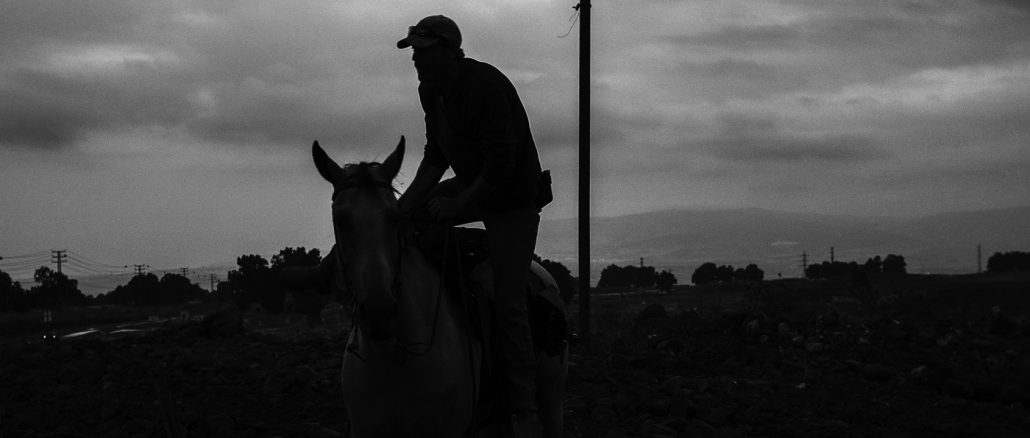
A guy on horseback at sunset. Sarai Alamgir, Punjab, Pakistan. 2009
21mm Biogon T* @ f2.8. Fuji Velvia 50.
-
Villager collecting firewood and fodder. Rakaposhi base camp trek, bang-e-das, Nagar Valley, Gilgit-Baltistan. 2009.  21mm Biogon T*@ f2.8 (I think) Fuji Velvia 50.
-
Shepherds and their Dog. Swat Valley, NWFP. 2007. Fuji Sensia 100. 21mm Biogon T*
-
Mystic/ Fakir at the Shrine of Pir-e-Shah Ghazi, Kharri Shareef, Kashmir. 2009. 45mm Planar T* @ f2.8  Fuji velvia 50.
-
Two Kalash Girls, Grom, Rumbour, Hindu Kush. 2011.  45mm Planar T*, Kodak e100vs
-
Rabi Gul, young Kalash girl in traditional dress. Grom, Rumbour, Chitral, Hindu Kush. 45mm Planar T* Kodak e100vs
 

The Leica M9 for Fashion by Simon Lipman

from Steve: I always enjoy seeing when others are using the Leica M series in professional situations. If I had $2 for every time someone e-mailed me saying it is not possible or feasible to shoot the M9 for pro work I’d have some serious cash sitting in my bank account. I found the photos here from Simon to be pretty damn beautiful, hope you enjoy the post!

Simon’s Website

My name is Simon and I’m a UK-based editorial and fashion photographer.

I wanted to share with you a little insight, something that I think is somewhat relevant to you and your audience. After beginning my career shooting with a Hasselblad and digital back (I was one of the last generation of ‘film’ assistants, and was therefore very keen to add some soul to my shooting!), I finally succumbed to using the dreaded ”C” word – Canon, making working life a little easier, quicker, more stable and a whole host more reasons.

Then came the day that an old boss of mine lent me his M9. I fell head over heals in love. As countless others have and still do before me, I drooled over internet sites with nothing short of obsession!! I had to make it mine. Fortunately for me, i had a tax break – and my chance! I ordered my M9-P!!

Since then I have tried to use it wherever possible, on as many jobs as possible – usually finding my opportunities during editorials - free of commercial and creative restraint. Something special happens, not only with the results, but between the photographer and the subject. Many say the same – in their own fields, now I was finding it shooting fashion. After spending years turning up to shoots with countless Pelican cases and equipment bags, i was now arriving with a tiny bag with a Macbook Air, and the M9 with three Cron lenses, a reflector and NOTHING else!!! It was, and still is a dream.

The M9 is often (quite rightly so) labelled as a documentary / journalism camera. And indeed it excels at that. I often use it for my personal work. However, when researching the camera, there seemed to be a lack of photographers using the M9 for fashion! I’m here to say otherwise – it is the perfect fashion / portrait camera. There is no end to what I could say, but with your permission, I’d love to send you some of what i have shot with it!

Your reviews of the M9 greatly influenced me when looking into buying this system and it has in no way disappointed… Indeed, it has exceeded my expectations in every way!! Keep up the good work…

Simon


From Leica 3A to X1 – a 51 Year Journey by John Shingleton

John’s Blog: http://therollingroad.blogspot.com/

Twelve months ago I purchased a Leica X-1.It was an impulse purchase and the latest step in a 51 year journey.

Way back in 1960 when I was just 14 my high school biology teacher started a school camera club.At the inaugural meeting he handed around his Leica-I believe it was a Leica 2–and prints from his 1930s travels in India and Burma.From the moment I handled that jewel of a camera and saw the pictures it produced I was hooked– I had to have a Leica.

It took me 7 years to achieve my ambition–a 30 year old Leica 3A –with F2.8 Elmar lens, lens hood, accesory brightline viewfinder and Leica neckstrap- purchased for $35 in1967. The thought of purchasing a 30 year old camera today other than as a collectable item seems absurd but progress was much slower then and a 3A was still regarded as a serious working /hobby camera although the Japanese SLRs ,particularly the Asahi Pentax Spotmatic ,were making rapid inroads into the market .

The 3A served me very well for about ten years before I stood it down and purchased one of the fashionable Japanese SLRs–an Olympus OM-2.I kept the 3A and still have it — complete with accesories–although I have not put a film through it for over 30 years.

In the years since I have taken tens of thousand of photos all over the world.I have won competitions and even a few useful prizes. I had a home darkroom, I have done black and white printing and even dabbled in Cibachrome ( reversal color) printing which was both difficult and expensive and even for reasons which I have long forgotten I home processed color slide film. I have owned a few Leicas and Leica lenses but my relationship with Leica was not monogomous. I owned an Olympus OM outfit and later a Canon EOS outfit .But I have never been a “photo gearhead” . In 52 years I have only owned 11 cameras. I used my M6 for 18 years .My interest has primarily been in taking photos not in collecting gear.

I particularly liked Leicas because of their precision almost watchlike feel , the fact that they were rangefinder cameras and above all for their magic lenses which had and I believe still do have a unique quality .

I was an early adopter of digital and acquired a film scanner in 1997 and I won an early Kodak digital camera in a photo competition in 2000 . My first serious digital photos were taken with a Leica Digilux 1 which I acquired in 2003 .This is an odd camera which takes surprisingly good photos even by today’s standards. I have recently revived it and the images have really surprised me .

In 2006 I purchased the then newly launched Canon G7 as a “point and shoot” camera and its capabilities and its compactness convinced me that compact was the way to go . My days of carrying around a big bag of gear were over . Besides anything else I was just getting too old for all that weight and airport security checks were becoming very difficult .

I also had a new passion -old Porsches — and I was restoring a 1971 911. I was “over”analogue photography so I sold most of my gear including my lovely Leica M6 outfit and ploughed the money into the Porsche restoration.

I kept a watching eye on the world of Leica but from a distance. I was not impressed with the M8 and that crop factor and it confirmed for me that I had made the right decision to sell my outfit when I had .

When the X-1 was announced I handled one at a Leica dealer in Sydney and came way seriously underwhelmed . I thought that it was overpriced ,very plasticky and lacked that Leica feel although I was impressed by its simple controls and what I had seen of its image quality in reviews although these same reviews were very luke warm about other aspects of the camera

I decided that I was quite happy with my little Canon but then in July 2010 I visited an old friend and serious Leica enthusiast at his home in Italy. He had an M9. It was gorgeous and I loved the feel of it and the solidity and the simplicity of the controls. It stirred old enthusiasms .

In January of last year I was in Auckland,NZ, when I saw the then newly announced black X-1 in the window of a camera dealer . My Leica M6 had been black. I could not afford an M9 and anyway “compact ” was now my mantra so I decided to set aside my misgivings and buy myself a black X-1 and to rejoin the Leica world . It was a rash, hasty decision.

My longstanding and expert Leica dealer in Adelaide, South Australia , found one for me immediately and it arrived in the post in the first week of February . It did not work out of the box . The silly pop up flash unit would not retract.To say that I was annoyed would be a major understatement. I had spent $2000 on this camera which I had major doubts about and it arrived in this ridiculous over the top packaging with a note signed by the quality control manager and it was defective. Shame on you Leica.

To cut a long story short Leica did not have the parts available to repair a black X-1 and black new cameras were on back order so I ended up with a replacement silver model after a few weeks . Not an auspicious start -particularly as I had already purchased a black Voigtlander optical viewfinder .

The first few weeks with the replacement camera were awful . I found the fixed focal length lens even more limiting than I had feared . The camera took beautiful images but it was slow and I was very nervous using it as I felt that it was fragile . I was beginning to think that maybe I had made a major mistake and then I started reading the Leica X-1 forums which were overwhelmingly negative and I was soon convinced that I had made a major mistake!

I seriously considered selling it on e-bay. In April I went for two weeks travelling in Vietnam and took it with me . I took some great photos on that trip but I was still struggling with it and undecided as to whether to keep it. Gradually I turned around . I took it on a trip to Europe in July and to the US and Canada in September and I came back with more great photos -some arguably as good as I have ever taken. It stayed. Now I love its strengths but still hate its defects. I still worry that it is fragile . But the lens/sensor combination is superb . The IQ is brilliant but it falls down in so many areas you really do have to be a mellow, understanding and committed Leica enthusiast to live with it and I do not believe that is who it was designed for .

Would I recommend the X-1? Not an academic question as I was stopped when I was using it on the street in Chicago in September by a man who said his daughter was graduating from college and wanted an X-1 as a graduation present -would I recommend it? I gave a highly qualified “yes”. I hope that he was not too confused.

So there you have my 51 year Leica journey .From Leica 3A to Leica X-1.

As for my X-1 photos I have always taken what interests me . I now put some of them up on my blog and what you see here is a small selection .The first two very neatly link the 3A and the X-1 . The first was taken in 1974 on the 3A on Kodak Tri-X film and home processed and shows my wife and daughter. The second is that daughter’s daughter taken with the X-1 in 2011. Three generations taken on two Leicas arguably three generations apart. The others are some of the output from the X-1in its first 12 months.

John Shingleton

http://therollingroad.blogspot.com/

From Steve: Want to share an article with the tens of thousands of readers who visit this site every day? Send an e-mail to me HERE and let me know your idea! My goal when I started this site was to hopefully one day have a community of passionate photographers who could share their stories, photos, techniques and inspirations and that goal is finally being accomplished thanks to all of the amazing readers here on this site. 


USER REPORT: The Sony Nex-7 with Zeiss ZM lenses.

By Dirk De Paepe 

Hello Steve,

First of all, I’m not a photographer. I’m a publisher (living in Belgium, so pardon my English language mistakes) of a trade magazine for the music business (that’s really a niche market). Besides that, I’m a photography enthusiast for more than 50 years, since my late father (who was nothing more than an enthusiast himself) learned me how to shoot with a Zeiss Ikon. Beside that, I never had any photography education what so ever. My education was music, and maybe (I hope) I got a sense of aesthetics from there.

Because I wrote some comments to some articles on your website before, maybe you know that I love your site very much, because of your real life and “human” approach that really appeals to me.

The reason why I write you this time is double. First of all, I use the Sony Nex-7 (one of the most anticipated camera’s of the last year) now for quite some time, since December 30 to be precise. And I think that I’m probably (one of) the prototype(s) of the Nex-7 user: a real enthusiast who wants to enjoy shooting pictures as much as possible.

Second reason is that I’m also a huge Carl Zeiss fan. And with the Novoflex adaptor, I can use my ZM lenses on the NEX-7 body. I use three lenses: the Biogon 2,8/28 ZM, the Planar 2/50 ZM and the Tele-Tessar 4/85 ZM. When I bought my previous camera, a NEX-5, it came with the Sony E 3.5-6.3/18-200 OSS. I’m keeping this lens, because of its 200mm capability, but I have to say that up till now, I never felt the need to use it, because I find shooting with the Zeiss glass to be so much more fun!

Why am I not a Leica fan? Well, in fact I am, but more in the sence that the Leica M9-P is my dream camera. But it’s simply to expensive for my kind of use. It’s simply not justifiable. So I guess it will remain a dream. But hey, isn’t it nice to have a dream?!!

In my opinion a photography enthusiast is somebody who’s not taking pictures as a profession (although in my job I regularly use my own pictures), as such he doesn’t take as many pictures as a pro, but he nevertheless tries to use his equipment to the fullest and is always looking for the best possible shot. So he’s definitely not a point and shoot photographer. We both now that many of your site visitors are enthusiasts, so what I write about my NEX-7/Zeiss ZM experience is probably very relevant to many of them. When I look at the “Daily Inspiration” publications on your site, sometimes I see pictures that really “Waw!” me. They are shot by great pro photographers, who can do things with their camera that I simply can’t. Maybe they shoot in better light circumstances, most likely they know better how to process the image afterwords and surely they use different material (the Leica M9 sensor for instance is clearly superior to the NEX’s). Not to forget that they developed “a better eye” than most enthusiast ever will. So many of your site visitors will, like me, never be able to reach that level. The more relevant I guess it is, to see what an average, but nevertheless serious enthusiast can realize with this material.

I know you did some testing of the NEX-7 with Leica glass, but honestly, I don’t think that this combination is really relevant for enthusiasts. When I’d want to spend that kind of money for my lenses, I wouldn’t doubt for a second to by an M9. But I simply can’t justify to spend Leica kind of money for my “on the road” camera. Nevertheless the idea is good: the NEX body can easily work with M-mount lenses. To me it’s almost as if the NEX-7 was conceived to be used with M-mount glass. And luckily there are other brands then Leica that make this glass for a considerably lower cost. Amongst them, Zeiss has always been my favorite, being of the same brand as that fabulous first camera of mine, a Zeis Ikon Ikonta C, that shot so unbelievably sharp on 90x60mm film, although it had no light meter, and no focus system what so ever. But it learned you right away what the technique of photographing was really all about… :-)

From a budget point of view the combination of NEX-7 with Zeiss ZM lenses is about the best one can get. And I know that in some circumstances there is a magenta color shift on the NEX-7 with M-mount glass. But really, when I consider that I just took shots as always, I must say that as far as now, it has never bothered me. And I even shot the Biogon wide open sometimes. But, probably like many enthusiasts, I don’t ALWAYS shote wide open. I recently visited the NAMM show, a big music trade show in Anaheim, CA, for my job and took quite some pictures there for our publication and just for fun. (Unfortunately the skies were grey during our visit.) When I shoot the exposition booth of our clients, it’s important that one can see as much as possible, so the DOF must be as large as possible. Also when I want to give a general impression of the fair, I think one must see as much as possible. In those pictures, my goal is probably different of yours. When I want to paint the atmosphere – I don’t want to focus on only one particular detail, but I need to show everything that’s going on there. This is important for our readers and our clients as well. Coming from that background, I always have been oriented towards an as large as possible DOF, with as much as possible detail. And that’s where the Zeiss lenses (in my opinion) outshine.

It’s only since buying the NEX-7 and finding the SteveHuffPhoto website, that I also targeted towards shallow DOF and that I tried to achieve this very beautiful 3D effect, just for fun. How come? Well it’s undoubtedly thanks to the NEX-7/Zeiss combination. To me the camera size and weight is perfect. I can have it around my neck permanently, without being bothered by it in the slightest way. Yet it’s just a little bit bigger than the NEX-5, that a found just too small to be practical. And of course the wonderful view finder (I NEVER AGAIN want to shoot with a camera without view finder!) and the extra control knobs make it such a tremendous joy to work with. I have never shot that much pictures just for fun! I can do everything manually again, but now in a very easy and smooth way. And this brings me the real joy of photographing.

You know, I’m an enthusiast. My goal is not to shoot “The Picture of The Year”. My goal is to enjoy shooting pictures, and at the same time trying to take nice pictures and to continue improving. The NEX-7 gave me already so much more inspiration and ideas to improve my photographic skills, mainly about where to look at while focussing, and how to do this fast. I believe that if one is really trained in manual focussing, he will focus almost as fast as an automatic focussing system, surely when using the ingenious focus peaking, and a good lens like the Zeiss ZM. The focus peaking allows you to immediately and purposefully focus on any point in the view finder. In my opinion (correct me if I’m wrong) this beats any automatic focussing system – surely in joy of use (and remember, that’s my #1 motivation!). To me this opened a new world. Where I used to really take time for every shot, thinking about DOF, pointing, focussing, holding the release knob half ways and reframing, I now enjoy instant shooting, but still framing and focussing in the best possible way. Only now I can do this instantly. What a joy! Many of you will think that it’s pretty remarkable that I only begin to shoot in this way in my late fifties, but hey, I’m just an enthusiast! Of course, shallow depth of field is something I’ve known for whole my life. But I never achieved it in my pictures so much until recently. Nevertheless, I don’t get why anyone would ALWAYS want to achieve THE MOST shallow DOF possible. Sometimes, like in my waitress picture, I want it to be 3D with a shallow background, but I believe it’s better for the atmosphere of the picture to still have some notice of the surroundings, instead off just having some light stains “to make a nice bouquet”.

Do I have other remarks on the NEX-7? Yes. Well, everybody must communicate to Sony that in a future software update, they must provide that the camera can stay in standby while hanging around your neck. “Waking it up” by touching the release knob seems a good idea to me. When I’m out to take fast shots, I’d want it in the on-position all the time. Now this drains the battery in a few hours time. (I measured around 3.5 hours, but maybe that depends on the light circumstances.) Luckily, the battery is small and I have three of them, thanks to my NEX-5. So it’s not a big deal to me. But still…

And yes, I sometimes accidentally start filming. So I delete those. That’s about it guys, and it really doesn’t spoil my joy of using this camera. For the rest, the balance and the feel of the camera is superb. And with the ZM lenses on it, my hand just doesn’t get tired. Ever!

Do I have other remarks on the Zeiss ZM lenses? No. I’m utterly pleased by them. They are sharp, nice bouquet, great 3D, fairly lightweight (without feeling cheap), so easy to use, beautiful and offer the best quality for the money, by far. I told you, I’m a fifty year Zeiss fan. I’m probably not the most objective person, when it comes to Zeiss (after a love of 50 years, who can blame me), but you know, I’m no photography reporter, nor a professional photographer, so I think I can permit me more… :-)

Do I have special comments on the NEX-7/Zeiss ZM combination? Yes. To work with, it’s just a perfect combination. The joy of use is tremendous. Never experienced that in my 50 years of shooting! (I owned more than 10 different camera’s.) Also, the price is right. Lenses and body “play in the same league”. They seem to be meant for one another.

And then there is the magenta color shift. I can’t deny that it’s there. It is. Sometimes. Very rarely in my use. And only with the Biogon. With large aperture. But even then not always, or not noticeable. And when it appears, sometimes it’s only very slightly. Which doesn’t bother me. You know I don’t shoot wide open all the time. From the about 1000 pictures I took up till now, the magenta really bothered me only a very few times – two or maybe three, I already forgot it… Would I want to get rid of it? Sure! Will I buy another camera for it? No way!! Maybe Sony can fix it in a later software update, although I doubt it and I don’t hope for it. But if they do, I surely want the update. If the don’t I stay happy as it is.

My only real comment and regret on the NEX-7 is it not having a full frame sensor. I really would like to get rid of the cropping factor! So maybe the last camera I’ll ever buy will be a full frame NEX-10?? ;-)

I hope you still can enjoy the pictures of a non-pro, who, I’m sure, sometimes will do things that “are not done” in a professionals opinion. If you can give critic of any kind, that can improve my shooting, you are so very welcome! Besides that, I guess the pictures can be very relevant for all those enthusiasts, who want to see what quality they can expect from this NEX-7/Zeiss ZM combination for themselves. Me being one of them!

The pictures shown here are all taken out of hand, without flash, as jpg’s and often slightly processed with Photoshop Elements. I find the Shadows/Highlights function to be very effective, I sometimes somewhat skew and of course sometimes crop a little. Also I sometimes use a very small amount of Unsharp Mask. Oh yeah, also the Adjust Color for Skin Tone sometimes works very effectively. Those functions make it possible to work very fast, being designed to process photo’s and some of them are not available in the regular Photoshop. That’s why I prefer Photoshop Elements for my “normal” pictures, and Photoshop CS Extended for pictures that need to be printed in the magazine.

Have fun shooting!


The Ancient – M9, 35 Summilux ASPH II, ~f/2.8, 1/350s, ISO 160


USER REPORT: Landscape Photography with the M9

Aravind Krishnaswamy

I am a nature photographer. For several years that meant I mostly photographed Avians and Wildlife with some Landscapes thrown in for good measure. I recently started moving away from Avians to concentrate more on Wildlife and Landscapes. I have a backpack filled with a 5D Mark II and Zeiss lenses for my landscape photography and I’ve generally been happy with the images that kit generated.

However, I wanted something more compact which could also do double duty while traveling and also early last year my interest in the Leica M9 got piqued.

The River Rushes – M9, 28 Elmarit ASPH, ~f/22, 1.5s, ISO 160


I got an initial M9 kit with just a couple of lenses and started doing some shooting. The image above is one of the first images I made with the kit and immediately both the delight and the challenges became apparent, especially since I photographed the same scene with my Canon kit. One of the biggest challenges when working with an M9 on a tripod is framing. With my 5D Mark II, I use Live View extensively to get perfect framing and my depth of field precisely the way I want it. However, upon looking at and comparing the files later, it was clear that the M9 was producing accurate colors requiring little adjustment as opposed to the images from my Canon kit (You can see and read more about the difference on my blog post on the subject: http://blog.akimagery.com/2011/07/goin-leica.html).

Lonely House – M9, 50 Summilux ASPH, ~f/6.7, 1/1500s, ISO 160


One of the advantages of having accurate colors (and generally good color separation) is that it improves tonal separation in black and white images. I like making black and white images when I want to use the color information in an image to manipulate the tonal relationships in an image that would otherwise not be possible if it remained color. This only gets better with the fact that the M9 images withstand a lot of abuse in post processing.

The M9 is in many ways well suited for landscape photography. There’s no mirror to cause vibration and I do use a remote cable release for those times when the camera is on a tripod. I have found that there aren’t too many regular repeating patterns in landscape work to cause moire or aliasing which can in other photography be an issue due to the lack of an anti-aliasing filter. I’ve also observed that the 24″x36″ prints I’ve made from the M9 have as much if not more detail than what I’ve produced with the 5D Mark II.

Summer Storm – M9, 50 Summilux ASPH, ~f/6.7, 1/250s, ISO 160


Generally speaking, I’m not that fond of tripod photography as I have found that it keeps me from exploring interesting angles, but I’ve usually stuck to tripods for my landscape photography. As time progressed, I found myself spending more time making images with the M9 handheld rather than affixed to a tripod. I can’t be sure for the reason, perhaps its the difficulty in framing when on a tripod or perhaps its just because the kit’s diminutive size makes it so comfortable in the hand that I feel like wandering a scene and making images.

Aged Branches – M9, 18 Super Elmar, ~f/13, 1/250s, ISO 160

Late last year I had the chance to pick up the 18mm Super Elmar right here in Steve’s buy/sell which I’m using for the wide work. Of course, accurate framing in this case requires the use of an external viewfinder but I’ve found that I’m not that fond of them. I made the image above without the external finder but just approximating the framing and taking a lot of test images. It ended up working out as the result you see is an uncropped file.

One of the things that really becomes obvious after working with some of Leica’s finest lenses is how superb the optics really are. My favorite lenses are landscape photography are the 18 Super Elmar, 28 Elmarit, 35 Summilux and 50 Summilux. All of these lenses when stopped down are exceptionally sharp across the frame regardless of focus distance and all have very pleasing color reproduction. I have generally found that the amount of color post processing working I have to do with my M9 images are significantly less than with my other cameras.

Clearing Storm over the California Coast – M9, 28 Elmarit ASPH, ~f/8, ISO 160


I typically use a lot of filters in my landscape photography, particularly graduated neutral density filters. I find that trying to get the dynamic range down to control at capture time saves a lot of hassle when it comes to post processing. However, with the M9 using filters is tricky since you can’t visualize directly through the lens and hence I don’t use my graduated neutral density filters (though still use the circular polarizer). In scenes where the dynamic range is high, I’ve had to resort to capturing multiple exposures and fusing them together in post (such as the one above). One thing you have to be careful about is getting false colors on high contrast edges, so I’ve found that its important to set all sharpening to zero when exporting the individual exposures to whatever HDR software you use (I use Photomatix and almost exclusively the Exposure Fusion option for the more realistic results it produces).

Pismo Pier – M9, 35 Summilux II, ~f/4, 8s, ISO 160


Neither the M9, nor the M lenses are weather sealed. When working in an area such as beach, it can be a little distressing when you realize how much money you’ve got in your hands so close to electronics destroying water or spray. I just tend to be extra paranoid in such situations, I’m not sure there’s much else you can do there. Since I mainly work with prime lenses, I’ve found that its important to visualize an image at a scene before putting the camera out and attaching a lens. To that end, I’ve picked up Voigtlander’s 15-35 zoom viewfinder which is compact and useful for this purpose.

Light Portal – M9, 50 Summilux, ~f/4, 1/30s, ISO 160


Landscape photography with the M9 certainly has its challenges. The rewards however are the exceptional image quality delivered by M glass and the fact that my full kit fits in a small shoulder bag. If a future M10 adds Live View and a better screen on the back I don’t see why I wouldn’t switch to M system for most of my landscape photography work. I say ‘most’ because I still use tilt/shift lenses and there are currently no such offerings for the M system, though if Leica does add Live View it might then make sense for them to develop such lenses.

The wonderful thing about the M system is not just that I use it for landscape photography but also as a general travel and family photography kit. The same lenses are use for making 24″x36″ landscape prints can be used for photographing people in low light and best of all no one gets freaked out or self conscious when someone is pointing an M at them as opposed to a large SLR. This combined with its small footprint is why the M9 is becoming my go to camera and why I stick with it in spite of the challenges.


Using Pentax FA Lenses on the Sony NEX-5n by Tord Eriksson  - Tord’s Flickr

Hi Steve,

My name is Tord S Eriksson, I am 59 years old, married, and I drive buses in Gothenburg, Sweden, but I have been around cameras much of my life, but not taken more than a few shots in my previous life as a journalist, and editor (as illustrations to articles, or photos of my interviewees).

The NEX-5n

In my twenties I had some training as a photographer, and in studio work. We students used the school’s cameras: Nikon F-1, Canon Pellix, Leica M3, and Hasselblads of various versions, including my favorite, the SWC.

We even got a chance to try the real heavy stuff, like Sinar – lovely cameras, but certainly not your point & shoot. Soon 40 years ago, but I remember those years fondly!

I got my first SLR system as a young teenager: an old Edixa Reflex (1957 version) – one of many screw-mount cameras coming out of Germany after the war, with three primes, and a Japanese zoom – very rare in those days). I bought the whole kit very cheaply from my sister’s boyfriend, who then moved up to a Hasselblad 500C). Gave the well worn kit away ages ago, after it had sat in a box for decades, together with a lot of other camera stuff.

Began my second SLR system about 40 years later: It is by now fairly complete, with zooms from 10mm to 500mm, and a respectable range of primes from 15 to 400mm (800mm using a converter).

Various reasons, including size, weight, and price, led me to Pentax DSLRs (my first was a K-x, with the DA 18-55 kit lens). Pretty soon I learned about the famed lenses that carry the unusual designation ‘Limited’, so I started to collect a few (not that many in production).

These Limited lenses are not the fastest there are, but all really sharp, and most with a nice bokeh. There are two groups, the DA series, optimized for Pentax APS-C cameras (thus have no aperture ring), and the FA group, which is a relic from the days Pentax made full frame cameras. The FA all have aperture rings, thus can be used in manual mode, essential if you’re going to use them on another camera system.

After having read various reviews of the Sony NEX-5N, including yours, Steve, I realized that this little marvel could be a great backup, if I could find a K Mount adapter. Amazon had both very cheap, and very expensive ones, so I went the middle of the road: a Chinese adapter for about $40.

Over the last two years I’ve have got myself a nice selection of FA Limited prime lenses, actually almost all of the FA lenses still in production: the Pentax-FA 31mm F1.8 AL Limited, the Pentax-FA 43mm F1.9 Limited, and access to my wife’s Pentax-FA 77mm F1.8 Limited. There are two more: the FA 35/2.0, which is still in production, but that’s not a Limited, and neither is the Pentax-FA 50mm F1.4, which my wife owns a copy of.

NEX-5n with Pentax 31 Limited

The Limited designation is not restricted to FA lenses: A few really outstanding DA lenses also have it, like the tiny DA40, equally small DA21, and the superb DA 50-135/2.8 zoom. The FA43 is much bigger than the ‘pancake’ DA40, but also quite a lot sharper, faster, and more expensive. Like the others, the FA31 is superbly sharp, with a really nice bokeh, but doesn’t handle flare as well as most modern lenses, so not ideal for all situations!

In addition to these lenses I have two other K Mounts suitable for my NEX-5N: The Tamron SP 90 Macro, a truly classic design, and a very old Pentax-M 400/5.6, both equipped with the needed aperture rings. The 400 suffer from CA at times, but overall works superbly with the NEX!

After a lot of ‘studio’ test shots with my, and my wife’s, Limiteds (and the Tamron), using Theodore the Bear as model (he never tires), I noted a few things …

NEX-5n…

-

Pentax K5

Using both my beloved Pentax K-5 (my second!), and the new friend, the NEX-5N, with exactly the same lenses, at various apertures, it is evident that to get similar results you have to set the K-5 slightly lower, say -1.0 EV, or thereabout. But the K-5 can be pushed up to ISO 51200, leaving the NEX-5N far, far behind, but I did my tests from 100 up to 1600, more normal settings. All test photos are totally unedited, and you note that the AWB of the two cameras handled the light quite differently – the 5N has a yellowish tone, while the K-5 is more like my eyes saw it.

You have to have a steady hand, as neither the lenses, nor the NEX body, have any kind of stabilisation.

Or even better, use a good tripod, and a serious ball/panorama head. I used my Berlebach Reporter 3032, which has a big ball head integrated into its design, so setting it level is very easy, even on a sloping surface. You extend the legs to the approximate setting and use the spirit level to set the top perfectly level, and then tighten the clamp – as easy as it could be! I maybe overdid it slightly as I used my Wimberley WH-200 on top of that (made changing cameras so much easier).

What more to say about the NEX-5N? A little jewel of a camera, that is on par with the K-5 in most situations, and when used as a video camera, surpassing the K-5 easily! The NEX-5N is very nice to use, especially if you have the hard-to-find electronic viewfinder. The menu system is simpler on the Pentax, and I do like to have buttons to access things, like the K-5, and the NEX-7, have, but as the latter is currently unavailable.

The 5n and 18-200

The Sony E 18-200 that my wife bought for her NEX-5N is an excellent lens, even when not making videos. This lens was designed with the pro NEX video cameras in mind, so it is kind of oversize on NEX-5N. But help was at hand: For a small fee SRB-Griturn in the UK made a tripod attachment for that lens and since then attaching it on a tripod head is a simple task – the 5N isn’t quite up to being the sole support for this amazing lens.

I love the NEX-5N, and it has indeed become a perfect compliment to the K-5!

Yours,

Tord S Eriksson


Traveling light in Myanmar with a Nikon V1 by Colin Steel 

Hey photo travel fans, I am newly returned from a week long trip to Myanmar with a twist. I decided to travel very light with a totally minimalist kit comprising a Nikon V1 with two lens kit (10-30 & 30-110), my tiny Manfrotto travel tripod and a small Manfrotto led light. I also carried a Limix G3 and Samyang fisheye for the many temple and pagoda shots that I new would be coming. More on this later but here is one of the first shots I took with it….

The trip was organized by the great guys at Singapore Trekkers and I have to say that it was one the most enjoyable and interesting photography tours that I have ever been on, well done to Melvin who hosted. Part of this success was down to the sheer diversity and variety of photographic opportunity that Myanmar presents and you can’t help but feel that the country is going to change dramatically in the next 2-3 years so I would urge anyone who is thinking about it to go now. I am totally apolitical and will in no way comment about the political change process that is underway other than to say that I find the people of Myanmar to be the kindest and most respectful in South East Asia and I sincerely hope that it turns out well for them.

I did however spot this somewhat metaphorical shot which for me appeared to suggest how the country will move forward.

Anyway, back to the minimalist kit approach and those of you who follow these posts will know that I usually base my travel kit around a Nikon D3 with 24 & 50 F1.4 lenses. Regular readers will also know however that I have a very strong dislike of lugging too much gear when I travel and so I have been thinking about a lightweight travel kit which I initially intended to compliment the D3 with some reasonable zoom capability. Like many others, I initially regarded the launch of the Nikon V1 with scorn. However, I read a blog post by my favorite photography writer Kirk Tuck who had actually bought and was using the camera. Much to my surprise, he liked it very much and his V1 review demonstrated what a versatile camera this could be. I followed this up by reading Steve Huff’s review where he openly admitted that, like myself, he expected to hate it but ended up wanting to buy one. The selling points that both of these guys highlighted were the astonishingly fast focusing, long zoom reach of the 30-110 and the reasonably good high ISO performance. I have to say that it was the fact that I had been to Myanmar before and knew that many of the locations needed a long zoom to exploit them to the best that finaly sold me on the V1 (along with the very attractive S$1,100 price at KT Photo in Funan). Here is an nice example of this from Inle Lake which is famous for the fishermen who row with one leg and use a kind of cage trap with spear arrangement to catch fish.

Additionally, there are many locations that present the opportunity to compress perspective and this of course requires a longish zoom to create this effect.

The V1 handled this very well and there is no question in my mind that the Nikon lens stabilization system is extremely effective. Both Kirk and Steve pointed this out and they are spot on. shooting with a longish zoom is a real novelty for me and I have to say that I had great fun with it and felt very confident that I would get a good shot with it regardless of the light levels. Here’s another example of the very nice compression effect taken in very low light conditions.

I will follow up with more details on the overall performance of the V1 a little further down including some basic essential travel mods that it needs and some sunrise shots using the tiny Manfrotto pocket tripod.

-

I just love the way this worked out with the wispy grass and slightly gradating background. Finally, here’s the shot processed with Snapseed taken in near darkness in a bouncing boat !!!

-

Here’s a pretty poor shot of the full V1 kit but it gives you good idea of how light and compact this full set up is.

I mentioned earlier that some mods that I would consider essential if you are going to do any serious traveling with this camera. Firstly, its a good idea to stick some gaffer tape over the grip at the right hand side to assist handling when it gets humid and damp, I also took the opportunity to make the camera more discrete by covering the somewhat cheesy V1 logo. Secondly, my experience of traveling with cameras is that anything that can detach, will detach, fall off and get lost. This applies to expensive so called pro gear as well. Do yourself a favor and put some tape over the flash cover or it wont last long.

Finally, if you don’t want to shoot video, set the control dial to the still image setting and get some tape on it to hold it in place. This is a major design flaw for a travel cam and the dial will change on you at the worst of moments.

These mods are not pretty but they are highly functional and they also make the camera look very inoffensive and discrete, ideal for stealthy shooting. My only other setup comment would be to set the ISO to auto with a limit of 3200. the only time you need to watch out on this is if you have subject movement when you need to control the shutter rather than let the camera set it.

I mentioned the Manfrotto Led lightpanel that I took along and I think it’s worth putting it quickly into perspective. Let’s be clear, this is no flash substitute, its merely an emergency fill light and a damn useful torch!!! It works off a single AAA battery and weighs nothing. Here are two examples where I had no shot and the little bit of light from the Manfrotto at least gave me something usable.

Far from fantastic photos I know, but at least I have something semi-decent and these kids were so delightfully polite and friendly that I wanted to have a shot that I could print for them on my next visit.

Notice the catchlight is a bit too pinpoint to be useful so be careful when you use it. To be honest, I would recommend buying the next size up which, although more bulky and requiring more battery power, would be ultimately more usable.

White Balance on the V1

It’s pretty common in travel photography that you start very early to catch sunrise, then finish the day with a nice sunset location. With this in mind its worth considering setting the white balance to shade for these situations. Although this can easily be adjusted in Lightroom or processing, I personally like to make the photograph as complete as I can at the point of creation and for that reason I like to see how the image looks when I take it. I set the white balance to shade for these two shots which were taken at sunset.

The warming effect is evident and gives the images a very nice feel. I particularly like the golden glow in the above shot, this is gives the shot a nice golden look which is still clean and not exaggerated. The sunset below is by way of comparison very rich and much deeper in color tone, still a very nice effect though and it worked very nicely with the wispy grass.

Well, that’s it!  I am happy to answer any questions on these images from a location or technical viewpoint, just pop me a note or leave a comment.

Cheers,

Colsteel

Colin’s website can be seen here including a continuation of this article HERE.


USER REPORT: A stitch in time … with an M9

by Kefyn Moss

One thing I don’t see very often are stitched images using a Leica camera. Maybe this is anathema to many Leica users or maybe it’s just that the camera is so often used for a different subject matter that doesn’t suit them. I used to own the brilliant Nikon D700 but for travel purposes, which forms a large portion of my photography, I was wanting something more portable. I travel light. Even with a D700, three lenses and a tripod I can go with only carry-on luggage for months at a time. I’m definitely a minimalist, so reducing the size and weight of my photographic equipment while retaining full frame is a high priority. I had considered the M9 before but couldn’t afford it and keep my Nikon at the same time, but I finally took the plunge, sold all my Nikon gear to pay for it, and bought the Leica.

Monastic Outlook #2, Zeiss 35mm, 10,814 x 4897 px (53MP)

Leica glass (new) was almost impossible to find at the time I was looking, and out of my price range or not what I wanted with the few models that were available. I opted for mostly Zeiss optics (I had to literally scour the world for these too, in the time I had before leaving on a trip to Greece) deciding on the 25/2.8 Biogon, 35/2.8 Biogon and 50/2 Planar.

I also got a 90/4 macro Elmar second hand but used it far less than I thought I would. I have a variety of tripods and ball heads and normally use a Really Right Stuff head with the pano clamp and nodal slide, but this time, due to the small size of the lenses the accuracy of finding the exit pupil was not such a concern for me and I just took a lever release head and leveled the tripod. This still necessitated an Arca-style QR plate on the camera so I also shelled out for the RRS set which includes a replacement base (fits perfectly), L bracket and hand grip, which I found brilliant for hand held use (more ergonomic than the Thumbs Up IMO).

Monastic Outlook #4, Zeiss 25mm, 7039 x 4443 px (31MP)


I didn’t have a lot of time to familiarize myself with the camera before heading off for six weeks, but I was confident that it’s the photographer that takes the photos, not the camera, and I wasn’t going to blame the camera for my shortcomings. Some things I expected to be limiting, such as the high ISO performance and slow processor but high ISO isn’t a concern for tripod mounted shots, and the buffer/write speed? Frustratingly slow, which occasionally led to missed, or at least crippled, opportunities (waiting for the buffer when bracketing and watching the light starting to change … c’mon, c’mon) even though I tried to plan for it.

The metering was better than I expected (I didn’t expect too much having been used to Nikon’s accurate multi-pattern metering and having owned the lovely Olympus OM-4 with multi spot metering I find CW average to be a bit primitive on its own) but I bracketed a lot to make sure and I love how the camera automatically shoots the number of shots chosen when bracketing – this should be standard on all cameras! Manual controls were a joy to use in general and specifically I use the DOF scale on manual focus lenses for “f8 to infinity” which became my mantra for this type of photo. I haven’t had any issues with rangefinder calibration so selective focus using the viewfinder was a non-issue and focus lock is built in!

Calm Fortitude (this is actually an HDR pano for those that think HDR has to look over-the-top rather than to render highlight/shadow detail realistically), Zeiss 25mm, 7080 x 4499 px (31MP)


I don’t travel with a laptop, just a HyperDrive (although a MacBook Air would be OK), so I had to wait until I returned home before assessing the results. I wasn’t expecting the lack of an AA filter to be an issue, after all I wasn’t shooting fashion, but in a few cases moiré reared its head (the fences in the fish farms in “Klisova Lagoon” for example) and marred a potentially good image (desaturating the offending area didn’t often help and created more post-processing work).

The biggest annoyance however, and Matt Draper in his recent article seemed to have a similar experience, was DUST. The camera came with a dusty sensor and it just got worse with each lens change. Keeping one lens on the camera in street photography or portraits would reduce the problem significantly, but it is after all an interchangeable lens camera and the omission of some sort of sensor cleaning is, in my opinion, very remiss of Leica. For me this created a huge amount of work in landscape and architectural images during post processing. In (single) images taken in the latter half of the trip I have counted literally hundreds of dust spots that would show up on a large print – thank Adobe for the spot healing brush tool (and sync settings in Lightroom for multi-image stitches) is all I can say. And to answer the question “why not take sensor cleaning gear?” I would reply that: a) as I said I travel light so with the insane carry-on restrictions I can’t take cleaning fluid, and b) I have traveled with a D700 in a similar fashion with no dust problem (the mirror probably helps a bit too) so wasn’t expecting or prepared for the severity of it – when I did clean the sensor at home it took 3 or 4 “wet” cleans to remove some of the more stubborn crud!

Klisova Lagoon (the camera wasn’t vertical for this one), Zeiss 50mm, 10,765 x 3264 px (35MP)


There is inevitably some pixel loss with final image cropping, but to demonstrate finished file dimensions, I have included them with the relative image. Luckily I have an 8 core Mac Pro with 12Gb of RAM and a 30” NEC MultiSync monitor, so processing these huge files wasn’t too time consuming and the merge to pano in PS CS5 does a great job 95% of the time – no specialized software required anymore as far as I’m concerned.

Klisova Lagoon detail. Moiré does show up in some landscapes…


So is the M9 the best tool for stitched panoramas? Definitely not, as the frame-lines are not accurate enough for me to take sequences without building in more overlap error protection than I would normally use, increasing the time to take them, which is critical when the light is changing rapidly and already a limitation with that pitiful RAW buffer and slow write speed. But the low distortion lenses of small physical size and relatively simple design, the portability of the camera and system and the designers of stitching software all contribute to making it a usable tool for stitched panoramas and, as they are not the only photos I take, I am more than satisfied with the results. I hope you are too, but constructive criticism is welcome.

Thank you,

Kefyn Moss (and thanks Steve for providing the opportunities that you do).


Lasithi Plateau, Zeiss 50mm, 11,786 x 5161 px (60MP)

 -

Lasithi Plateau crop. A nice rendering for this landscape to my eye…


USER REPORT: My time with the Leica M9 by Matt Draper

FIRSTLY I WOULD LIKE TO THANK STEVE FOR ALLOWING ME TO CONTRIBUTE TO HIS EVER GROWING SITE, HIS RESPECT OF OTHERS OPINIONS AND SKILL LEVELS ARE VERY HUMBLE TO SAY THE LEAST.

SECONDLY IF YOU DO NOT WANT TO READ ANOTHER M9 USER POST IT MAYBE WISE TO CLOSE THIS PAGE NOW.

All comments are welcome!

The photos I have selected for this post have no theme. I tried to add variety so please feel free to send any constructive criticism my way. I am grateful for the posts added on Steve’s site every day, they take longer to write than most think :)

There weren’t enough seats in the back of the tuktuk so the roof it is.

The driver must be doing at least 70 kilometers per hour – we are an hour or so out of Chang Mai dodging pot holes, small landslides and the odd stray elephant it’s a one way road and there’s oncoming traffic.

Gadd attempts to pass me his camera, he wants a photo standing on the roof with no hands. I look at him with a worried look and he yells “car surfing bro”. Shaking I take the camera…..

I look through the electronic view finder and time stands still for a moment, it’s so bright and clear, the large dial on the light ergonomic body is set to auto and I quickly gain composure with the stock standard auto focus 18-55mm lens.

One click and a quick look at the well sized well lighten LCD and that’s it, a Facebook profile picture nailed.

I begin to rem-anise…… 5D MKII

A love–hate relationship is a relationship involving simultaneous or alternating emotions of love and hate.

Never have I used let alone owned a camera that I have loved and obsessed over, learnt and grown from and also been so continually pissed off with in my short 26 years on Earth like the Leica M9.

It reminds me of the first time I dated a girl, I guess those were the same feelings I felt maybe in a different order but they were present.

An explanation is a set of statements constructed to describe a set of facts which clarifies the causes, context, and consequences of those facts.

Some of my reasons in changing from a very popular DSLR to the camera I now speak of fall into the cliche M9 buyers guide that users ever so often mention.

Personally I don’t believe individuals need to justify a purchase to others especially one of such grotesque value in which most M9 cases involve a few sleepless nights before bank details are given to that authorized Leica dealer you have continued to annoy with countless emails and phone calls.

In saying that here are my main reasons/thoughts:

Documentation is a term used in several different ways. Generally, documentation (to document) refers to the process of providing evidence.

*I would like to think my photography has a photo journalist quality to it. I am inspired by the classic National Geographic magazine in which anything ever imagined is documented in such a raw, unique and educational manner, a magazine where in my opinion most images are so powerful that captions are not needed and our creative brains can manufacture a story to go with them. My fingers have turned these pages ever since I can remember “the girl with the green eyes” was published on the month and year of my birth and a pristine copy sits framed on my wall. To contribute to this magazine is a life long goal.

Like the yellow cover of Nat Geo magazine Leica has moulded itself into a well known name with a cult following which happens to be joined at the hip to the classic 35mm camera. Some of history’s most dramatic images in photo journalism have been captured with a Leica system and to have individuals from Magnum photographers working with such cameras Leica has always been imprinted in my brain as a camera system worth having.

Sick of Canons countless menus, HD movie capture I never used, auto focus I didn’t need or rely on and a love of all things manual the M9s attributes started to have my full attention.

*Its always mentioned but size and discretion are paramount to me, I travel a lot throughout the year and I don’t feel comfortable with a large DSLR slung around my neck shouting their ever so popular brand name$

The countries and cultures I have recently been surrounded by require respect and edict (two things the western world could slowly be losing) acquiring a portrait with my old Canon 24-70mm 2.8 lens can be extremely overwhelming and draw unwanted attention.

*Lastly and possibly most importantly, the quality of most Leica lenses are second to none, they are in many cases kept for life.

A waiting period is a period of time which one must wait in order for a specific action to occur, after that action is requested or mandated.

After a long 8 months of waiting and a whopping 1.672.900 Australian cents sucked out of my bank account I had the Leica M9 the 35mm 1.4 Summilux-M ASPH and 50mm 1.4 Summilux-M ASPH sitting next to me in my tiny 3 by 4 metre Donga situated in the middle of the blistering hot Western Australian desert on a dusty and dangerous iron ore mine site.

Ergonomics is the study of designing equipment and devices that fit the human body, its movements, and its cognitive abilities.

Holding the M9 is satisfying its solid weight/build and ergonomic feel really sit nicely in the hand, all working buttons and dials are positioned to be used with such ease. Changing the ISO on the M9 compared to doing the same on Canons 5D MKII is not even worth competition, it hands down beats any DSLR I have ever used for practical functionality.

Select the shutter speed turn the top dial, change the aperture rotate the ring on the lens, increase or decrease the ISO speed, hold the ISO button then navigate through to your desired speed.THAT’S IT, THAT EASY a couple of seconds and all things needed to capture an image are done, this made me smile.

Color, or colour is the visual perceptual property corresponding in humans to the categories called red, green,blue and others.

Although I own CS5 I am not a huge user of photoshop. I use most of the basic RAW adjustments, the spot healing tool (as my M9 came with a dirty sensor and images shot over f8 had spots in them) small amounts of noise reduction or sharpening and the crop/straighten tool if composure is off. So it didn’t take much encouragement from the M9 for me to capture more photos in black and white (well convert to black and white as I shoot in DNG) and less in colour.

The auto white balance is poor (pre-sets not as bad) and the colour rendition compared to cameras of the late was not what I had expected.

I find it really hard to put my finger on what exactly the M9 does poorly with its colours as I am not very technical in that area eg: charts etc all I know is that a lot of the time the colours in my images just don’t look right, when it gets it right it really gets it right, the colours look amazing it is quite hit and miss, more miss.

In both digital and film photography, the reduction of exposure corresponding to use of higher sensitivities generally leads to reduced image quality.

I have never used a flash its just not my thing, the people that have mastered flash photography and the images they produce are impressive. Most of the images I take do not require one, in saying that this does not mean I am never in low light conditions, quite the opposite to be exact, so high ISO performance is something I cherish in a camera.

Switching from the capabilities of the 5D MKII’s astonishing high ISO performance to that of the M9 was extremely frustrating even with the low light capability’s of the two f1.4 lenses I use.

Anything over 1,600 has noticeable noise, if you are shooting over 1000 ISO don’t even bother replaying your images on the LCD (unless you are checking composition) they will look far noisier then the actual image produced.

The M9 with a Leica lens attached has the potential to take some of the sharpest images (even at f1.4) in the world of photography, I would rather have high noise in my image then blur and lack of sharpness so I tend to keep the shutter speed as fast as possible with the available light present when shooting hand held.

Improve means to make something better.

“Am I a better photographer now that I use a Leica? Hell no. For those out there that say a Leica will improve your photography, don’t believe them.”

A quote extracted from “The Leica M9 – 16 Months Later by Scott Graham” Although Scott’s post contains informative points and beautiful images fueled by years of experience, teaching and travel, I personally have to disagree with the statement above.

The M9 encourages patience, I am more visual when trying to compose a scene, I spend more time trying to get the whole story in the frame lines, I see more through a fixed focal length like that of the eye and less time thinking of what I could zoom in on, more time concentrating on the available light present, more time trying to get the perfect shutter speed and aperture to work together in preventing post processing. The M9 relies on me to focus as all lenses are manual, I no longer count on the camera’s auto focus system to later find that it didn’t quite nail it, I take less photos on the M9 and keep more, I spend less time checking the LCD screen and more time composing.

Have these things helped improve my photography? Yes I think so, I have grown up in a world where technology is improved everyday, where paid photographers are made over night relying on the latest camera and its advanced intelligence rather then their own creativity and knowledge of the subject, switching to all things manual is a lesson worth taking in photography. (From Steve: I agree with Matt on this 100%)

Damage is physical harm caused to something in such a way as to impair it value, usefulness, or normal function.

6 months after receiving the M9 the already below average LCD screen has small but noticeable scratches on it, purchasing a screen protector is a must, its irritating to say the least on how easy it is for this screen to be permanently marked.

The fake black leather that surrounds the body of the M9 may look and feel nice but whether its a problem with the adhesive used or something beyond my knowledge that causes the black material to pull away from the body of the camera located at the bottom left and right side of the playback screen on the M9. At first I thought I may have received a manufacturing dud but after seeing two other M9′s (one being brand new on display at a Leica store) with the same trouble I begun to wander how many others have this easy to fix but most annoying problem?

Not having too many troubles with the SD card writing that many speak of (maybe happened to one in 200 of my photos when taking photo after photo) the problem is replaced with another, sometimes when replaying images on the LCD screen (zooming in or flicking through images) the M9 would randomly turn off, even after the latest firmware had been loaded.

Pros and cons have always helped me make a decision…….

I am in no way a good photographer its a hobby I have loved and done all my life, I wish in some way photography could be part of my career but I have a trade, some of the photos that are posted on Steve’s site (daily inspiration) truly blow me away, the skill and creativity out there is really helping people realize that what we love is a form art.

In no ways is this post about blaming equipment it is just one mans point of view, one mans opinion of a debatable subject.

Some pros

* Ease of use (simple menus)

* Unnoticeable size

* Rangefinder (amazing focus capabilities)

* Full frame sensor

* A mount for the best lenses ever made

Some cons

* White balance

* Colour rendition

* ISO capabilities

* Battery life (not too bad, but compared to others)

* Poor LCD screen

Summary is a brief statement or account of the main points of something

From the red dust of the desert I call work and home, the crystal clear waters with endless surf points of the Western Australian coast line, the funky streets of Bondi Sydney, the warm smiles of Indonesian Island life, the fast moving South to the temple rich North that is Thailand, days down the Mekong River, crazy bus rides through Laos, three weeks of motorbike riding and a bad case of Dengue Fever (time in hospital) in Vietnam to pre Christmas shopping in Malaysia. Over the last 6 months the M9 has seen what I have seen and been where I have been.

The M9 has spent days in a draw when its flaws have continued to annoy me and days around my neck when its qualities have continued to inspire me.

I have produced photos that I will keep forever, photos that I would like to send to a competition, photos that I have deleted ten at a time of and photos where I think my iPhone or even the most basic of point and shoot cameras could have done better.

So is the M9 for me?? Yeah! it was very much so for 6 months to be exact, but here’s the twist the flaws of the M9 are flaws a seven thousand dollar plus camera body should not have, flaws I am not content living with, flaws that make me believe the M9 is not the last camera I will own, so in a world where the dollar sign is ever so present and where global financial problems affect everyday living I SOLD IT, it lasted 4 days on Steve’s site.

I had just spent 3 months in Asia and with a new life draining job in the mines starting early January it was a decision I found easy to make.

This is the beauty of life isn’t it? We are free to make decisions on our own accord whether they are spirit of the moment or a product of sleepless thoughts.

One thing I am certain of is the two lenses I now own are keepers for life, if I ever have children I would like to think they too will use them one day, the build quality of the Summilux really has to be seen (and felt) to be believed, its hard to say how much time I have actually spent just looking and holding these beautiful optical masterpieces.

Succeed, lead to the desired result

The M9 was announced September 2009 so taking into account the time to design and produce this camera the technology used could well be over 3 years old. Not long in terms of life but in the world of technology and with what has been released over the last 12 months this could well be holding the M9 back.

I am confident that anyone that has ever owned the M9 or currently uses one has a wish list for the M10, I do! its not big, its not over the top or a complete turn around in design but I do believe the things on my list are crucial for the Leica M system to keep competing with cameras of today.

Do I think Leica will nail the M10? Yes I really think so, Leica seems to listen to their users, they have lasted the test of time and slowly modified to the wants and needs of today’s photographer, Leica’s share price reflects their achievements of 2011 a year where most small companies faced certain death.

The M10 could well be a camera I own for a very long time, I anticipate its announcement and predict to place an order as soon as this happens, its an expensive set up but in the words of Led Zeppelin “That’s the way, oh, that’s the way it outta be, yeah, yeah”


Finish, bring to an end; complete.

As I finish this article siting on the couch of my parents house in New Zealand, the house I grew up in, a house and family I have been away from for nearly two years a surprise visit for Christmas.

My thoughts of what 2012 will bring are blinded by a camera that stares at me from the coffee table, the SX 70 Polaroid in near new condition, loaded with film and awaiting the start of what is to be a very interesting project.

All photos were taken with the Leica M9 with either the 35mm or 50mm Summilux, each image has a story but I would like you to make your own to go with them. :)

Thanks Matty Draper

Thanks Matt for the great article! If anyone else would like to submit a guest report, article or review e-mail me at stevehuff1@me.com


Nepal Kodachrome Adventure by Andrew Kirkby

It has taken me a year of thinking and reviewing my images before i could get this together for your readers. I think that Kodachrome enabled me to take pictures reminiscent of the National Geographic magazines which inspired me to pick up a camera as a teenager (my father has every single one since 1967). I shot so many rolls of film during my trip to Nepal – it was very difficult to select images which I feel I should show others. So here they are, and a little about them is included where necessary.

Upon arrival in Nepal i went about shooting straight away. What struck me straight away is the amount of dogs everywhere. In every street, alley, alcove or shop. They don’t belong to anyone other than the city.

-

A dog scavenging for food near the highly polluted Kopan River (Kathmandu). The smell was terrible.
-
This particular scene is something i will never forget. The shop in the picture is that of a butcher, and the dog in the street has run in, grabbed a piece of meat off the counter and run away. The shop keeper’s dog doesn’t bad an eyelid and the woman just carries on as if nothing had happen.
-

While driving along in a taxi, a boy came up to the window and demanded money. I had the F5 in my right hand and quickly took the shot. The kid instantly went mental and my friend Tashi needed to get out of the taxi and sort the kid out to avoid further trouble. Tashi later told me that he knew this boy and he told me that he was severely burnt while inhaling glue fumes.

-
As I walked further and further away from the tourist district (Thamel) into Chhetrapati and surrounding areas, I found the real Kathmandu. People going about their normal lives and no hustlers trying to sell dope/underage girls/mountain tours!
-
By night Kathmandu is an interesting place. A lot of shops are still open well after sunset. They are often lit by candles or rechargeable lamps as there is a scheduled blackout scheme in place. This butcher shop is one of my favorite images of the whole trip. In front of this table there was a stack of cages full of chickens awaiting their end. Sadly there was not enough light for a picture of those.


-
-
Walking back in to Thamel at night is an interesting experience. There are countless children on the streets who are often sniffing glue or smoking cigarettes – courtesy of tourist donations. Here they are sniffing glue – which can be purchased for 5 Rupees at almost any store. The kid standing up (on the left side) has just had a huge amount of glue and is about to fall over. I had to leave immediately after taking this photo to avoid a dangerous situation.


-
Walking back in to Thamel at night is an interesting experience. There are countless children on the streets who are often sniffing glue or smoking cigarettes – courtesy of tourist donations. Here they are sniffing glue – which can be purchased for 5 Rupees at almost any store. The kid standing up (on the left side) has just had a huge amount of glue and is about to fall over. I had to leave immediately after taking this photo to avoid a dangerous situation.


-
The rubbish which can not be sold is simply burnt in little piles all around the city at night. That would explain the huge amount of thick smog.


-
After a week in Kathmandu I flew into Lukla; one of the world’s most dangerous airports, and began a 3 week trek to Gokyo Ri and back via the Everest region. The airline that i was flying had a serious accident in August of 2010 – a flight destined for Lukla but forced to turn back in poor weather, and subsequently crashed just outside of Kathmandu. I was scared, to say the least.


-
It is interesting to note the completely different complexion of the people in the mountains. In the Khumbu region, the people are mostly Sherpa – very similar to Tibetans or Mongolians. Typically very kind, warm and hospitable people.

I guess this is what i came to Nepal to see – the mountains and the people who inhabit them.

One thing that was refreshing for me, is that children are outside playing with sticks and other such objects. There is no Xbox, Playstation, TV or computer. Kids are just kids.

-

A young boy playing with firecrackers. Something not seen here in Australia for a long while (before my time!)

-
After a few days walking we arrived in Namche, the largest town in the area. Lots of tourists and yaks.
-
This picture was taken just above Namche Bazaar late in the afternoon. The Sherpa people are very hard workers.
-
I noticed that the altitude had a profound effect on my thinking. I saw the dark side of things, and at times i felt rather belittled by the enormous mountains. These next few images were shot while descending from Gokyo Ri, feeling rather ill from the altitude.
-
This is one of my favorite mountain shots. The moon and snow blown off the mountain was really quite spectacular. It was one of those moments that only lasts for a short time.
-
Ama Dablam at sunset
-
A few days later, a bit further away.
-
At the top of the Cho-La Pass. These black birds were everywhere
-
Near Everest Base Camp… I had to take a picture of at least one Kodachrome box on the trip.
-
Back in Kathmandu for about a week before returning home, I got up every day at the crack of dawn and went out shooting until I couldn’t do anything more. The way the light is recorded with this film is simply beautiful. It has just the right amount of contrast.
-
-
I still don’t know what this woman was pointing at.
-
-

Best Regards,

Andrew


Another Open Letter to Leica

By Ashwin Rao

Hi Leica,

It’s me again, Ashwin (from my last letter about a year back… I hope you had a chance to read it). Well, it’s that time of year to read the tea leaves of wish aloud on the interwebs, Thus, here I am again, thinking it’s time to write a letter and get your attention….

With the new year upon us, the photography world has seen many interesting developments. Last year, there was the Fuji X100, copying your style and going toe to toe with the X1, sporting new innovations and a friendlier price tag. It was nominated as one of the most innovative cameras of the year, despite the X1 before it….

Later in the year came the announcement of the Sony NEX7 and the release of the Ricoh GXR. Both are remarkable cameras, Leica, and you should be taking notice….after all, demand for Leica, Zeiss, and Voigtlander glass is at an all time high, as many folks are adapting these lenses for use on these bodies as well as Micro 4/3 cameras such as the Panasonic GX-1 and the Olympus EP-3….

There is a veritable plethora of choices for using Leica lenses. Focus peaking, hybrid viewfinders, and other tech have made it quite feasible to adeptly manually focus rangefinder lenses, which have been notoriously moody lenses to focus in the first place….

Now comes a new announcement….the Fuji interchangeable lens camera, the Fuji X-Pro1. It’s not yet official, but by the time you read this article, it may well be. I’m sure that your insiders have whispered in your ears about this camera (and the threat that it could pose to your install base. It will arrive, apparently, with capable and tiny 28 mm f/2, 50 mm f/1.4, and 90 mm f/2.5 equivalent lenses (when accounting for its APS-C sized sensor). It will have a refined hybrid viewfinder. It will be autofocus (and hopefully improve upon the design of the X100’s AF system). Companies like Novoflex and Fotodiox will surely make adapters for it, so that all Leica M mount lenses will be useable on it. I suspect that the X-Pro1 will have a high “lust factor” for photographers such as myself…..I am already telling myself to look away….look away (likely in vain)….

So why am I writing this letter, you may ask? To brag about other systems, new cameras, and fascinating innovations? To rave about focus peaking and novel uses for M mount lenses? To blather on about 2 MP EVF’s, cross utilization of lenses, and flexibility of systems. No, I am writing to coax you to stay relevant to your target market: folks like me who love photography and who love innovation….folks like me who want to see Leica lead the way, as you did with the M9. Folks, unlike me, who haven’t yet invested in a system, and who would love to try a Leica, but can’t as it is too pricy. It’s time to do grow into new markets, leica, or risk further cornering yourself into a niche.

Now, Leica, I know that you have big aspirations. All of this talk of staying small, refining your base, um….I’m not so sure that I believe you. Why else would you partner with Blackstone to provide more funds for growth and development? Why else would you build new plants to produce lenses and cameras? Why else would your CEO speak in LFI about expanding your production base to meet future demands that the market is setting?

The time of large sensor compact cameras with high performance is upon us. DSLR’s will continue to thrive, but less than in the past decade, as smaller cameras become more capable. Smaller cameras will lead the way through this decade.

Is it possible that the time of the Rangefinder and getting back to the roots of photography are in front of us? Is it possible, Leica, that your greatest days are in front of you? As a fan of your work, I hope so. But I think you need to continue to innovate and refine….

…and if you do, the Rangefinder will thrive. And if you don’t, the RF way could die (well, not really, I wrote that to rhyme and for dramatic effect …)

So, here’s what I hope, Leica. I hope again, against all odds, for a digital CL solution. My prior arguments, essentially remain the same. I think that the time is upon us for you to develop a product that sits between the X1 and the the M9 as a interchangeable lens camera that brings forth and tests Leica’s best innovations.

What should this camera be? It should be a rangefinder, first and foremost. Leica, this is what you are good at, but we need more from you. I feel that the hybrid VF idea is great, if properly implemented, and I suspect that you feel similarly. Having the best of both worlds, a true optical rangefinder focusing mechanism while carrying forth some added ideas such as focus peaking, which has worked wonders on the NEX and GXR camera lines…would be a great way to explore new tech that you can eventually bring to your top teir cameras such as the Leica M10.

The camera should be priced to compete too…Yes, Leica, we all know that you are vain. Your vanity is both the best and worst part of you…it’s why we cherish you and at the same time sneer and mutter at your prices….but once again, in order to win over more market share rather than lose some of your base to Sony, the M4/3 consortium, and Ricoh, you need to compete at their level. You still need to enforce a slight air of superiority by pricing the camera bit more than Sony, Ricoh or Panasonic/Olympus would feel comfortable with. But you need to price a digital CL in such a way as to the Leica brand and pricing structure…how about a $2500 solution, with an APS-H or APS-C sized sensor?

How would this camera be different form what’s out there, and what’s coming? Well, you gotta keep the rangefinder focusing mechanism intact. The manual focus that defines Leica is why I buy into the system. The lenses are now good on many systems, so the Rangefinder focusing system will distinguish you.

The camera’s gotta keep Leica’s style and substance! Metal build, vulcanite, old school looks, and new school technology. Like a German Car (Beemers, Mercedes, you know the ropes)…..

I am sure that from now on, Leica will remain relevant for its lenses. But the lenses work best with the system that they were designed for: The Rangefinder system. And it’s that system that is endangered by cameras like the new Fuji, which looks a lot like a Leica, but has Autofocus as an option, and at a price less than 1/3 of an M9….

So Leica, it’s time to stay relevant with your cameras. I know that you can innovate. You certainly did so with the M9 and the M8 before it (and for all of each cameras flaws, they are great cameras)….But you need to keep those cameras great by refining them and pricing them in the stratosphere for all of the longtime Leica customers. However, there are so many people out there who deserve to be part of the experience. The students, the newbies, the artists, who cant afford such a pricey body as the M9.

So design something for those people, a little sister to the M9, with a lower price, with a rangefinder focusing scheme, and with an M mount….oh yeah, and focus peaking would be nice too if there’s a hybrid VF in the works…

You’ll win over a lot more customers, and you and Blackstone will both be happy for a long while to come!

Your friend, fanboy, and voice of both content and discontent,

Ashwin


From Steve: Coming later today is another edition of “Q&A Wednesday” but for now I’d like to share with you some of the most inspirational images I have seen in a while. I have known Peter for years now and his images always go right to my heart and soul as he truly does capture “Life’s Little Moments”. Enjoy!

Dear Steve,

In follow-up to my previous contributions “Life’s Little Moments“, “The M9 for Sports” and “All I know about photography in 25 words” , I wanted to make another contribution to your fine website.

These were taken over the past year and I hope they continue to convey my philosophy of image creation, that is, “seeing and capturing the beauty of life’s little moments.”

I’d be honoured if you posted them.

Either way, I wish you (much deserved) ongoing success for 2012 and beyond!

Your friend,

Peter | Prosophos.

www.prosophos.com


-
-
-
-
-
-
-
-
-
-
-
and one more image for Jan 2012!
-
 

The Panasonic GX1: All the camera you will ever need? By David Babsky

From Steve: This is NOT my review of the GX1. This is a user report from David Babsky. Figured you may enjoy it while I work on my review though by the time it is done we may end up with the same conclusion!

Panasonic’s GF series started out great as mirror-less compact interchangeable-lens pocketable “micro-four-thirds” cameras – with the GF1 – and then went a bit twee with the GF2 and the almost button-less GF3 ..they went all touch-screen and tiny, and ‘one-step-up-from-a-point-&-shoot’ instead of developing into a useful ‘system’ camera. (The GF3, for example, has no provision for a clip on electronic finder, nor an external-flash hotshoe.)

But the GX1 has now got Panasonic back on track.

The GX1 is a micro-four-thirds camera, like the other Panasonic ‘G’ series cameras (SLRs and ‘mirror-less-compacts’) and like the Olympus PENs. The GX1 is a bit smaller than the original GF1, and a bit larger than its successor GF2, with a bigger grip than either of them, making it easy to hold without accidentally thumbing the touch-screen and thus unintentionally changing settings – as often happens with the GF2 and even smaller GF3!

The GF1, GF2 and GF3 were (are) 12mpxl cameras, with a display screen on the back and an optional clip-on (low-res) electronic finder for the 1 and 2 – but not for the GF3. The GF2 was the GF1 shrunk by 18%, making it less easy to hold ..and the added touch-screen capabilities meant that the ball of your thumb (accidentally touching the screen) might engage Manual Focus instead of Auto Focus, or move the focus point or make any number of other accidental changes.


The GX1, like the GFs, is a descendent of Panasonic’s (and Leica’s and Olympus’) original ‘Four-Thirds’ cameras, which had – just like a film or digital SLR – a flipping mirror between the lens and the sensor: the mirror diverted the lens’ view into the optical viewfinder until the moment you squeeze the ‘shoot’ button, and then the mirror flips out of the way to let light straight through to the sensor. These cameras had – and do have – a sensor one quarter the size of a full-frame 36x24mm sensor (the size used in the Leica M9, Canon 5DMkII, etc) and slightly smaller than an APS-sized sensor. So the ‘crop factor’, or magnification factor, of a Four-Thirds camera is 2x ..meaning that a 25mm lens on a Four-Thirds camera behaves just like a 50mm lens does on a ‘full-frame’ sensor. Compared that with the (roughly) 1.5x factor when using an APS camera, on which a 25mm lens behaves like(approximately) a 40mm lens on a full-frame camera.

Removing that flipping mirror let Four-Thirds manufacturers reduce the distance between the back of the lens and the sensor, thus making the resulting ‘MICRO-4/3′ cameras much smaller, but keeping the same size sensor. With the mirror gone, the optical reflex finder was gone too, so Olympus and Panny provide electronic “live view” on the rear display, just like other pocket compact cameras, with an optional add-on electronic viewfinder (EVF) – bought separately – for easier viewing in bright sunlight (like a teeny camcorder finder) or when you don’t want to hold the camera at arm’s length.

Olympus quickly went to a hi-definition megapixel EVF, while Panny lagged behind with only a 460k screen and a 202kilo-pixel finder.


Sensor size:

Sony’s NEX, Samsung’s NX, Fujifilm’s X100, Leica’s X1 and other larger-sensor APS-sized cameras offer a bigger sensor than the micro4/3 cameras, thus potentially clearer low-light results and more detail, and with optionally shallower depth-of-field, but with generally bulkier lenses to match the larger sensor. Sony’s latest NEX 7 has an EVF built-in, instead of it being a fragile, optional clip-on. (The APS-size Fuji X100, with its built-in hi-def viewfinder, and the Leica X1, don’t, however, accept interchangeable lenses.)

These and other manufacturers’ offerings, both APS-sized and m4/3, provide very compact interchangeable-lens ‘system’ cameras, once known as ‘EVIL’ (Electronic Viewfinder Interchangeable Lens) but now generally known as ‘CSC’ (Compact System Cameras), which don’t have the bulk or the bulge of internal-top-mounted-viewfinder SLRs.

(Sensor sizes courtesy of Wikipedia.com)

Panasonic has raised the GX1′s resolution from the 12 megapixels of their GF models to 16 megapixels – matching the Sony NEXs and Panny’s G3 SLR, being only 2mp short of the Leica M9 full-frame sensor (..though the M9 has only manual-focus lenses, no zooms, no HDR, slow picture review, max 2500 ISO, no electronic finder, no “live view”, and – unlike most other digital cameras – can’t shoot video ..but the M9 has, remember, a FULL-FRAME sensor, capturing far better detail than the smaller m4/3 sensor, and offering shallower depth-of-field to make whatever’s in focus stand out from its background).

Adding pixels seems, at first, like a great bonus, but now do the math(s): the original GF-series sensor shot 4,000 x 3,000 pixels, giving a total of 12,000,000 pixels. The GX1 shoots 4,592 x 3,448 = 15,833,216 pixels. So it’s gained about 600 pixels across the width of the shot, and 450 pixels up the height. Not a great deal. But what it HAS gained is increased light sensitivity: max ISO of the GF1/GF2/GF3 models were 3200/6400/6400 ..the GX1 has doubled that to 12,800. But – as with all digital cameras – these ISO numbers should be taken with a pinch of salt; the highest USABLE number (without too much digital noise, and jpeg artefacts) is generally one notch down from the maximum.

The following images are all full size – click for full size

Lumix 14-140 HD zoom at 48mm (96mm equivalent on full-frame) hand-held at 160, 3200, 6400 and 12,800 ISO. Everything’s fairly good up to 6400, then banding and severe noise come in at 12,800, at least in dark areas. The 160 ISO shot was 1/10th sec, showing great in-lens stabilisation with the 14-140mm lens which – without stabilisation – would have needed at least 1/100th sec shutter speed.

ISO 160

-

ISO 3200

 -

ISO 6400

 -

ISO 12,800

Increased specs:

The GX1 incorporates the features of the original GF1 with the addition of:

1 More pixels: 16mp instead of 12mp (max 4592×3448 [4:3] 4576×3056 [3:2])

2 Full HD video at 1920x1080i, up from 720p, with stereo sound (but no external audio input jack)

3 Higher resolution EVF: 1.4mp, up from 202kp. (but this is an added accessory)

4 Same 3″ 460k rear screen, but touch-capable focusing and shooting (as on GF2 and GF3) plus two extra touch-screen ‘virtual’ customisable buttons

5 Higher max ISO 12800 (though serious noise after 6400) up from 3200 on GF1

6 Incredibly fast – and accurate – autofocus, even in dim light, without any focus ‘hunting’

7 Newer RAW format – with same .RW2 suffix as GF series

16mp out-of-camera jpeg on a dull afternoon at ISO 1600 gives great detail, and just moderate noise.

-

-

In going ‘back to the GF1′-style, Panny’s put back a Mode dial on the top plate (P A S M, Custom1, Custom2, Scene and Palette [Hi-key, Lo-key, Sepia, Toy-lens, etc]), moved the Playback button back to where it was on the GF1, and added configurable buttons, but kept the GF2/GF3 touch screen (for focus region, touch’n'shoot) and also added an ‘artificial horizon’ for ensuring level shots, both vertically and horizontally. The chunkier On/Off switch, around the Mode dial, is workable with a thumb, or winter gloves, instead of needing a fingernail.

There’s also a quiet motorised short zoom (14-42mm) available – others to come – enabling smooth zooming while shooting, but this is mainly for video ..instead of having to (jerkily) twist a zoom ring while recording movies.

Ease of use? Similar to the GF1 (meaning “not as fiddly as the (primarily touch-screen) GF2″). Features and capabilities? Like the GF2, but enhanced and increased, and with far easier handling.


Electronic viewfinder:

The new ‘LVF2′ slip-on finder for the GX1, compared with the older ‘LVF1′ for the GF1 and GF2, gives:

[a] bigger, brighter, ‘closer’ image – 1.4x magnification, compared with previous 1.04x (less like looking through a tunnel) almost like the superbly big and bright optical finder of an old Olympus OM1/2

[b] much higher resolution EVF – 1.44mp, up from 202kp – to see fine detail in focus (almost like the Fuji X100 finder)

[c] finder’s focus adjustment UNDERNEATH the tiltable EVF (so it doesn’t get accidentally nudged)

[d] activation button on the back, not the side (just as I’d got used to the position of the LVF1 side-button!) similar to the Olympus add-on EVF

[e] locks in place on the accessory shoe, so doesn’t accidentally slide off.

Sadly, the finders are not interchangeable, so the new, better, finder does not work on the older GF1 and GF2 nor on Olympus cameras (nor does the older Panny finder fit on the new GX1).

Looking through the old LVF1 finder on the GF2

-

Looking through the new LVF2 finder on the GX1. The superior resolution of the LVF2 is mainly because of improvements to the EVF, not just the (slightly) higher pixel count of the GX1.


Handling:

The bigger, better grip for the right hand is really useful. The GX1 takes the huge range of m4/3 lenses available (including, via an extra adapter, the older, larger Panasonic/Leica lenses for the Panny L1/Leica Digilux 3 and early Olympus Four-Thirds cameras, although autofocus is much slower with these. Why use them? The big old Panny/Leica lenses offered 14-45mm f2.8 and 14-150mm f3.5 ..wider apertures than current m4/3 zooms.)

The Panny/Leica 25mm Summicron f1.4 Aspheric for m4/3 (NOT the same lens, or formula, as the Leica 50mm 1.4 Asph, but a reasonable approximation) works a treat with the higher-resolution and higher-sensitivity sensor of the GX1. Ditto the 20mm f1.7. I haven’t tried Olympus m4/3 lenses on the GX1, but they, too, should be great. The Voigtländer 25mm f0.95 also works admirably on the GX1, but – not having any in-lens stabilisation – may be more useful in dim light on an Olympus PEN m4/3, all models having stabilisation built into the camera.

In the garden, Panny/Leica Summilux 25mm at f1.6, Panny 20mm at f1.7, Voigtländer 25mm at f4, Voigtländer 25mm at f0.95 (..all unadjusted out of camera jpegs at ISO 400, except the Summilux, which has had its shadows lightened slightly).

Panasonic/Leica 25 1.4 at 1.6 

-

Panasonic 20 at f/1.7

-

Voigtlander 25 at f/4

-

Voigtlander 25 at 0.95

The new, quicker autofocus of the GX1 is extremely fast: one half press on the shutter release and images are INSTANTLY in focus with all current Panny lenses; so fast that it doesn’t seem possible ..but there is, of course, plenty of computing power inside the GX1.

As with the previous GF series, pushing IN on the magnify/shrink left-right thumbwheel on playback (after zooming in) lets you click back and forth to previous and later images at the same degree of magnification – a feature of the Leica M8/9 and Canon 5DII, etc – which is handy for comparing a series of images at great magnification. No need to zoom out before moving to the previous or next image. Pressing IN with manual focus lenses, in shooting mode, magnifies the centre of the image, quicker than the double-push needed with Olympus PENs. (Magnification is automatic when Manual Focus has been pre-selected.) Pressing IN in shooting mode with autofocus lenses also – like the GF series – swaps from adjusting, say, Aperture (in ‘A’ mode) to adjusting over/under-exposure. Pressing IN again reverts to Aperture selection (or Shutter speed in ‘S’ mode). That dual-mode thumbwheel – as on previous GF series cameras – is twice as useful as the simpler, separate magnify and shrink buttons on the PENs. (But then again, with the Oly E-PL1, for example, once you’ve pressed the ‘Magnify’ button, there’s a continuous magnified view on the rear screen or EVF, whereas half-squeezing the shutter button on a Panny then drops the view back to full frame, and the magnified view disappears.)

Keeping architectural verticals vertical on the GX1 with an OM-1 35mm Shift lens and OM-to-m4/3 adaptor. Afternoon glow, 1600 ISO.

The GX1′s 4-way keypad buttons (up-down-left-right) have engraved metal icons to show which button does what, and they’re nowhere near as legible as the printed legends on the previous GF1, GF2 and GF3, though which button does what becomes instinctive after a while. It’s a real shame that the info engraved on each keypad button is pretty near invisible! Minus five for uselessness, Panasonic!

In ‘Palette’ mode (chosen on the Mode dial, offering Hi-Key, Low-key, Sepia, ‘Retro’ colours, etc) the push-IN thumbwheel allows Aperture adjustment, giving fine control over what’s in focus and what isn’t ..a real improvement over previous GFs, and really making use of that push-IN facility. However, Black-&-White has been dropped from the choice of creative colours. But ‘Monochrome’ is always available by pressing the Menu button and choosing from ‘Photo Style’ (Vivid, Natural, Monochrome, Scenery, Portrait, Custom, Standard) and each of the Styles may be varied by altering Contrast, Sharpness, Saturation, Noise Reduction to plus-or-minus two steps of adjustment each way.

This makes it far simpler to select colour, or creative, modes on the GX1 than on the previous touch-screen GF cameras, and is a small, but really useful, improvement over the original GF1.

The Voigt 25mm at f1.4 and 160 ISO, and the Summicron 25mm at f1.4 and 1600. No more visible ‘grain’ at 1600 than at 160 (but the Panny/Leica Summicron won’t focus as close as the Voigt 25mm).

-

The GX1′s handling is easier than the Olympus PEN E-PL3, which has no integral flash, and has slow and (to me) awkward menus. (The Oly E-PL1 and E-PL2 do, however, have a built-in flash, and are altogether more versatile than the E-PL3 ..in my opinion.)

The GX1′s handling is FAR faster than the larger-APS-sensor Sony NEX 5n, which has no top-mounted selection dial, so its one rear-mounted dial must be constantly reconfigured for different purposes via a Menu button, choosing otherwise by scrolling through touch-screen options. And there’s no pop-up flash on the 5n.

The GX1 has a dedicated button or dial for almost everything you may need to change quickly while shooting: ISO, White Balance, Single/Multiple/Self-timer shooting, metering mode, focus mode, aperture, over/under exposure – all without searching through menus. The beauty and usefulness of the GX1 is that everything you may want to change is instantly at your fingertips ..with four customisable buttons, and two dedicated pre-settable Customised Settings on the Mode dial, too!

Results:

1600 ISO, Panny 14-140mm zoom at 140mm, out-of-camera jpeg. Split-second accurate autofocus at maximum zoom and maximum aperture.

-

1600 ISO, Panny 7-14mm zoom at 7mm, fading light. Great range of subtle tone at 1600 ISO.

 -

1600 ISO at sunset. 7-14mm zoom at 14mm.

 -

 Dusk, 1600 ISO. Excellent autofocus, maximum zoom, maximum aperture. Great range of tone without grain.

The GX1 – like the GF cameras – has no built-in steady-shot ..which the Olympus PENs do have. Various Panny lenses have optional stabilisation built-in, but not the shorter, wider-angles like the 7-14mm. There’s no stabilisation available for third-party primes, such as the Voigt 25mm or the Panny/Leica 25mm ..or, indeed, any Leica or Olympus OM or other-brand lens. Other-brand lenses which DO have stabilisation (e.g; Canon 28-300mm) may not be able to run off the GX1′s power for their stabilisation; it depends upon the contacts available within any relevant mount adaptor.

In the magic 10 minutes after dusk, 7-14mm zoom, wide open at f4 and 7mm. With a little addition of greater Definition (black and edge sharpness) and Highlight reduction in iPhoto to bring out the details of the shop window and the splash of highlight below the signpost. ISO 1600. 1/5th sec.

 -

Man runsfor bus. Ditto. 1/4 second.

Without stabilisation you need steady hands at slow speeds in dim light. But wobble and shake are no more noticeable than with other non-stabilised cameras like the M9 or other mainstream SLRs.

Out in the garden in fading light, here are some shots at 3200 ISO with the GX1, and then the Olympus E-PL1, with the Panasonic 100-300mm stabilised zoom (with in-lens-stabilisation turned OFF when used on the Olympus!) to see [a] how in-lens and in-camera stabilisation compare, [b] to see how the GX1 16mp and E-PL1 12mp sensors compare at 3200 ISO ..all pics are RAW, at 1/60th sec. 1st the Panny, then the Oly..

GX1, blackbird, jpeg, 3200 ISO, Panny 100-300mm at 205mm f5, 1/60th, in-LENS stabilisation on

 -

Oly E-PL1, RAW, 3200 ISO, Panny 100-300mm at 120mm f4.2, 1/60th, in-CAMERA stabilisation (not lens)

 -

Oly E-PL1,3200 ISO, Panny 100-300mm at 218mm f5.1, 1/60th, in-CAMERA stabilisation (not lens)

In the three shots above, the stabilisation (in-lens with the GX1, in-CAMERA with the Olympus E-PL1) gives non-wobbly shots at 1/60th. Without stabilisation of either sort it would have needed about 1/200th or 1/250th to get a sharp shot. Both types work equally well (in-lens & in-camera) and give at least 2 stops’ worth of stabilisation. Notice, though, that the GX1 16mp shot is far less grainy than the two Olympus 12mp shots (all at 3200 ISO). Dim-light high-ISO noise is much reduced in this GX1 compared with the Panny GF and Olympus models.

The GX1′s little pop-up flash (Guide number 7.6 in metres, at ISO 160) has wide enough coverage to almost match the full width of the 7-14mm zoom (equivalent to 14-28mm on a 35mm full-frame camera).

Certainly good enough for fill-in flash, even at 7mm!

You’d expect that finely detailed GX1 images would not be up to the higher standard of APS-sensor cameras, or full-frame sensors, whose images can generally be cropped or magnified far more than the m4/3 pics before losing detail. Nevertheless, the variety of different lenses available for m4/3, the great low-light capability of the GX1, and the easy-to-use versatility of this Panny and its compact lenses, make it a far better ‘general purpose’ fast-focusing compact tool - for me! – than a single-lens APS, or an interchangeable-lens APS, or a bigger SLR or rangefinder.

My usual quick’n'dirty test for stability, clarity, sharpness and contrast is to shoot a set of noticeboards about 200 yards (metres) away, and to see how legible the results are. Here are the results, shot at maximum zoom with two lenses; Panasonic’s 100-300mm stabilised zoom, and a Tamron 18-270mm zoom (intended for EF-S-fit APS-sized Canon SLRs). The small m4/3 sensor, with 2x crop, means that these provide the equivalent of 600mm and 540mm on the GF/GX1 and Oly E-PL1 cameras, and about 430mm on the 12mp APS-size Canon Rebel T3/1100D. (The Panny zoom doesn’t fit on the Canon, as it’s designed for the smaller m4/3 sensor.) Without electrical connections on the Canon-to-m4/3 adaptor, the Tamron was focused manually on the Pannys and Olympus. With the Panny lens’s own stabilisation left switched on when used on an Oly E-PL1, stability was NOT achieved (the lens’ own stabiliser and the camera’s in-built stabilisation confounded each other). All cameras were on a tripod and fired on a two-seconds self-timer to avoid shutter-button shake.

All shots were taken at three steps down from the camera’s maximum ISO, to avoid digital noise.

GX1

-

CAPTION: GF1

-

CAPTION: Oly E-PL1


-

Canon Rebel T3/1100D. The 1st shot of each pair is taken with the Panny zoom, the 2nd with the Tamron.


And the winner of that rough test is.. well, it’s a very close call between the new GX1 and the original GF1! The GF1 RAW file with the Tamron lens is fractionally clearer and more legible than the GX1 pics and even the Canon with the APS-sensor.

Will I now use the GX1 instead of the GF1, or stick with the original? The GX1 is slightly easier to handle (a little smaller, but with a bigger grip), has a higher max ISO, has a slightly higher pixel count (but that didn’t mean a lot in this test) and has a FAR better clip-on EVF, far faster automatic focusing, four configurable buttons, and the handy artificial horizon.

So I’ll migrate to the GX1 and leave the GF1 & GF2 behind.. continuing with my existing stash of m4/3 lenses.

Summary:

The GX1 is easier to handle than the (predecessor) GF series, and with a great mixture of the combined features of the GF1 and GF2. Like the Olympus PENs, it has NO swing-out tilt-&-twistable rear screen, so can only be shot straight-out-at-arm’s length (via the rear screen) or with the tilt-at-up-to-90-degrees hi-def clip-on finder (bought separately).

As m4/3 cameras go, it’s very fast to use, with a great assortment of creative options, high-end lenses, high ISO and good resolution (though only slightly better resolution than the original GF1).

The many dedicated buttons for instant access to shooting parameters, without having to first press a Menu button, make it quicker to use than most compact APS-sized cameras. Enormous attention has been given to rapid ‘usability’.

The rear screen (and EVF) show what appear to be better contrast & resolution than the same pics when viewed on a computer monitor, so some tweaking (in Silkypix 3.1 for GX1 RAW pics, Viveza 2, Lightroom, Aperture, Photoshop, iPhoto etc) may be needed to bring them up to the vividness which the camera’s display appears to show.

Rear-screen and EVF magnification with manual lenses is far simpler with the Pannys than with Oly PENs. However, the Pannys (including the GX1) have no built-in stabilisation, so in dim light an Olympus may be a better option (with its in-camera stabilisation). [Note that in-LENS stabilisation must be switched OFF for best results when using Olympus in-CAMERA stabilisation!]

The GX1 gave great results with the following lenses: Panny 7-14mm, Panny 20mm f1.7, Voigt 25mm f0.95, Panny/Leica 25mm f1.4, Panny 14-45mm, Panny 14-140mm HD, Panny 100-300mm, Leica-fit Canon 50mm f1.4, Leica-fit Leitz 75mm, Olympus OM 35mm Shift, Canon 28-300mm zoom. I didn’t use any Olympus m4/3 lenses.

Autofocus is faster, and more accurate, than with many Canon lenses on a Canon Rebel T3 (also known as an 1100D in Europe) APS-sized model, and faster than any lenses on a Canon 5DMkII (though they generally have further to travel when focusing) ..and is faster and more instantaneously accurate than any comparable-size camera.

A full-frame camera – such as an M9, or 5DII – can provide softer, melt-in-the-mouth disappearing background ‘bokeh’ at normal distances than the GX1 – or any m4/3 camera – because [a] the larger 36x24mm sensor uses longer focal length lenses for equivalent shots as an m4/3 (e.g: 50mm on full-frame = 25mm on an m4/3), [b] many m4/3 lenses don’t have such wide apertures as are available for, say, the M9 (for which there are several f1.4 lenses). Note that the Panny/Leica 25mm f1.4, although having the equivalent focal length to a 50mm (on a full-frame camera) has two stops DEEPER depth-of-field than a 50mm f1.4 on an M9, because the m4/3 25mm lens – being a 25mm lens – has greater d-o-f no matter what the aperture. (The Voigt 25mm f0.9 wide open on m4/3 has similar d-o-f to a 50mm f1.8 on a full-frame camera.)

GX1 PROS:

Large range of useful m4/3 lenses and adaptors for non-m4/3 lenses

Extremely fast and accurate autofocus

Comfortable to hold, carry and use

Excellent add-on hi-res EVF (fits above the stereo mics without impeding audio)

External EVF locks in place (doesn’t slip out, as on previous Pannys & Olympus)

Built-in flash and also dedicated hot-shoe for external full-size flashgun

Higher ISO than previous models, up to 12,800 (but, realistically, 6400)

RAW and .jpeg files

Double-action thumbwheel, like previous Pannys, providing Aperture adjustment in various modes

Easier access to ‘creative’ functions than GF series and Olympus models

16mp sensor

GX1 CONS:

Engraved metal keypad buttons have almost INVISIBLE legends

Compared with Olympus m4/3 models – no in-camera stabilisation

Presently no external stereo audio input for video (might evolve as clip-on accessory)

For a little micro-four-thirds ‘system’ camera, with many different lenses to choose from, the GX1 is the absolute best value available today (though things change month by month, of course) unless you’re likely to need the in-camera stabilisation of Olympus models for shooting in very low light, say at wedding parties. But for those, you should be using a camera with a bigger and more sensitive sensor anyway!


Event Photography- Photographing a Restaurant Opening
By Ashwin Rao – Ashwin’s blog can be seen HERE


Hi everyone, it’s Ashwin, back with a short and sweet post (hopefully) as the New Year fast approaches. As many of us have gotten increasing experience with our cameras, we have received opportunities to port our cameras to events, such as weddings, sporting events, and gallery openings. Recently, I had the pleasure to be invited to the grand opening of the Seattle Restaurant U:Don, a Japanese noodle station in which the udon noodles are manufactured in house and served in a variety of delicious preparations.


I am acquainted with the Station’s owner and family members, and so I had early access to the big opening. Of course, along with me came the trusty Leica M9 and my fast-developing favorite lens, the 35 mm f/1.4 Summilux Asph FLE lens, as well as the nice 21 mm f/3.4 Super-Elmar and 75 mm f/2 APO-Summicron Asph.
A busy opening night….21 Super Elmar


I had a blast photographing the event, after polishing off a delicious bowl of wonderful noodles, with beef brisket, and all of the fixings. A happy belly makes a happy photographer, or so they say (wait, I think I just made that up).  Regardless, I had the opportunity to take a nix mix of photos of the grand opening of U:Don, and present them here.


The Line Chefs in Action: 35 FLE


I primarily shot the lenses wide open, hand-held, at ISO 50, using Auto-WB (though fluorescent settings would have worked fine as well. I kept shutter speeds about 1/45 s, in general, though I took some liberties to shoot as slow as 1/24 sec with the 21 mm Super-Elmar. I only mention this, as a good rule of thumb for shooting hand-held is to shoot no slower than 1/focal length. That is, for a 35 mm lens, shoot at 1/35 s or faster shutter speed, and so on.


Head chef Tak Kurachi: 35 FLE


Line Chef/Noodle Master: 35 FLE


Event photography poses many challenges, and variable lighting is in fact a big one. As you can see from the pictures, U:Don’s décor incorporates a variety of palettes, including warm neutral wood stock, red and brown accents, and sheet metal, along with reflective surfaces. I used a variety of perspectives, focal lengths, color/b&w profiles, and angles to capture the opening event in a way that I thought was representative of a typically busy night at this restaurant, which I hope will be a great success, not only as I know the head chef, but also because the food is fantastic, and good food should never go unrewarded.


Chef and Sous-Chef: 75 APO-Cron


Patrons Lining up for the Goods: 35 FLE


Sure, it would have been nice to have a camera with ridiculous high ISO performance, Vibration control/image stabilization, and crazy zooms, but me, M9, and 3 lenses seemed to do the trick just fine. In fact, keeping a simple kit of 1-3 lenses and 1-2 bodies is suffient for nearly all perspectives for your photography. You may find that the simplicity of shooting in this manner stimulates and challenges your creativity in ways that are both refreshing and rewarding. I certainly have….


U:Don Sign: 35 FLE


Chowin’ down: 35 FLE


Servin’ Up the Tempura Fixin’s


If you are ever in Seattle and are craving a soup/noodle/Japanese cuisine fix, you can find U:Don in Seattle’s University District, at 4515 University Way NE, Seattle, WA 98105….U(just ful disclosure, that I have no stake in U:Don, other than a satisfied customer with a happy belly and some fun photos to share).:


Happy holidays to everyone!
Ashwin
 

From Steve: Just as I started shooting with the 25 1.4 from Panasonic I received an e-mail from William Jusuf who bought this lens along with a Panasonic GF2 to document the birth of his baby. The story and photos are wonderful so I had to post this. The 25 1.4 did great with the little Panasonic/Leica 25 1.4 Summilux. Congratulations to William for the new addition to his family and the new lens to capture the upcoming years ahead. Enjoy!

Life’s Little Moments with the Panasonic 25 1.4 by William Jusuf

Hello Steve

I ve been wanting to email you for quite some time. Been reading and really enjoying your website for +/- 6 months. My name is William from Jakarta, Indonesia. Working as Radiologist.. also running and moderate some forums in Internet (regarding my other hobby) For few years, I own Panasonic LX3 and has been a very happy user of LX3…  Using it mostly to do my hobby of watch collecting and watch photography.. Since for +/- 3 years, I just photograph still life and  product. Barely even photographed people and life object. Ssince I really like to sort things in order.. composing and make the best out of minimalistic photographic tool (only LX3 + sunlight)

Since my wife bearing our first child I’ve been wanting to move on to human.. portrait photography.

I wish I could take the greatest moments for us…the process of my love one pregnancy…  and most of all the process of bringing our first child to the world.  A good friend of mine , also named Mike (like ur good buddy) recommend me to start reading and understand your website esp.  your vision. I read your web many times and been most inspired about the concept of ” human touch and close” photography.. The decision is, what  camera should I upgrade to.? With my limited budget at that time I definitely cant hurt my family cashflow by buying my grail Leica M9.

I’ve been very interested in Nex Series.. but I cant find any particular portrait lens for my liking (and its still overbudget for me). Then Mike, my friend travel to Manchester and telling me, There is clearance sale of Panasonic GF2 for 150 pounds (standard zoom kit). I think it perfectly suite my needs to photos our baby. So I grab the sales and get Panasonic GF2!

I borrowed some of my friends lens to learn how to photographed people.  I tried  pancake 20mm 1.7, panasonic 14mm, olym 45 f1.8 and some old manual lens (from my fellow, Mike). The only lens I own is basic lens kit and 30usd CCTV 35 mm F1.7 lens.. I save for 1 good lens and then I decide to spend all the saving for Pannasonic 25mm F1.4 lens. I ordered it on my wife’s 35 weeks pregnancy from Adorama USA and wishing Pannie 25 mm to be arrived before our baby is born.. and.. the Pannie arrived on my wife’s 38 weeks pregnancy.  Yeayyy… then I shoot and try to know the characteristic.

The Big Day arrive…. Dec 19th 2011.

At 6 AM my wife starting to feel the contraction every 15 minutes.. then off to the Hospital. Thanks God… everything went so smoothly. 10.51 AM Dec 19th 2011, our baby Girls is normally born … 3325 gram 50 cm length. I’ve been helping with my colleague the Obgyn and 2 midwives. I am recording moments using Pannie GF2 and Pannie 25 mm F1.4.

I would love to share.. our happiness… with all my dear photographer…

The moments of our first daughter birth.. Daini Regatta Wilanda and her first day in the world

1. exact moments of our baby girl birth (she is born)

-

2. her first cry on my wife’s chest (her first cry)

-

3. our baby girl directly open her eyes feeling mom’s warmness (Daini open her eyes)

-

4. she grab mommy’s shirt (grabbing mommy)

-

5 our baby girl catch mom’s finger (catch mom finger)

-

6. our baby is cleaned up by peditrician (cleaning up)

-

7. our baby directly do the rooting and sucking reflect (first rooting reflex)

-

8. happy mom (happy mom)

-

9. my first official kiss (first kiss)

-

10. she finally sleep (Daini sleep)

-

11. Daini sleep in my couch with me (sleep with papa, photos taken by my wife )


Our love to you all

William, Erwinda and Daini Regatta Wilanda (D.R.W.)

Archive

© 2012 STEVE HUFF PHOTOS Suffusion theme by Sayontan Sinha
© 2009-2012 STEVE HUFF PHOTOS All Rights Reserved