
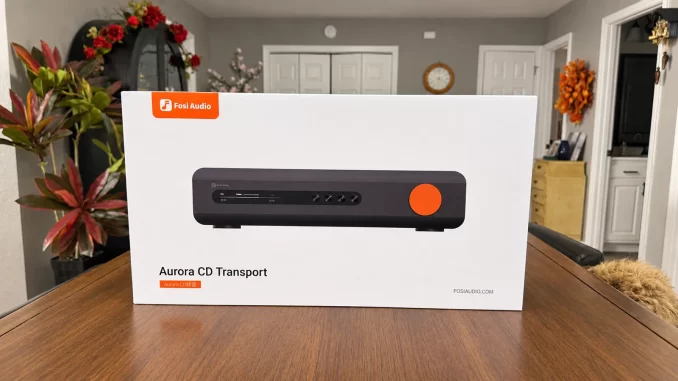
The Fosi Audio Aurora CD Transport Review.
By Steve Huff
Well, here we go again! Today I want to talk about a product from a company that I never really expected to see making a serious, dedicated CD transport.

Fosi Audio.
I am still 100% settled with my digital streaming music but I must say that the Aurora has been a pleasure and a treat to use over the last couple of months. I had gotten this piece in a while ago and am now ready to talk about it.
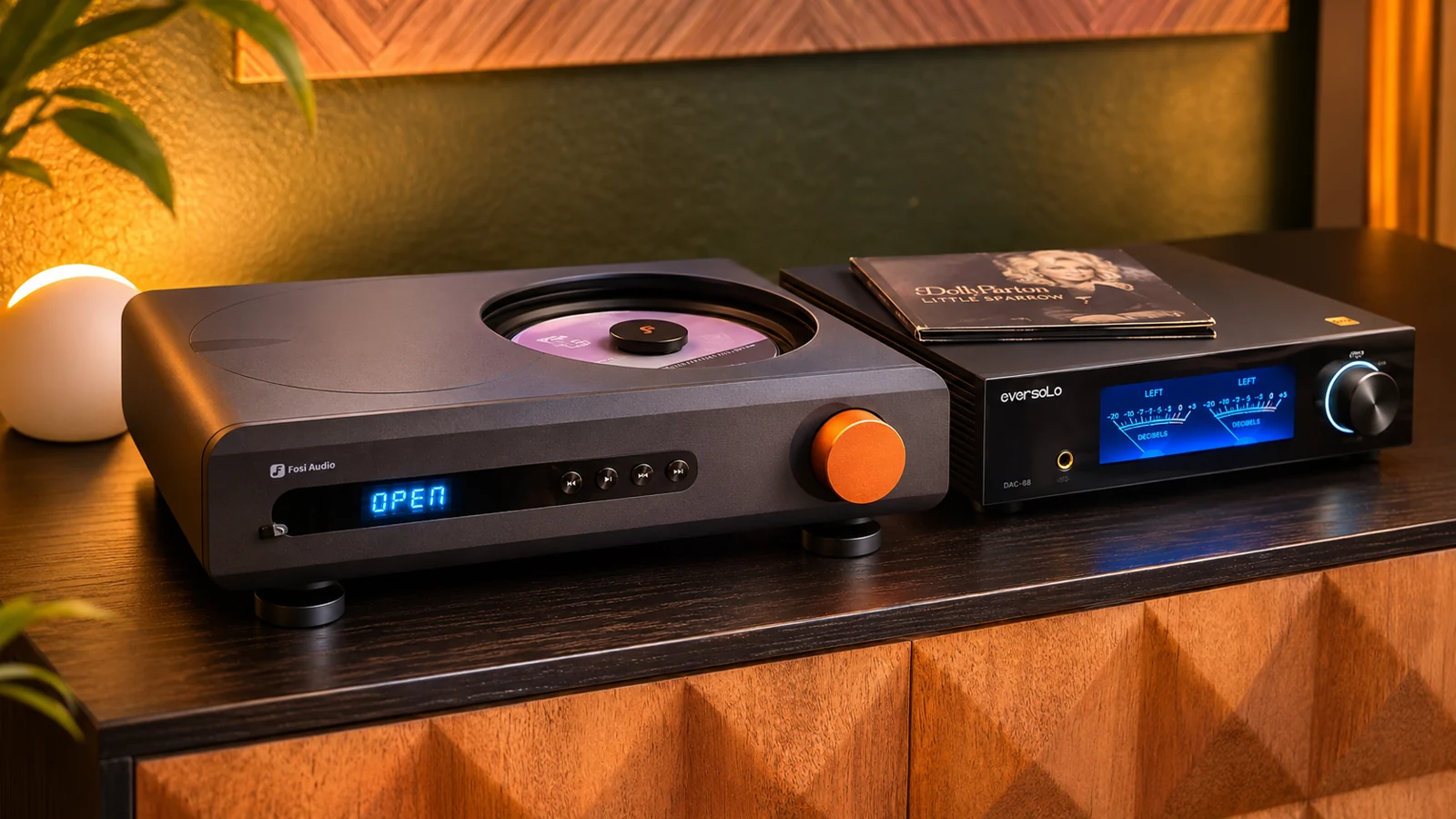
I’ve spun around 20 full CD’s and spent many hours listening and testing this affordable yet capable transport. I tested it with three DACs as well and really enjoyed it with an Eversolo R8, which is a $1300 R2R DAC.
The Aurora CD transport comes from Fosi Audio who are known for very affordable gear. I will be honest here. I haven’t loved a lot of the Fosi products I have tried (amps) but the Aurora is a step up from what I have seen from the brand previously.
This is not a $99 amplifier or a little DAC that fits in the palm of your hand. This is a rather beautiful, substantial and seemingly well-engineered top-loading CD transport that comes in at just under $600 USD.
It’s called the Aurora.
What I find interesting about this product is that Fosi didn’t try to make it do everything. There is no streamer inside, no DAC, no headphone amplifier and no fancy app to install on your phone. This is in fact why I agreed to do the review.
Its purpose is to read the information from a compact disc and deliver that information to the DAC of your choice.
That’s it. Sometimes less can indeed be more.
The Return of the Compact Disc
I have been enjoying this hobby for around 40 years now, and I remember when the compact disc was the exciting new thing in audio. No surface noise, no pops or clicks, no getting up halfway through an album to flip it over. It was pretty remarkable at the time.
When those first CD players became available in the 80’s I had to have one. I begged my parents for a player for Christmas and I wore that thing out until it broke down many years later. I remember coming home from my job on Christmas eve to find the CD music maker wrapped under the tree back in 1987. I have fond memories of those days. Very much so.
These days, most of my listening is done via streaming and most of my CD’s have been sold over the years. I still own quite a few though, the ones I could not part with.
Even so, with streaming I have access to more music than I could ever listen to in several lifetimes, and with some of the digital front ends I have had here over the last few years, the sound can be absolutely spectacular.
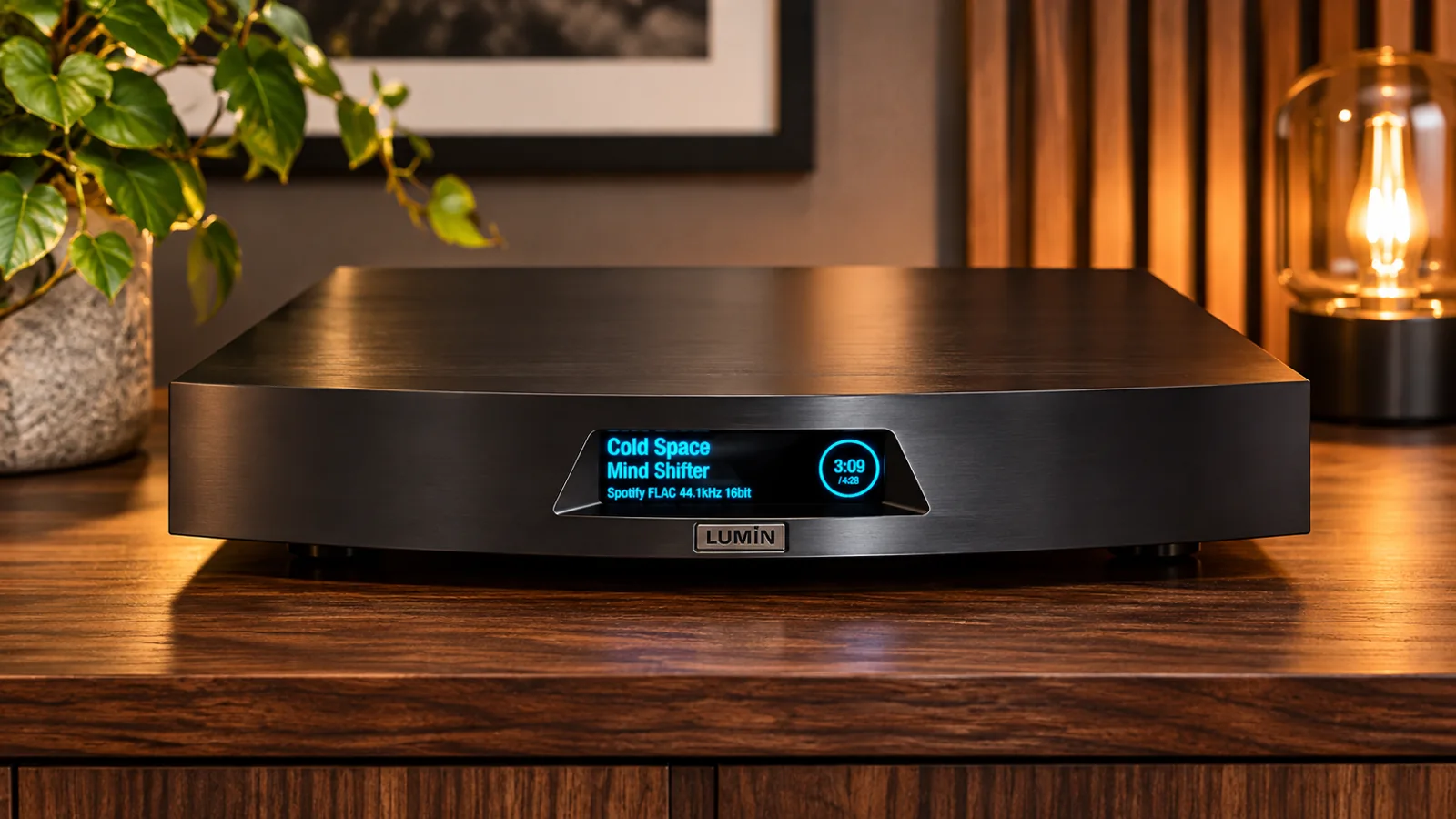
Not only does the Lumin X2 sound better than the best Analog (or digital) I have managed to setup (ever), the ease of finding new music is incredible. Even so, there are many who still crave that physical media, and I get it.
There is something about pulling a CD off the shelf, opening the case, looking at the artwork and placing that disc into a machine that makes the experience a little more special.
I also find that when I play a CD, I tend to listen differently. I am more likely to listen to an entire album rather than jump from artist to artist, song to song. There is more of a connection to the music when I have made a conscious decision about what I am going to listen to.
Then there is the fact that I actually own that music. No monthly subscription is required, no internet connection is needed, and nobody can decide tomorrow that the version of the album I love is no longer available.
Imagine we lose the internet for a month. For digital streamers, no music can play. For those who own physical media…they can keep listening. Yea, CD’s and Vinyl still have their place for sure.
With all of the changes taking place in the world of digital music, I can certainly understand why some are rediscovering their CD collections.
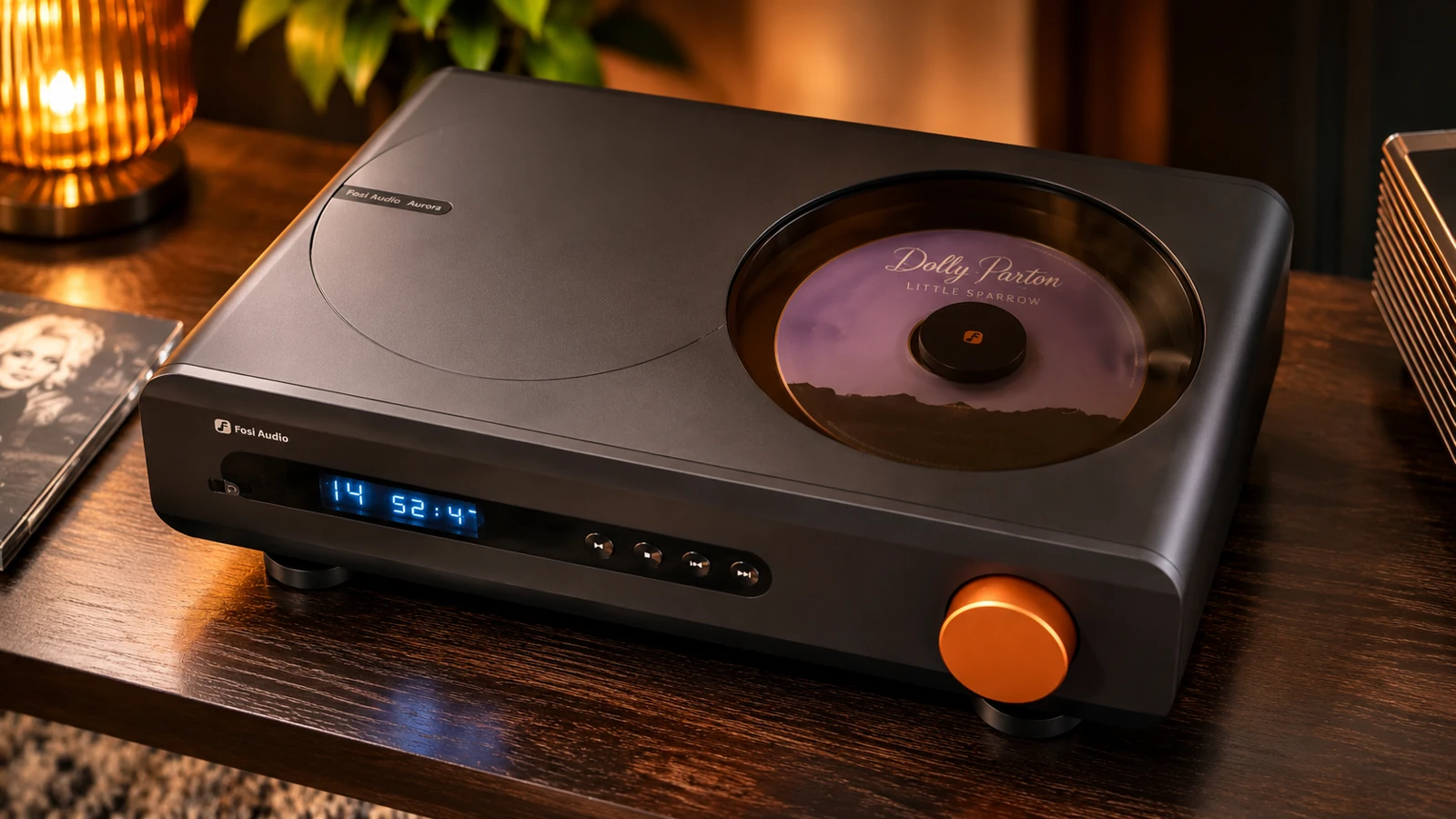
This Is a Different Kind of Product From Fosi
When I first heard about the Aurora, I was curious as to how far Fosi would go with the design of this machine. Would it be another budget product dressed up to look like something more expensive, or would there be some serious engineering going on inside?
From what I have learned about the Aurora, it appears that Fosi has put quite a bit of thought into this one.
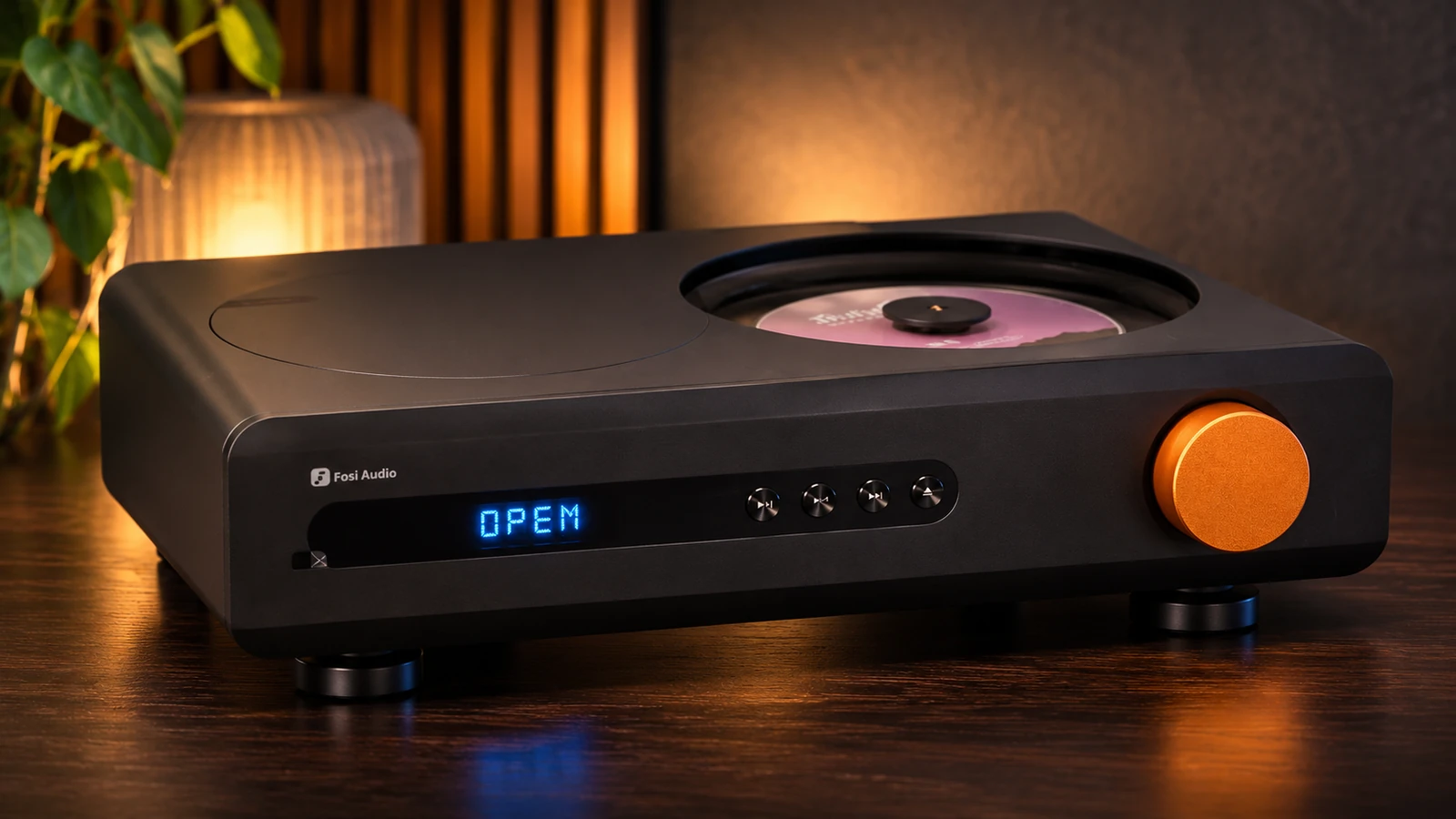
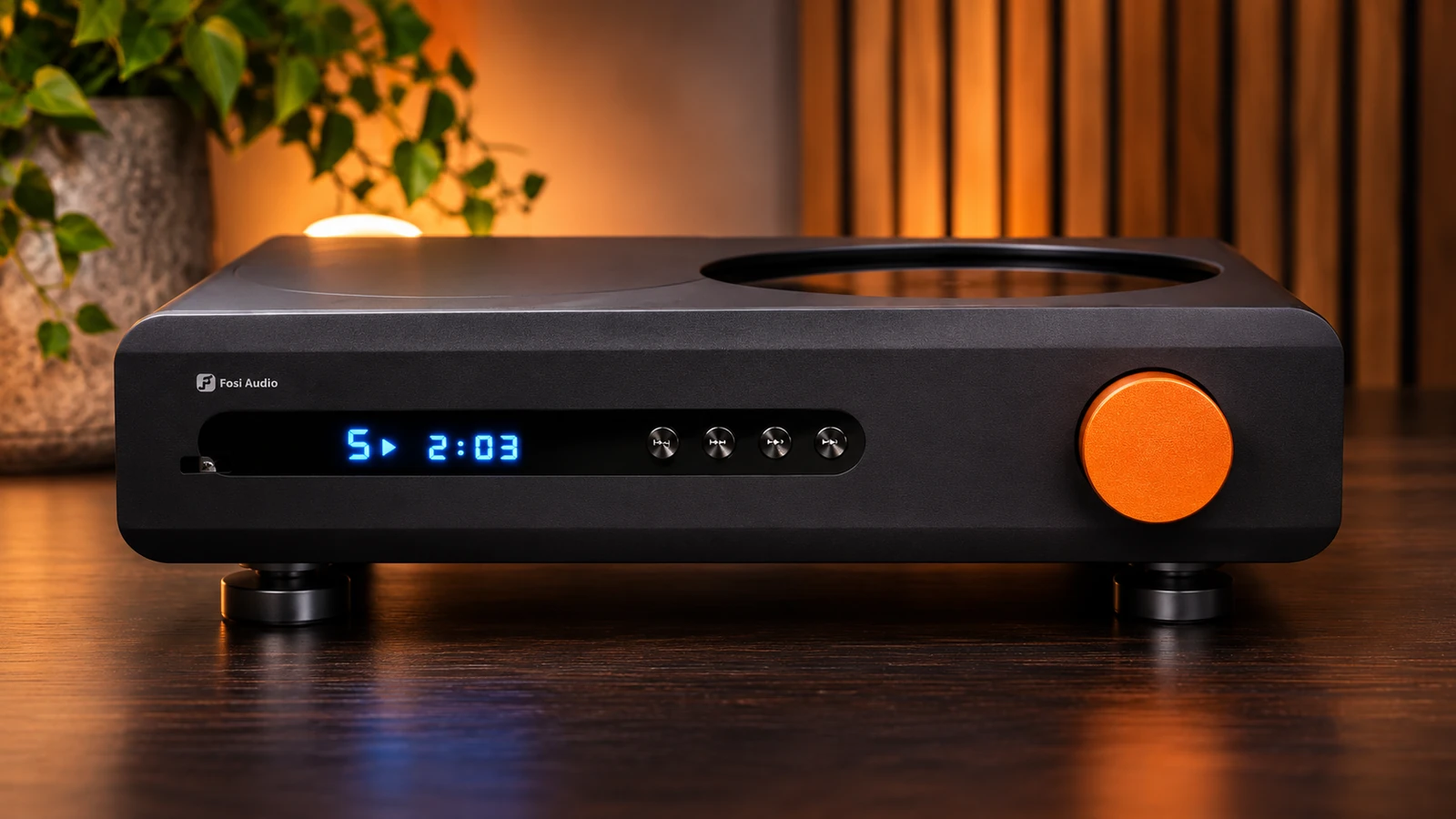
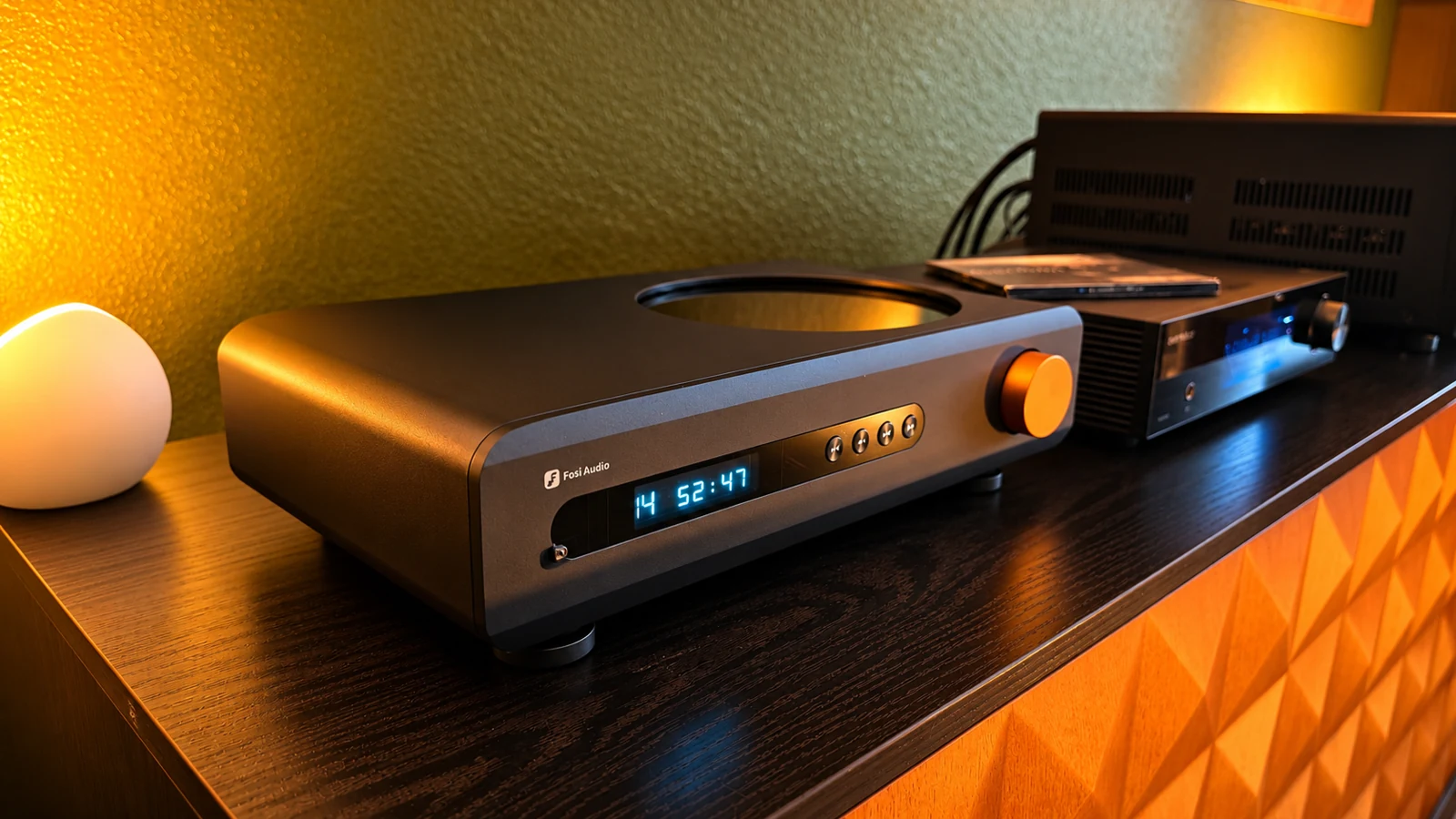
For starters, the Aurora is a dedicated top-loading CD transport housed in an aluminum chassis. It weighs in at a little over eight pounds and measures approximately 13.3 inches wide, 8.7 inches deep and three inches tall.
It’s not a huge piece of gear, nor is it one of those tiny little boxes that looks out of place sitting next to a full-size high-end audio component.
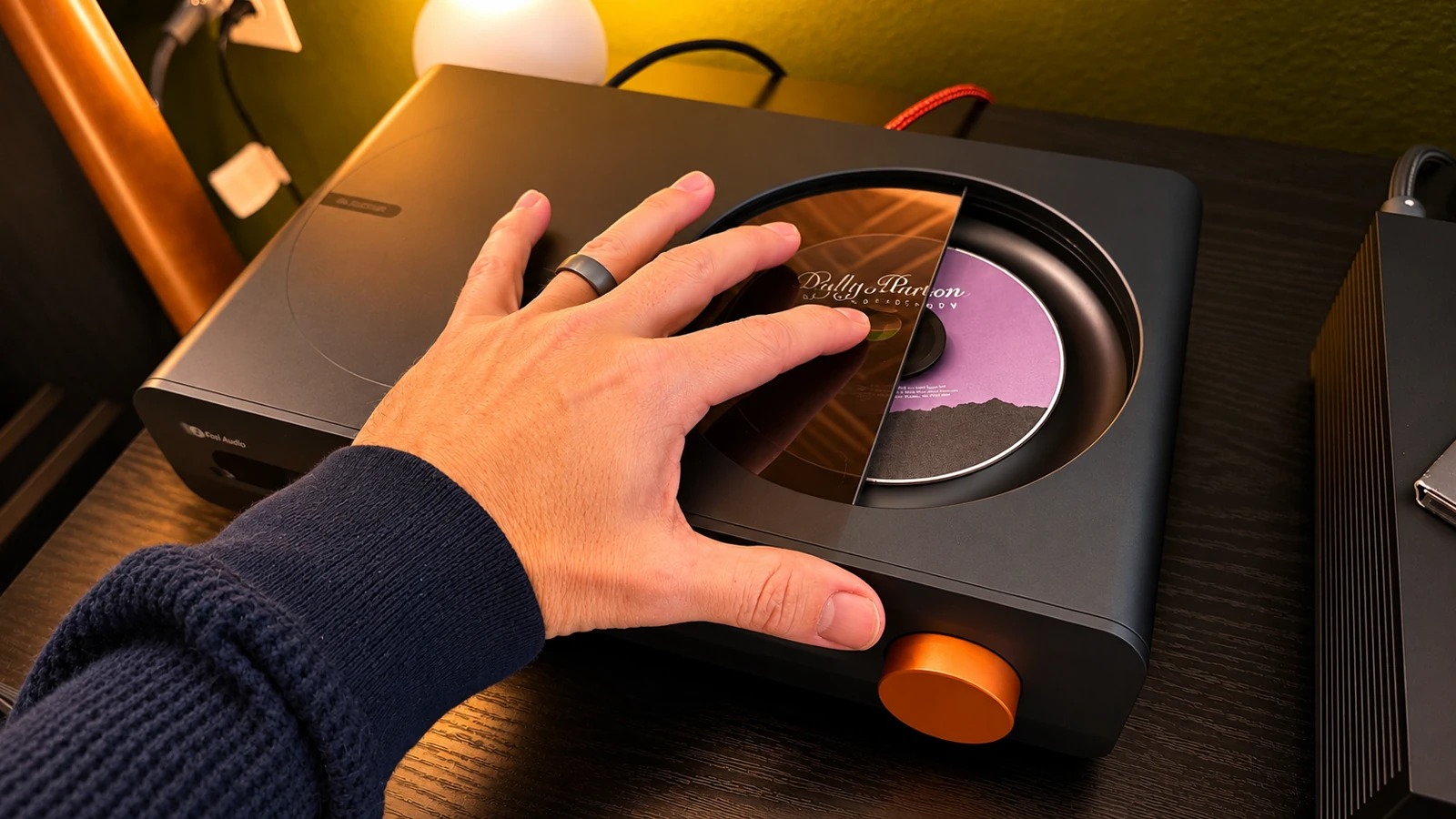
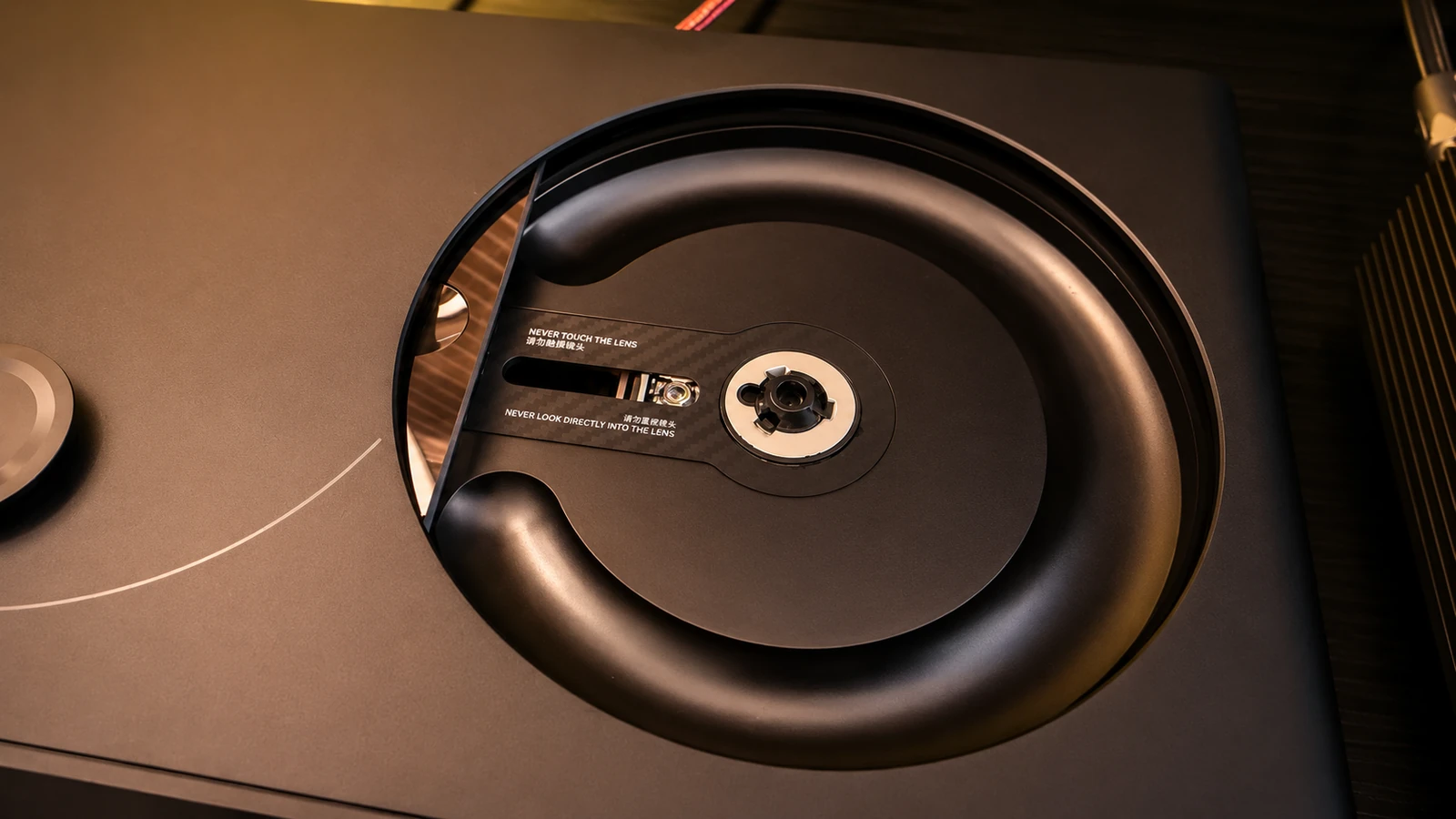
There is a sliding cover on top of the unit, and once opened, you place your CD directly onto the mechanism and secure it with the supplied disc clamp. I would have loved to see a rubber grip on the indent in the glass but it works lovely as is.
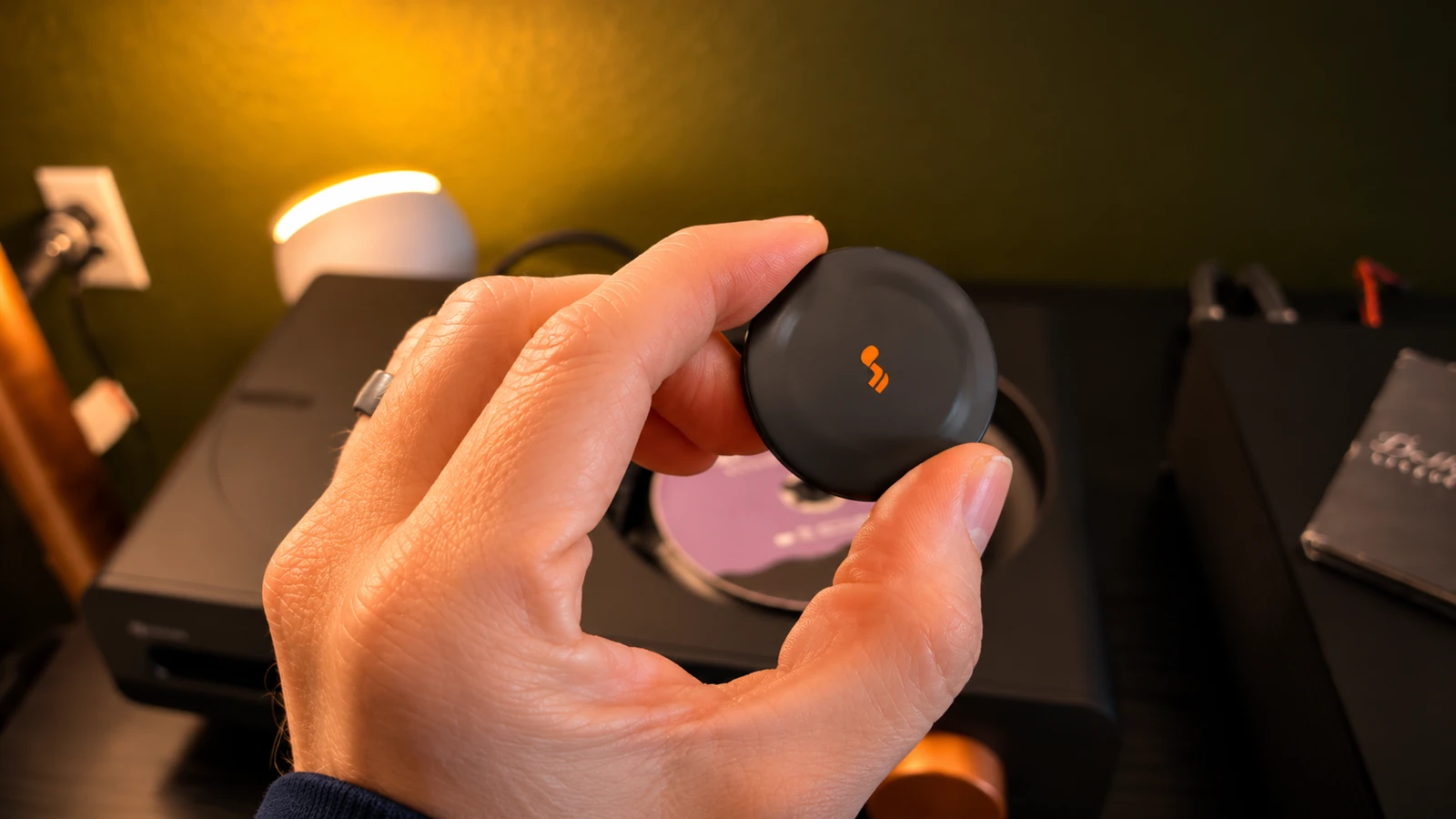
I have always enjoyed top-loading CD players and transports. There is something a little more luxurious about the process, and in some ways, it reminds me of the ritual of playing a record. Slide open the top, place disc, place clamp and close door. Then press play.
The build is decent. It is not high end by any means, and by that I mean it doesn’t sit with $3k+ transports but hey, this is Fosi and they seem to have a goal of delivering “Excellent Affordable HIFi”.
The Aurora, for me was quite the surprise in feel, heft and design. Simple yet solid.
What’s Inside?
This is where things get a little more interesting, especially when we consider the price of the Aurora.
Rather than using an external switching power supply, Fosi has gone with an internal linear power supply that utilizes a toroidal transformer.
THIS IS GOOD.
According to the published information, there are four independently regulated power sections inside the Aurora. These supply power to the motor, servo circuitry, digital processing circuitry and master clock.
Why do this?
Well, a CD transport is both a mechanical and an electronic device. You have a motor spinning a disc, a laser reading the information, servo circuitry keeping everything operating correctly and digital circuitry responsible for delivering that information to your DAC.
Separating these power circuits is intended to minimize unwanted electrical interference between the various sections of the machine.
THIS IS GOOD,
Fosi has also paid attention to vibration control, with a suspended CD mechanism, internal damping and isolation feet.
Then we have the clock.
The Aurora utilizes what Fosi describes as a low-phase-noise, femtosecond-grade oscillator, with a published jitter specification of less than 150 picoseconds RMS.
Now, I have been experimenting quite a bit with digital clocks, transports and DACs over the last few years. I have heard some rather wonderful digital setups and have also learned that spending more money doesn’t always guarantee that we will enjoy the sound more.
The quality of the clock, the power supply, the implementation of the digital outputs and, of course, the DAC we are connecting it all to can play a role in the final result.
How much of a difference any one of these things makes will depend on the system and the implementation.
But I do like seeing this level of attention being paid to the design of a $600 CD transport.
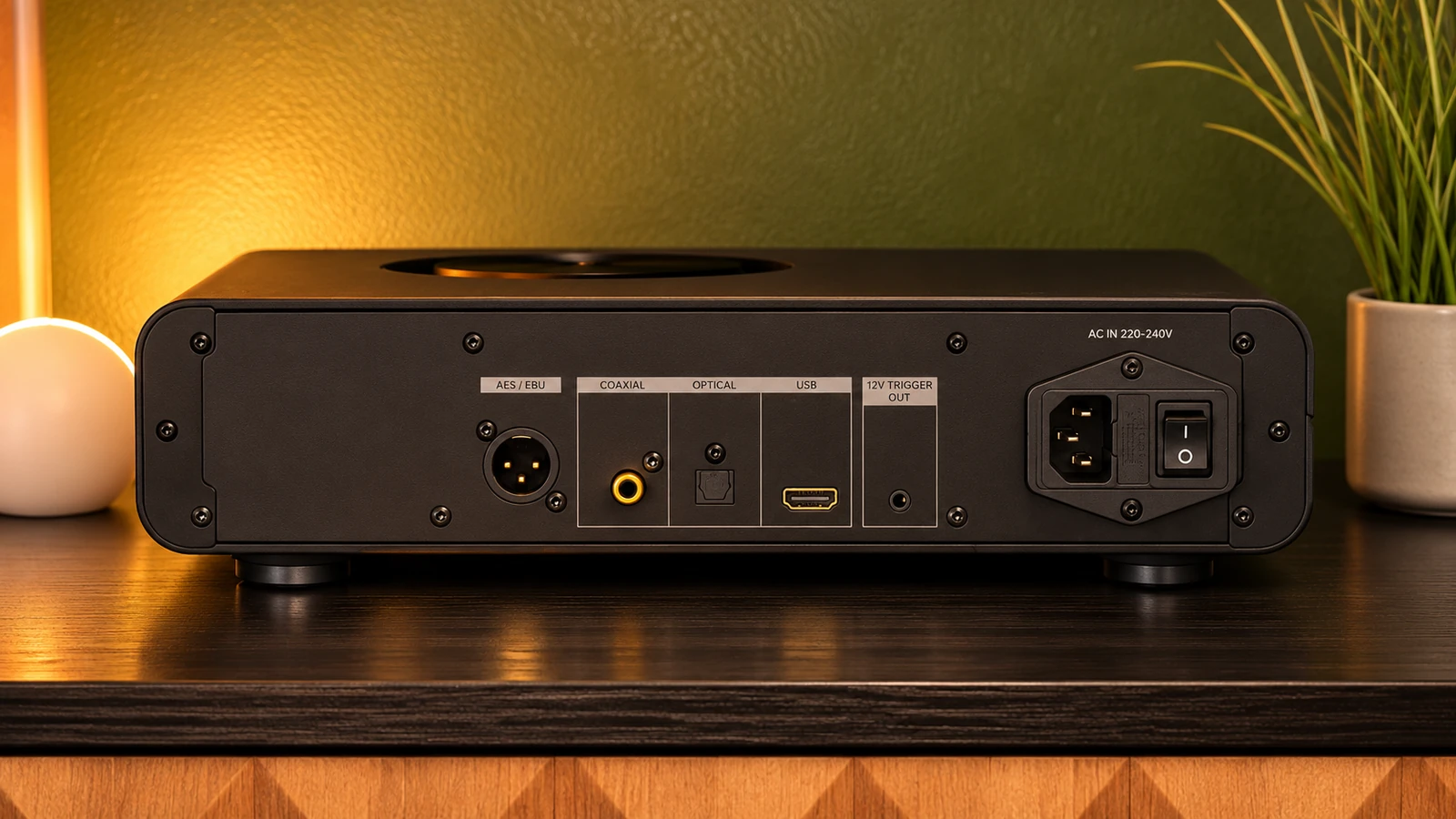
Connections. Fosi Gives Us Some Nice Options Here.
Around the back of the Aurora, we have four digital output options.
- Coaxial S/PDIF
- Optical Toslink
- Balanced AES/EBU
- I²S via HDMI
I was happy to see both AES/EBU and I²S included here, as these are connections that many of us who own higher-end DACs like to experiment with.
Do keep in mind that I²S over HDMI is not the same as a standard HDMI audio connection, and compatibility between different manufacturers is not always guaranteed.
The Aurora also features a standard AC power connection and a 12V trigger output.
There is no analog output on the Aurora because, again, this is a transport and not a CD player in the traditional sense. You will need a DAC to use it.
For me, this is a good thing. I would rather Fosi put the money into making the best transport they could at this price than spend some of that budget implementing a DAC that many of us would never use.
It also means that as your system evolves and you change DACs, the Aurora can remain in your system. The Aurora ships with feet that you screw in to the bottom. There are discs to protect your cabinet top or rack shelf.
Upsampling. Do We Really Need It?
The Aurora also gives us the option to play our CDs at their native sampling rate or to utilize its internal upsampling.
The published options include:
- Native 16-bit/44.1 kHz
- 24-bit/88.2 kHz
- 24-bit/176.4 kHz
- 24-bit/352.8 kHz
The highest available sampling rate may depend on which digital output you are using.
Now, just because we are taking a 16-bit/44.1 kHz recording and upsampling it to a higher rate doesn’t mean we are magically creating new musical information that wasn’t there to begin with.
But we are changing how and where some of the digital processing takes place, and depending on the DAC we are using, we may prefer one presentation over another.
I have had DACs here where I preferred everything in its native resolution, and others where I enjoyed what upsampling brought to the presentation.
There is no universal answer here, which is why I appreciate having the choice.
Me, I liked the sound best in my system with upsampling OFF but that is my usual with any digital music these days, most of the time. Your mileage may vary.
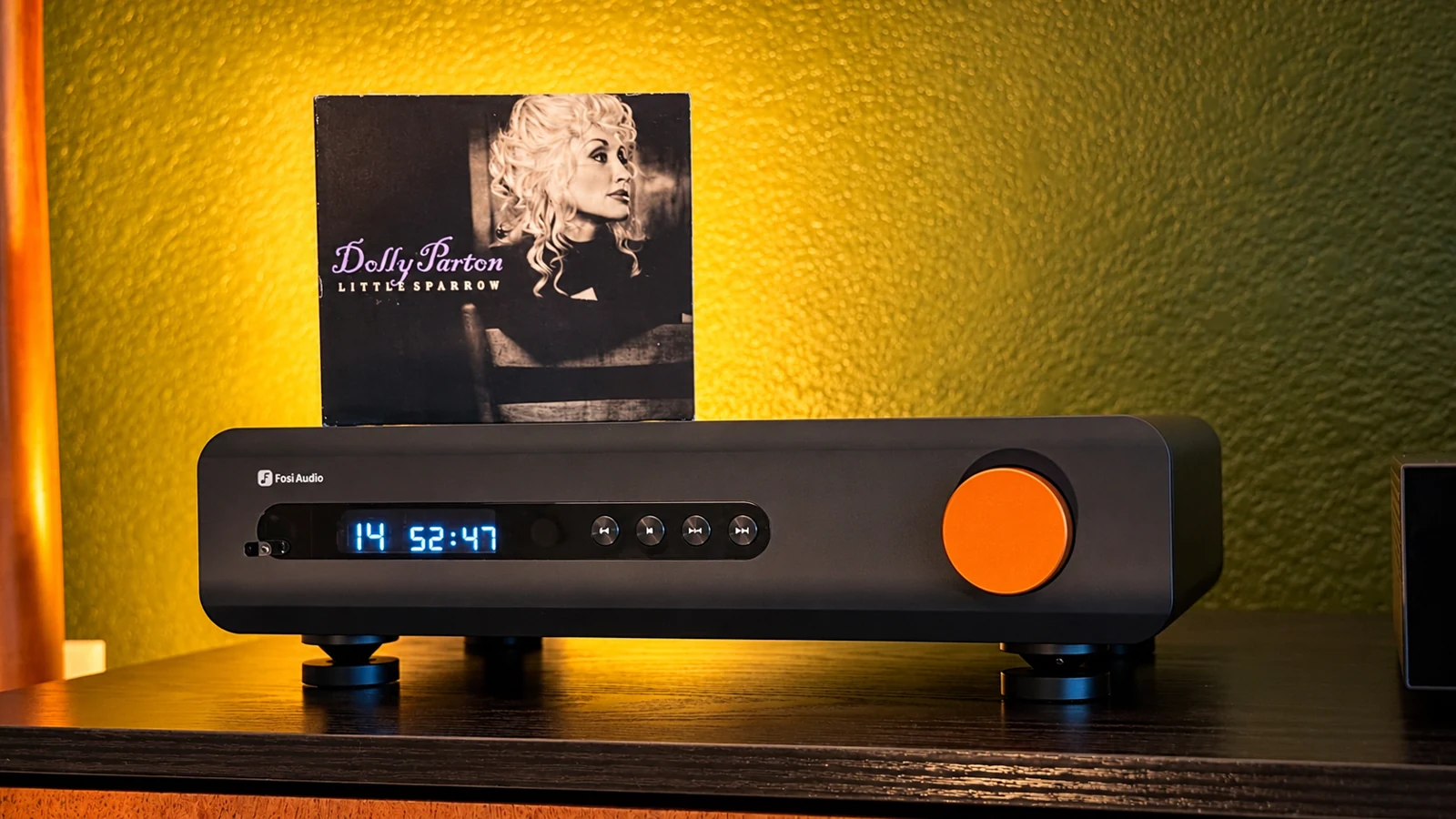
Living With the Aurora
There is something to be said for simplicity in this hobby.
Over the years, I have had digital components here that required apps, network connections, firmware updates, external clocks, network switches and all kinds of additional things to get them up and running.
With a CD transport, we connect a digital cable to our DAC, plug it into the wall, put in a CD and press play.
Pretty simple, isn’t it?
The Aurora also comes with a remote control, which is something I consider essential with a CD transport. I want to be able to sit in my listening chair, skip tracks, pause the music or repeat a track without having to get up.
Of course, with a top-loading transport, you will want to make sure you have enough space above the unit to comfortably change discs.
As for disc loading times it was very good. Normal. Like I remember a decent CD player loading up a disc. When I open the top glass plate and insert a CD I then place the clamp on. Close the lid and the disc will load up within a few seconds.
The Sound. Can a $600 CD Transport Compete With the Big Boys?
This is probably the section most of you have been waiting for.
Can a CD transport really have a sound of its own? After all, isn’t it just sending ones and zeros to our DAC?
It’s a discussion that has been going on for decades in this hobby, and one that will probably continue for decades more.
A transport is not converting the digital information into an analog signal. That is the job of our DAC. But the way that digital information is delivered, the electrical noise present at the interface and how the receiving DAC handles timing and clock recovery are all things that can vary from one implementation to another.
Whether those differences translate into something audible is what I am interested in when I sit down to listen.
For me, it always comes back to the music. Am I enjoying what I am hearing? Am I connecting with the performance? Am I sitting in my chair for hours on end, playing one album after another?
Those are the things that matter most to me.
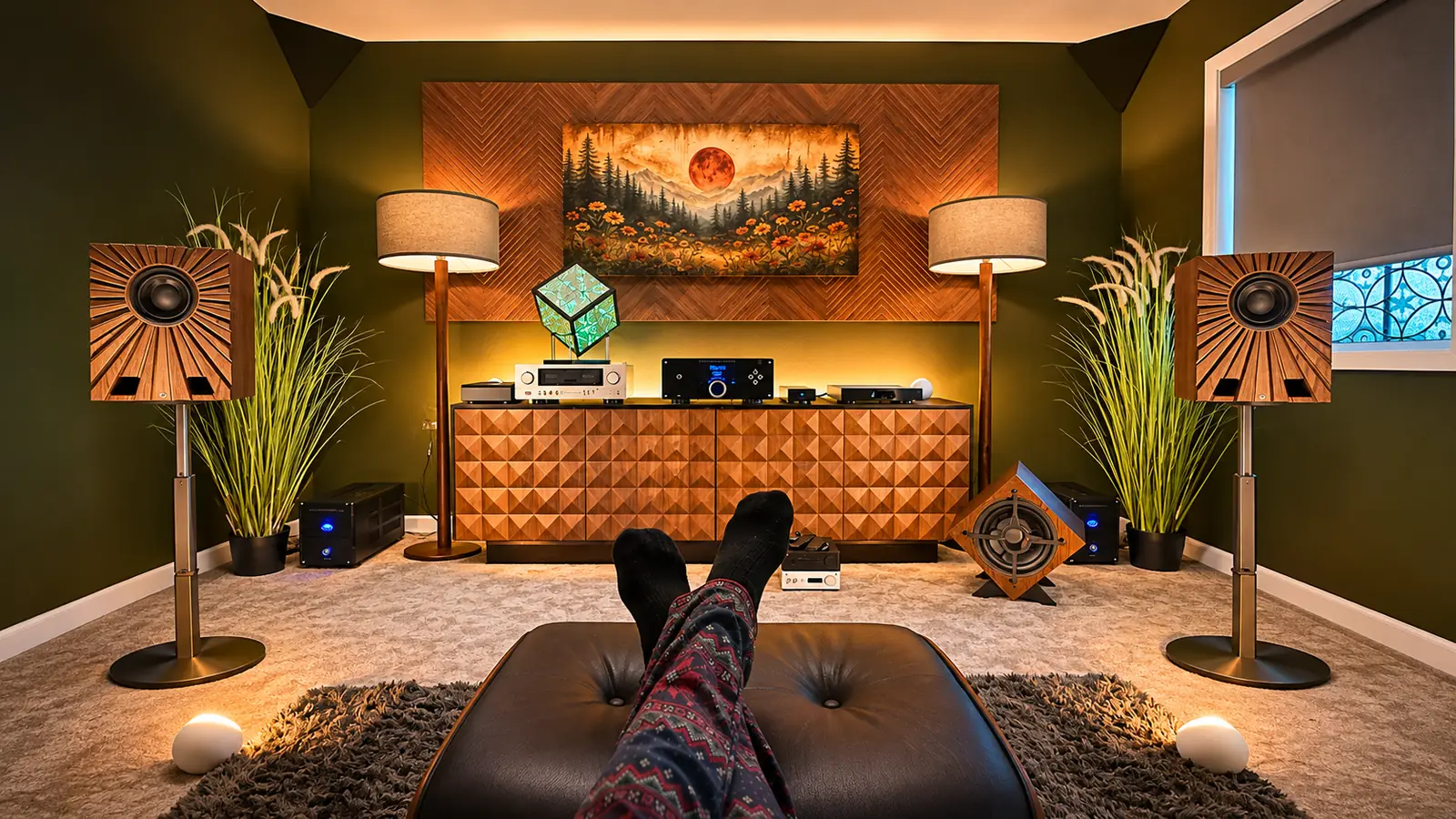
The system used for this review:
When I tested the Aurora for the first run. I had it going into a LAIV Harmony 2 DAC via the COAX input. I tested this with an Accuphase E-3000 and my Electrocomoaniet reference setup of EC5 and AW300 mono amps. Speakers were my SV Audio Gro and Fleetwood Helios.
For my streaming I was using the Eversolo triple stack of T10, Z10 and C10 along with the Harmony 2 as well for the R2R flavor. Also a Lumin X2 landed which sits within the pinnacle of streaming as of 2026.
CD vs. Streaming
This is something I was particularly interested in with the Aurora.
I have had some rather expensive digital streaming components in my system, and some of them have delivered the finest digital sound I have ever experienced in my home.
The $16,800 Lumin X2 has been transformative with digital streaming music. Hell, it should be for that price.
The convenience of streaming is something I would never want to give up. Being able to discover new music, find obscure recordings and have millions of albums available at my fingertips is pretty incredible.
But what happens when I take a $600 CD transport and compare it to a digital streaming front end costing several times as much, using the same DAC?
Now, we do have to be careful when making these comparisons, as the mastering of the CD may be different from the version available on our streaming service. Sometimes what we are hearing is a difference in the recording itself rather than a difference in the equipment.
With that said…
The Aurora was stable, loaded the discs with ease and had no issues in operation. The sound was clean, snappy and just as I remember CD sounding. There was also nice body due to the DAC being used and for me the Aurora seemed to love going into an R2R DAC.
I have some of my original CD’s from the 90’s and 2000’s and I listened to “Little Sparrow” from Dolly Parton. I love this album and sat through the entire DISC before listening to it via streaming.
I will not lie, the Lumin X2 sounded much better, even streaming from Spotify Connect Lossless. But the X2 is a special high end kind of thing. This is not the Aurora sounding less than, it’s just I have access to some of the finest streaming setups out there.
The CD through the Aurora though did sound different, more snappy and clean with sharper transients and dynamics. The Aurora was doing its job well.
Compared to an Eversolo T10 streamer and Z10 DAC the sound of the Aurora, going into the Z10 was very similar to that particular streaming setup. So here the Z10 DAC was showing its stuff and the Aurora was sending the digital bits from the CD without ever giving me an issue or problem.
It all just worked.
What About Spending More?
There are CD transports available today that cost $1,000, $3,000, $5,000 and even well into five figures.
The question I always ask myself when reviewing a more affordable piece of gear is not whether it is the absolute best I have ever heard, but rather how much of that high-end experience it can deliver for the money.
I have reviewed products over the years that have cost more than some automobiles. I have also reviewed products costing a few hundred dollars that have brought me an enormous amount of musical enjoyment.
Price is not always an indication of how much we are going to enjoy a piece of audio equipment in our own system.
With the Aurora, Fosi is offering a dedicated CD transport with a linear power supply, a top-loading mechanism, vibration control, multiple digital outputs and selectable upsampling for around $600.
On paper, there is quite a bit here for the money.
But as always, the proof is in the listening.
I have heard CD transports from Technics, TEAC, Mark Levinson and others that cost more, look nicer and feel more solid. They sounded a bit better as well but that cost several thousand dollars. The Fosi is not trying to be an end all audiophile player. Rather they are offering us a solution to play our CD’s without spending a fortune to do so. All while sounding rather excellent and delivering a reliable experience.
There are times when CD can seem to sound better and vice versa.
The Pros and Cons
The Pros
- Dedicated CD transport design.
- Attractive aluminum chassis.
- Internal linear power supply with separately regulated circuits.
- Four digital output options, including AES/EBU and I²S.
- Selectable upsampling.
- Top-loading mechanism with disc clamp.
- Remote control included.
- No unnecessary features to complicate the experience.
- Competitive $599.99 retail price.
The Cons
- Requires an external DAC, which adds to the cost for those who do not already own one.
- Top-loading design requires clearance above the unit.
- I²S compatibility will depend on your DAC.
- Not designed for SACD playback.

My Final Thoughts on the Fosi Audio Aurora
I like the direction Fosi is taking with the Aurora.
We have seen so many companies over the last few years trying to cram as much functionality as possible into a single box. Streamers that are also DACs, preamps, headphone amplifiers, music servers and sometimes even integrated amplifiers.
There is absolutely nothing wrong with those products. I have enjoyed quite a few of them myself.
But there is also something refreshing about a company releasing a component designed to do one thing.
To simply play a compact disc and do it well. A master of one vs trying to be everything to everyone.
For those of us who still have hundreds or even thousands of CDs sitting on shelves, the Aurora offers a way to bring those collections back into our systems without having to spend thousands of dollars on a dedicated transport.
And maybe, just maybe, some of you will rediscover a few albums you haven’t listened to in years. CD’s are affordable these days and used offerings are everywhere.
The Aurora is a cool product and one I love to see. It will allow so many more to get into trying out separates in the CD playback world. Add a DAC of choice and you will have a reliable transport to spin your discs.
While transports do sound different when it comes to CD boxes, the Aurora brings all most all ever need.
As always, it’s about the music.
Steve
The Fosi Audio Aurora is said to start shipping in December 2026.