
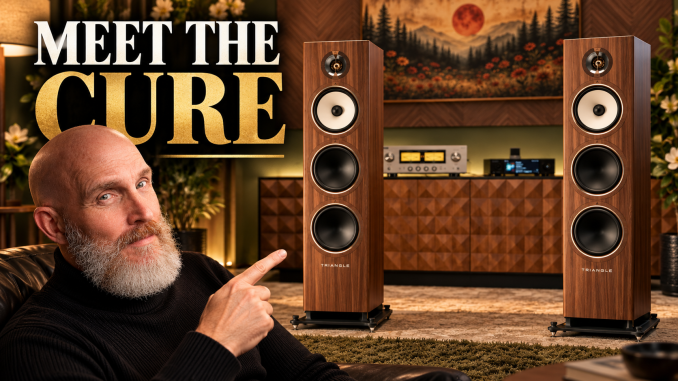
The Cure for CRAZY HiFi Prices? Triangle Solstice 8 Review
By Steve Huff
The Video Review
A few months ago I reviewed the new small speakers from French brand Triangle. Those were the Solstice 3, which are small two-way bookshelf speakers that truly hit above their price point in design, build and sound. Today I want to talk about the big model in the new lineup: the Solstice 8, which comes in at $2,799 for a pair. This one is a much larger speaker than the 3 and truly looks stunning in my new space in the teak finish, but what about sound? We will get to that as well in this review.
The Solstice 8 is, in reality, a much larger Solstice 3, so I expected this speaker to sound quite different, yet it kept a similar sound and vibe to the little 3 when it comes to tonality. Everything just sounded…well…bigger!
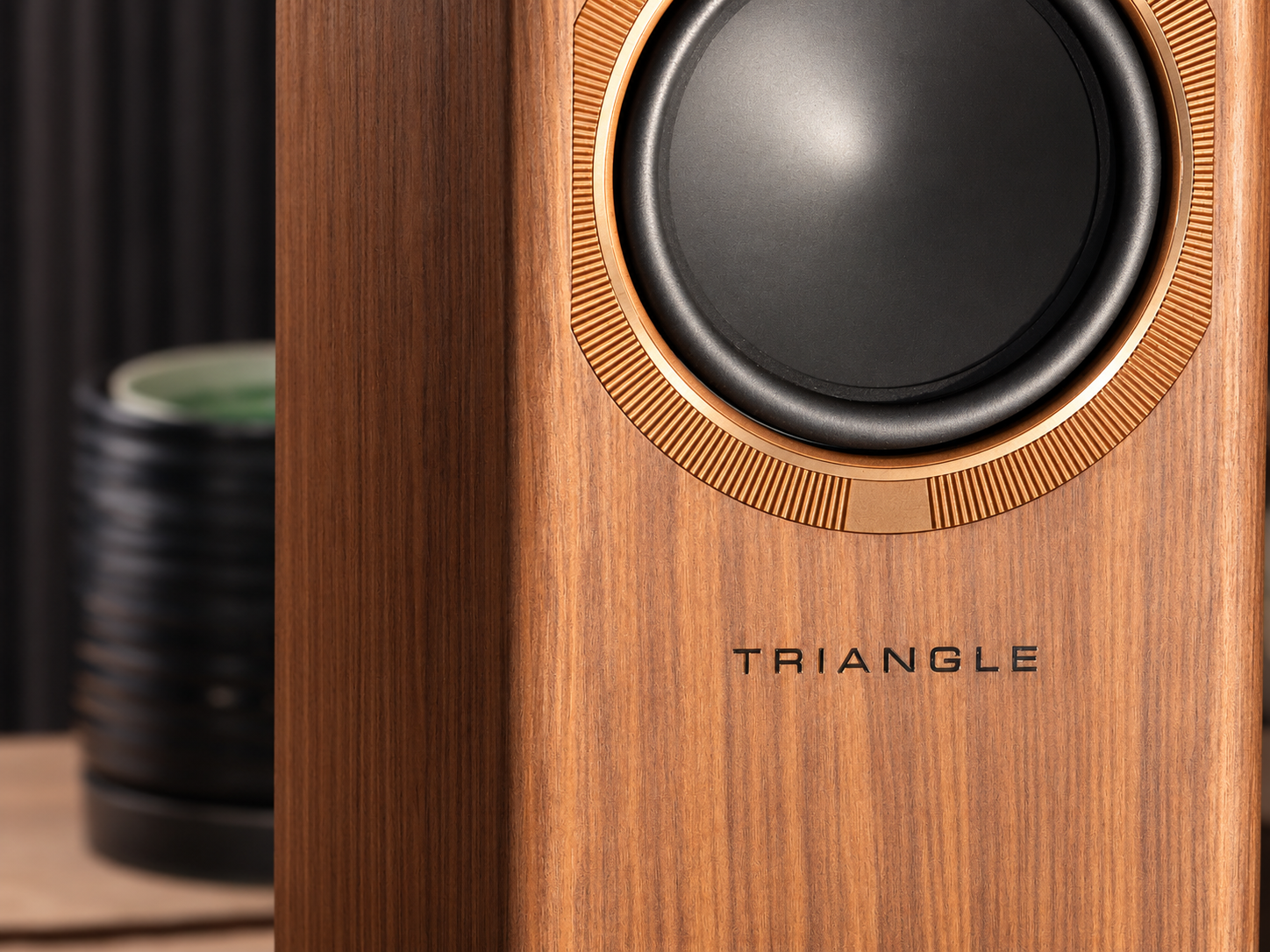
This review will not be long or drawn out, as this will be an easy one, but first let me talk about the specs of the Solstice 8 tower speaker.
Key Specifications of the Solstice 8
- Type: 3-way bass-reflex floorstanding speaker
- Sensitivity: 91 dB
- Frequency Response: 38 Hz – 22,000 Hz (±3 dB)
- Nominal Impedance: 8 Ω (minimum drops to 3.6 Ω)
- Power Handling: 130 W RMS (recommended amplifier power: 60 to 200 W RMS)
- Recommended Room Size: 15 to 50 m² (approx. 160 to 540 sq. ft.)
Driver Complement
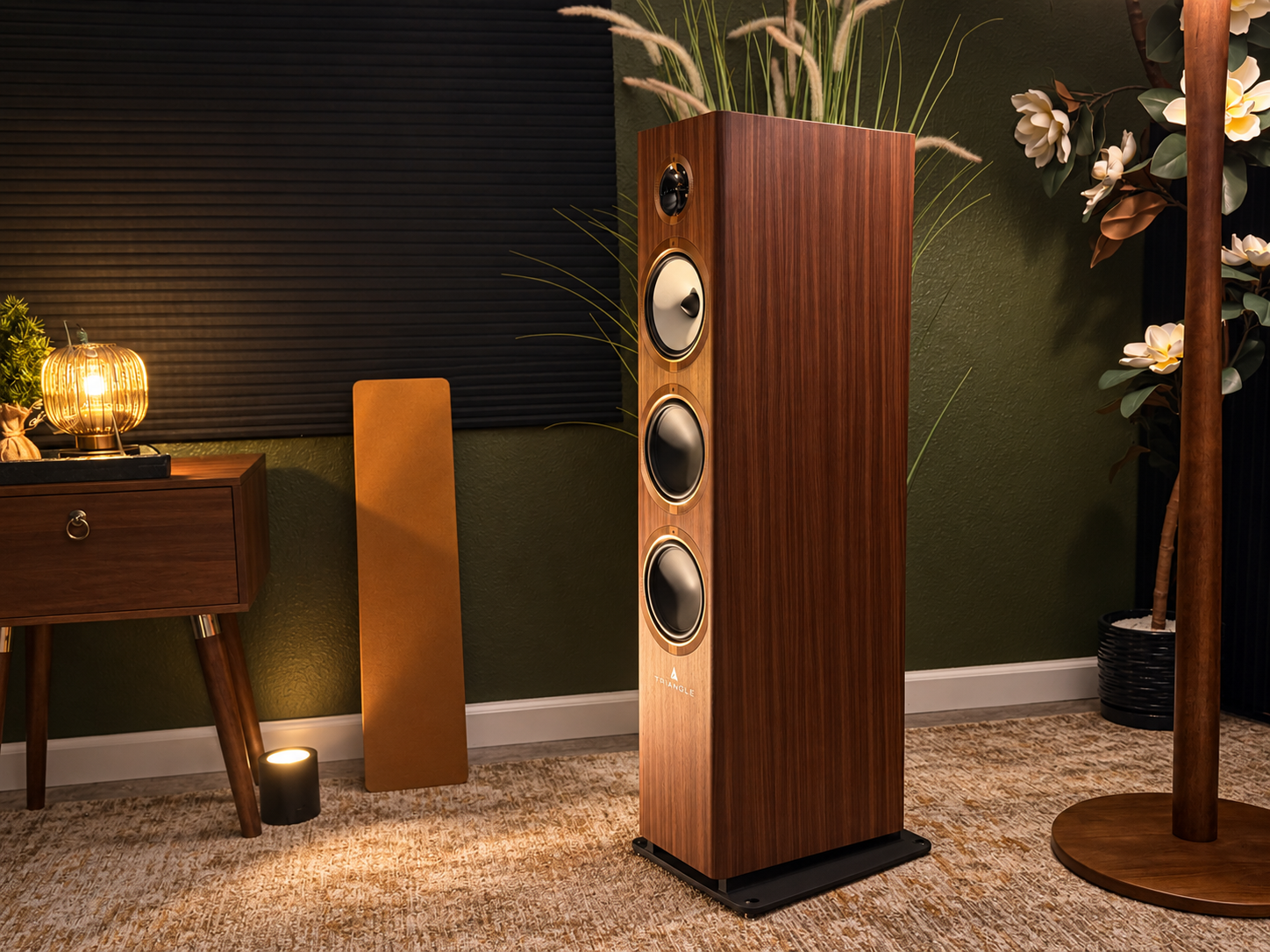
- Tweeter: 1 x 25 mm magnesium alloy barrel-type horn tweeter (TZ2540MG)
- Midrange: 1 x 16 cm natural cellulose pulp midrange driver
- Woofers: 2 x 16 cm paper concave woofers with no dust cap
Design and Connectivity
- Enclosure/Base: MDF cabinet with a 2-degree tilt and a silicone-damped cast-iron base hiding the downward-firing laminar port
- Terminals: Dual terminal blocks supporting single-wire, bi-wiring, or bi-amping
- Finishes: Black Ash, Satin White, Teak, and Birch
- Dimensions & Weight (Per Speaker): 107.5 cm tall × 30.8 cm wide × 39.4 cm deep; weight is 30.4 kg (approx. 67 lbs) each, or about 60.8 kg (134 lbs) per pair
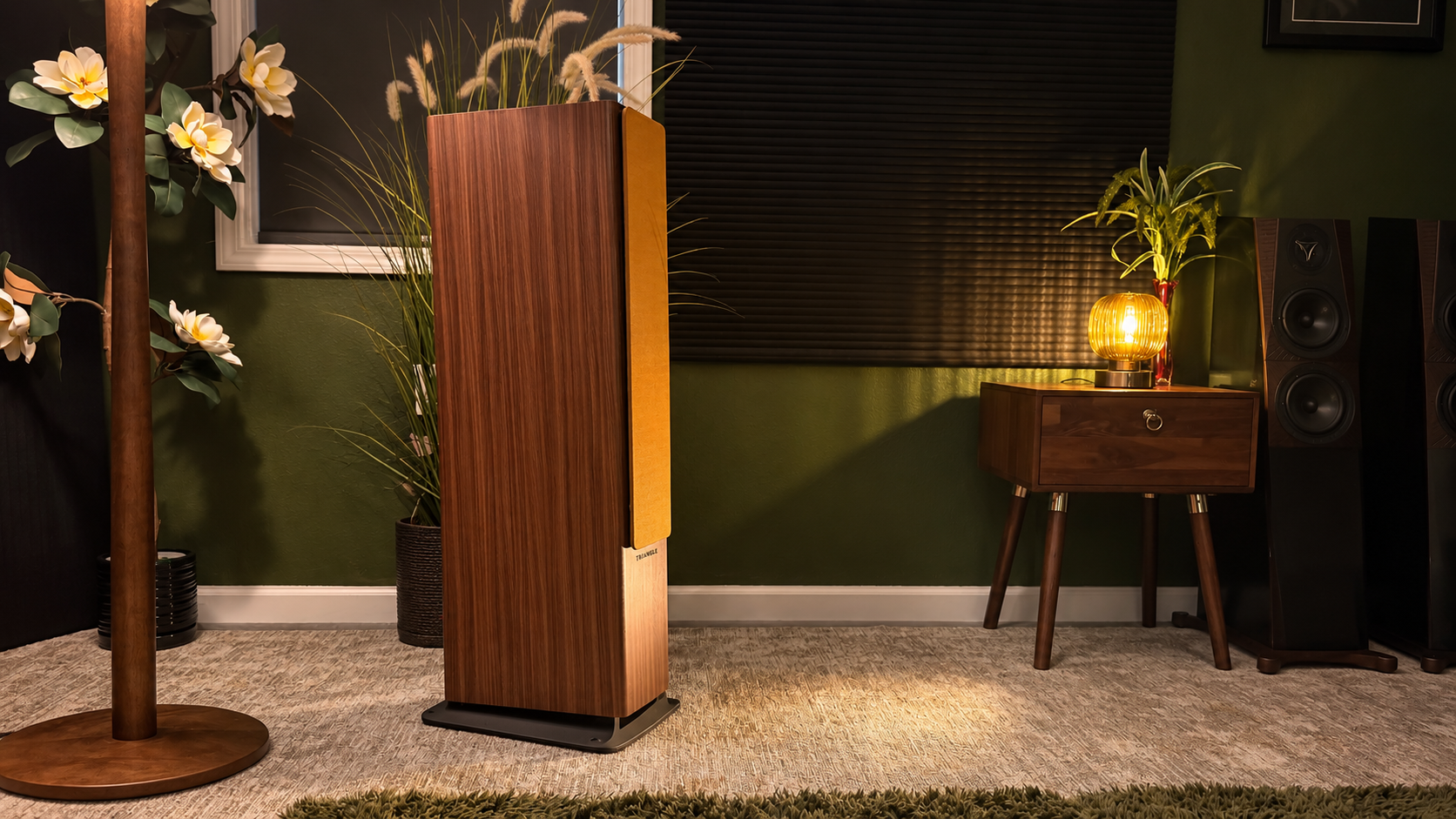
So all in all, each Solstice 8 houses three cone drivers and a tweeter, and the speakers are not hard to drive. They are tall and commanding in my space but look so nice in the teak finish.
Also, let’s look at some details that are interesting when it comes to this speaker.
- The bass drivers are new designs. The two 16 cm (6 inch) woofers use concave paper cones with no dust caps. Triangle says eliminating the conventional dust cap helps create a more rigid, continuous cone surface, reducing deformation/distortion when the woofers are moving hard.
- The midrange is cellulose/paper for a reason. The dedicated 16 cm mid driver uses a natural cellulose pulp cone. Triangle specifically talks about timbral realism, vocal presence and body here. They also changed the way the cone is glued from the rear, which increases the effective radiating area.
- The crossover points are interesting: 250 Hz and 3.7 kHz. So those two woofers are really being allowed to concentrate on bass, with the paper midrange carrying a huge part of what we actually perceive as the musical character of the speaker. Triangle uses a 2nd-order low-pass on the bass section, a 2nd-order band-pass on the midrange and a 3rd-order high-pass on the tweeter.
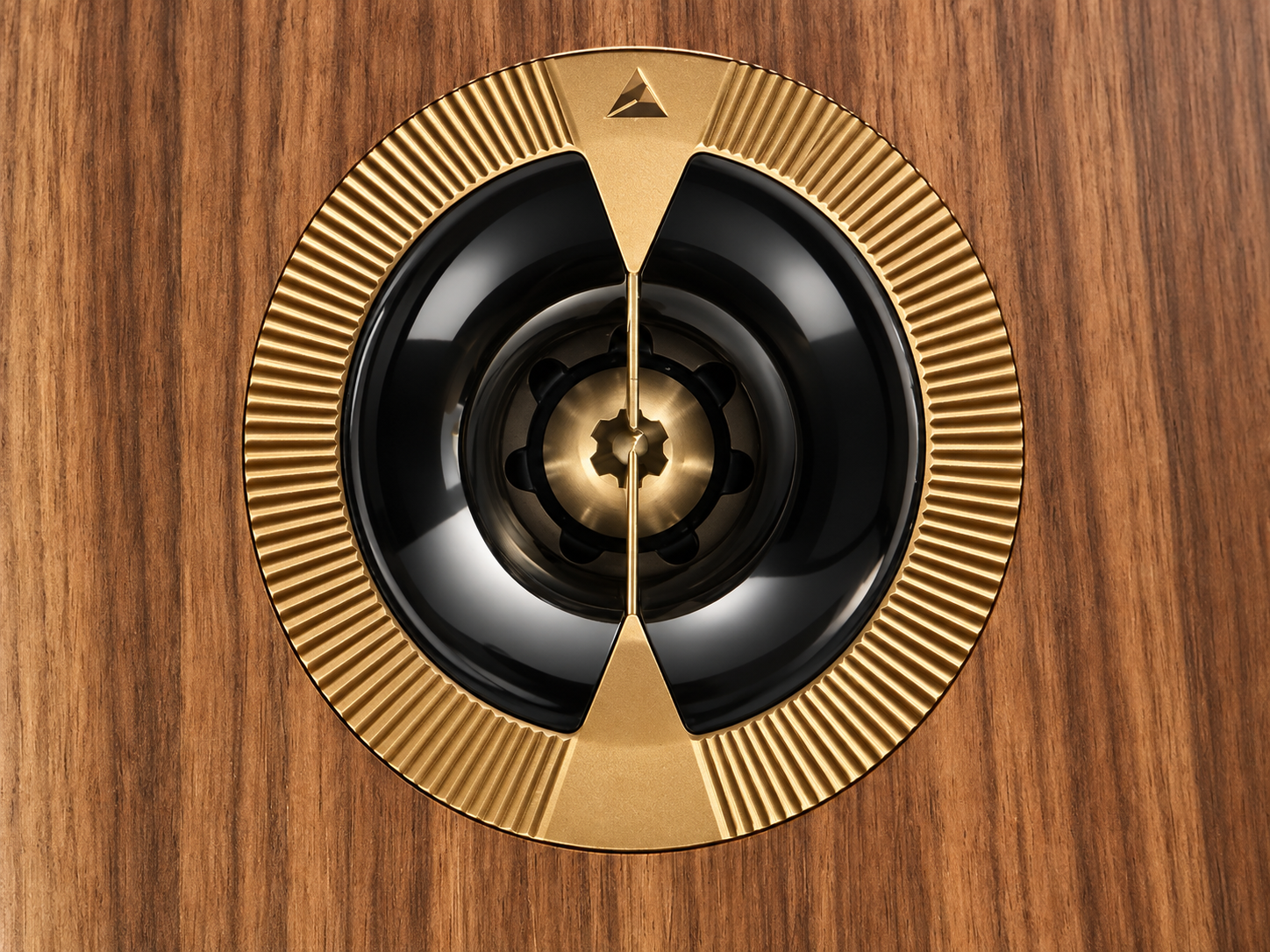
Let’s not forget about the tweeter here. The TZ2540MG is a 25 mm aluminum/magnesium dome sitting inside Triangle’s horn, but the horn has been re-engineered.
The big change is the strange-looking barrel-shaped compression area immediately ahead of the dome. Triangle says this geometry smooths the tweeter’s response and helps it integrate more naturally with the midrange.
They’ve also designed the horn around an OS-SEW — Oblate Spheroid Super Elliptical Waveguide — profile, specifically to make the treble dispersion more uniform across the listening area rather than giving you a tiny sweet spot. There’s a redesigned one-piece phase plug for the same purpose. I can validate that the sweet spot is wide with these.
The motor also uses a neodymium ring magnet with an open center and rear absorption chamber, meant to reduce energy reflecting back toward the dome. Seems like Triangle did their homework when designing the all-new Solstice line.
I have several speakers here on hand right now and I have compared the Solstice 8 to all of them along with three different power solutions. For my main source these days I use an Eversolo T10 streaming transport into a Benchmark DAC 3B using the RCA outs. This is in no way bright, lean or analytical but rather this source gives me punch, density, solidity and some warmth along with a holographic soundstage depending on speaker and placement.
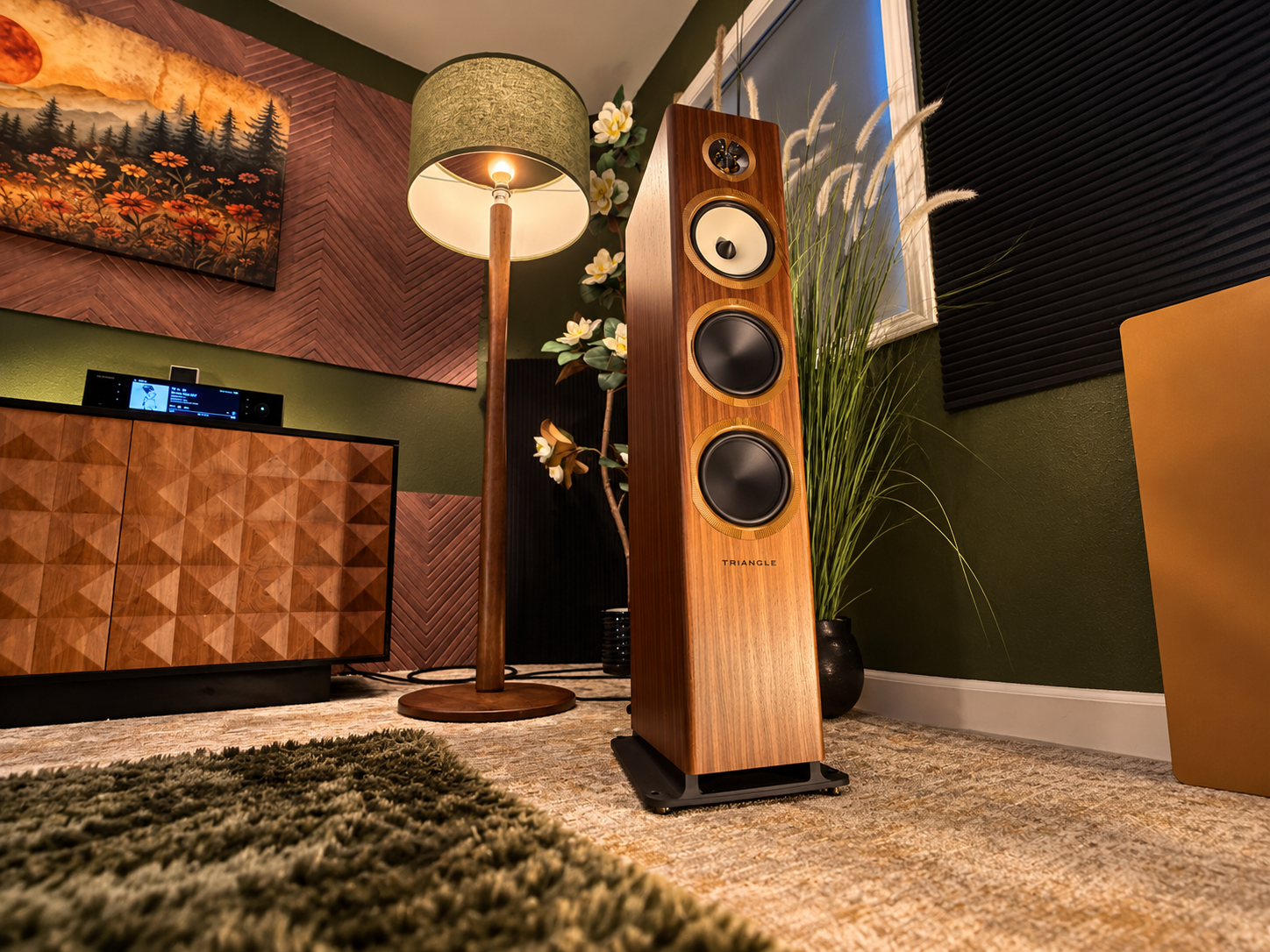
Amplifiers used were the Luxman L-100 Centennial Class A Integrated, an Accuphase E-3000 Integrated and the Benchmark LA4 and AHB2 amp. I will say out of the gate that the Solstice 8s are not hard to drive in my 14 x 19 space (rounded up) and all of these amps powered them beautifully and without issue. Each brought their own sound. I also used the little $799 FiiO EA13 tube amp and that also powered the Solstice 8 without issue.
Triangle describes the Solstice 8 as carrying forward the character of the previous Antal:
lively sound + open soundstage + versatility, but the Solstice 8 appears to be Triangle taking the qualities that made speakers like the Antal popular—speed, energy, openness and dynamics—and refining the areas where older Triangle designs could sometimes sound a little too enthusiastic.
But let’s dig in to that a bit after I talk about unboxing the speakers as these sound the opposite of aggressive or overly lively.
Unboxing
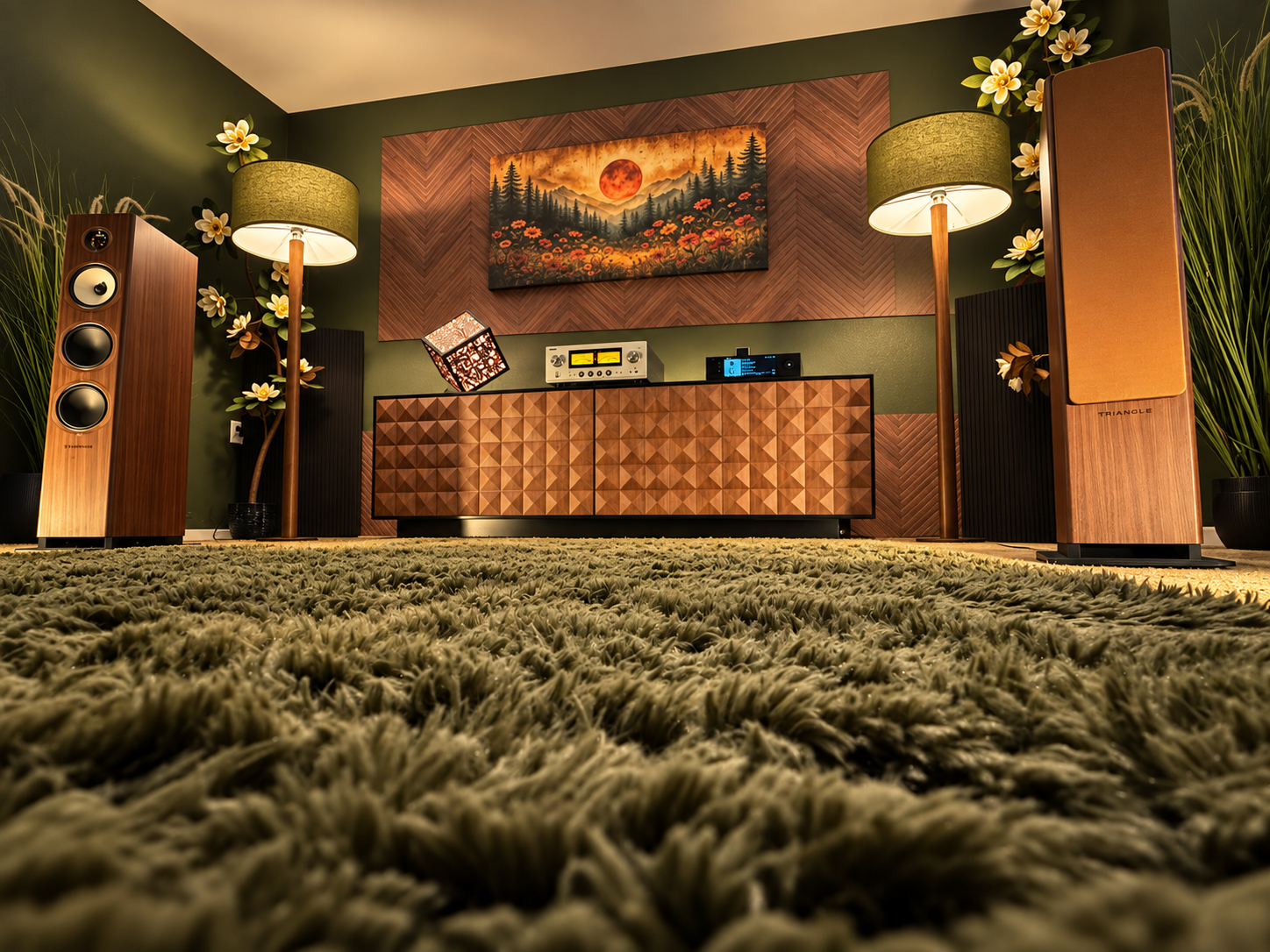
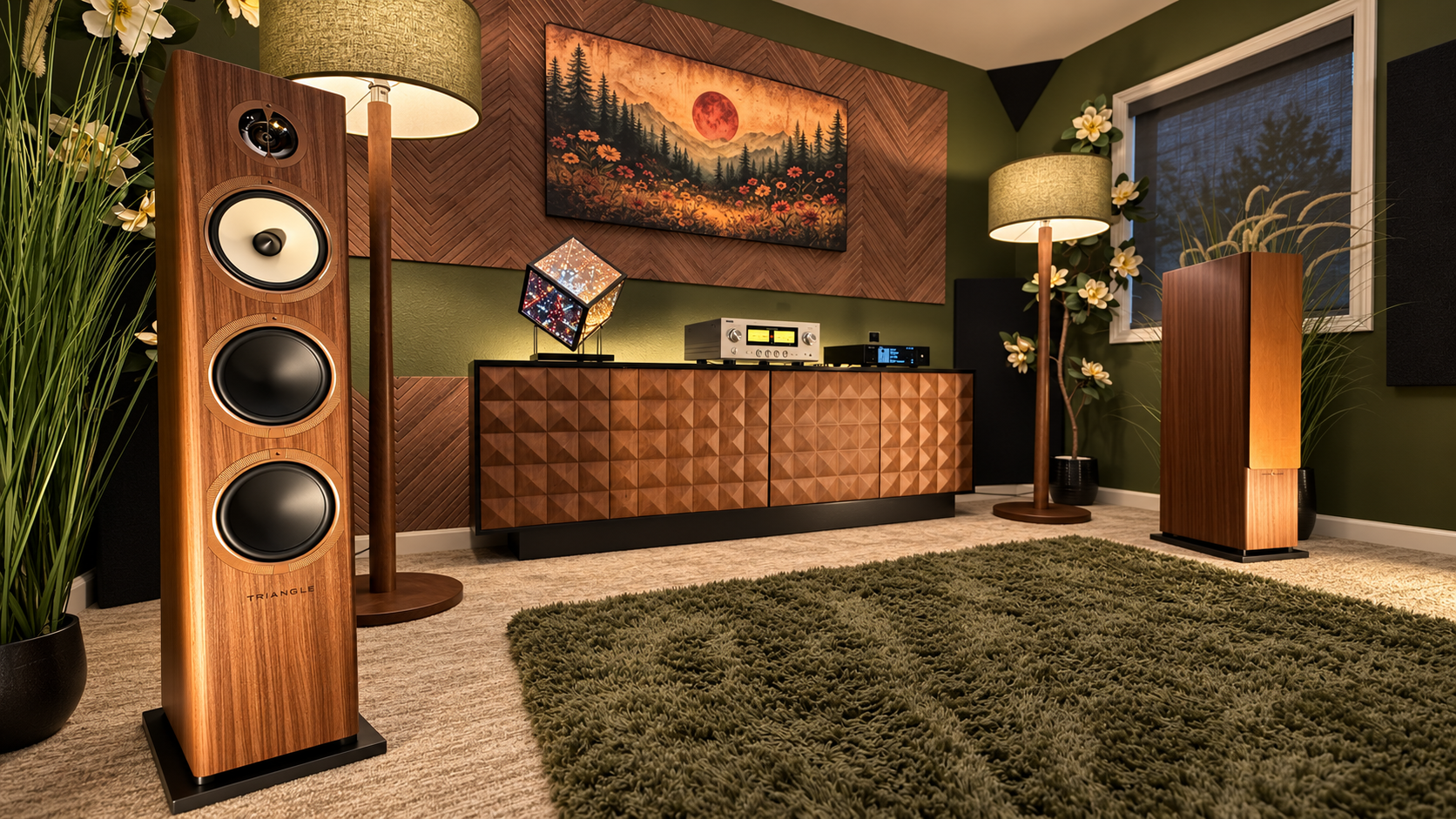
When I unboxed the Solstice 8 I was pleased to see that I was sent the teak finish as it goes so well in my current audio room. I designed the space here with a mid-century modern vibe with a natural twist. The teak veneer really makes a statement in the room in regard to looks. Tall, striking and classy.
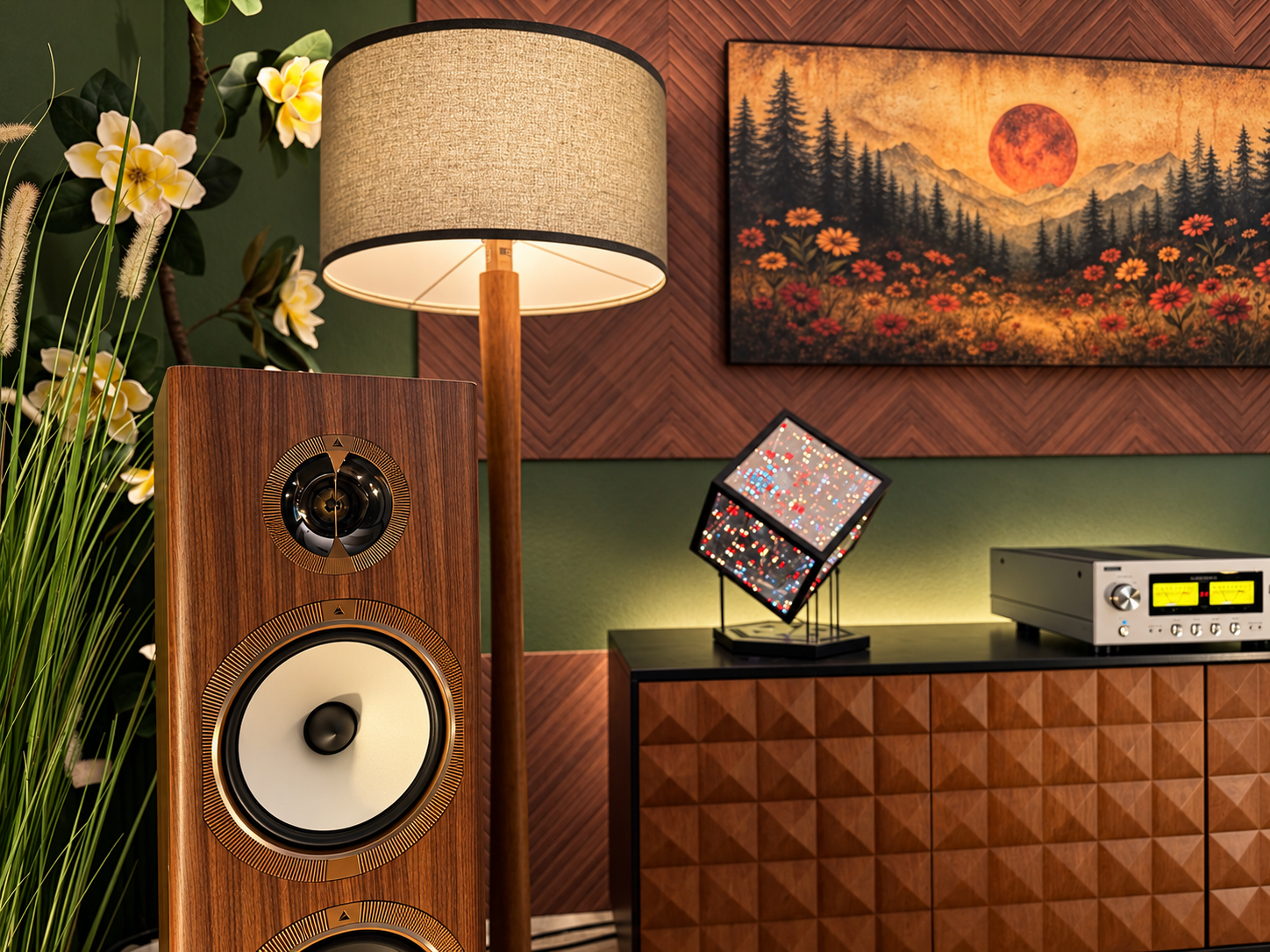
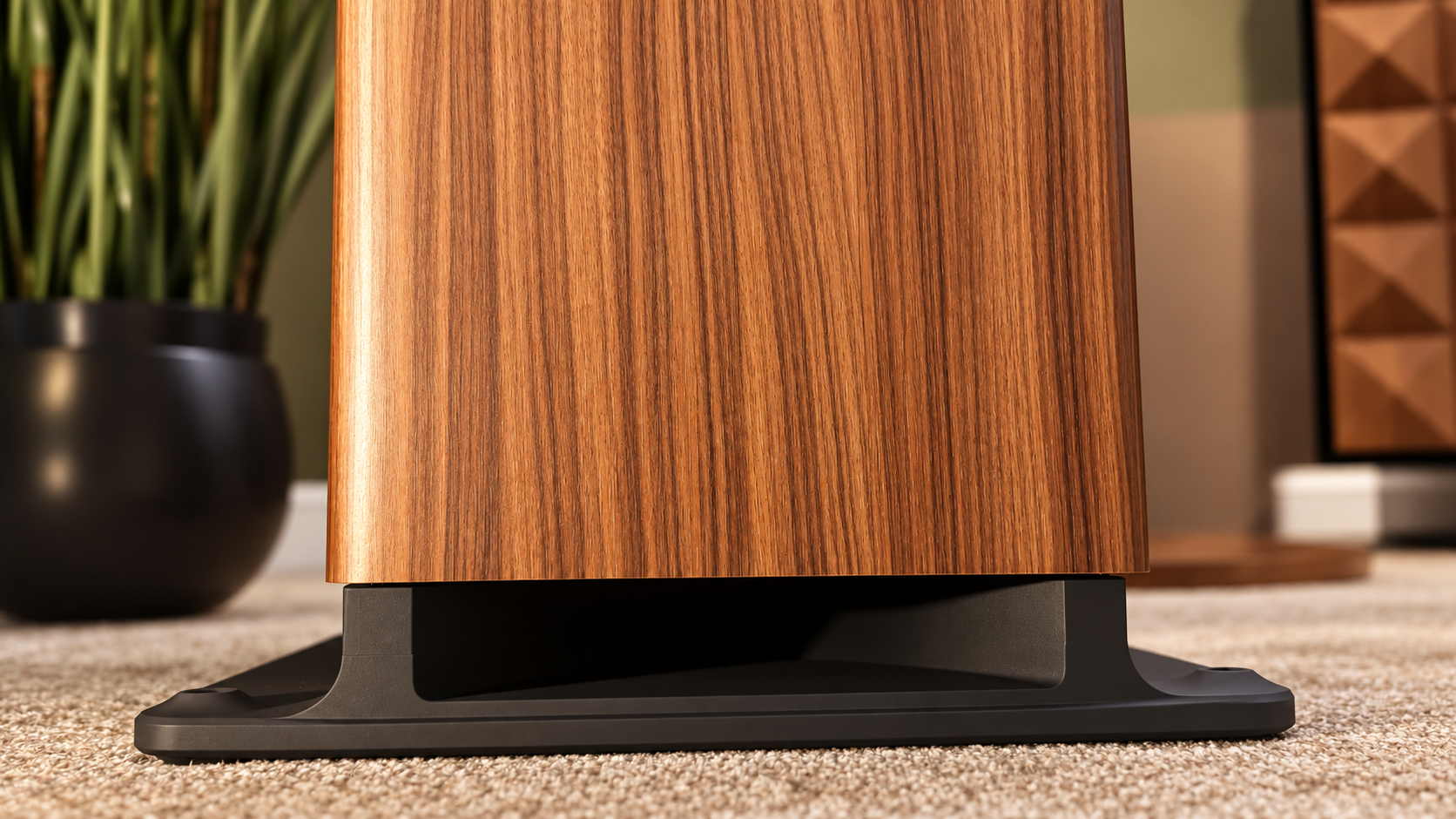
With a price tag of $2,799 for a beautiful tower speaker, I was excited to give these a listen, but first I went around the speaker to check out the design. Curved corners, magnetic grilles and a new silicone-damped cast-iron base that allows the bass port to be hidden, kind of, in that base. Let’s dig in more…
The big plinth underneath the Solstice 8 performs three separate functions.
First, the bass-reflex port is hidden inside the base. Triangle calls it a laminar-flow design, with the air exiting through the plinth rather than a traditional obvious front/rear port. Their intention is lower turbulence/port noise and more controlled bass.
Second, the base itself is a cast-iron honeycomb structure coated in a thick silicone layer. That’s designed to absorb vibration and mechanically decouple the cabinet.
Third, it deliberately tilts the entire cabinet backward by 2 degrees. Triangle says this improves directionality and broadens the listening field. You also get adjustable spikes and counter-spikes.
So that unusual bottom assembly isn’t decoration. It’s basically port + vibration control + speaker geometry all rolled into one piece.
The speakers also come with spikes and discs but I only had them in for a few days and yes, they do finish off the sound once you have the placement set, so use them once set up. Each speaker ships in its own box as they are large, though not as heavy and unruly as some big speakers. These gave me, a 57-year-old man, no issues with moving them, lifting them or placing them in the right spot.
Also, when I did my initial review of these it was stated online everywhere that these were made in France but after some digging and verifying with Triangle, the Solstice line are made in China. This explains the amazing price point and value. If these were indeed made in France the price would be double or triple. Triangle wanted to bring value here and that they did. Even so, these are lovely no matter where they were made.
Listening
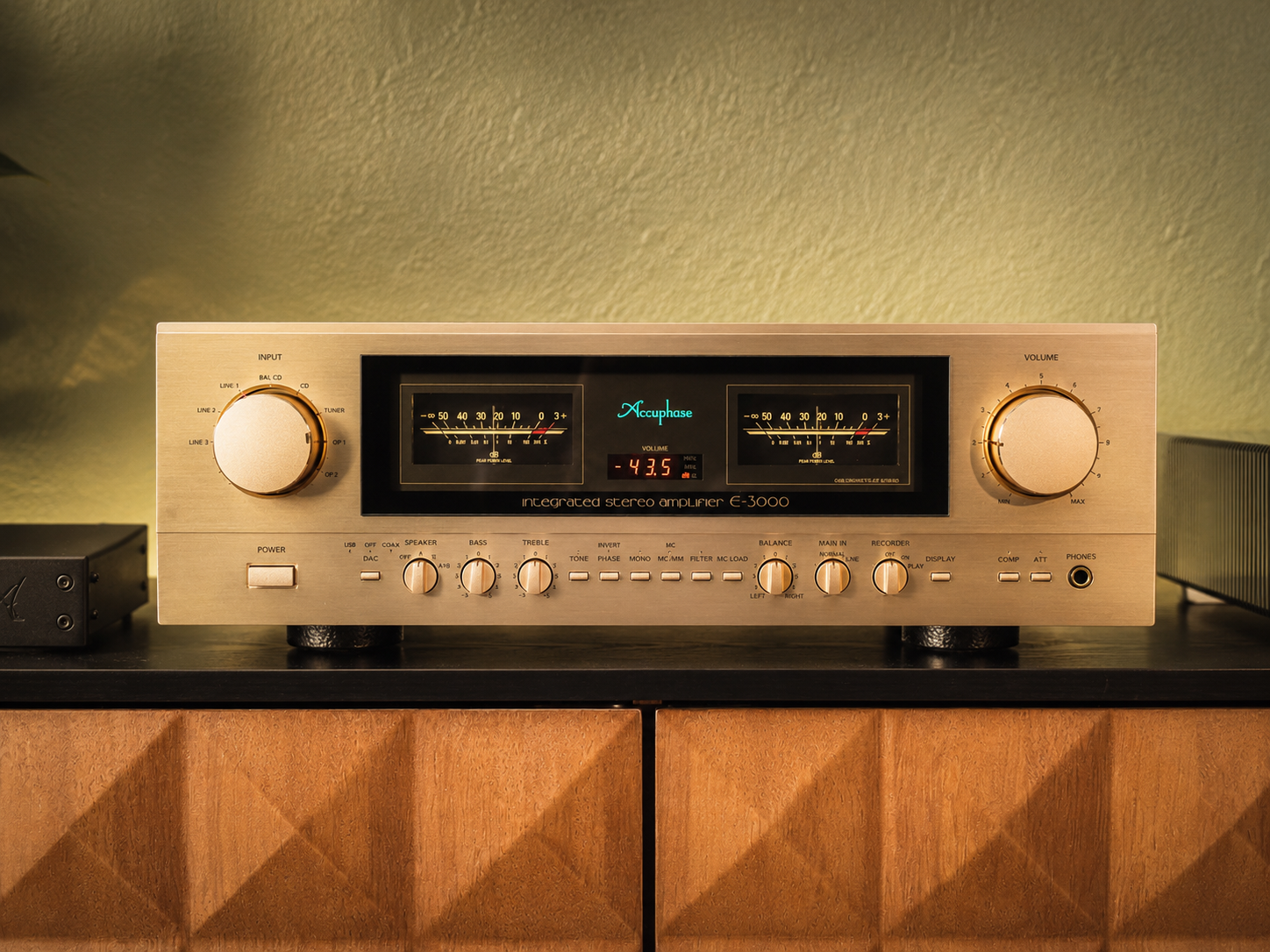
After I set the speakers up I started with the Accuphase E-3000 I recently fell head over heels for. It has solidity, warmth and is also about precision, so it brings out the details as well. The E-3000 throws a big, wide stage that also has depth and it brings this character to most speakers I hook up to it. Just gorgeous, silky and deep music.

I pressed play on some of my fave music, starting with “Patience” from Low Roar. The Solstice 8 impressed me right out of the gate with its big, beefy sound, warmth and gentle, silky treble. I was not getting anything aggressive from the sound here and I am thrilled with the way these sound but with the E-3000 I know I am losing some treble sparkle. Even so: rich, full-bodied, warm and silky, with some depth and 3-dimensional stuff going on, though not as much 3D as some of my other speakers.
Musical, beefy, big-scale kind of sound without any brightness to be found. In fact, in my space and with this Accuphase I hear such a sweetness it makes it tough to argue spending more on a speaker if you enjoy this kind of sound as spending more will bring a leaner sound.
The bass is not so tight that it’s lean; rather, it is not super tight here but a touch…a hair loose. This gives me the full-bodied vibe I love, especially with vocals, rock music, old ’80s recordings and even classic rock, metal, etc.
Nothing stands out as “wow, look at me” as the sound with the E-3000 and Solstice 8 is balanced, cohesive and smooth. As for details, they are here but of the thicker variety, which is a pro, not a con. Separation of instruments is nice, but these will not throw a crazy stage where every detail is sitting in its own place on the stage. Rather, this is looser and not as defined, not as lined up and separated as, say, my SV Audio Gro speakers.
No matter what I played, the bass was plentiful, the treble was smooth and the sound filled my room floor to ceiling with an addictive quality that melded detail with warmth in a masterful way. The mids are big and warm, the lower bass is very nice and the treble is a bit soft and silky vs alive and energetic or aggressive, as some past Triangle speakers could be.
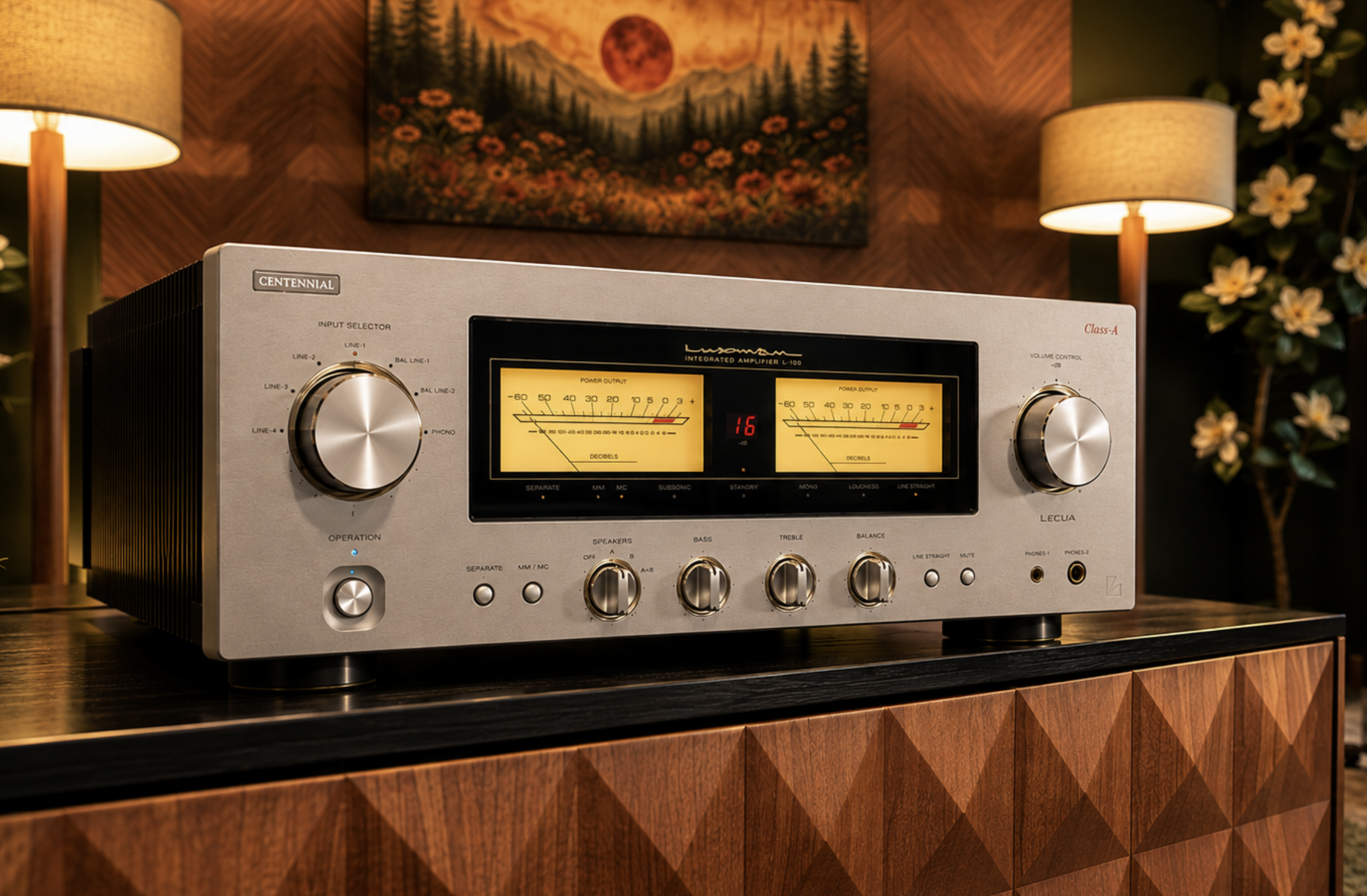
Now with the Luxman L-100 CENTENNIAL
I placed the Class A, 20-watt-per-channel integrated amp from Luxman in, the L-100 CENTENNIAL limited edition. This only puts out 20 watts so I was curious as to what would happen. Listening to the same Low Roar album so I could compare, I was now hearing a more illuminating treble but it was still non-aggressive. The upper midrange was less beefy and clearer now, creating more of a 3D soundstage. I lost some of the warmth of the Accuphase but gained some air and glow. The 20 watts of Class A had no problem driving the 8s in my space to any volume I would need. The upper mids were less full-bodied than the Accuphase and yes, these changes are easy to hear. What I am hearing is the Luxman sound vs. the Accuphase sound, but both are gorgeous and sound “end game” for the Solstice 8.
There is a sort of musical flow going on with the Solstice 8 with the L-100 CENTENNIAL and they sound larger, deeper and smoother than the smaller 3s indeed. When I think of the Solstice 8 the first word that pops into my head is “Silky” and that is pretty awesome for a Triangle speaker as many say they are bright, aggressive or thin. Some of the older models, maybe, but not the Solstice 8.
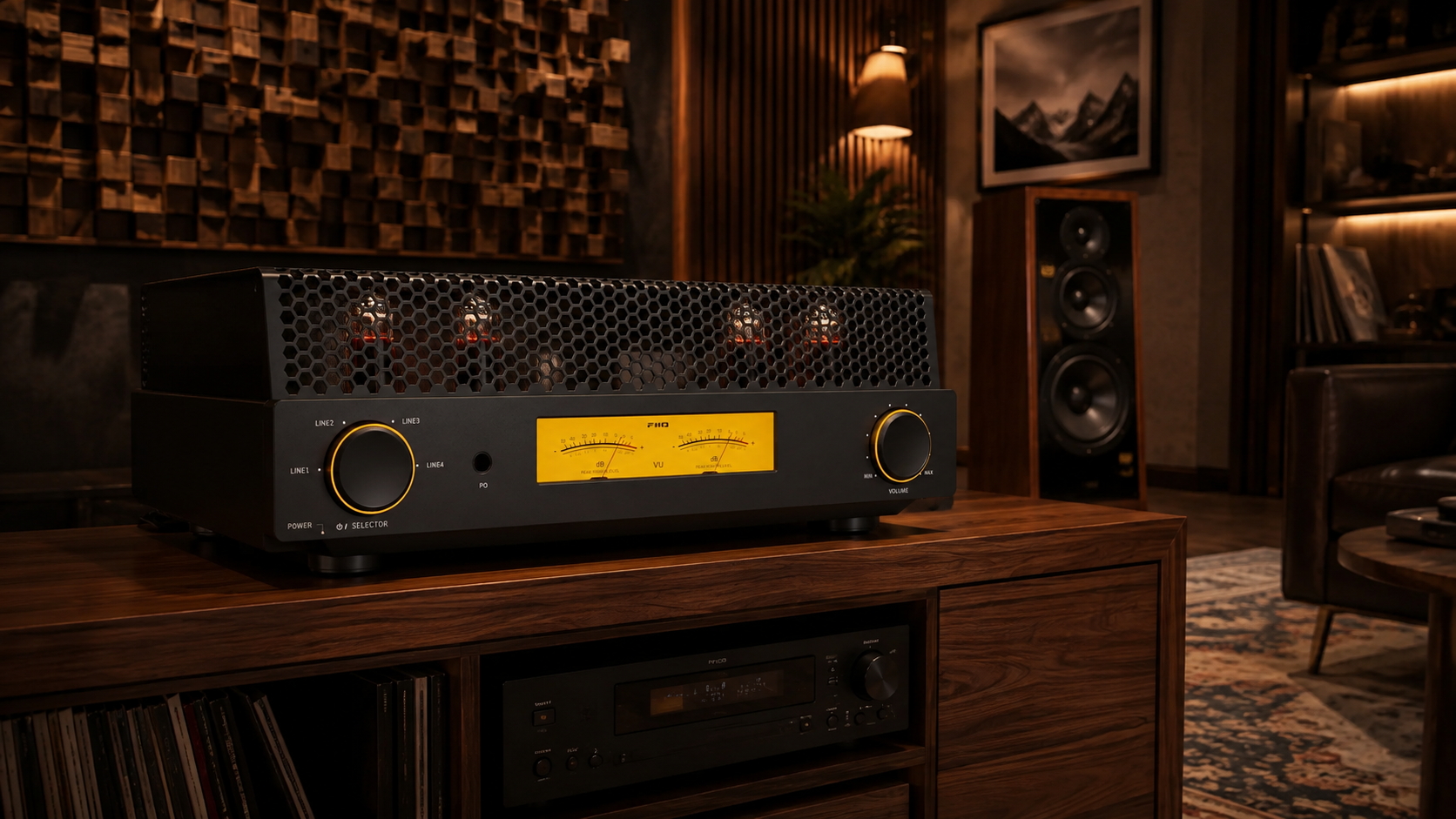
Overall the Luxman L-100 CENTENNIAL was a great mate to the 8s but I wasn’t sure which I preferred, the Accuphase or the Luxman. My heart says Accuphase, my audiophile brain says Luxman, as it brings more out from the details. It all depends on which way you want the speakers to tilt the sound, the tone and the feels. Even the little FiiO EA 13 above sounds amazing with the Solstice 8 and that amp costs $799, though it has a couple of cons. Heat and buzz.
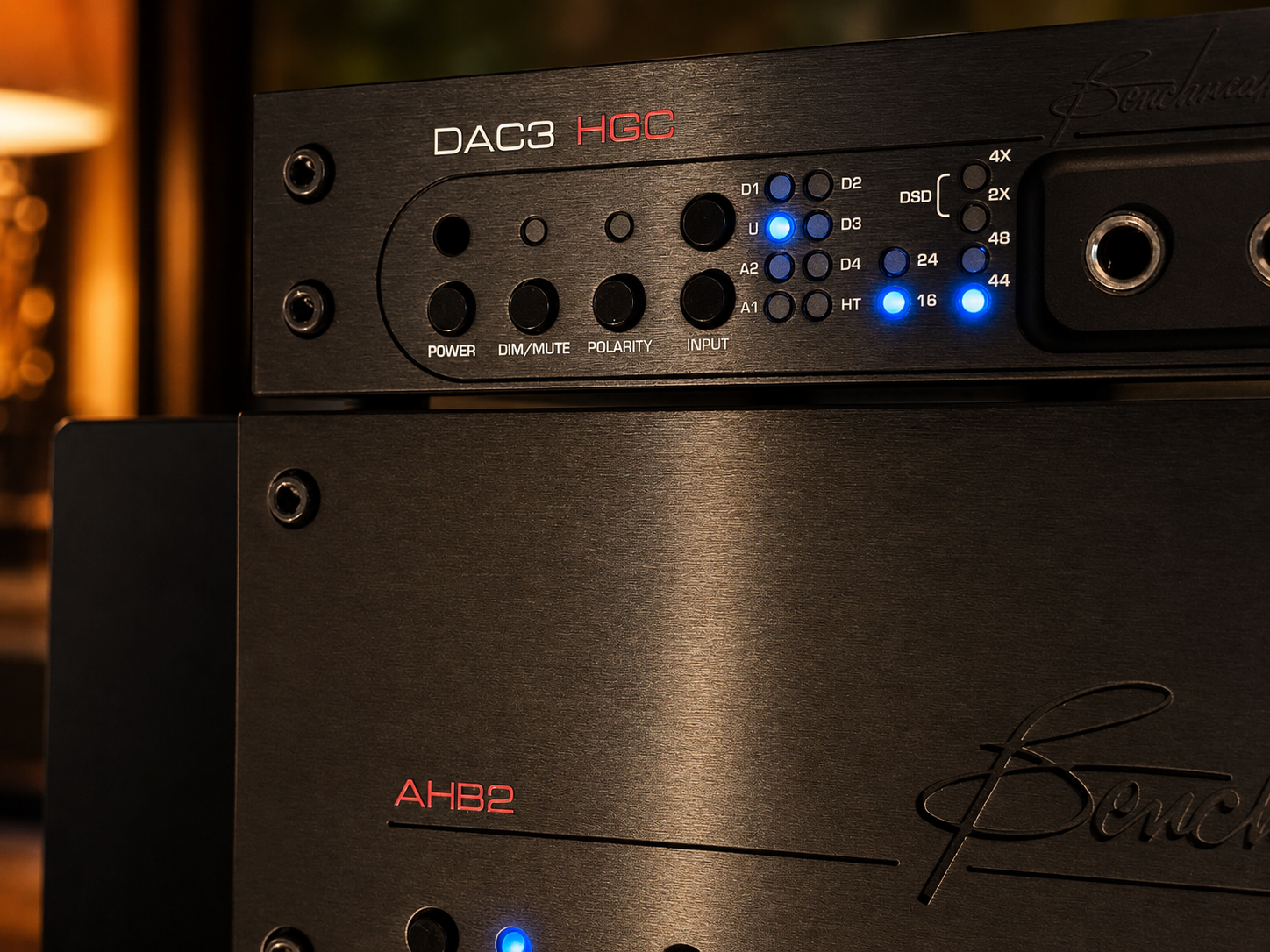
Now with the Benchmark AHB2 and LA4
Now we are cooking with some excitement. While still a little warm-leaning (less than the others, though), now I am getting more air and a more lit-up treble again, and while I am not hearing the rich Class A depth of the Luxman, the Class A/B Benchmark is all about speed, transparency and detail but it also has some solidity, depth and warmth hidden in there somewhere as the sound was still incredible considering the cost of the Solstice 8. As in…wow…these speakers rock.
Not as heartwarming as the E-3000, not as holographic as the Luxman L-100 CENTENNIAL but the clearest and most transparent of them all, still with nice big rich bass. For EDM and POWER music, this was the ticket. It electrified. It’s interesting as the LA4 and AHB2 are about half the cost of the other two options and have the Solstice 8 sounding amazing but different.
Here are my quick thoughts on each amp…
BIG, BOLD, MUSICAL, SILKY, BEEFY and WARM: Accuphase E-3000
CLEAN, SOME WARMTH, MORE TREBLE and UPPER MIDS ILLUMINATION: Luxman L-100 CENTENNIAL
TRANSPARENCY, OPEN/CLEAR with MORE GET-UP-AND-GO ENERGY: Benchmark
If I put 100 people in a room and had them listen to each amp, my guess is 1/3 would pick the Accuphase, 1/3 the Luxman and 1/3 the Benchmark. We all like what we like, but in this case it is the power we use that makes these slight changes to how the speaker sounds. I would pick the Accuphase for me personally, but then I might second-guess that as the Luxman really brings out more of the air and detail. I then lose the flow and silk of the Accuphase. It’s tricky, but either of these is end game if we can be serious and honest.
The moral of the story is each of these amps had the Solstice 8 sounding beautiful and the 20 Class A watts are plenty in a mid-sized room.
I was having a hard time accepting the fact that these cost $2,799 for a pair. This is an amazing price for what we are getting. They do not sound like a high-end exotic speaker, nor do they sound like a cheap lower-end speaker. The Solstice 8 doesn’t come out to wow you but it makes you feel it over time, with how musical and somewhat forgiving they are. This means most music will sound lovely, and even your bad recordings may sound much more listenable now.
Whether I was listening to Sade, Ghost, Dolly Parton or Miles Davis, the sound was simply gorgeous and fulfilling. These are some of the best tower speakers you can get for this price today in 2026, if not the best buy. They look amazing, are built well and sound so pleasing that they are hard to turn off.
I think Triangle did an amazing job here and they made the speakers we need for this current time where everything costs so damn much and yet we get less and less for our money. The Solstice 8 is here to say “I’ll give you more than your money’s worth” and that they do…that they do. If high prices are the disease, Solstice is the cure.
An easy recommend for anyone seeking beautiful tower speakers that sound musical vs analytical. One that sounds heartfelt vs. surgical. One that doesn’t do all of the “WOW” that very expensive speakers bring, but one that brings the tunes in a sublime musical way that made it tough for me to swap them out when they were in. Superb speakers at a superb price, full stop.
You can read more about the Solstice 8 on the Triangle website HERE.