Shakuto Audio Vitalic-12 Review. BIG, Beautiful and ALIVE!
A handcrafted horn speaker that brings the energy of live music into your listening room.
By Steve Huff
Something a Little Different Has Arrived
Hello friends! Today I want to talk about a speaker from a company that many of you may have never heard of. The company is Shakuto Audio, based in California, and the speaker is called the Vitalic-12.
This is not your typical slim, modern-looking audiophile speaker. Nope. These are something different, and I have to say, I have been enjoying the heck out of what these speakers bring to my listening room. It’s been a while since I had a large horn speaker here. I always enjoy the sound and energy they bring. Well, sometimes I do, lol. Not all are created equal but when done right a horn speaker can bring a very “alive” sound that makes the hairs on your arms stand on end.
Over the last 40-plus years, I have heard and owned so many speakers. From inexpensive bookshelf designs to massive, exotic creations costing more than some automobiles. Some have impressed me with detail, others with speed, some with bass, and others with soundstage magic or even warmth.
But there is something about a well-designed horn speaker that can be incredibly special when done right.
That sense of life. The scale. The feeling that instruments and voices have real presence rather than sounding like tiny reproductions coming from two boxes. This is what a great horn design can bring.
The problem with some horn speakers, at least those I’ve heard, is that they can sometimes sound a bit aggressive, shouty or even harsh. They may deliver all of that excitement, but sometimes at the expense of long-term listening enjoyment.
I love Klipsch Heritage speakers but I will admit certain models can sometimes be shouty and aggressive, as well as tough to find a perfect amp to mate to them. The newest models have improved on this greatly but run a Heresy IV with a neutral or sharp sounding amp and be prepared to cover your ears!
What if you could have that big, open, live sound without the bite or aggression? That’s what I always sought in a horn design and while I have personally found this in designs from Fleetwood Sound, Shakuto Audio is a bit more traditional here.
I am indeed hearing all of this from these Shakuto Vitalic-12 speakers, and it makes them rather interesting. The sound is BIG. It is pretty smooth, especially for a speaker of this kind. It is full of life and energy, yet it doesn’t throw an aggressive treble presentation at you like some horn designs can do. They still sound like a horn though. They do bring the performer into the room a bit, which I love.
I am talking about a speaker that can sound open and beautiful while still bringing the excitement of live music. Shakuto has done a very good job here. And yes, they can sound beautiful even with a $299 tube amplifier from Amazon.
More on that in a bit.
What Is Shakuto Audio?
Shakuto Audio is a smaller independent speaker manufacturer in California. Rather than producing mass-market speakers by the thousands, the company focuses on handcrafted, high-efficiency designs with an emphasis on horn technology, cabinet construction and musicality. I like to call this “Small Batch” as that is what it is. Small batches built to order rather than a mass production line.
The company is run by Serge, who says he personally oversees the speakers being built.

Each pair is made to order, with the company currently quoting approximately six to eight weeks for production before shipping. There is something I appreciate about a smaller builder who has a specific vision for how music should sound. Especially in today’s world, where so much audio gear looks and feels alike.
I also like that when you order a set of these you know they are being made just for you. The few weeks wait makes it exciting as well as when they arrive it will feel like Christmas Morning all over again, even if it is July.
Shakuto’s philosophy seems pretty simple: create speakers that don’t require massive power, can bring real dynamics into the home, and offer the kind of presence that makes listening to music an event rather than just another activity.
This is what I seek. The Experience rather than just throwing on music and sitting there, bored. I like the music to feed my senses, warm my heart and bring back memories of times past. That’s a philosophy I can get behind.
The Vitalic-12 is one of the company’s higher-end offerings, starting at $9,500 per pair. Yes, that’s a substantial amount of money. But as we all know in this hobby, $9,500 doesn’t necessarily always buy you the kind of engineering, materials or handcrafted construction you might expect.
So what exactly are we getting here?
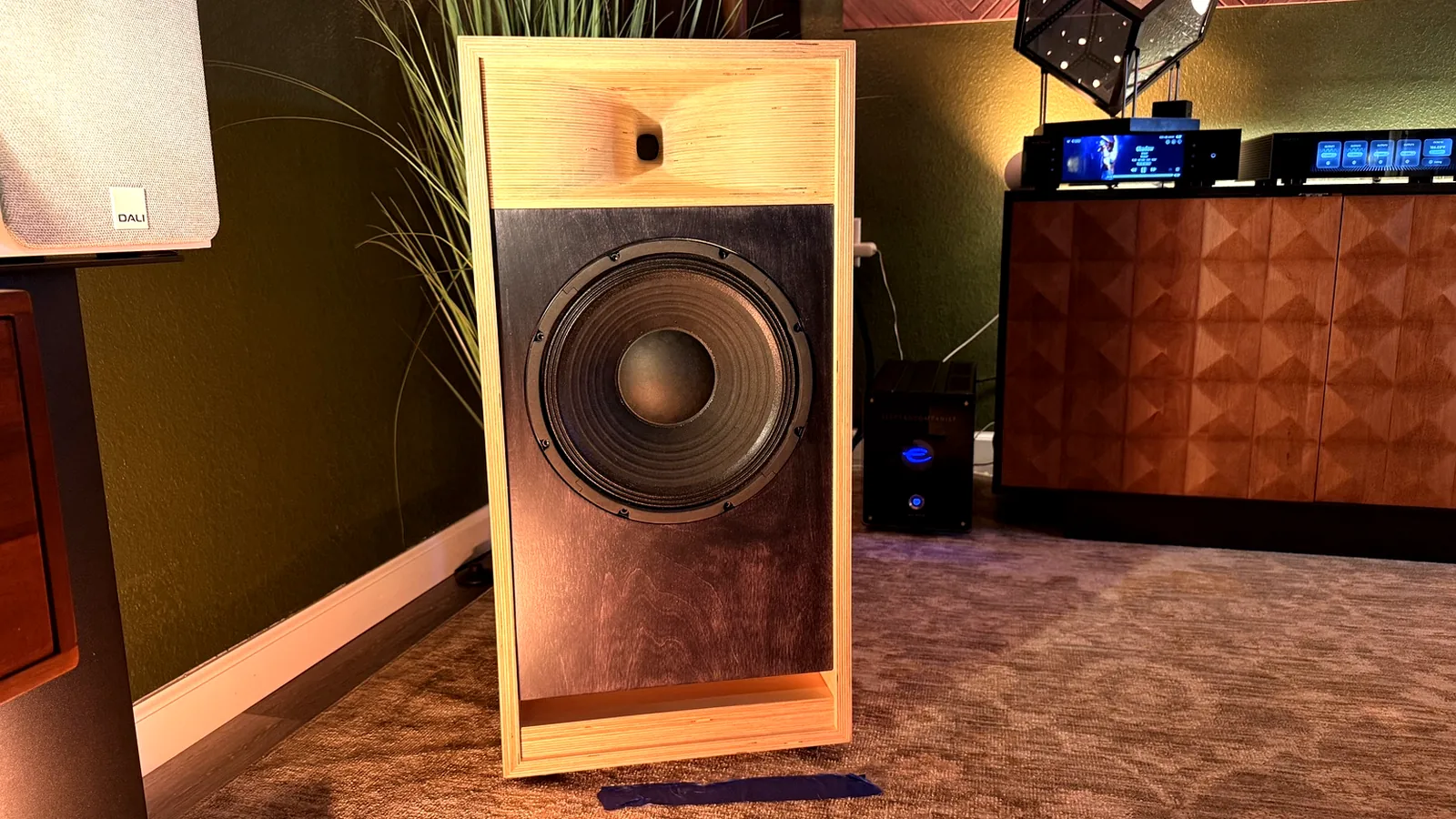
The Build. Real Wood, Real Substance.
One of the first things that makes the Vitalic-12 interesting is the construction.
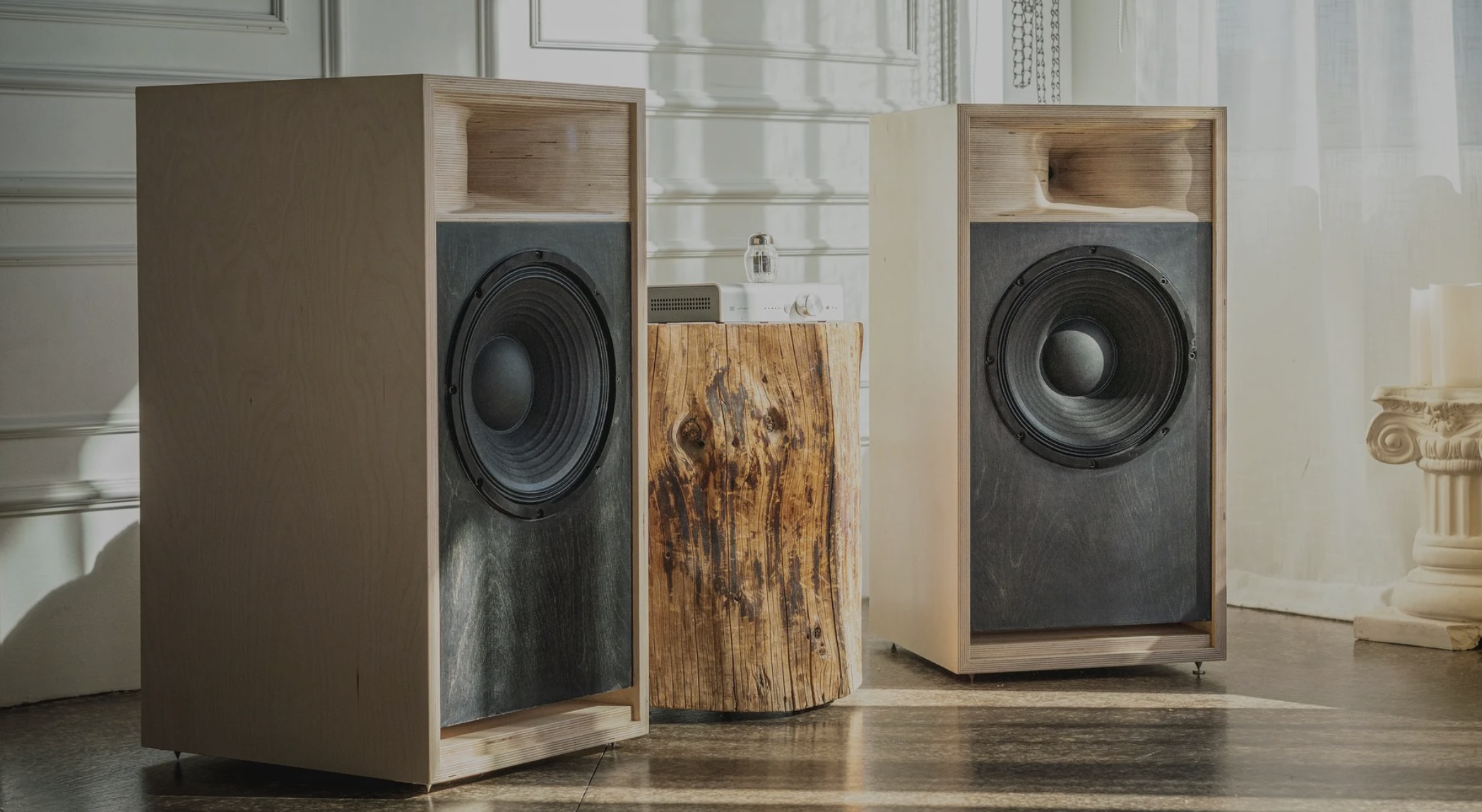
The cabinets are handcrafted from Baltic birch plywood rather than the MDF commonly found in many commercial loudspeakers. They feature internal bracing and are available in natural wood finishes or custom veneers, including walnut and oak. So there is a veneer placed over the plywood here but the set I have here is much nicer than most I have seen.
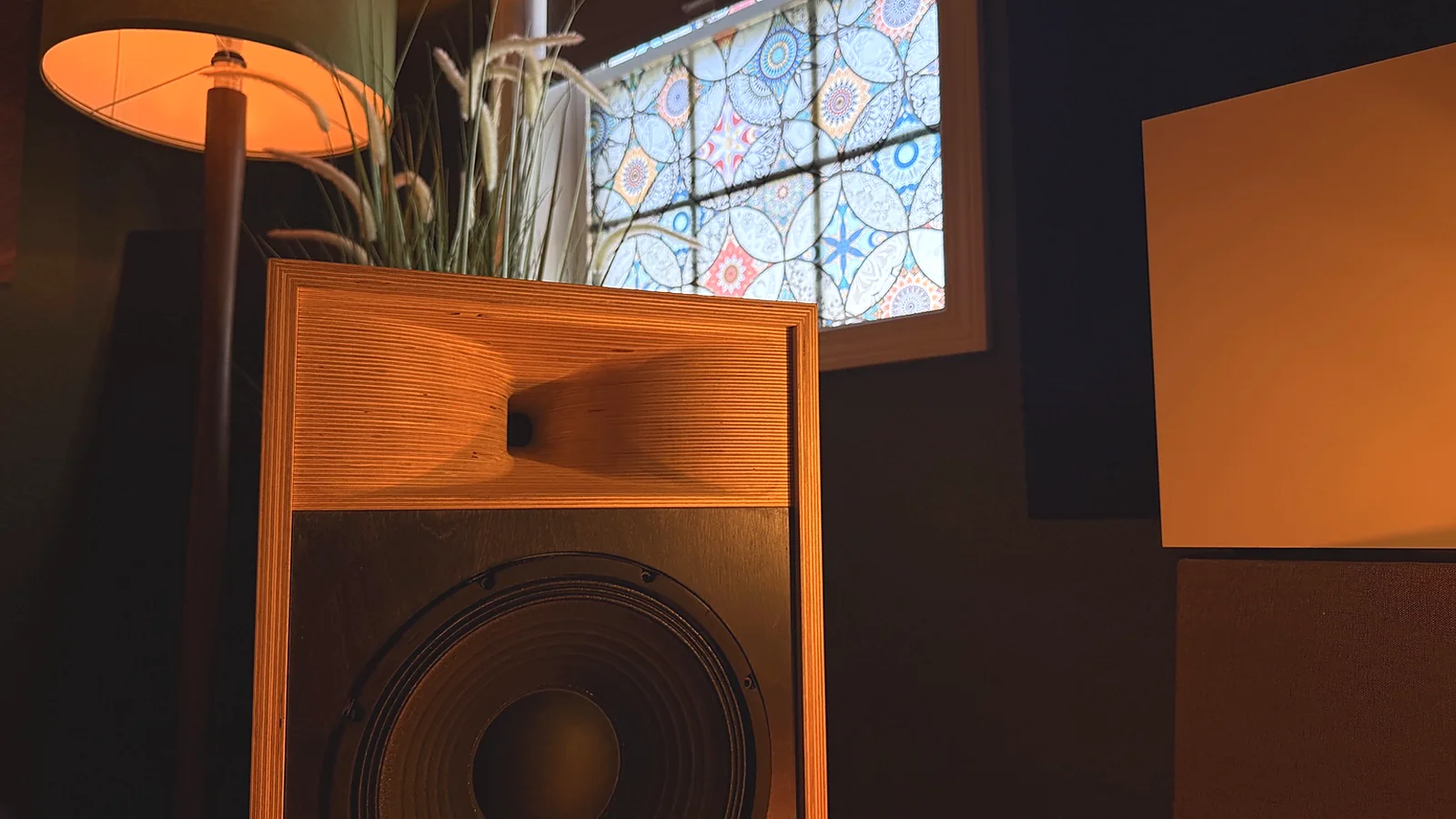
Then there is that horn. This one my friends is not a thin plastic horn screwed onto the front baffle and that is a good thing. Mass market speakers like this will use inferior parts. This will bring inferior sound.
Shakuto CNC-machines the horn from a substantial block of laminated Baltic birch, creating a solid, rigid structure that becomes part of the cabinet. According to the company, the idea is to minimize unwanted vibration and coloration while allowing the horn to maintain clarity, control and natural tone.
Whether a particular cabinet material automatically sounds better than another is a discussion for another day. I’ve heard fabulous speakers made from MDF, wood, aluminum and other materials but personally, I do prefer real wood.
What really matters with a speaker is how the entire design comes together.
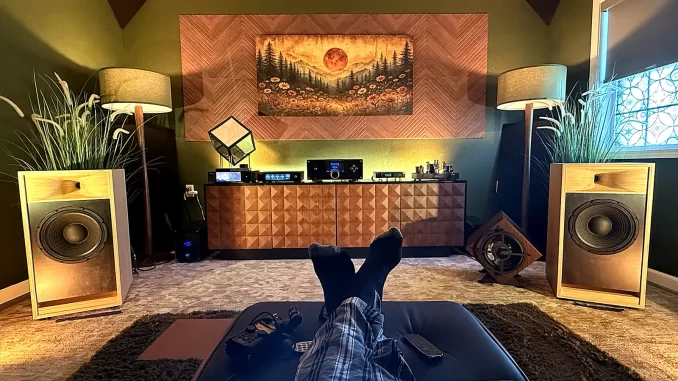
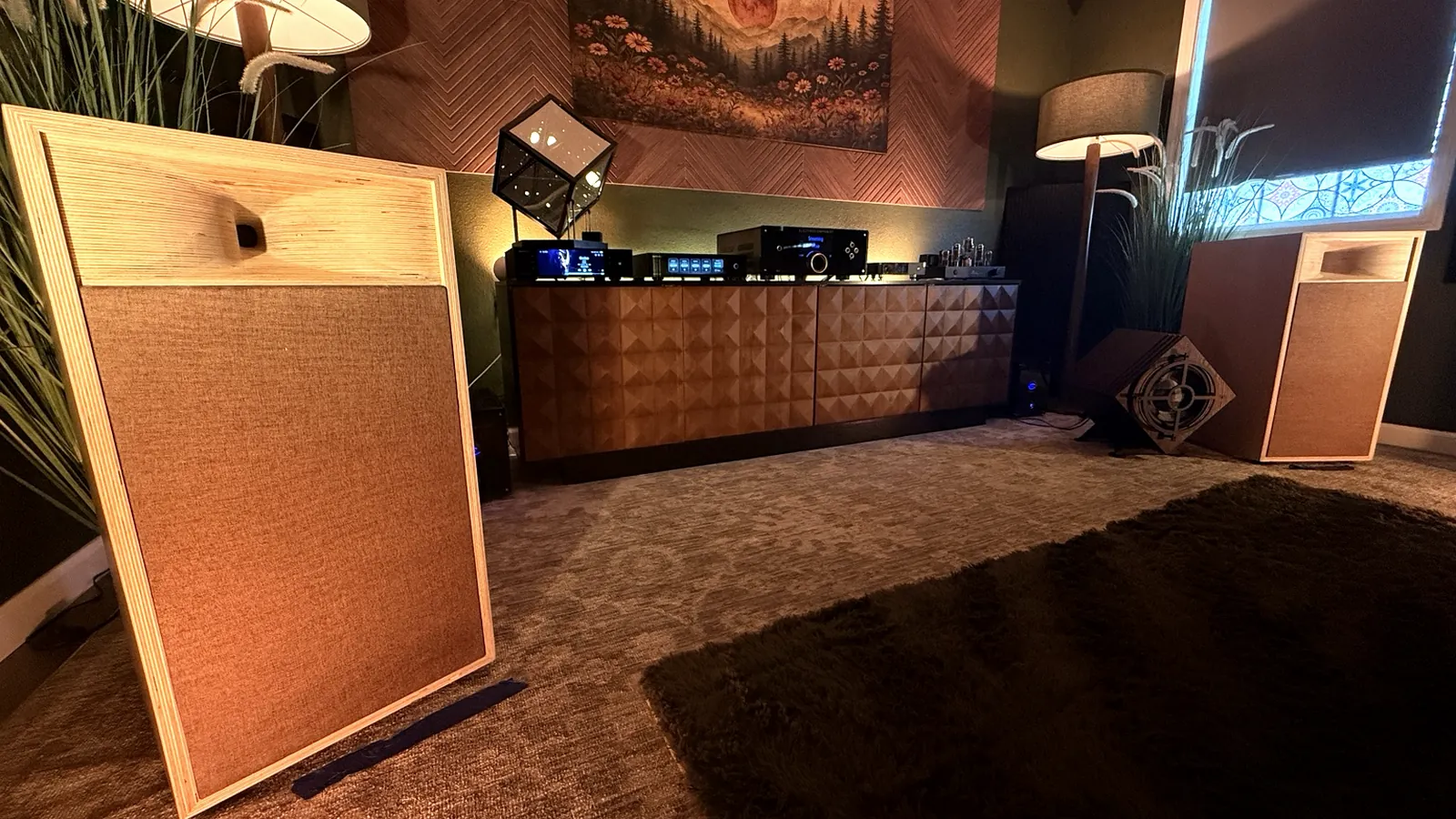
Visually, these have an almost vintage, mid-century industrial character. They don’t try to disappear by being pencil-thin or ultra-modern. These look like serious loudspeakers, and the large wooden horn gives them a personality all their own. In my room, that is starting to get crowded, the V12’s are a bit large. One day I hope to review smaller speakers from Shakuto. For those seeking something in a smaller package, these look pretty freaking awesome.
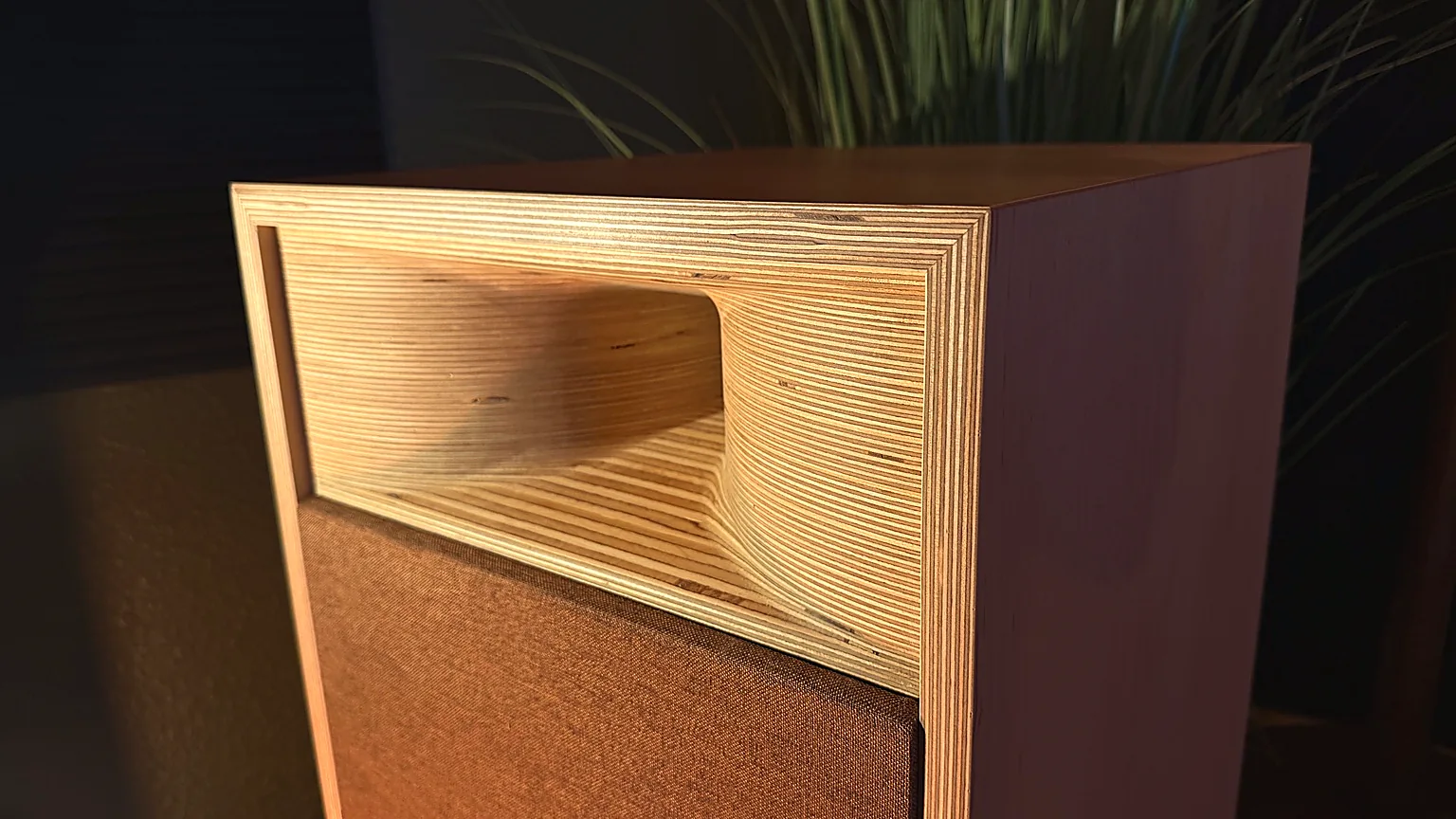
Back to the subject of this review, the V12. These speakers are quite substantial. Shakuto lists dimensions of 30.7 inches high, 15.6 inches wide and 17.5 inches deep, with a listed weight of 100 pounds. Phew, they just reached my limit as I decided I could no longer review speakers over 100lbs. Many reasons why but since I do get paid for this, and spend weeks doing these reviews, and am getting older..no thanks.
Even so, these are not tiny little lifestyle speakers and they do take up some space though I have seen much larger speakers than the Vitalic-12. Overall these should fit nicely into most listening rooms, living rooms. etc.
For those wondering. yes, these are a much nicer version or take on a Klipsch Heritage type of speaker, which for me is their natural competition. To me, the V12 look, feel and sound much nicer. They are built better as well.
Not dissing Klipsch, I love the brand personally, but these are on another level and I keep it real rather than play fanboy. Think of Shakuto as a small batch boutique speaker builder that focuses on quality.
This image is from the Shakuto Audio website.
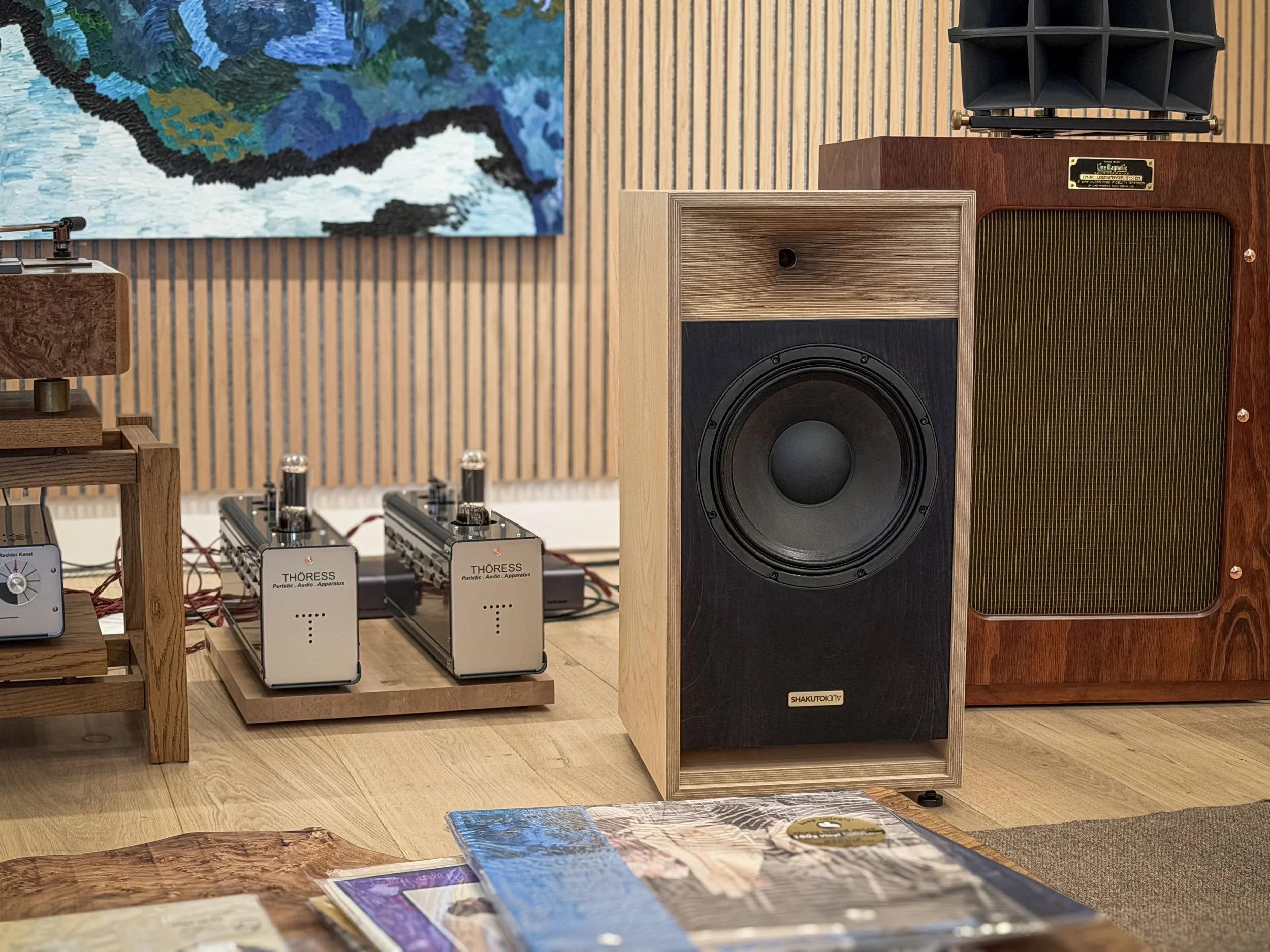
The Technology. A 12-Inch Woofer and Wooden Horn.
At its heart, the Vitalic-12 is a two-way loudspeaker.
Rather than using multiple smaller woofers and an assortment of drivers, Shakuto keeps things relatively simple. We have a substantial 12-inch woofer handling the lower frequencies, paired with a horn-loaded compression driver for the upper frequencies.
The woofer uses a carbon-fiber-impregnated paper cone and cloth surround, while the high-frequency compression driver operates through that beautiful machined birch horn. The cabinet is front-ported, and the passive crossover is designed with time alignment and integration between the drivers in mind.
The published frequency response extends from 36 Hz to 20 kHz, which suggests useful low-frequency reach from a speaker of this size. The passive version presents a nominal 8-ohm load and is rated at approximately 96–97 dB sensitivity, depending on which section of the company’s specifications you read.
That is pretty darn efficient in today’s audio world.
Shakuto recommends amplifiers ranging from around 5 watts to 200 watts and specifically mentions compatibility with low-power tube designs such as 300B, 2A3 and EL84 amplifiers.
An active version is also available, with integrated amplification and DSP, for those who prefer an all-in-one approach. I am testing the passive speakers, as I wanted to hear how they respond to different amplifiers.
And that brings me to one of the most interesting parts of this review.
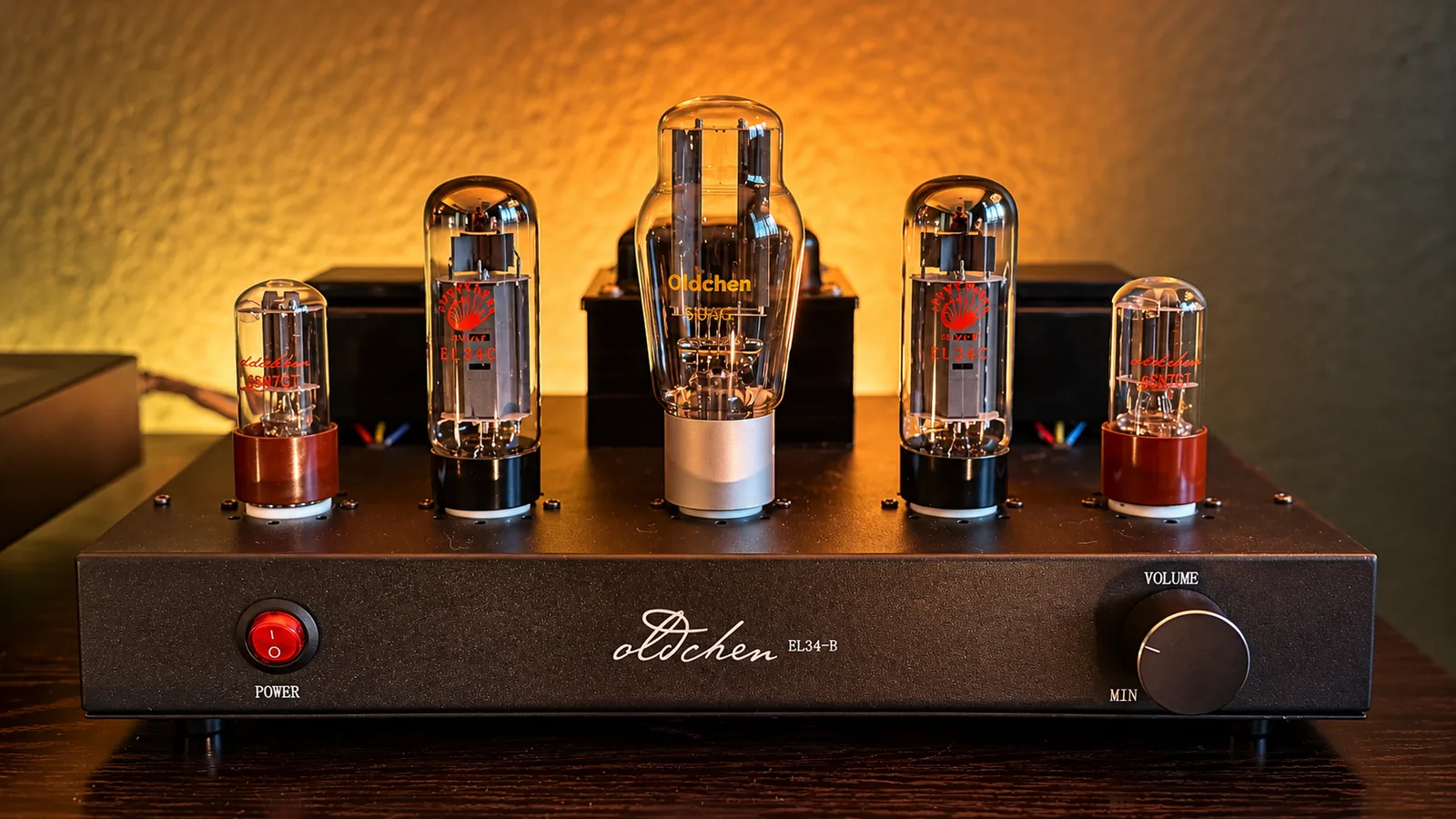
A $299 Tube Amp? YES!
Now this is where things get fun.
I have been fortunate to listen to some truly wonderful amplification over the years. I currently have the flagship Electrocompaniet EC5 preamplifier and AW300 monoblocks here, a setup that costs more than $50,000.
That’s some very serious amplification that just so happens to be almost perfect solid state amplification for a speaker such as these. The EC gear has a solid bass midrange, full of body and life. The treble is a tad softer than most, relaxed but not rolled off. Keeps shout and aggression away. But who has $50k to spend after spending $10k on these speakers? It’s a crazy match up indeed.
With the Vitalic-12, I wanted to try something at the complete opposite end of the spectrum.
So I connected a little tube amplifier from Amazon that costs just $299.
Yes, $299!
I wanted to see what these speakers could do with an inexpensive amplifier, because with high-efficiency designs, you don’t always need hundreds of watts to make music come alive.
And wouldn’t you know it? They sounded beautiful. Big, luscious, smooth and spacious.
The soundstage was absolutely beautiful, with a sense of width and depth that I certainly wouldn’t expect someone to associate with such an inexpensive amplifier. There was body to the presentation. There was warmth and a sense of ease that made it very enjoyable to sit and listen.
But most importantly, the music sounded alive yet not aggressive or in my face.
This wasn’t about having the most expensive electronics or chasing the last percentage of resolution. It was about enjoying music, and the Shakuto speakers allowed that little amplifier to make some really beautiful sound.
I love this. $299 and it sounds wonderful and is silent as well. Class A, Hand Wired, Single Ended, 10 Watts.
There is something almost refreshing about being reminded that we don’t necessarily need to spend a small fortune on amplification to achieve a deeply satisfying musical experience. This is sometimes why many buy easy to drive speakers such as these. No need to spend a fortune on the amplification.
Of course, I am not suggesting that every inexpensive amplifier will sound wonderful with these speakers (they will not), or that a $299 amplifier will do everything a serious high-end design can do. I can not speak to the reliability and longevity of such an amp either.
Amplifier quality and matching still matter as synergy is real. So is the room.
But the fact that I could connect such an affordable tube amp and hear this much scale, beauty and soundstage depth says something about the potential of these speakers.
To me, that is a big deal.
The amp I speak of is the Oldchen EL34 Single-Ended integrated. It has one input so is made for a single source. It is full on Class A and Hand-Wired. It puts out 10 watts. I remember when a certain big time audio dealer used to say that hand wired was the only way to go. It is when it comes to amps like this. These days everyone has went to circuit boards for lower cost. Now this same big time dealer touts circuit boards as the best, go figure.
Me, I love a good hand wired tube amp. At $299 I have never seen a better deal in an amplifier of this type. It’s like 1976 pricing here.
Single ended, class A, 10 watts, so pure with warmth, nice bass and a super nice midrange. It gelled so well with the Vitalic-12 but I cannot say it was doing the best things in the realm of a “swim inside sound stage” or big huge thrilling dynamics. Even so, a beautiful listen for low cash and this amp is silent as a mouse. No buzzes or crackles and it comes with decent tubes as well.
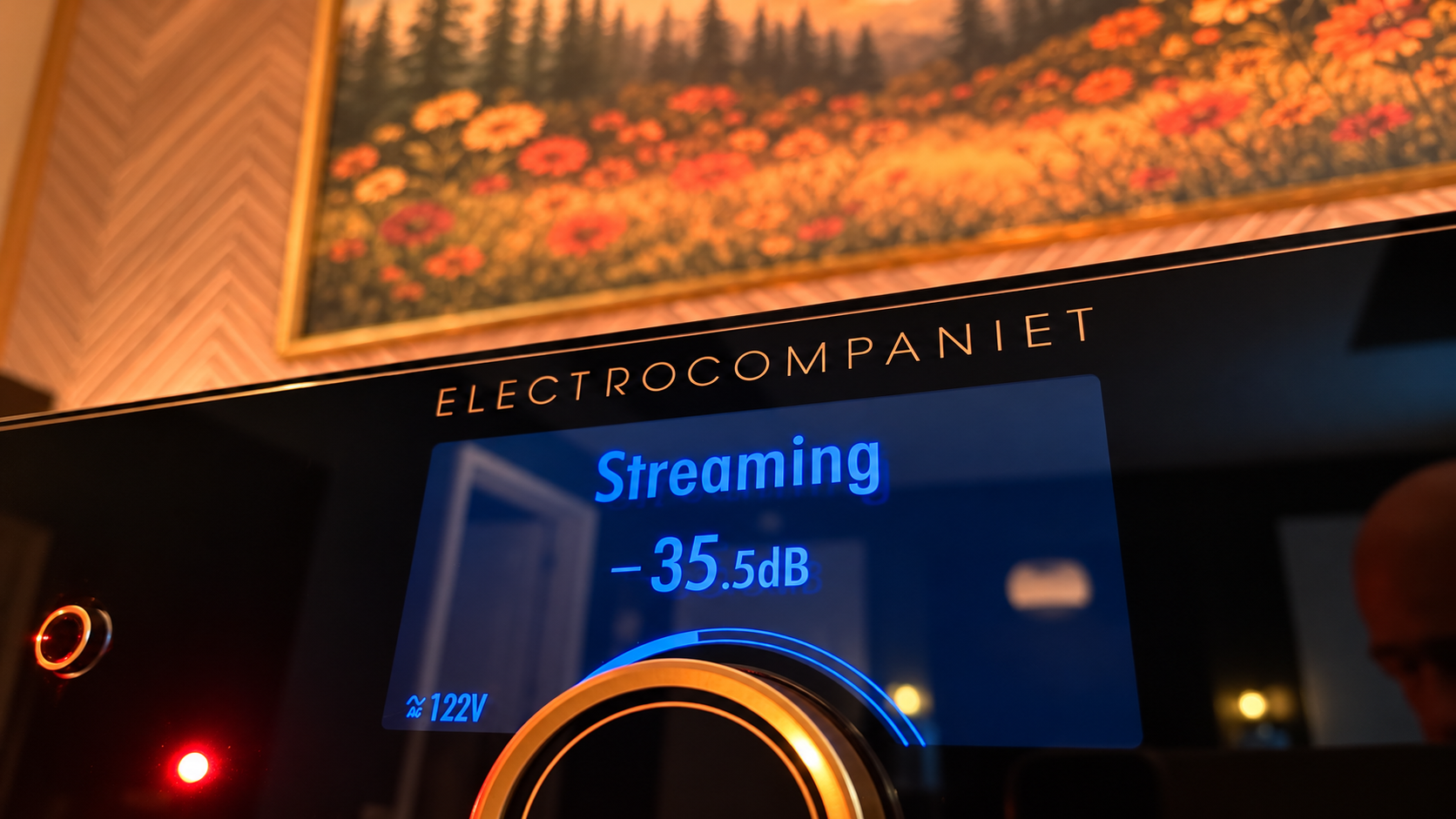
Now Let’s Get Serious. The Electrocompaniet EC5 and AW300.
After enjoying the Vitalic-12 with the little tube amp, I also connected them to my Electrocompaniet setup.
This consists of the EC5 preamplifier and AW300 monoblock amplifiers, a combination I recently reviewed and yes, I want them in the worst of ways. No, I could never afford them but after an offer of a deal on review units, which have been around the block a few times, I may be able to make it work. I am still trying to get it worked out but it may or may not happen.
These amplifiers are pure reference in my eyes for a reason. They bring a richness, depth and solidity to music that I find incredibly addictive. I have never listened so much, spending hours a day in my seat.
So how did the Shakuto speakers respond?
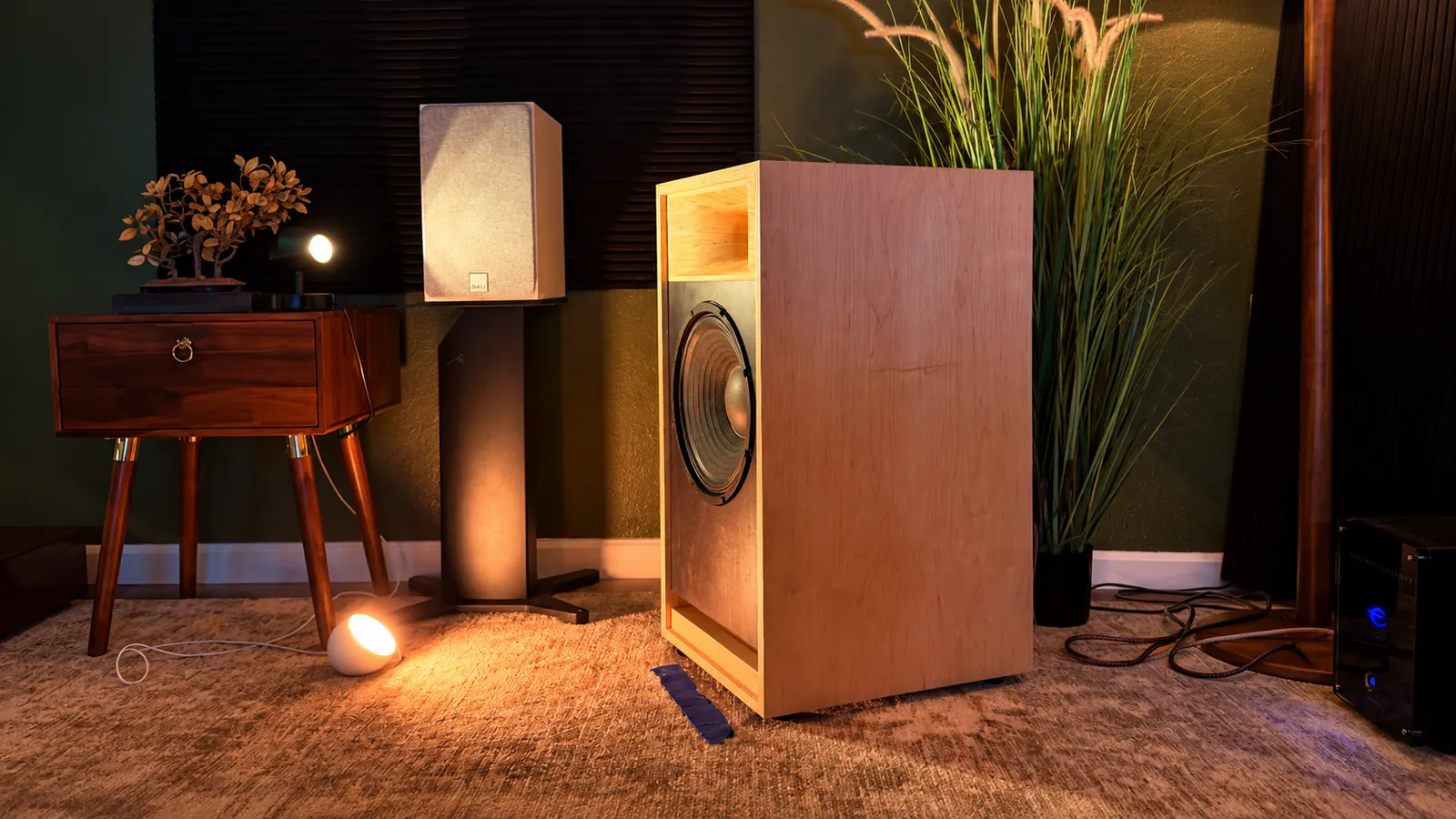
Beautifully.
With the EC5 and AW300 driving them, the Vitalic-12 delivered a warm, layered and deeply spacious presentation. The speakers were a bit subdued in the top, yet not truly rolled off as I still had the details coming through with an ease of hearing them in the soundstage.
There was a lovely sense of dimensionality to the sound, the kind of presentation that makes me want to settle into my listening chair and forget about reviewing equipment for a while. The $299 OldChen tube amp was more enlightened in the treble, and more open but the EC gear was soundong more like pure analog warmth, even with digital music streams.
The Shakuto speakers already have this sense of life and scale built into their personality, and the Electrocompaniet gear complemented that beautifully but also warmed them up. The presentation was smooth, rich and layered without becoming aggressive up top. That is the beauty of EC, that Velvet Hammer kind of sound. The sound of Norway.
This is the type of sound I tend to gravitate toward these days yet I doubt anyone would buy a setup like this for a sensitive horn speaker. I just had to try though, and was very impressed. Deeply. For much less one could go with the brands ECI 6II which would bring the same house sound. Some call the EC sound dark, and it is darker than some.
I don’t want thin, bright, overly analytical sound. I want musical substance. I want to hear the body of instruments, the depth of a recording and the space around performers. I want to feel something when I listen.
The EC setup paired with these speakers was giving me much of that experience but as the case is with most horn speakers you will hear a slight lean kind of sound in the upper midrange. There is not big drum kick (unless a sub is activated) here nor is the midrange juicy and fat. With almost all horns, and even these here, the midrange is clean, dynamic and striking but not full of big beefy body.
Maybe a hint of dryness when compared to my $33k SV Gro. That is the only con I found here but I hear this in 99% of horns as the woofer is really meant for more lower bass and the horn is meant for the upper frequencies. Almost every horn I have heard has a leaner midrange but this means it is clean, clear and spooky real at times. It brings that alive vibe energy to the music.
Cheap vs Expensive
It’s interesting to hear the same speakers with a $299 amplifier and then a reference system costing tens of thousands of dollars.
Both combinations sounded beautiful, but the electronics clearly bring their own personalities to the experience. That versatility is one of the things I find so appealing about an efficient, amplifier-friendly loudspeaker.
When compared to the $299 tube amp, the EC gear was bringing bigger, deeper and more control to the bass down below. It was now larger and tighter. The treble was more airy yet still smooth as silk. The midrange was more transparent. It was more resolute than the lower cost amp, and understandably so. The funny thing is the EC setup sounded more like tubes than SS. Both powered the Vitalic-12 with ease.
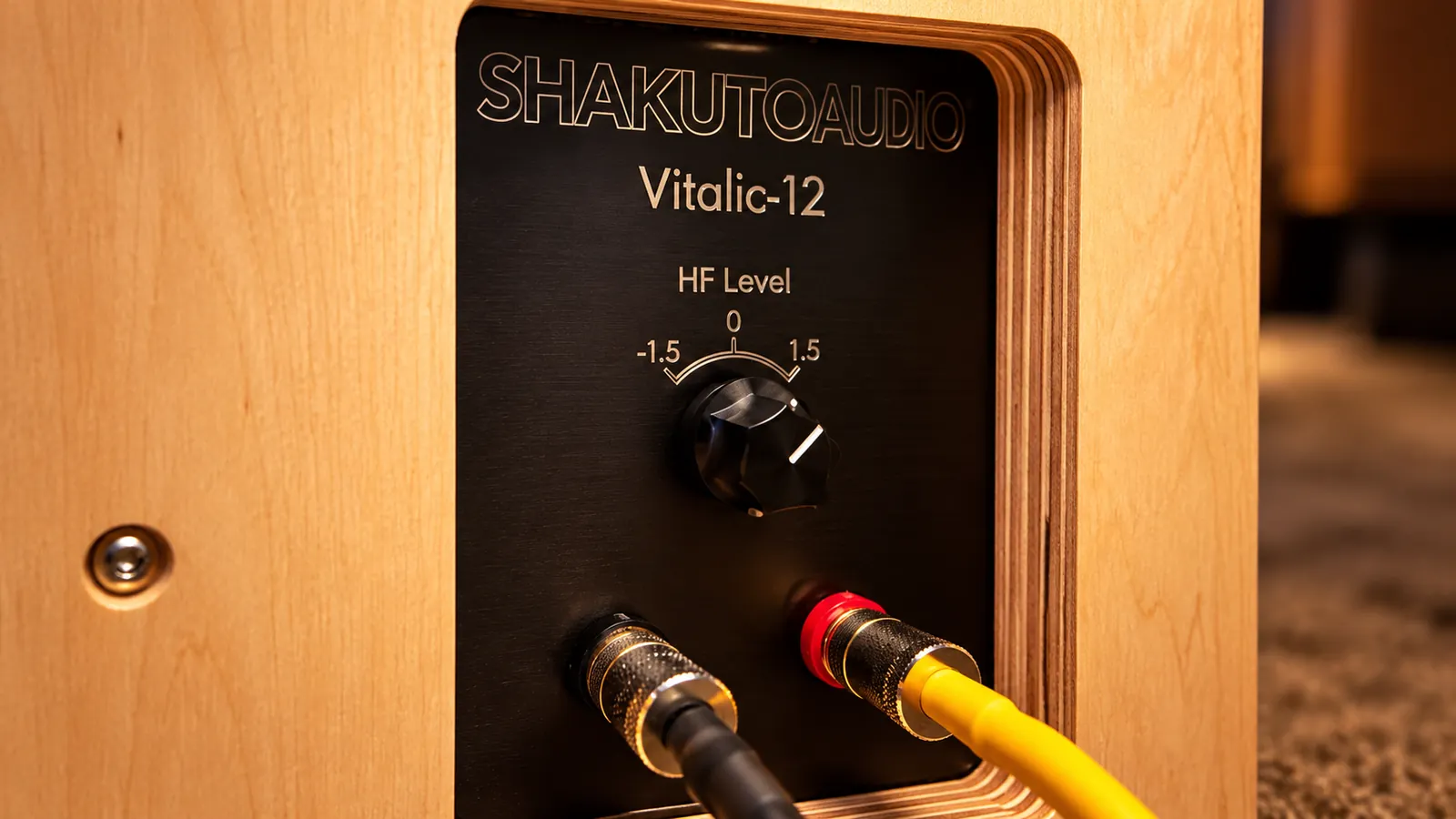
On the back of the Vitalic-12 you can dial in the amount of treble energy you want. Going down subdues it very much its seems. I listened with it boosted when using EC and middle with the tube amp and Accuphase E3000.
The Sound. HUGE, Smooth and Very LIVE.
Let’s talk about what really matters here.
The sound.
The first word that comes to mind when I think about the Vitalic-12 is BIG. These speakers produce the kind of presentation that makes music feel substantial. There is a sense of scale and openness that immediately stands out.
I have reviewed a lot of speakers over the years, and I know that big sound doesn’t always mean good sound.
Sometimes a speaker can create an exaggerated presentation that sounds impressive for 15 minutes but eventually wears thin. The Shakuto speakers are interesting because they combine that big, lively personality with a smoothness that makes listening enjoyable. They strike a balance and for a horn, that’s not always easy.
There is energy here, but I am not hearing that edgy, overly aggressive treble that can sometimes turn me away from horn-loaded designs. Instead, the highs are pretty smooth and easy to listen to. They don’t seem to be trying to force every last bit of upper-frequency information into my ears.
I will say though that with an Accuphase E-3000 these opened up much more than with the EC AW300’s and EC5. More tipped up again, and more holographic still. With some edgy 80’s music I did hear a bit of grunge so these will not beautify bad recordings, especially with a leaner solid state amp. Tubes, maybe.
I also love what these speakers do with soundstage depth. With both the inexpensive tube amp, the E-3000 and the big Electrocompaniet system, I heard a beautiful sense of space. This is something I value tremendously in a loudspeaker.
I want the music to extend beyond the physical cabinets, with performers and instruments occupying believable positions within the soundstage. And I want some depth. Not everything plastered along a flat line between the speakers.
The Vitalic-12 can deliver a very satisfying sense of that dimensionality but it is not the be all end all in this area.
The overall character is big but not aggressive, and with a wonderful feeling of presence. For me, this combination is what makes them worth listening to. Remember though, this is in my space which has been treated for a warmer sound as well as the electronics I have used here.
Even so, if you have spent years listening to highly analytical speakers that emphasize every tiny detail, a speaker like this might offer a different experience. It’s not just about hearing the music but rather it’s more about getting pulled into it.
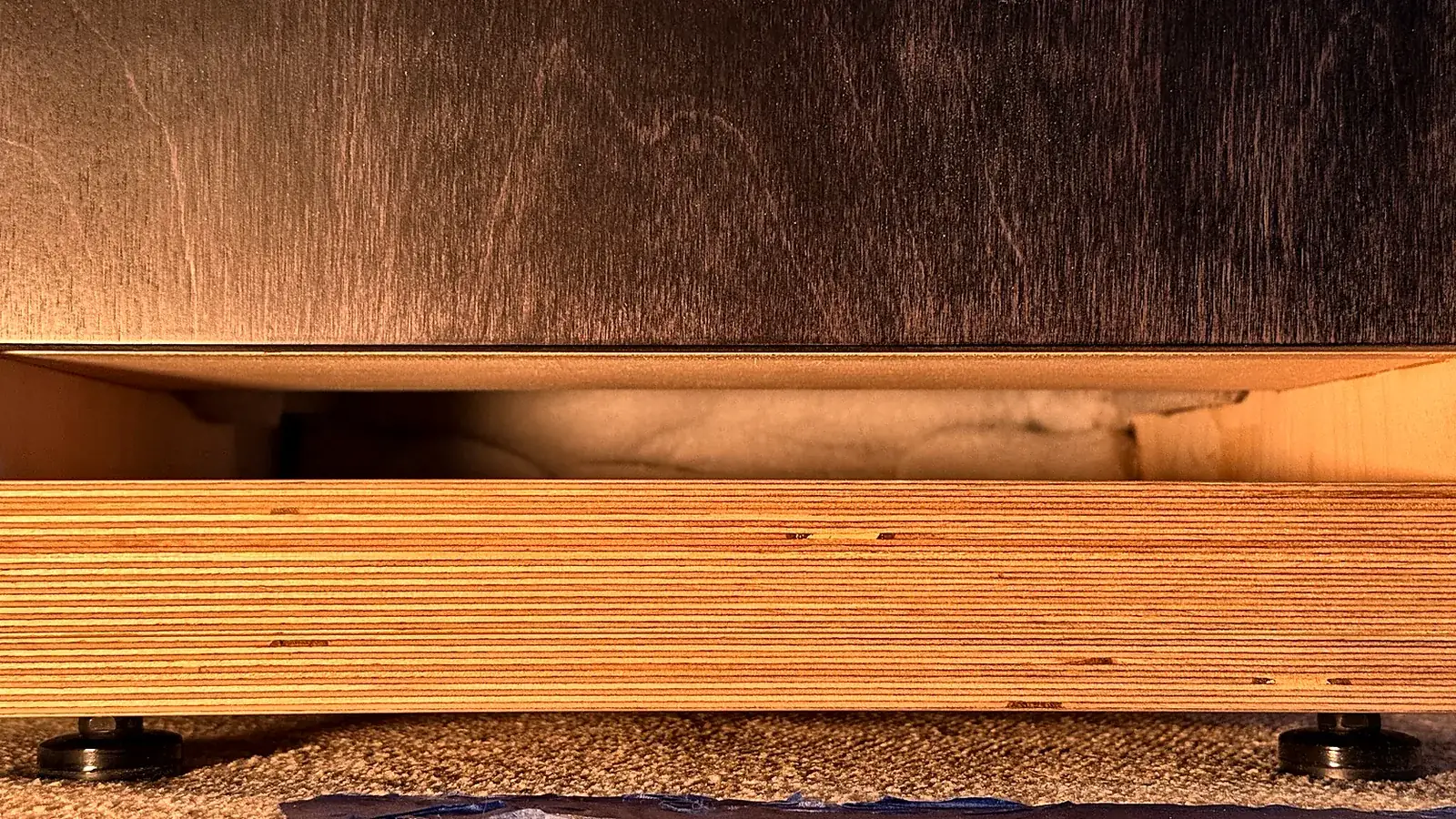
The port is at the bottom in the front
The Midrange and Treble
One thing I have learned over the years is that a speaker doesn’t need to sound bright to sound detailed, or aggressive to sound exciting. The Vitalic-12 is a good reminder of that. The presentation is smooth and quite natural to my ears, without losing that live feeling.
This is an important distinction. A speaker can sound smooth because it is overly soft, dull or rolled off. That’s not necessarily what we want either. With the Shakuto, the excitement is still present, but without the harshness that can make some horn speakers less enjoyable over long listening sessions.
I find that balance very appealing.
I loved listening to spatial ambient tracks with the Vitalic-12 as they presented the music in a very open wide way that brought forth a soundstage that was somewhat 3D and holographic. Yet again, no sharpness. Artists could greet me about 2 feet from my seat as they reached out into the space between the speakers.
The midrange is not fat or juicy but clean and open. It’s a little bit dry when compared to normal speakers that have a small mid driver pumping out more mid bass. Mid bass is not fleshed out or puffed up but more clean and open. This is how most harm speakers are though, part of the sound, why they are different.
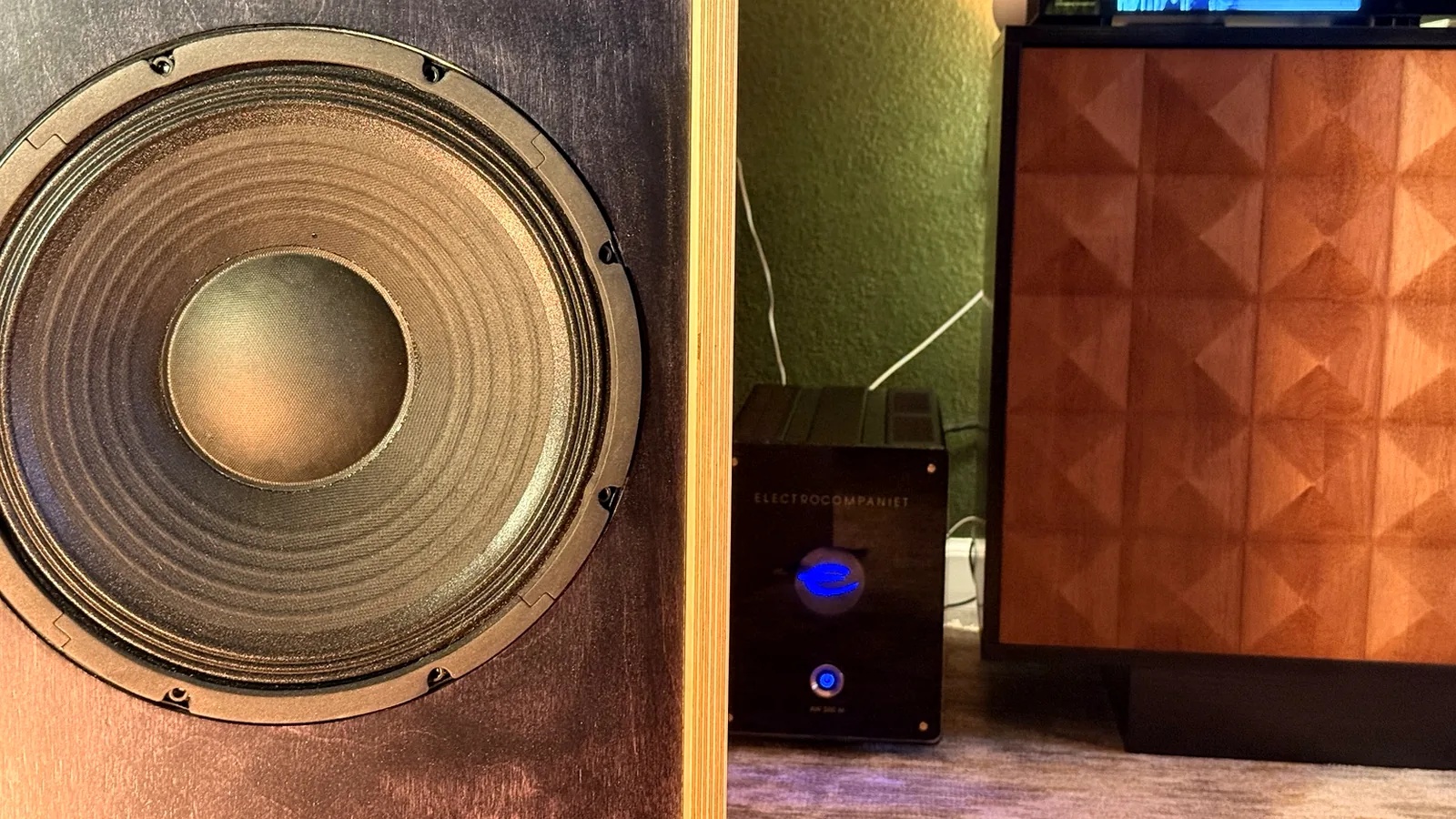
The Bass
With a 12-inch woofer and a cabinet tuned for useful extension down to a published 36 Hz, the Vitalic-12 certainly has the ingredients for a substantial low-frequency presentation. But bass quality is about much more than woofer size or a frequency-response specification.
Control, texture, punch and integration with the midrange are what really matter. The room and speaker placement also play a substantial role, as I’ve discovered many times over the years.
With the Vitalic-12 the bass, just like the mids, were not as juicy or wet as say with the SV Audio Gro, which are $33k speakers from Denmark that are very high end. The bass was not as full bodied or room filling as my Fleetwood Helios when paired with the Fleetwood Fundamental sub.
The Vitalic-12 has a bass that is fast and a touch dry compared to what I am used to. It’s a horn thing but I will say the bass here is deep, large and much nicer than I have heard from a Klipsch Heritage. When it is called upon the bottom end kicks in and delivers fast deep bass down to its published specs.
I tested these with a very fast Fleetwood Fundamental subwoofer that is designed for fast horns. With big high energy music such as rock, metal, EDM and dance music the sub enhanced these more than I thought. It filled in everything and brought that density, weight and punch that I felt. So if you want to enhance the bottom end, you will need a very good and very fast sub.
Also, Shakuto Audio just told me that they designed a sub for these if someone wants more bottom end. I haven’t heard it, and it is new but my guess is that it will be a great match and not cost as much as the Fundamental. Even so, a normal sub will not be able to keep up with the speed of a horn speaker so know this. You will need a very fast sub but they can be enhanced down below if you seek big weighty bass without slop.
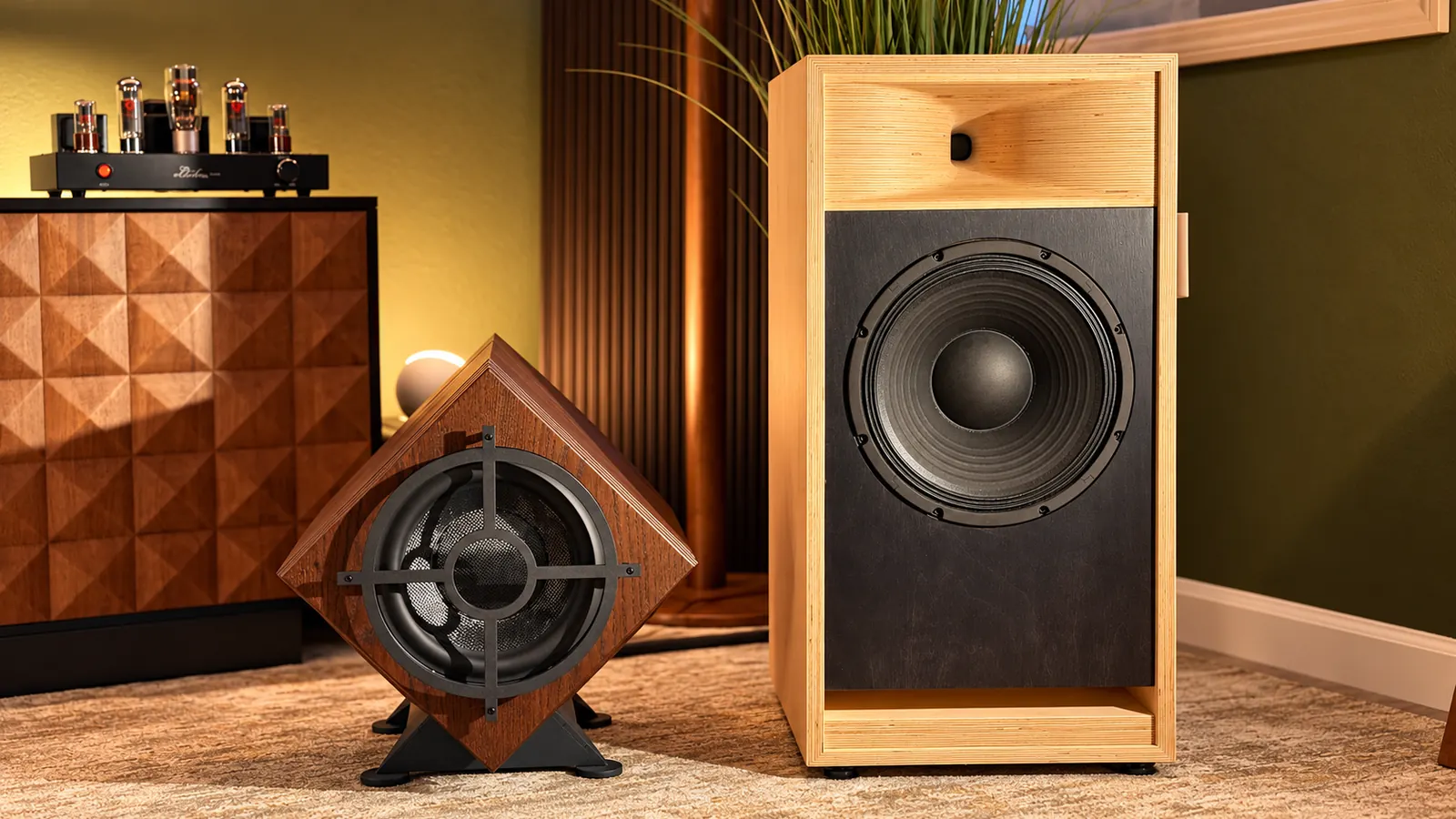
A Speaker That Doesn’t Demand a Monster Amplifier.
One of the most attractive things about the Vitalic-12 is its relatively high sensitivity and amplifier-friendly design. So many modern speakers seem to demand more and more power to really wake up.
I’ve heard speakers that sound sleepy with 30 watts but become completely different animals with 200 or 300 watts. There is nothing inherently wrong with that, but it does limit amplifier choices and can make building a satisfying system much more expensive.
With the Shakuto, you have more flexibility.
You could build a beautiful system around a modest tube amplifier, or connect a serious high-powered solid-state system and enjoy that combination as well. My experiences with the $299 tube amplifier and the Electrocompaniet setup show why that flexibility can be so enjoyable.
The speaker doesn’t seem to demand expensive amplification just to sound musical and at a starting price of $9,500 per pair, I think that’s important.
Because if a speaker requires another $20,000 in amplification before it begins to sound special, the real cost of ownership is much higher than the price on the speaker itself. That is something to think about before you make your next speaker purchase!
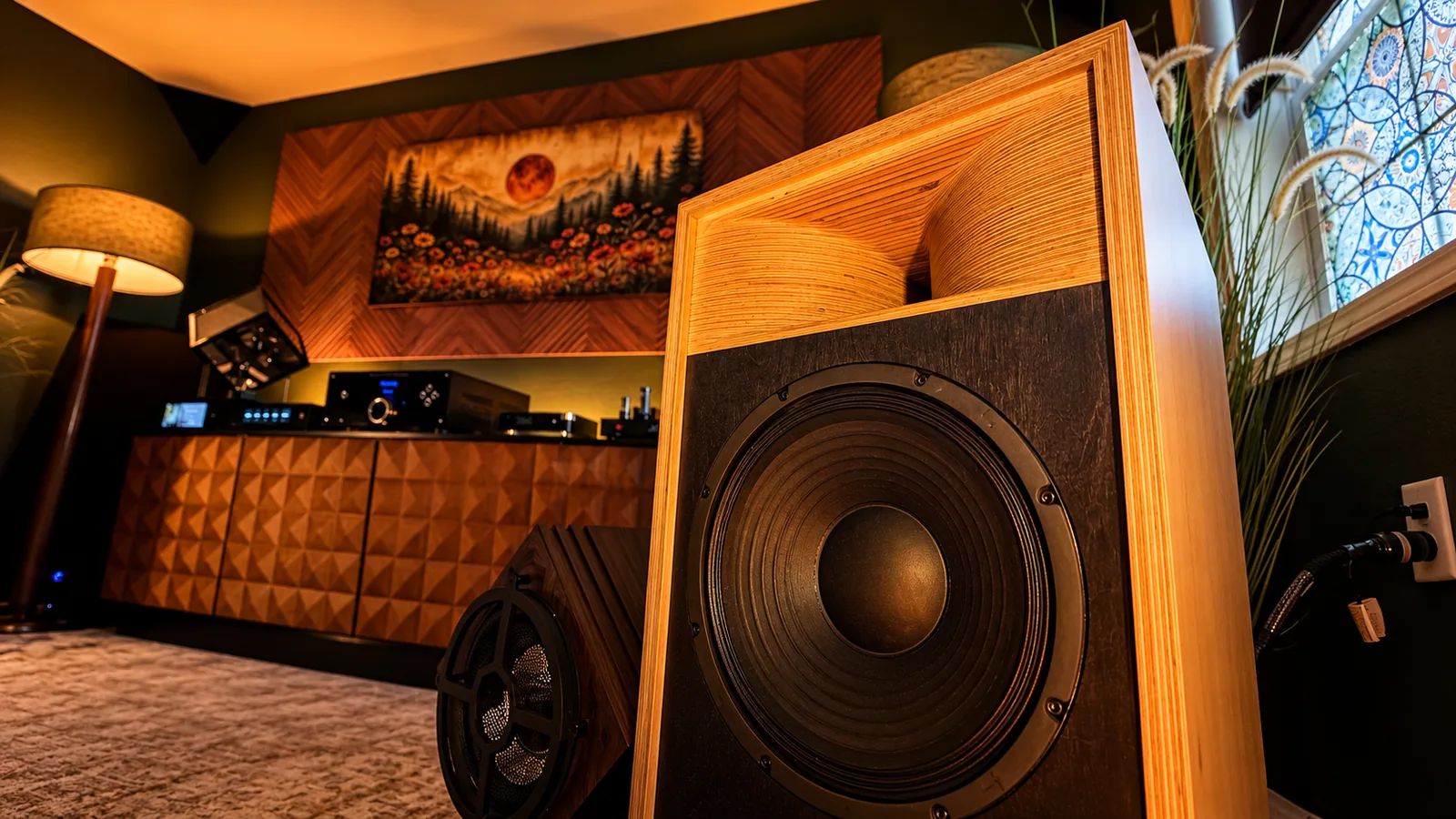
Who Are These Speakers For?
I think the Vitalic-12 will appeal to someone who values musical involvement, scale, richness and the excitement of a live performance. Those who like tubes as well because these will do so well with almost any decent tube amp. Those with some space as these are not baby sized, yet not large Wilson or Magnepan towers either.
The V12 are for someone who wants to feel the music rather than merely inspect every recording under a sonic microscope. Someone who appreciates real wood, unique designs, handcrafted construction and the freedom to experiment with different amplifiers.
And someone who loves the idea of a big, expressive speaker that doesn’t require hundreds of watts to come alive. Now, that doesn’t mean they will be for everyone as I have never found a speaker that everyone would love. We all have different tastes in looks and sound.
Audio is personal, and our rooms, equipment, ears and tastes can differ dramatically.
Those chasing a very specific analytical or ultra-neutral presentation should certainly audition them rather than assume this is their ideal sound. And the styling won’t appeal to everyone either. These are distinctive wooden horn speakers, not sleek, narrow towers designed to blend into the background.
But for the listener who wants a large, dimensional and smooth musical experience, I think there is something genuinely appealing here.
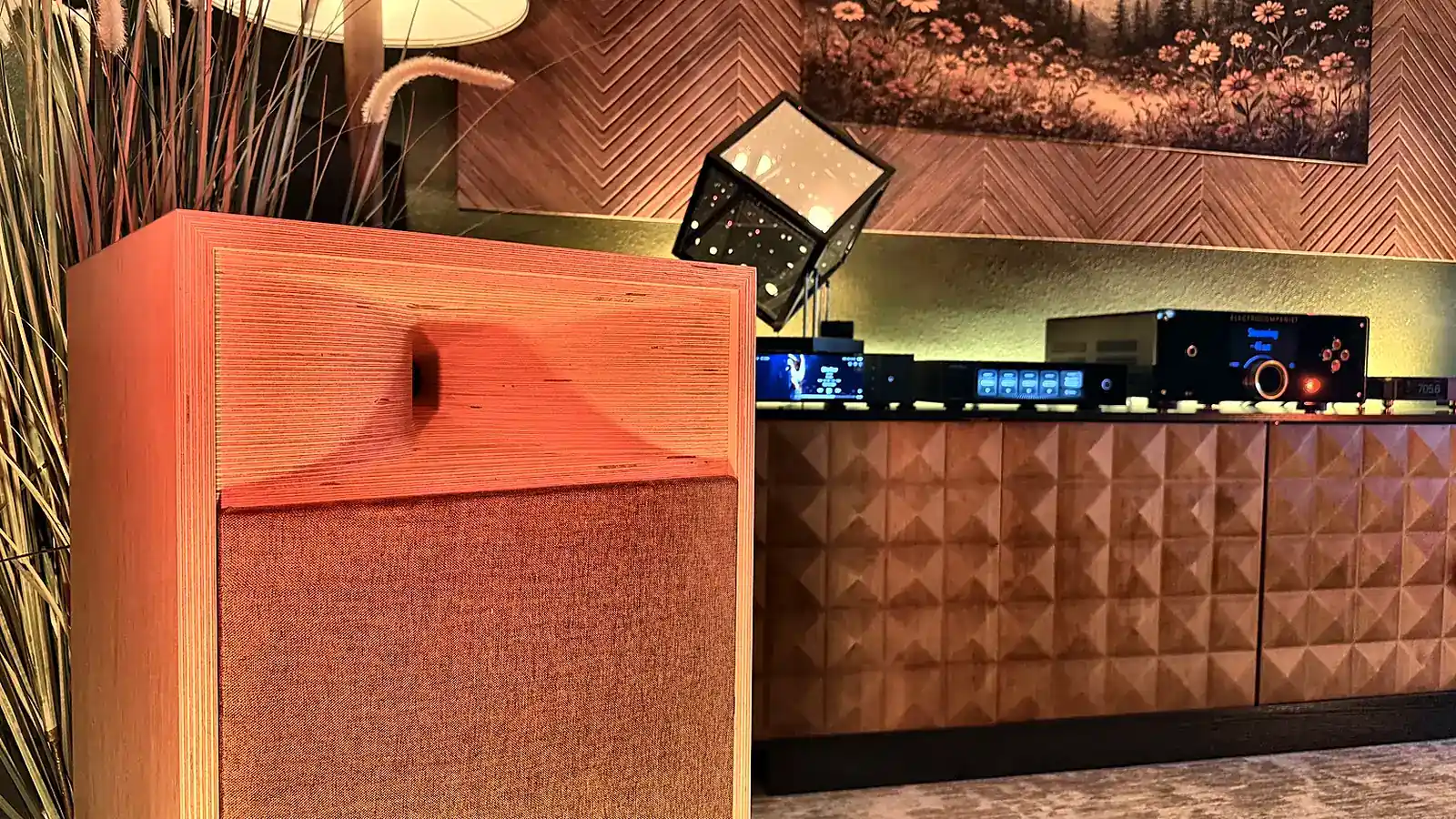
My Final Thoughts. Music First.
I’ve said this many times over the years, and I’ll say it again. For me, this hobby has never really been about specifications, measurements or impressing someone with how expensive my system is.
It’s about music. That’s why I couldn’t care less about measurements that have nothing to do with our room, our associated gear and how a piece will sound.
For me, ever since I was 17 in my parents basement 40 years ago listening nightly or today it’s always been about the music. It’s about sitting in my listening chair, shutting off the outside world and feeling something when a favorite recording starts playing. Sometimes that magic comes from a system costing a fortune. Other times, it comes from an inexpensive little tube amplifier paired with the right speakers.
That’s one of the wonderful things about this hobby. There are so many ways to get there.
The Shakuto Audio Vitalic-12 is an interesting speaker because it offers a sound that is both exciting and relaxing. It’s big. It’s spacious. It’s smooth. It has that live quality I enjoy, without the aggressive treble that can sometimes accompany speakers designed for maximum dynamics and presence. Well, this may depend on the amp you choose. I would never use a bright lean fast amp with a horn speaker. Think 300B, 845, 805. 2A3, EL84, etc.
With the hand wired class a single ended little $299 tube amp, it produced a beautiful, luscious sound with superb stage depth. With the Electrocompaniet EC5 and AW300, the presentation was warm, layered, dimensional and quite beautiful. With Accuphase it was open, precise and dynamic with more treble energy up top, yet still pretty smooth.
Three very different systems. Two very enjoyable experiences.
At $9,500 per pair, these are certainly not inexpensive speakers. But what you are getting is a distinctive, handcrafted design with a serious wooden horn, a 12-inch woofer and enough efficiency to open up a wide range of amplifier possibilities. More importantly, you’re getting a speaker with personality.
And in a world where so much audio equipment can begin to sound similar, I appreciate that.
What about compared to my Fleetwood Helios and Fundamental, which are my main reference now?
The Helios use a small 5″ driver with a horn loaded tweeter during within that driver. It’s a driver not used by anyone else in home audio. For me, these Helios do not sound anything like the Shakuto speakers. The Helios do not sound like a traditional horn. They are somewhat open, have some midrange punch and while the bass only reaches 40-45Hz, with the Fundamental they sound like a massively large speaker system that costs much more.
In comparison, the Shakuto is about $5k less pricey than the Fleetwood Duo. They are larger in size, much heavier and look quite different. When it comes to sound and experience, both are lovely but the Shakuto can not reach the bass depths nor does it bring the weight in the midrange of the pair of Fleetwood boxes.
Again all depends on what you seek in sound.
What the Vitalic-12 does bring is an even more open sound and a midrange that is more open as well. Less weight in the midrange so a cleaner presentation while keeping the treble smooth.
Oh on the back of the Vitalic-12 there is a dial that allows you to dial in the treble energy. Want it warmer, turn the dial to the left. Want more of that ALIVE sound? Turn it to the right all the way. I listened with it all the way up, yet treble was still smooth. It was too dark for me when dialed down, due. to my amps and source.
As tested, I used the Eversolo T10 transport and C10 clock with a LAIV Harmony 2 DAC. All cables are synergistic research foundation XL from power to digital to ethernet to speaker.
For now, I can say that the Vitalic-12 has been a very enjoyable speaker to listen to, and one that has reminded me why I love reviewing audio gear in the first place. Also reminded me of my love for big horn speakers. The star of the Vitalic-12 for me? Vocals. So real, so present, so in the room. Nothing like goosebumps at 1am!
It’s all about the music, my friends.
— Steve Huff
Manufacturer: Shakuto Audio, California
Model: Vitalic-12
Price: Starting at $9,500 per pair
Design: Two-way, horn-loaded, front-ported loudspeaker
Woofer: 12-inch carbon-fiber-impregnated paper cone
High Frequencies: Compression driver with CNC-machined Baltic birch horn
Cabinet: Baltic birch plywood, handcrafted in California
Sensitivity: Approximately 96–97 dB
Nominal Impedance: 8 ohms
Frequency Response: 36 Hz–20 kHz
Recommended Amplification: 5–200 watts
Dimensions: 30.7 × 15.6 × 17.5 inches