Amazing Sound for LESS. The Yzabel Audio Classic 1 Review.
Every now and then a speaker comes through my listening room that catches me a little off guard and The Yzabel Audio Classic 1 is one of those speakers. It isn’t the first and will not be the last that does this but something about the Classic 1 is special. I hope to convey that in this review, and how it is.
I have had these here for around three weeks now, listening almost every day and with a pretty wide range of amplification. Some of those amps cost many times what the speakers themselves sell for, which turned out to be an interesting experiment all on its own. One amp costs 1/4th of what the speaker costs, puts out only a few watts and is class A. I will talk about all of these amps and how they power the Classic 1 within this review.
I will be honest here, as always. The Classic 1 is not a speaker that knocked me over within the first 30 seconds with some kind of audiophile trick. I heard no exaggerated top end throwing detail at my face. There was also no artificially inflated midrange designed to make vocals sound six feet wide. There was no giant bloated bass trying to convince me that a relatively compact stand-mounted speaker was somehow a full-size tower.
Instead, these slowly won me over by doing something that I value more and more as the years go by.
They simply sound natural, musical, refined and open.
And perhaps most importantly, they allow me to relax into the music instead of sitting there analyzing the sound. Yet there is also something about these that absolutely does grab your attention and that would be the bass.
More on that soon, because the low-end performance of the Classic 1 is almost a review all by itself.
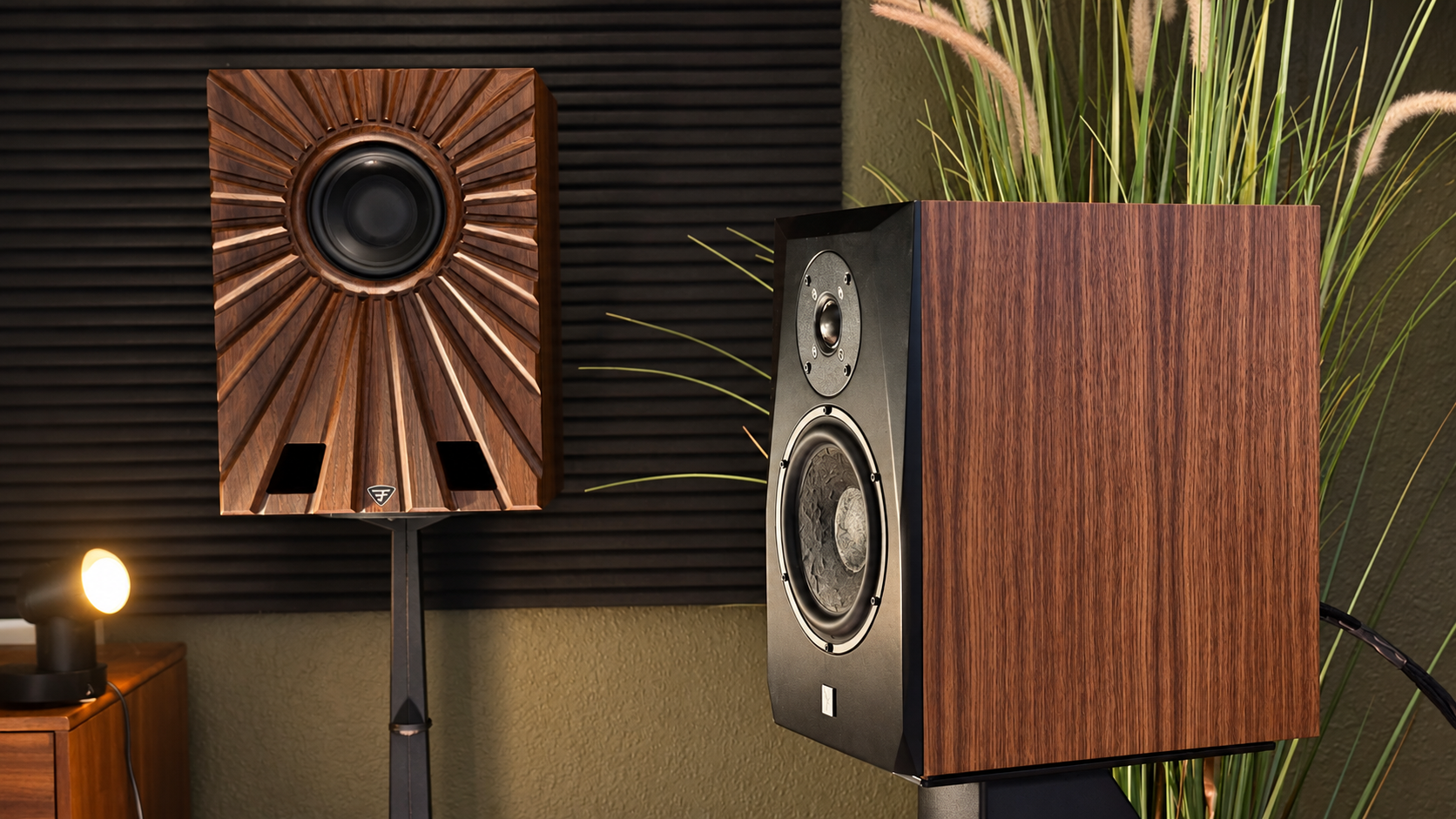
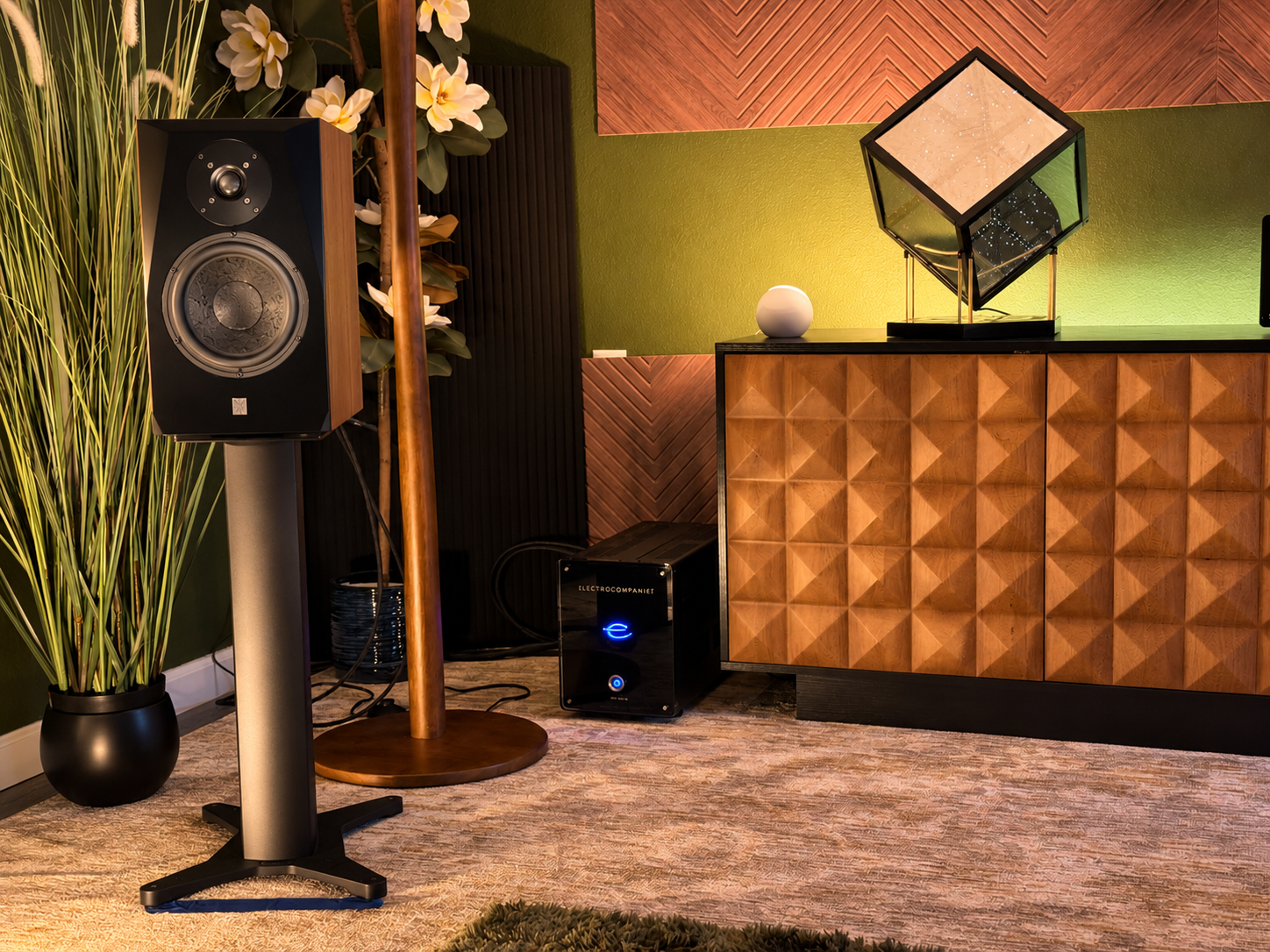
Next to the Fleetwood Sound Helios, the Classic 1 shows its classic design.
WHO IS YZABEL AUDIO?
Yzabel Audio is a small Canadian loudspeaker manufacturer located in Lévis, Québec.
Founder and designer Mario Isabel has a background in music and audio/video electronics and says loudspeaker design—particularly crossover development—became an area of special interest for him over the years.
That crossover aspect is important with the Classic 1.
Yzabel says a great deal of time went into selecting the drivers and crossover components, with the network designed to place as few components as practical in the signal path. Mario’s stated goal isn’t impressive measurements for the sake of impressive measurements, or a speaker with deliberate sonic coloration. His philosophy centers around balance, natural timbre and emotional connection to music. The Classic 1 is made in Canada and is sold direct at the Yzabel website.
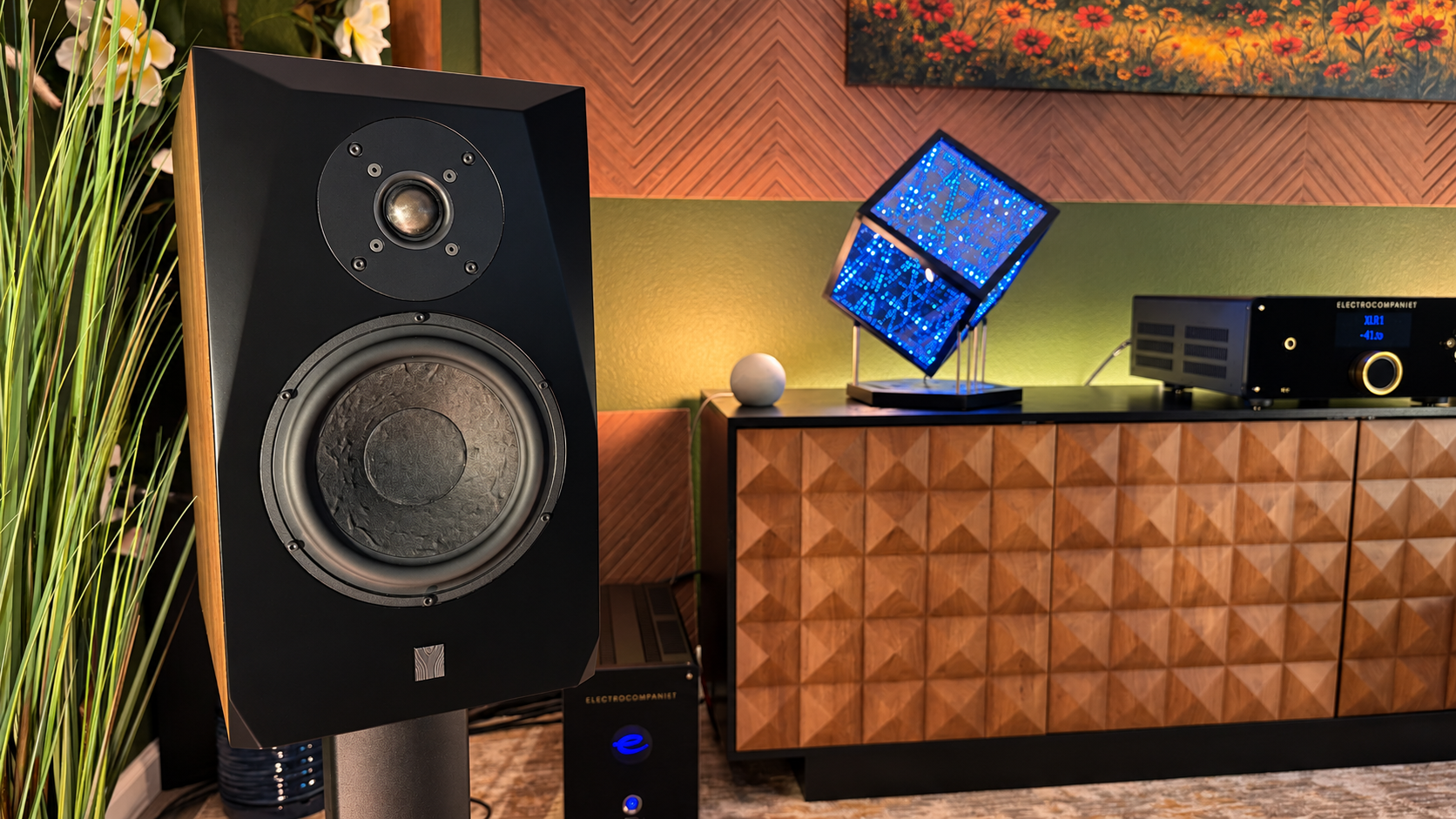
After three weeks with these speakers, I can say that description is actually very close to what I have been hearing and I have put them through all of my usual listening tests.
Let’s talk a little about the specs for a moment even though is is not how I just products in a review.
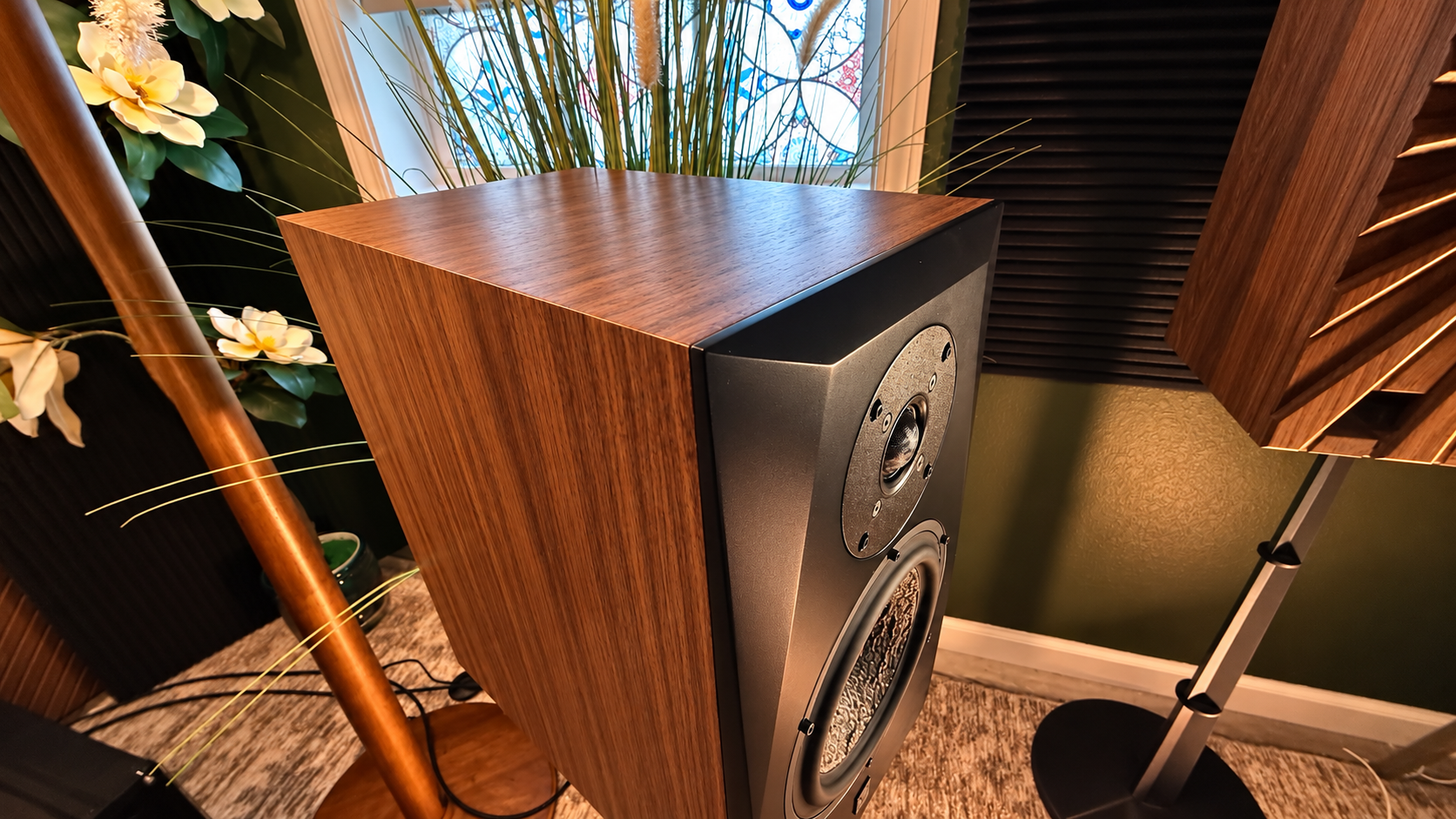
The Classic 1 is a relatively simple-looking two-way design using a 7-inch Scan-Speak paper/carbon woofer and a 1-inch Scan-Speak textile dome tweeter. The crossover point is 2.4 kHz with a second-order network.
Yzabel rates sensitivity at 87 dB with an 8-ohm nominal impedance and recommends amplifiers from 20 to 120 watts. The cabinets are made from reinforced 3/4-inch MDF with natural walnut veneer, and each speaker weighs around 30 lbs. They aren’t tiny either, measuring roughly 15.25 inches tall, 8.75 inches wide and 13.5 inches deep.
The claimed in-room frequency response? 30 Hz to 20 kHz ±3 dB. Yea, that’s thirty Hertz. When I first saw that specification I naturally wondered how realistic it would be.
Now I know.
THE BUILD
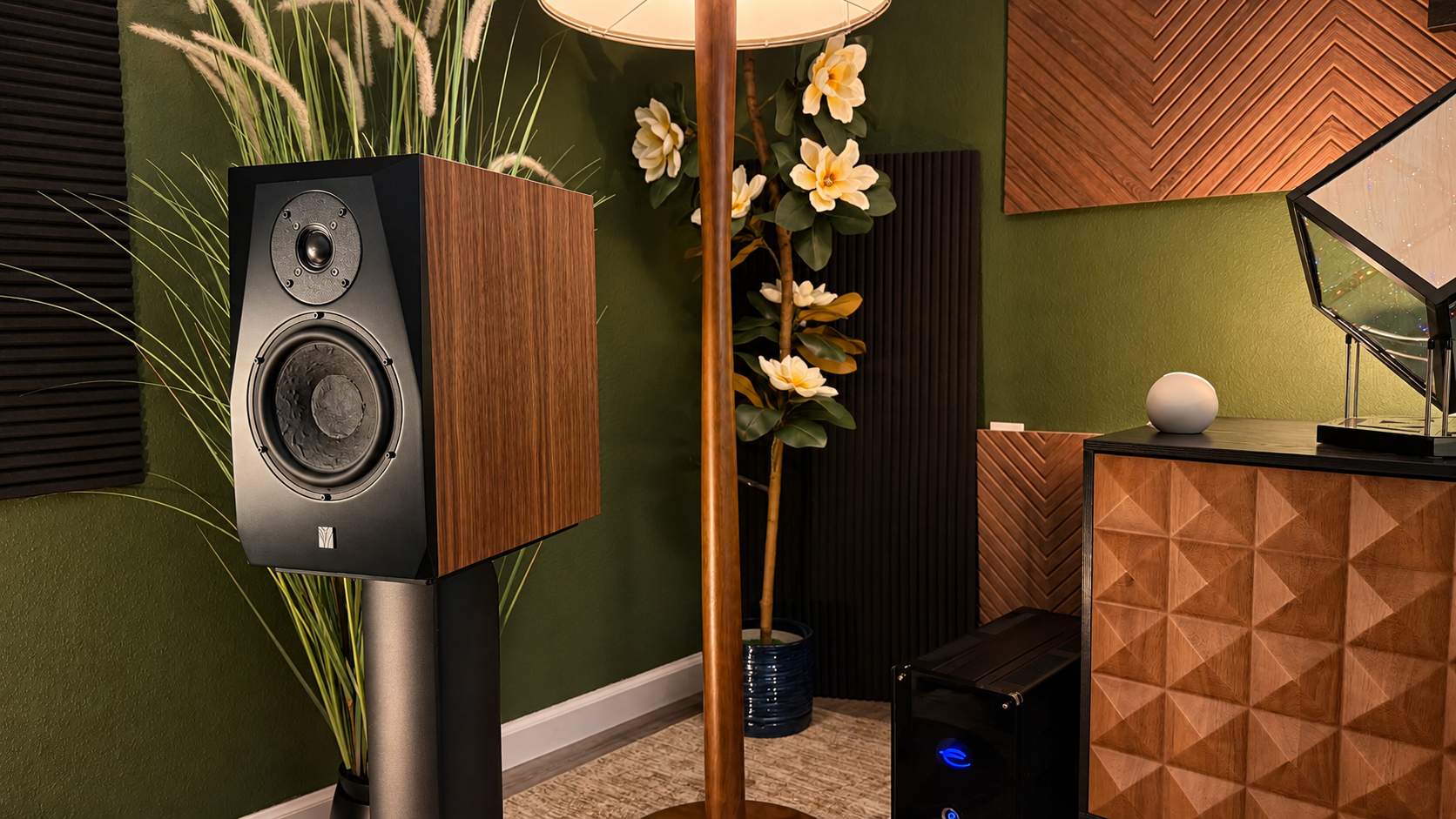
Before we even get into sound, I have to talk about the build quality because these are indeed what I would call “beautifully made speakers”.
Coming in at around a $3,300 USD price point (the upgraded model), I think the construction is rather stunning as they feel substantial. The cabinetry is beautifully finished and there is nothing about them that screams inexpensive or compromised. No they are not carved out of real wood nor made of stone but use a nice quality walnut or black veneer that is tough and upgraded vs the usual ones I see that get damaged easily. Nice.
Yzabel currently lists the Classic 1 in natural walnut and black finishes. They also offer both a standard and upgraded configuration, with the upgraded version receiving higher-end crossover parts, internal wiring and connectors. Their Canadian pricing at the time of this review is CAD $3,499 for the standard version and CAD $4,499 for the upgraded model.
I will state that I was told the lower end version will be discontinued soon and they will only offer the upgraded model, which is the one I have here now.
There is an old-school simplicity here that I appreciate. We don’t have some wild futuristic cabinet or exotic diamond, beryllium, plasma or unobtanium tweeters. No marketing gimmicks needed with these. They should sell themselves because of the price point vs what you get.
There is a nicely built wooden box containing two quality Scan-Speak drivers with a crossover that the designer clearly spent quite a bit of time refining. Yes my friends, sometimes simple works.
SETUP
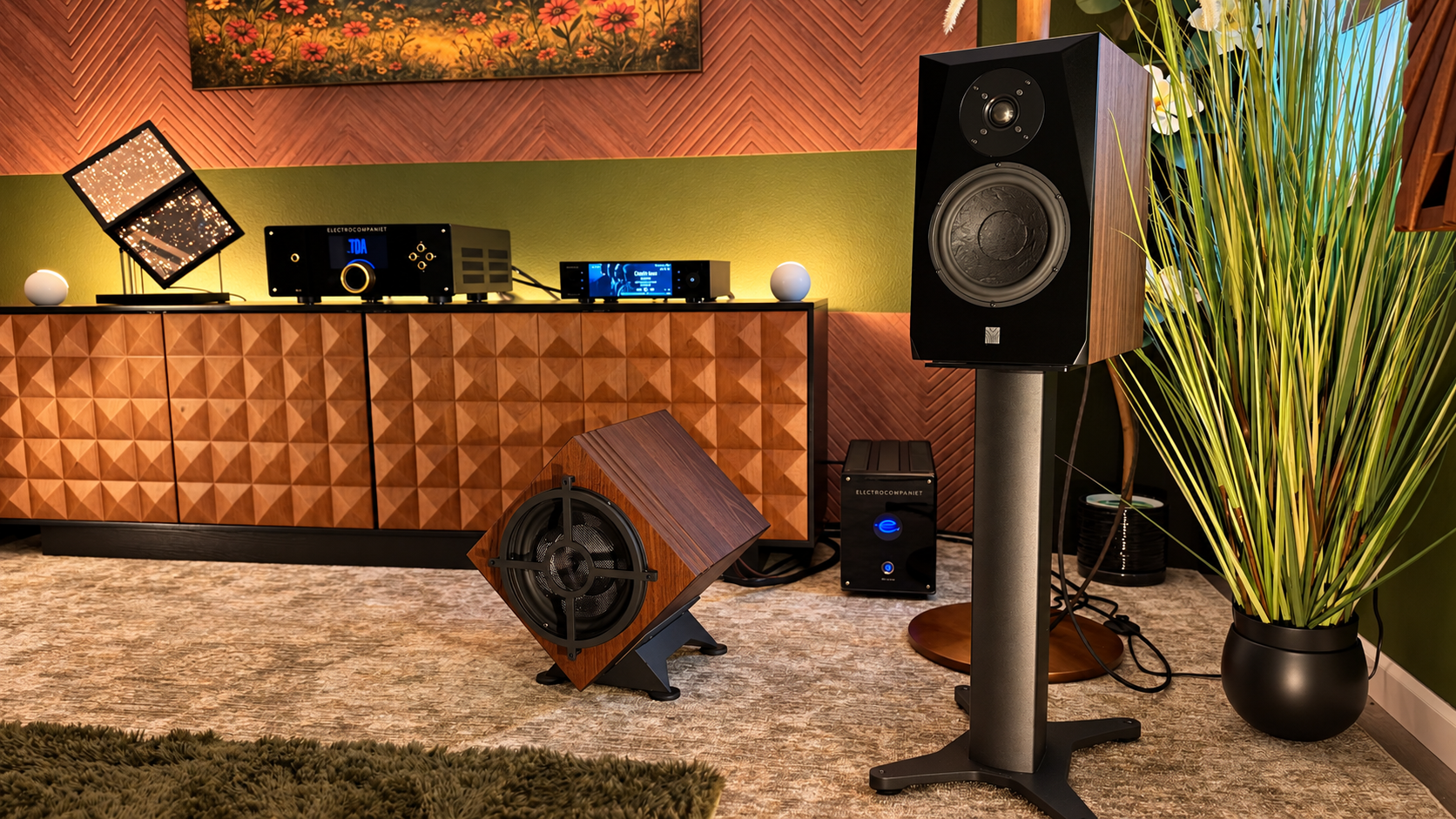
In my room I ended up placing the Classic 1 around eight feet apart, with just a slight amount of toe-in. My listening position was roughly eight to nine feet away. That’s it.
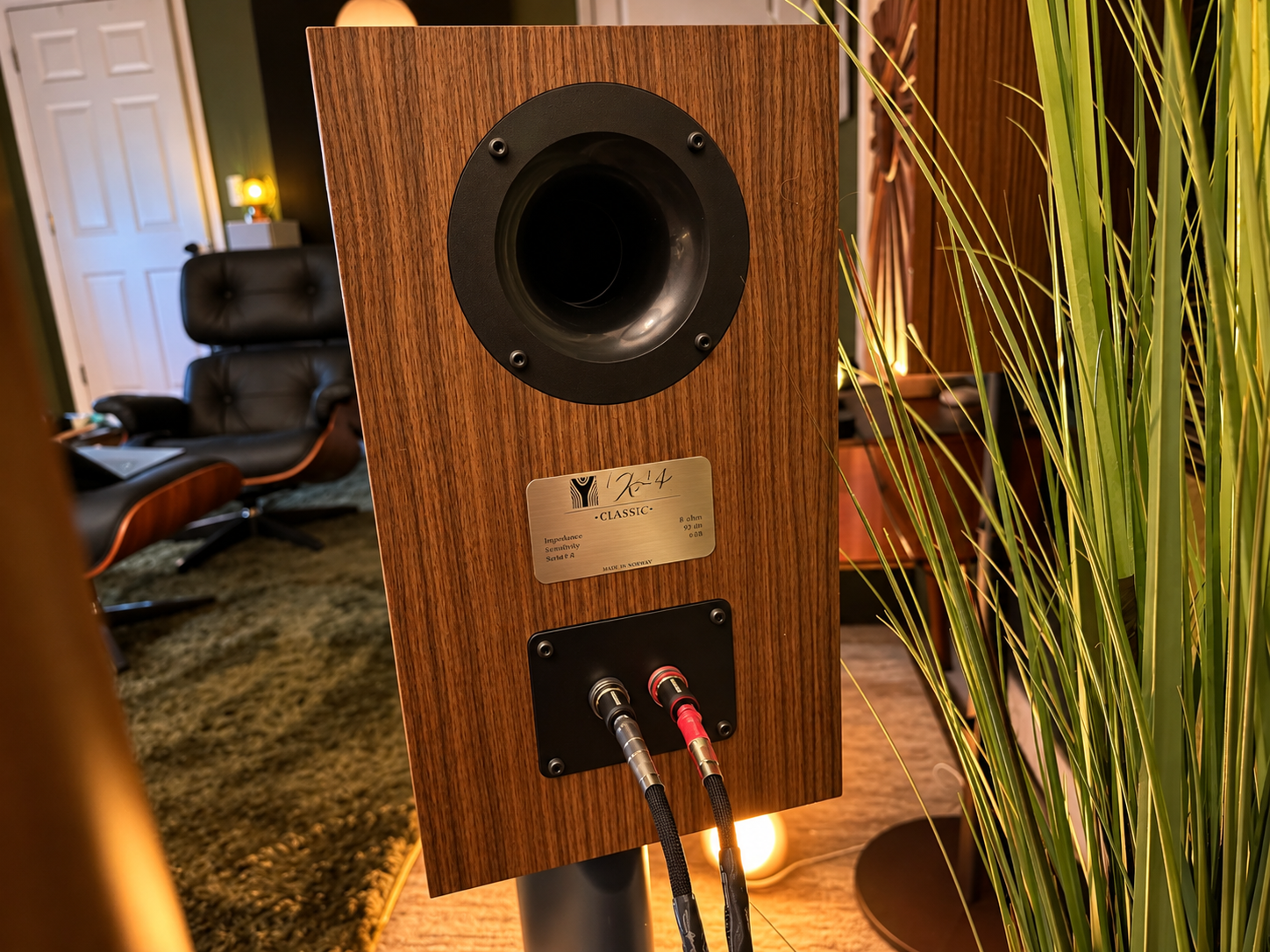
I didn’t find myself obsessing over placement for three days trying to squeeze some magical soundstage out of them as once positioned correctly, they simply disappeared quite nicely and were easy to set up. They do port from the back so be careful about pushing them against a wall to avoid boom, mushy sound and blur. They like to breathe but all they really need is 13-18″ away from a wall.
The soundstage of the Classic 1 is wide and had very good depth and not fake width where everything stretches unnaturally across the room. There was a nicely proportioned stage that gave recordings room to breathe.
This also isn’t one of those speakers where the center image sounds enormous while everything else becomes vague. Images were stable and the presentation was cohesive. The speakers themselves tended to get out of the way.
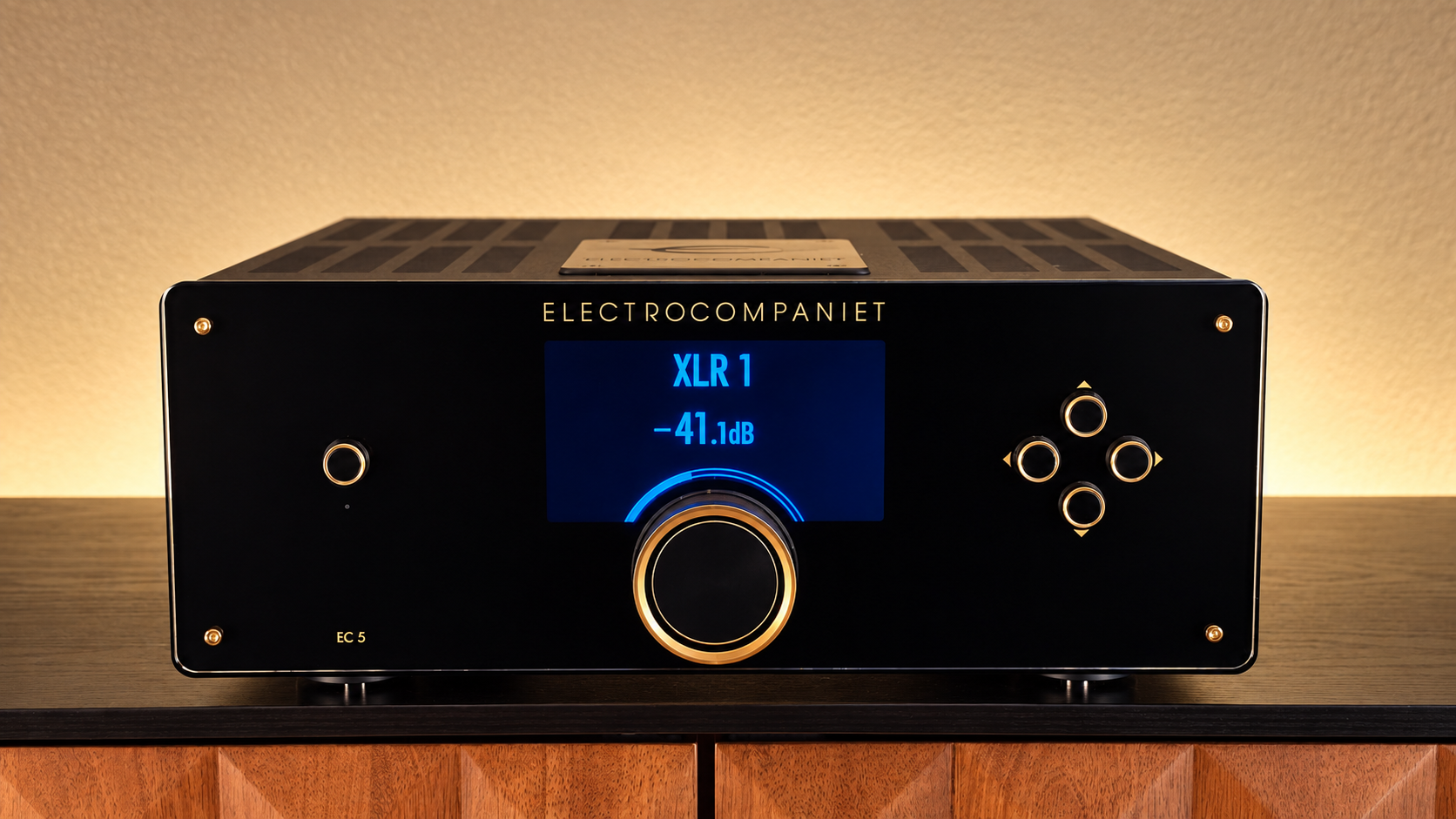
The stunning and very pricey Electrcocompaniet EC5 Preamp is a work of art but pricey.
NATURAL. THAT’S THE WORD.
If someone asked me to describe the Classic 1 with one word, it would probably be: Natural. Not really warm and for sure not dark. There is nothing analytical here either. The word I keep thinking of is… Natural.
There’s a subtle difference. When we call a speaker warm, many people immediately imagine softened highs, thick bass and a big ripe midrange but that’s not really what is happening here. The Classic 1 still has openness and transparency and there is also plenty of information coming through.
I can hear into recordings with air around performers meaning the soundstage opens up nicely. But the treble does not jump out of the speaker shouting:
LOOK AT ALL THIS DETAIL!
I have heard many expensive speakers do this and yes, initially it can be impressive, I agree. This is how many speakers are sold at a dealer, that first impression. It is only after days and weeks that you get to know a speaker.
But when you audition some high end speakers that are tuned for detail you will hear every little click, breath, studio artifact and tiny detail and Wow! But then two hours later I want to turn the system off.
The Classic 1 takes another route here because \the treble is gentle, refined and easy. The detail exists naturally within the recording rather than being shoved forward for effect and this my friends makes these speakers extremely easy to listen to.
And for me, that’s becoming increasingly important because after decades of listening to high-end audio, I no longer need a system constantly reminding me that I am listening to expensive audio equipment.
I want music.
THE MIDRANGE
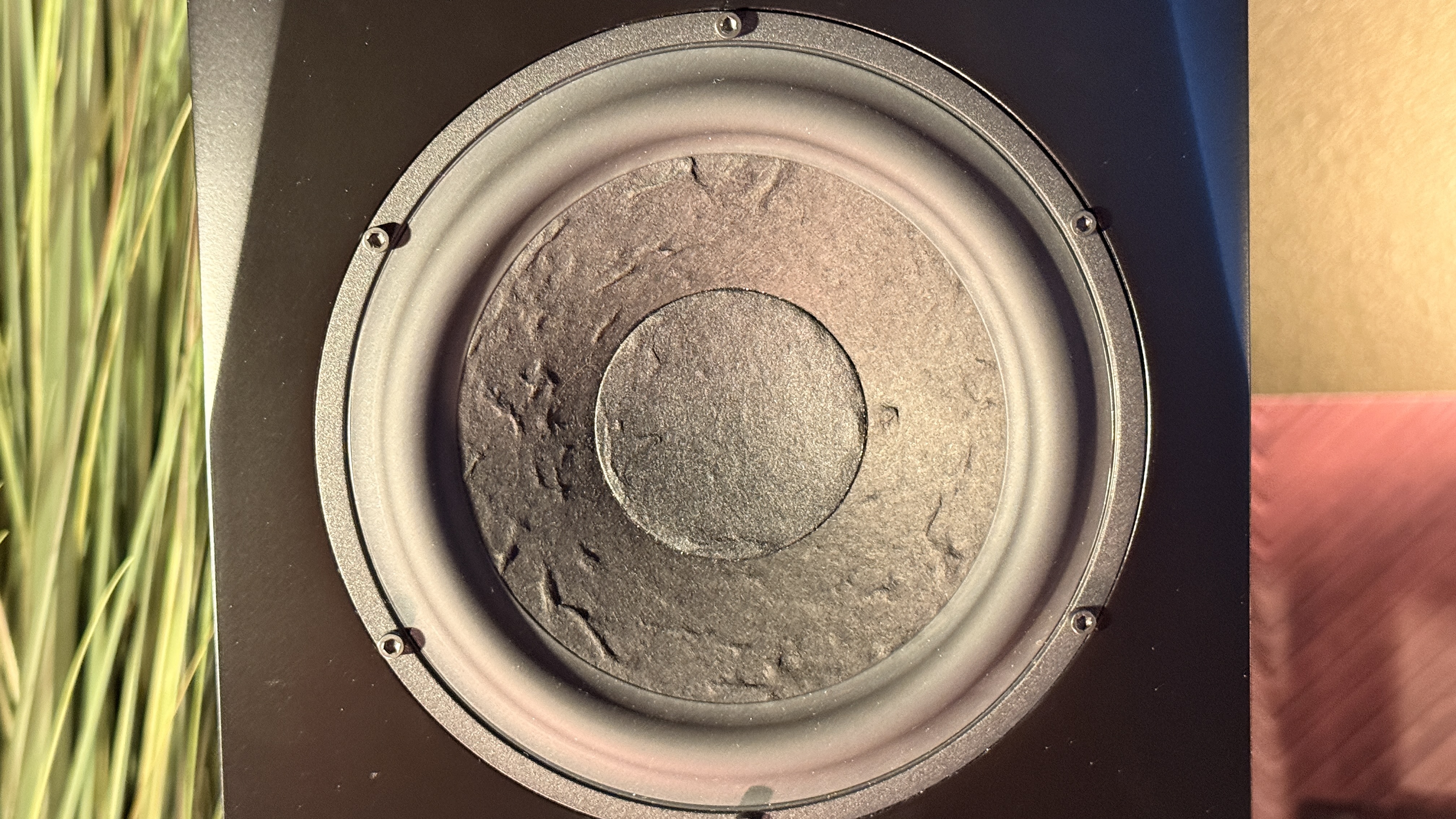
The midrange of the Classic 1 is interesting because I wouldn’t describe it as big, thick or beefy. In fact, it’s a little more delicate and also a little bit airy and sweet. Vocals have a beautiful quality without becoming overly saturated.
If you are coming from a speaker that gives every male singer a massive chest and pushes every female vocalist three feet forward into the room, these may initially sound somewhat lighter through the mids. Give them a little time and you will hear BALANCE.
Voices have texture and dimensionality without sounding artificially enlarged. Piano sounds natural and acoustic instruments retain their body while still allowing air and space around them.
This is where I started hearing a quality that reminded me—not in outright performance, but in musical philosophy—of my reference SV Audio Gro.
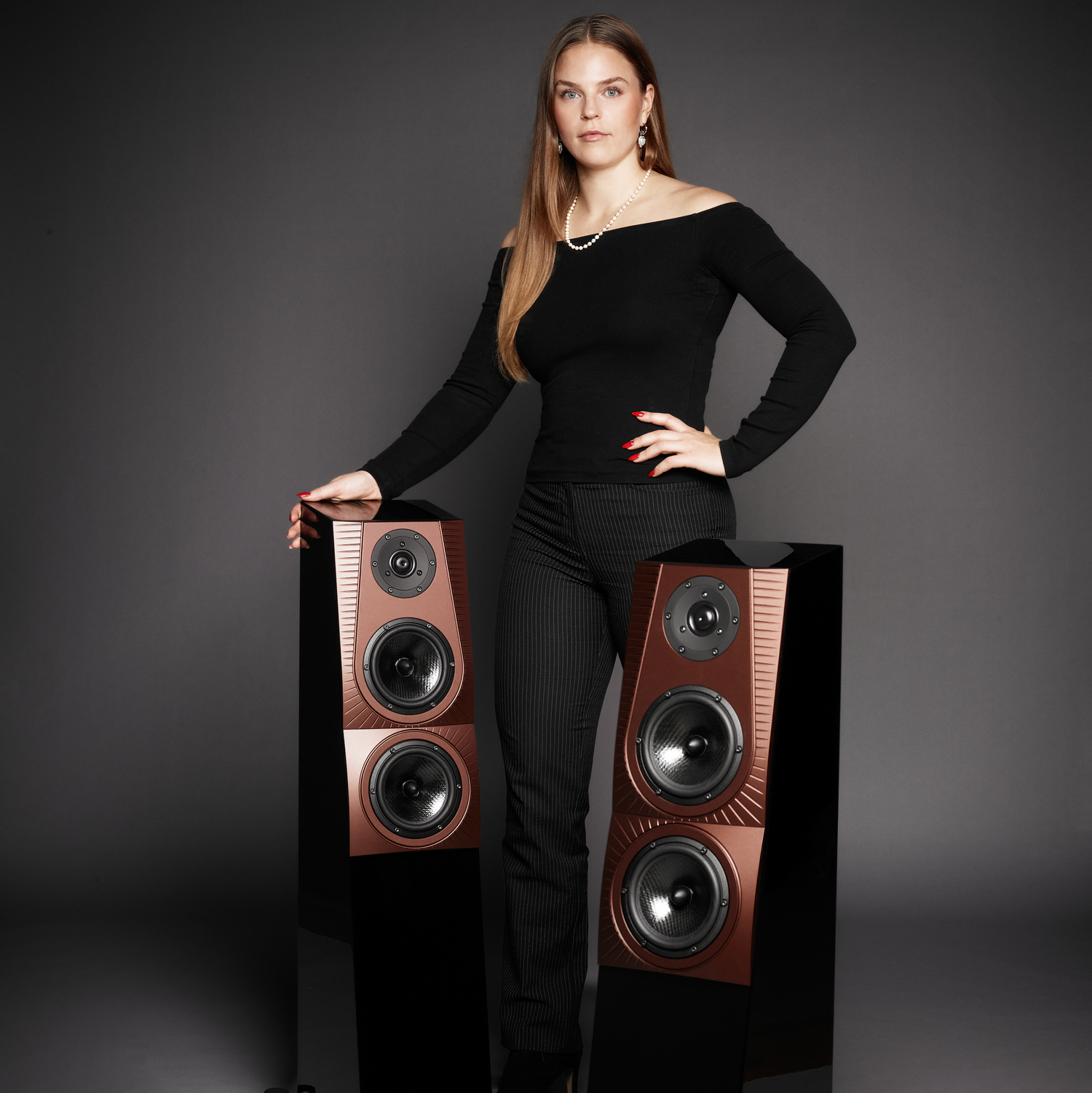
And yes, the Gro sells for around $33,000.
Let me explain before anyone loses their mind.
I am NOT saying the Yzabel Classic 1 is equal to my SV Audio Gro.
It isn’t.
The Gro is one of the finest speakers I have had in my home and does things involving scale, resolution, effortlessness, dynamic expression and overall realism that justify why it sits where it does in my system.
But…
There is something familiar between these two speakers. It’s in the way they approach music. Neither tries to dissect the recording and throw every microscopic detail into my face but instead both lean toward natural tone, musical flow and the ability to make me forget that I’m reviewing audio equipment.
That is quite a compliment for a speaker selling for roughly one tenth the price. They both seem to me that they may share some of that same musical DNA.
AGNES OBEL – THE MEANING OF FLOWERS

Then came Agnes Obel.
Her new album The Meaning of Flowers was released September 18, 2026, and it’s almost the perfect kind of recording for demonstrating what these speakers do well.
The album was written, recorded, arranged and produced by Obel in her Berlin studio and combines her vocals, piano, keys, synths and samples with violin, viola, cello, bass, lap steel, harmonium, flute, saxophone and percussion across twelve tracks.
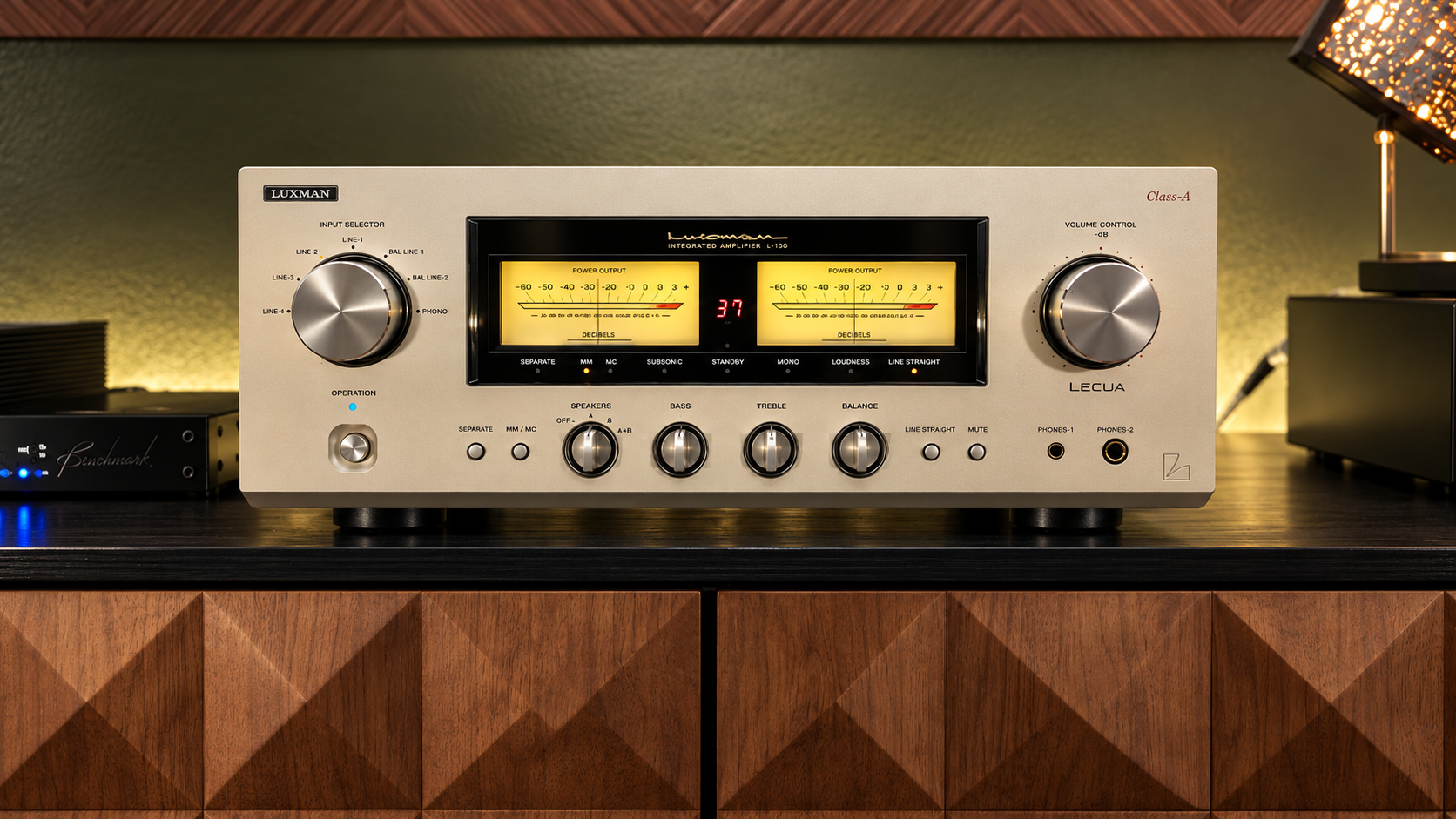
The beautiful Luxman L-100 Centennial – Class A Stunner.
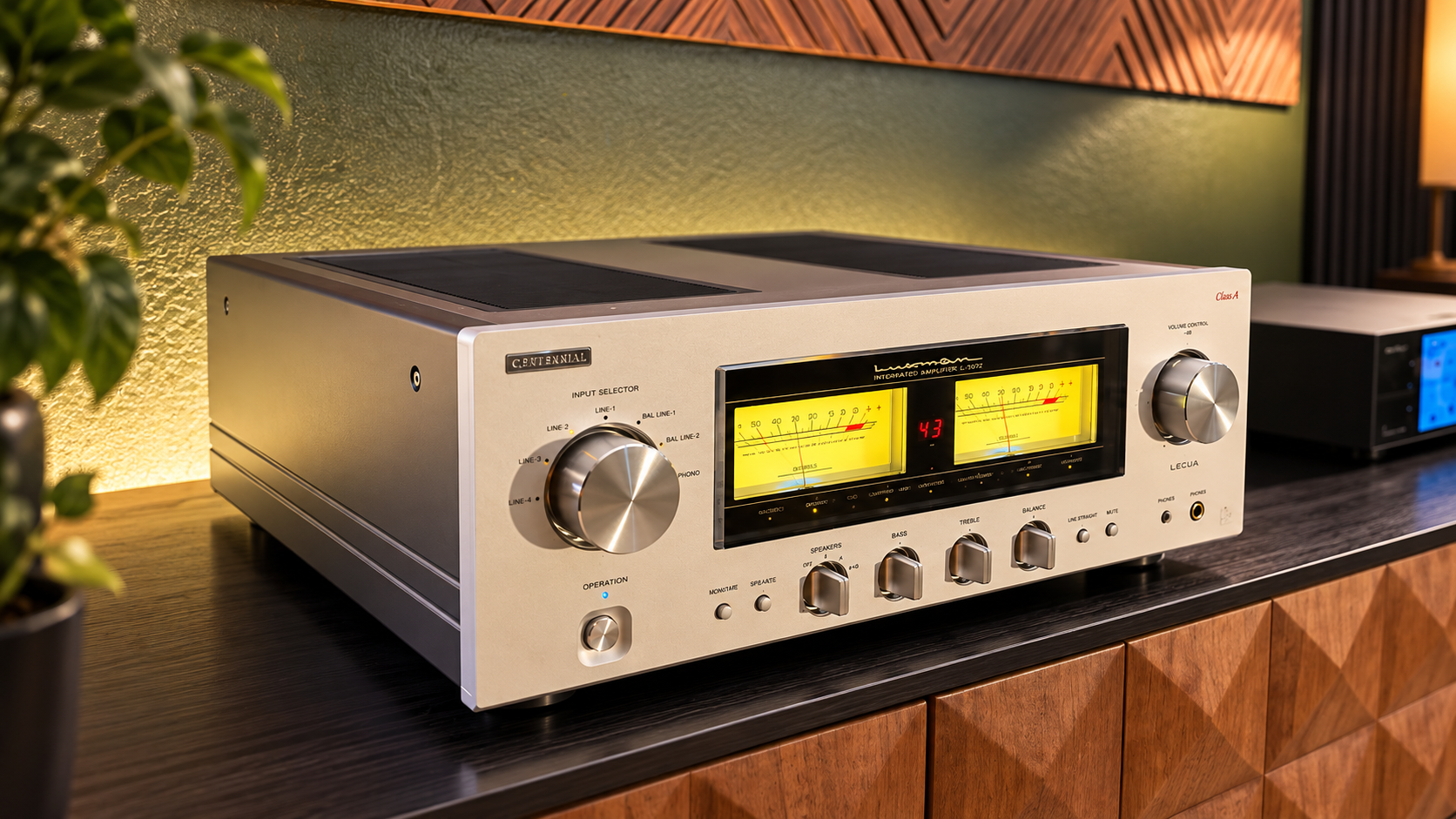
I put this album on with the Classic 1, Luxman L-100 Centennial and an Eversolo T10 streamer with a LAIV Harmony DAC 2 (the new one) and settled into my chair.
Beautiful. That’s the word. Her voice floated between these speakers with this delicate, almost haunting quality. There was air around her voice but it didn’t sound overly processed or artificially separated from the instruments. The stage extended beyond the speakers and there was real depth behind the front plane.
Sounds appeared deeper in the mix while others came slightly forward. Nothing ever sounded flat or stuck to the speaker cabinets.
And again, nothing was screaming for attention because that is something these speakers understand. The classic 1 don’t seem desperate to impress you but instead, the presentation invites you into the recording.
With The Meaning of Flowers, I stopped thinking about imaging after a while. I stopped thinking about the tweeter. I stopped wondering about the crossover and then I simply listened.
That’s one of the highest compliments I can give any speaker.
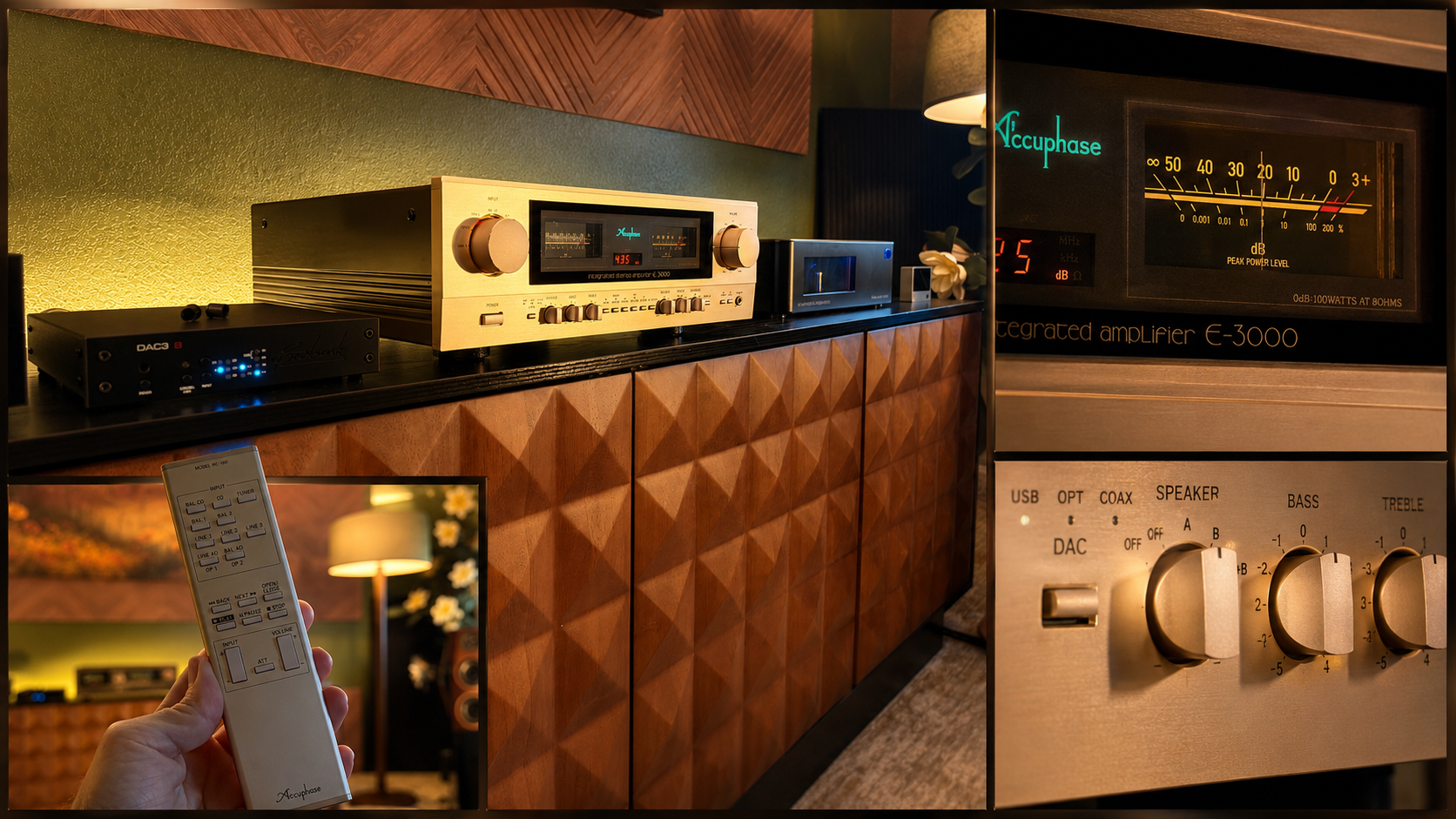
The Accuphase E-3000 in action – Review HERE.
WAIT…WHERE IS THAT BASS COMING FROM?
Now let’s talk bass. I swapped to the Accuphase E-3000 which is one of my fave integrated amps ever.
I then played a track called “The Rapture Titles” by Dominik Scherrer. This was on Spotify using lossless and connect which almost always sounds better to me than Tidal. This track has big drum beats, flowing hard hitting bass and effects that sway from left to right. It’s not chaotic but energetic and the Classic 1 brought all of this forth in a way that sounded like a much bigger speaker. When Yzabel says these reach down into the 30 Hz region in-room, they aren’t kidding around.
I then played an atmospheric track from Eguana called “Final Connection” and holy smokes!!! This track showed me what these Classic 1 can do with deep bass. This track was open, transparent, holographic and had big impact with the bass. Such an amazing experience with the Classic 1. I turned it up loud to around 83 DB in the room (that’s loud to me) and it was rocking with big body and delicacy at the same time.
I’m not saying:
“Wow, that’s pretty good bass for a bookshelf speaker.”
I am saying there is real bass here.
There is weight and impact but only if it is in the recording. There is texture and most importantly, there is control. That 7-inch Scan-Speak woofer is doing some serious work here and it’s sounding glorious in my room.
This is also where the crossover and cabinet design seem to pay dividends because the bass doesn’t feel disconnected from the rest of the presentation. Everything flows together.
DO YOU NEED A SUB?
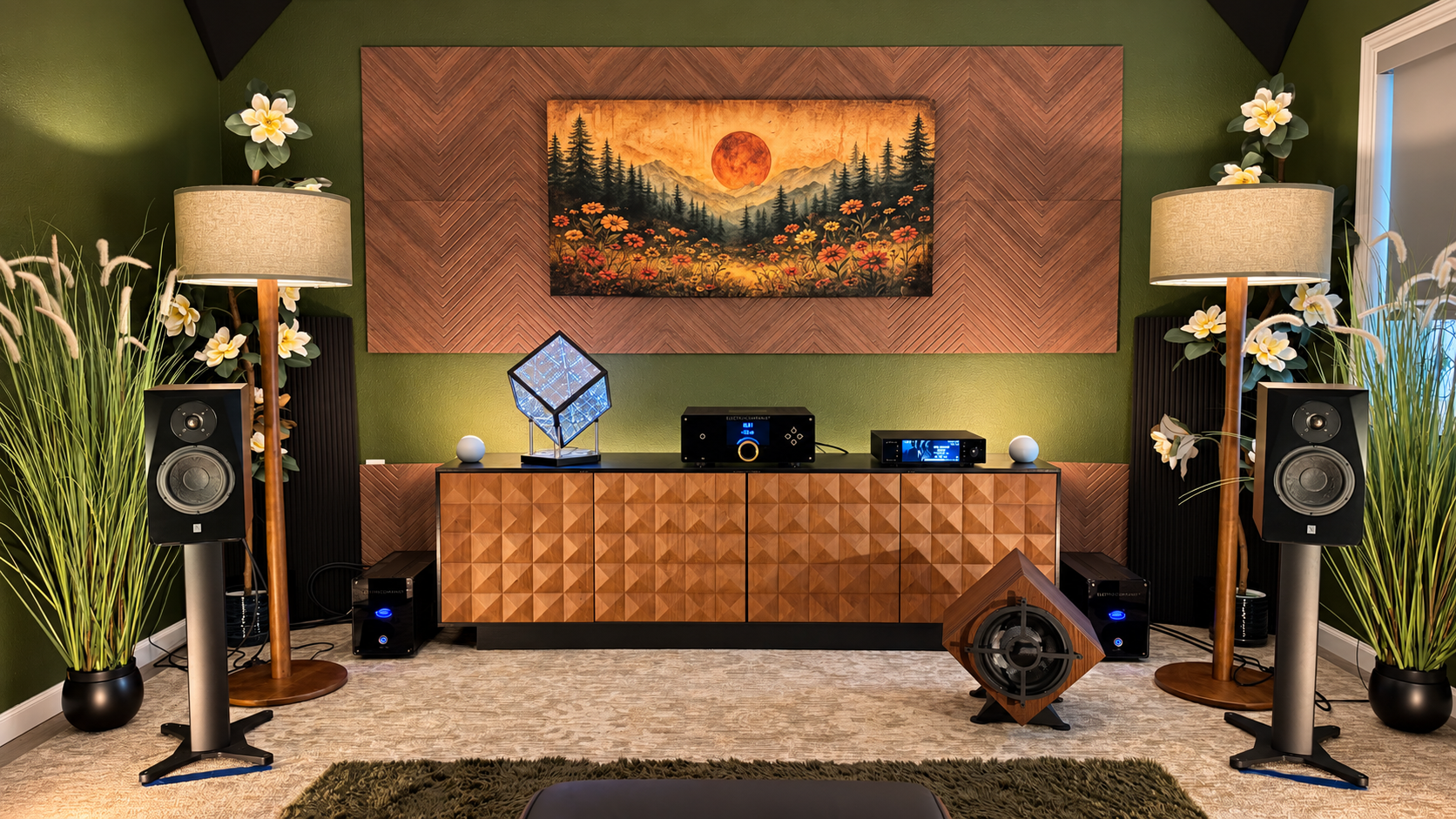
I wanted to find out so I put the Fleetwood Fundamental subwoofer in place as I have it in for review (and will become part of my reference as it is amazing).
With the fundamental crossover set to play just the lower bass I heard an extra layer of foundation and the soundstage grew wider again, with some height. The Fundamental is a fast sub, made for sensitive speakers where a fast sub is crucial. It’s the fastest sub I have ever experienced and horn like in speed but has much bigger output than a horn sub. I love that I can never can tell it is on, because it doesn’t bring attention to itself. It spreads the bass through the room that is connected to the speakers. Yes, when I turn it off I notice it.
I will say that the sub only needed to be set to a low crossover point and I had the gain at noon or so and it did add more solidity to the stage but I have to stress it was not “needed” here in my 14X19 space but if you desire more kick and slam, a sub would bring that. It really will depend on your room and how big it is.
Adding the Fundamental absolutely improved things but the difference was somewhat subtle for my space with the Classic 1.
With some speakers I have here, including my Fleetwood Helios, adding the Fundamental becomes a more obvious transformation, and it is a transformation. With the Yzabel Classic 1, the sub filled in that last portion of the bass foundation, but I never felt the Classic 1 desperately needed help.
I could absolutely live with these without a subwoofer and in fact, I spent the majority of time listening that way as I wanted to experience them as they were designed.
If you’re in a moderately sized room and don’t want another box sitting on the floor, you may find these deliver all the bass you need.

RAMMSTEIN?
Yes. Rammstein.
Because it’s very easy to make a speaker sound lovely playing sparse female vocals, piano and delicate acoustic recordings I wanted to see whether these speakers could rock as lately I have been enjoying some heavier music that I used to enjoy in my teen years. I test this kind of music with all speakers as again, easy for audiophile tracks to sound good but what about regular music?
So I fired up some Rammstein without the subwoofer. Now we’re asking that little 7-inch driver to deliver some serious low-end energy and it did. The backbone and the impact of the music was there and the music had weight.
The speakers didn’t suddenly collapse into a thin little audiophile speaker because I stopped playing Agnes Obel and that matters to me and should to you as well.
I listen to all kinds of music and I do not want a speaker that only works when someone is whispering into a microphone while a cello plays quietly in the background so the Classic 1 can be beautiful and delicate. Add the Fundamental back in and yes, Rammstein becomes even bigger and more physical.
But again, I could enjoy the music without it and for $3300 or so USD these speakers are indeed a bargain.
THESE SCALE WITH GREAT AMPLIFICATION
During these three weeks I tried the Classic 1 with some pretty serious electronics. The best I heard them was with the very high end and pricey Electrocompaniet EC 5 and AW 300 M mono amplifiers but that should have been the case considering the cost at over $50k.
This is obviously a rather insane amplifier combination to pair with a $3,300 speaker but it also taught me something.
These speakers scale…and scale very well.
With the 300 WPC that the electrocompaniet gear was pushing the Classic 1 became richer, bigger, smoother and even more refined. There was more dimensionality and the sound had such a big impact with bigger bass, warmer mids and more inner details being brought forth. No one will buy a $50k preamp and amp setup for a $3300 speaker but these speakers sounded so good with the EC gear.
Next up for me was the Luxman L-100 which puts out 20 watts of Class A power.
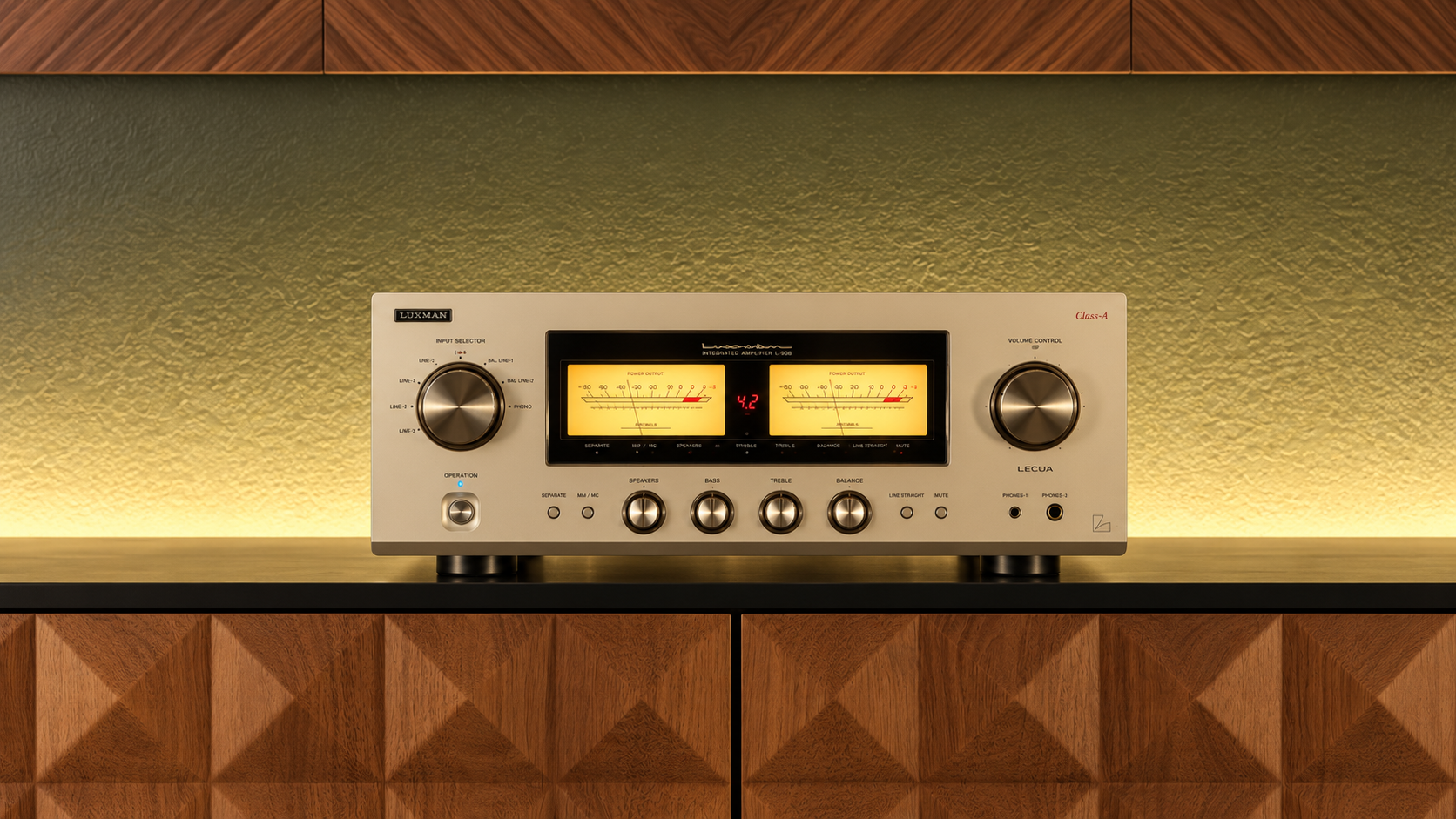
Again, all out gorgeous and equally as fine as the EC gear but with a different vibe. More neutral. more lit up in the treble. less warmth in the mids. The Luxman brought a more open soundstage with more sparkly details but it was not as refined and rich as the EC $50k monster combo. The 20 watts of class A on tap here delivered the goods with effortless ease and never ran out of steam. Impressive.
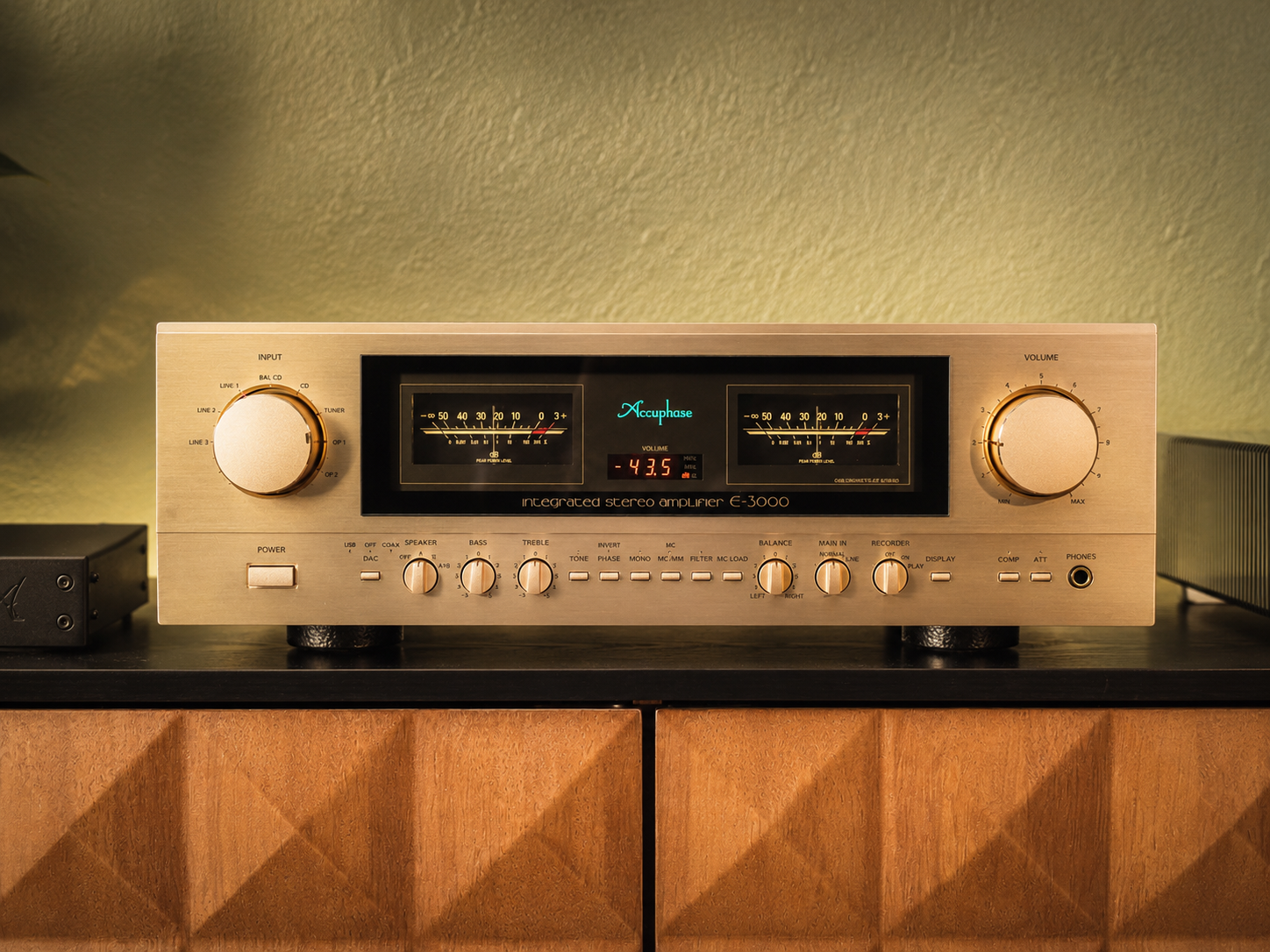
Then came the Accuphase E-3000, which also sounded beautiful with more warmth and less of that big bass impact of the EC but slightly more than the Luxman. This was refined, rich and added warmth.
All three systems had their own personalities, but the core character of the Classic 1 remained intact. This is a speaker that will absolutely let you hear what better electronics can do.
I also tested these with the little EA13 from Fiio. The $799 class A tube amp that pushes out 18 watts or so. It also drove them in a gorgeous tube like 1960’s kind of way. The amp is red hot, makes some noise but it can sing and it drove the Classic 1 without breaking a sweat as well.
So with the classic 1 you do not need enormously expensive amplification. No not at all.
Yzabel recommends anywhere from 20 to 120 watts, and with an 8-ohm nominal load and 87 dB sensitivity these aren’t crazy difficult speakers on paper. If you already own a great amplifier, don’t assume these speakers won’t be worthy of it simply because they cost less. They will show you what you paid for.
THE SOUNDSTAGE
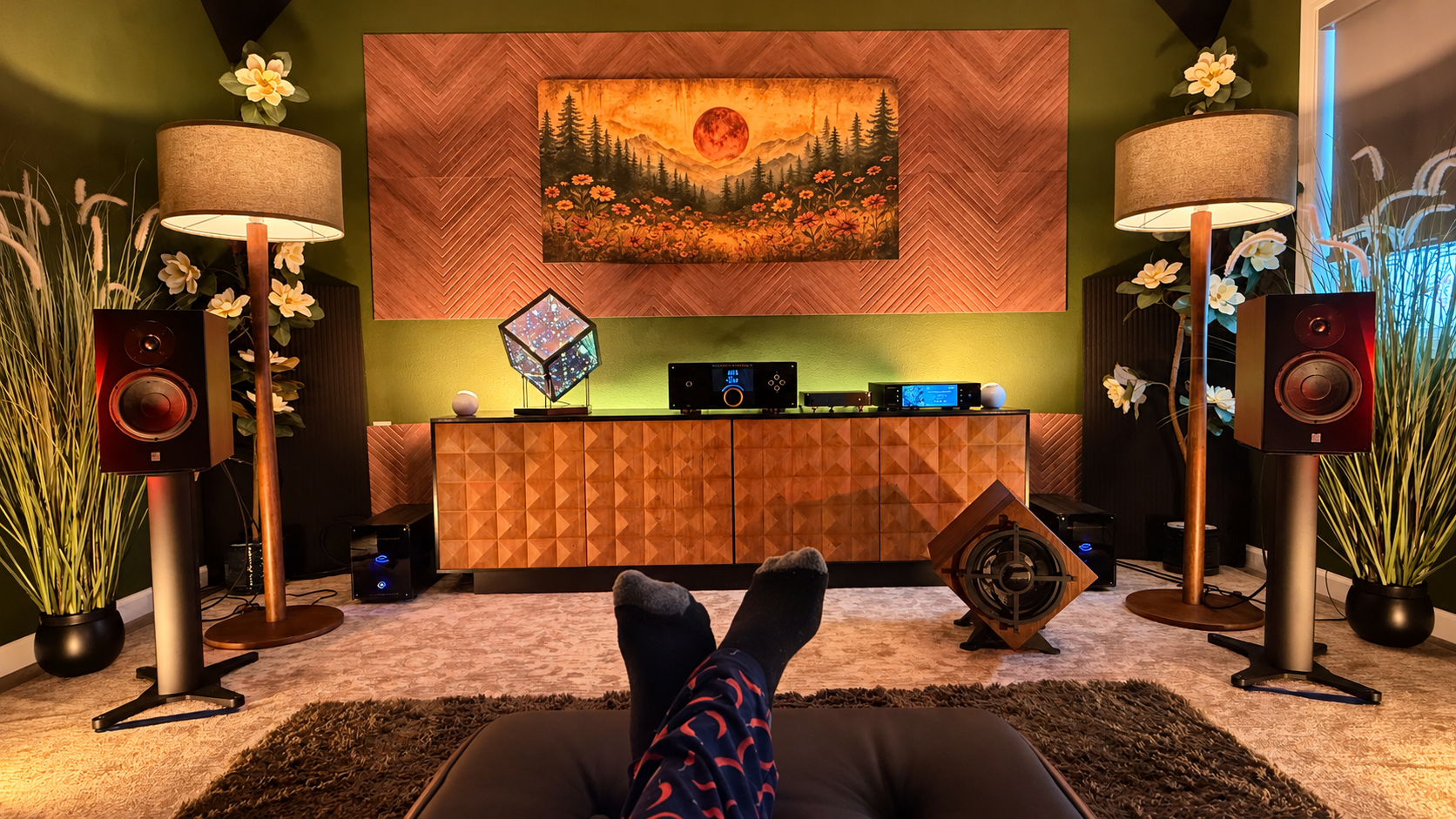
One area where the Classic 1 does perform like a more expensive speaker is soundstage presentation. With my eight-foot spacing and slight toe-in, I heard a wide stage with very nice depth.
With that said, the Classic 1 speakers are not the kind of speakers that create gigantic cartoon-sized images. Instead, the stage feels natural and appropriately proportioned without being exaggerated or again, artificial.
There is also enough openness through the treble and upper mids to give the recording a nice sense of atmosphere but the focus here is on natural and musical. When a recording contains spatial information, the Classic 1 lets you hear it and while other speakers I have may do this better the Classic 1 do it as well, just in a gentler way.
The manufacturer talks quite a bit about creating a stage that extends outside the physical boundaries of the speakers and even the room, and while I always take marketing descriptions with a grain of salt, I certainly heard an expansive and dimensional presentation from them. Again, the key is that they don’t accomplish this with an aggressive treble.
Some speakers create an impressive sense of openness simply by boosting energy higher up in the frequency range and that can sound exciting for ten minutes, as I discussed earlier. The Classic 1 sounds open without becoming edgy and that’s harder to pull off and not something I always hear in speakers that come in.
WHAT THESE ARE NOT
There are speakers that sound more analytical and there are tweeters that will give you even more sparkle and apparent resolution. There are also speakers with a bigger, meatier and more voluptuous midrange.
If your idea of perfect vocals involves an enormous warm voice hanging three feet in front of the speakers, there are designs that emphasize that quality more. The Classic 1 is subtler.
The mids are sweet and airy rather than thick and the highs are refined rather than flashy so what they give you is balance. That’s why I can listen to them for hours.
HIGH-END SOUND?
This is where price becomes important.
High-end audio pricing has gone absolutely crazy as of 2026. Today it’s quite easy to find stand-mounted speakers selling for $10,000, $20,000 and well beyond and yes indeed I’ve heard plenty of them!
Some are fantastic and some left me wondering what exactly I would be paying for. A few never got a review from me as I must love a product to spend weeks on reviewing it. If I do not enjoy a speaker, I can’t waste my time listening to it.
The Classic 1 doesn’t quite give you everything that the truly great ultra-high-end speakers can do but they give you a surprising amount of what I associate with high-end sound. Things such as refinement, natural tone, some dimensionality, a smoother top end and very good transparency. The build is also top notch for a $3300 speaker. I have seen $5500 speakers that were not as well made as these.
But the big one with the Classic 1, and most importantly is musical engagement. I could put these into a genuinely high-end system (not a crazy exotic system) and not feel embarrassed about them being there.
I know this because I did exactly that.
When connected to the Electrocompaniet electronics, the Classic 1 didn’t suddenly expose themselves as a weak link instead they seemed happy to accept everything those electronics gave them. Bravo to the Classic 1.
SPECS
I am not a huge “specs” guy as I always only go by what the experience is like but for those who want the technical details, here they are:
Yzabel Audio Classic 1
Frequency Response: 30 Hz – 20 kHz ±3 dB in-room
Nominal Impedance: 8 Ohms
Sensitivity: 87 dB
Recommended Amplifier Power: 20–120 Watts
Crossover: 2.4 kHz, second order
Woofer: 7-inch Scan-Speak paper/carbon
Tweeter: 1-inch Scan-Speak textile dome
Cabinet: Reinforced 3/4-inch MDF with natural wood walnut veneer
Dimensions: 15.25″ H × 8.75″ W × 13.5″ D
Weight: 30 lbs / 13.6 kg each
Manufacturer-listed Canadian pricing at the time of this review:
Standard: CAD $3,499
Upgraded: CAD $4,499
The upgraded version includes higher-end crossover components, internal wiring and connectors and this will be the only version that can be bought soon as the lower spec speaker is being discontinued as per Yzabel.
THREE WEEKS LATER
After three weeks, I understand what Mario Isabel was trying to accomplish with these.
This is a speaker designed around musicality and man oh man, I can appreciate that. The Classic 1 reminds me that you don’t need twenty drivers, a cabinet made out of crushed meteorite and a $25,000 price tag to make beautiful music.
You need good drivers and a well-designed cabinet with a carefully voiced crossover and someone behind the design who understands what music is supposed to feel like.
CONCLUSION
The Yzabel Audio Classic 1 surprised me. Nope, no way can they replace my $33,000 SV Audio Gro or even my Helios and Fundamental combo but strangely enough, they remind me of the Gro in one very important way.
They put music first.
There is a similar sense of naturalness and musical flow as well as a similar refusal to throw detail in your face just to impress you. There is a similar ability to sit back and allow the recording to unfold and while the Gro takes all of this much further, it should at ten times the price.
But the fact that a roughly $3,300 speaker can even make me think about that comparison says quite a lot. Then add the build quality, the Scan-Speak drivers, the beautiful “non wow” finish, the big soundstage and those delicate airy vocals.
Then there is the bass performance that legitimately had me wondering whether I needed my excellent Fleetwood Fundamental subwoofer at all. I have to state again that the bass is not huge, juicy and plump. It’s more about the deep bass being there rather than not. These speakers bring a solid foundation to the sound. I mean these do not sound lean and when deep bass hits you hear it and with some music like EDM you may feel it if you turn it up.
The Classic 1 will not add bass to recordings and sound puffy like a pair of 1990’s beats headphones. They are more accurate to the recording but stay supremely musical.
That’s a pretty sweet and compelling package for $3300 USD.
Put on something beautiful like Agnes Obel’s The Meaning of Flowers and these can disappear into a deep, atmospheric and wonderfully musical presentation. Put on Rammstein and they can still give you the backbone, punch and low-end weight needed to enjoy the music. I mean…that’s versatility.
The Classic 1 is one of those products that reminds me why I still enjoy doing this after all these years. Sometimes something comes along from a smaller company without a giant marketing machine behind it, and it simply delivers.
Natural, musical, refined and capable of quality tuneful bass that seems crazy from a speaker this size, the Yzabel Audio Classic 1 is an easy speaker to recommend listening to if you’re shopping anywhere near this price range—or even considerably above it.
Very nicely done!
You can see more or order your own set at the Yzabel Audio Website HERE