
“BOKEH – subjective aesthetic quality of out-of-focus areas of an image projected by a camera lens”
Ok guys! I had a few e-mail requests to whip up a test showing the bokeh from a lens on the Leica M9 and then the same lens on the Olympus E-P2 with adapter. This will not only show you how the E-P2 crop factor effects the lens but also will show you the bokeh (out of focus qualities) with each lens on each camera.
Bokeh and Depth of Field on m4/3
There is a bunch of info on the net about the m4/3 format and how it is tough to get shallow depth of field due to the small sensor. Well, this is somewhat true. For example, if you mount a 50mm F2 lens on a Leica M9, you are effectively shooting with a 50mm F2 so you will get the shallow depth of field associated with a 50mm f2. If you slap a 25mm F2 lens on a m4/3 camera it will be like shooting with a 50mm in regards to focal length, but your depth of field will be that of a 25mm lens at F2, not a 50mm lens at F2. This means that your out of focus backgrounds when shooting with a wide aperture, say F2, will be much less shallow (on the m4/3) due to the lens you are shooting with still being a 25mm lens. The wider the lens, the more depth of field you will have. Therefore, you will have the depth of field of a 25mm, not a 50mm. The sensor size turns the lens into a 50mm focal length but you are still shooting with a 25mm lens and therefore will have 25mm f2 depth of field, not 40 f2 depth of field. The other way some look at it, which is exactly the same, is that 25 F2 on an E-P2 would be acting more like that 50 on the M9 but at F4. Either way you look at it is fine.
To get the bokeh qualities (not depth of field) of a 50mm f2 lens on a m4/3 camera you need to use an actual 50mm lens on said camera. Only problem there is it will no longer behave like a 50mm because it becomes a 100mm focal length with 50mm quality bokeh. Confused yet? The bottom line is that it is not possible to get the bokeh qualities of a 50 or 75mm lens on a m4/3 camera unless you shoot with a 50 or 75mm lens. A 25 or 35mm lens is not going to do it.
Bokeh on full frame
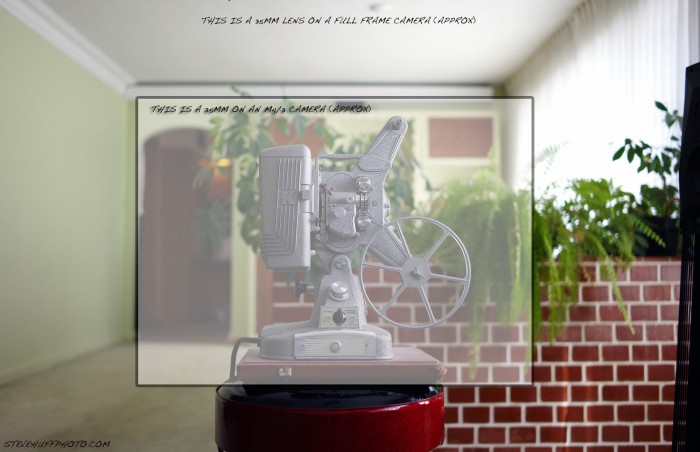
On a full frame camera the entire lens surface is being used so you will see more of the image. A 50mm image will utilize the full lens surface so you basically do not get a different quality of bokeh, just more of it because the edges your image are not cropped out. Below is an example on what you would see with a 35mm lens on a full frame camera vs that same 35mm lens on a m4/3 camera (approx). On both the “bokeh” will be the same as will the depth of field. The difference will be that the m4/3 version will basically be a cropped version of the full frame image.
The tests…
I set up my tripod and locked it down. I shot each of the following lenses on the M9: The Leica 35 Summarit, 50 summicron, 75 summicron, 90 elmarit, Zeiss 35 Biogon, and 85 Sonnar F2. I then shot the same lenses on the E-P2 from the same tripod position. This way you can see how each lens reacts on each camera.
I also made all of these 1500 px wide images available in a zip file that you can download HERE. It’s about 8MB and includes all of the images below.
You can click on any image below to open them up in a larger 1500 pixel wide window. I hope some of you find this useful!
The images…
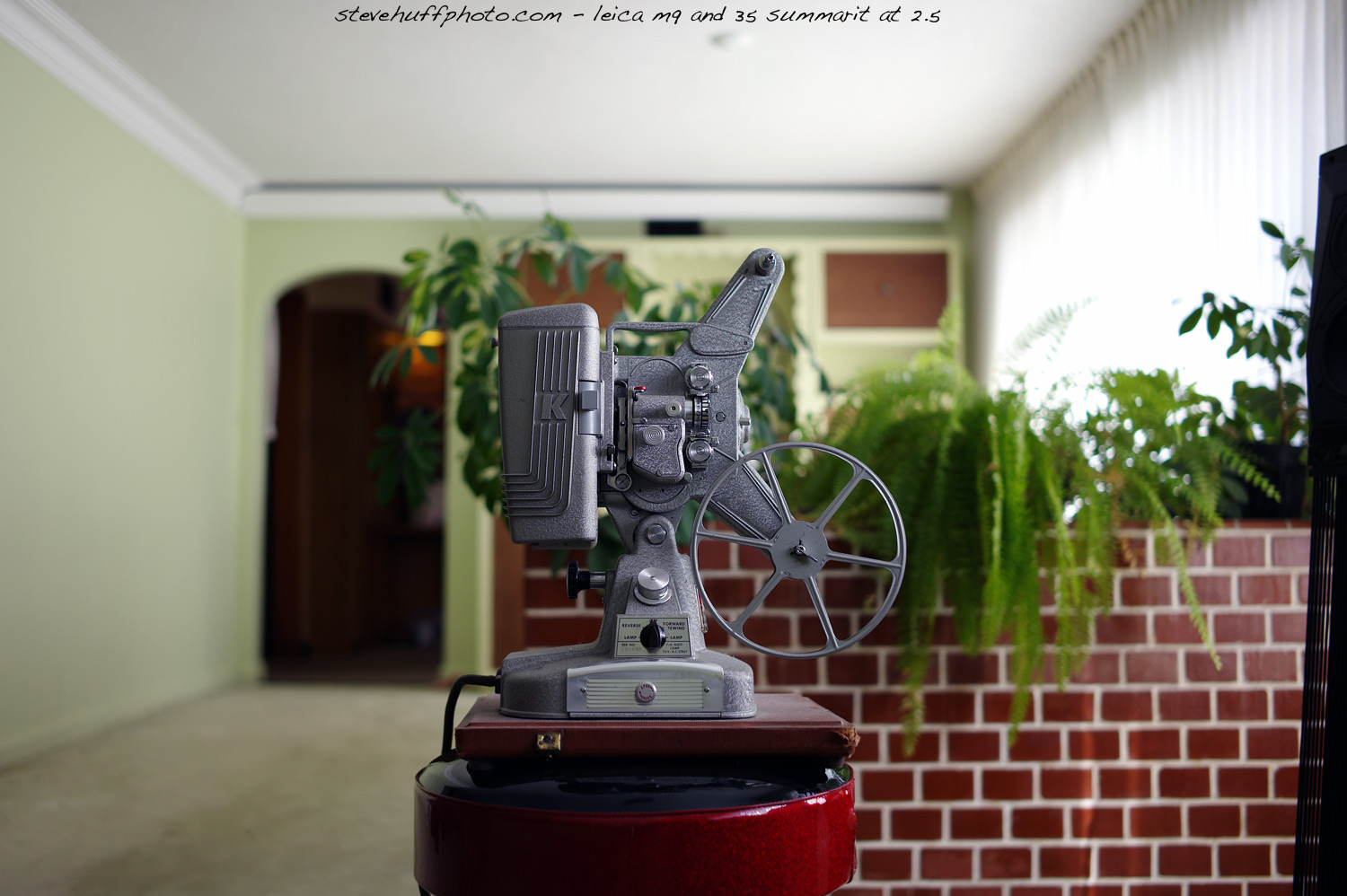
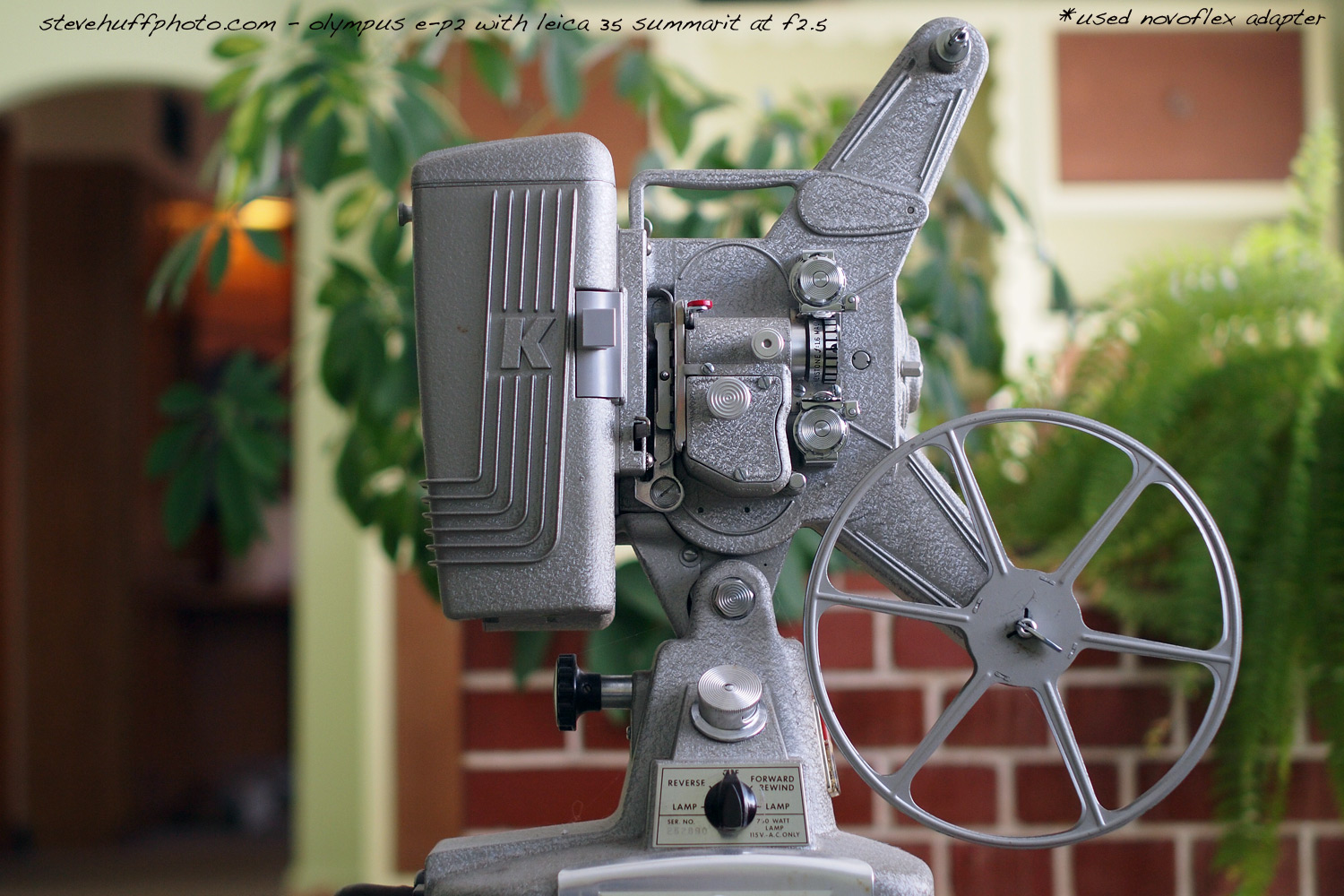
First up, the Leica 35 Summarit F2.5 lens on each camera. As you can see, the 35 becomes a 70mm on the E-P2 but the Bokeh and Depth of Field remains the same. You just have a cropped version with the E-P2.
LEICA M9 – 35 SUMMARIT – F2.5
OLYMPUS E-P2 – 35 SUMMARIT – F2.5
The Leica 50 summicron which will become a 100mm summicron on the E-P2 or any m4/3 camera and will give you the qualities of a 50 F2 in regards to bokeh and depth of field, not a 100. You still have a 100 F2 lens in regards to light gathering ability but you will be getting the depth of field of a 50.
LEICA M9 – 50 SUMMICRON – F2
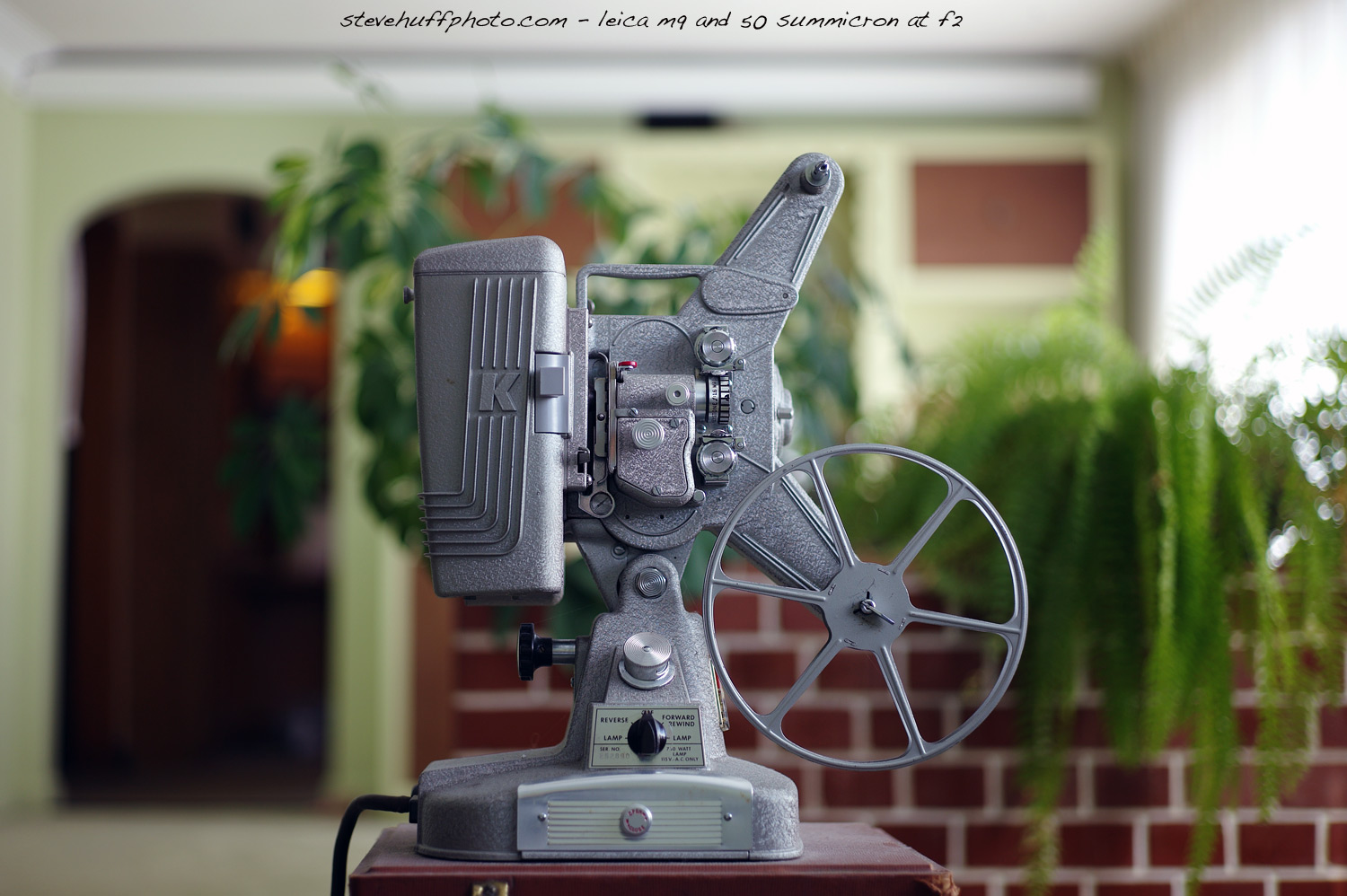
OLYMPUS E-P2 – 50 SUMMICRON – F2
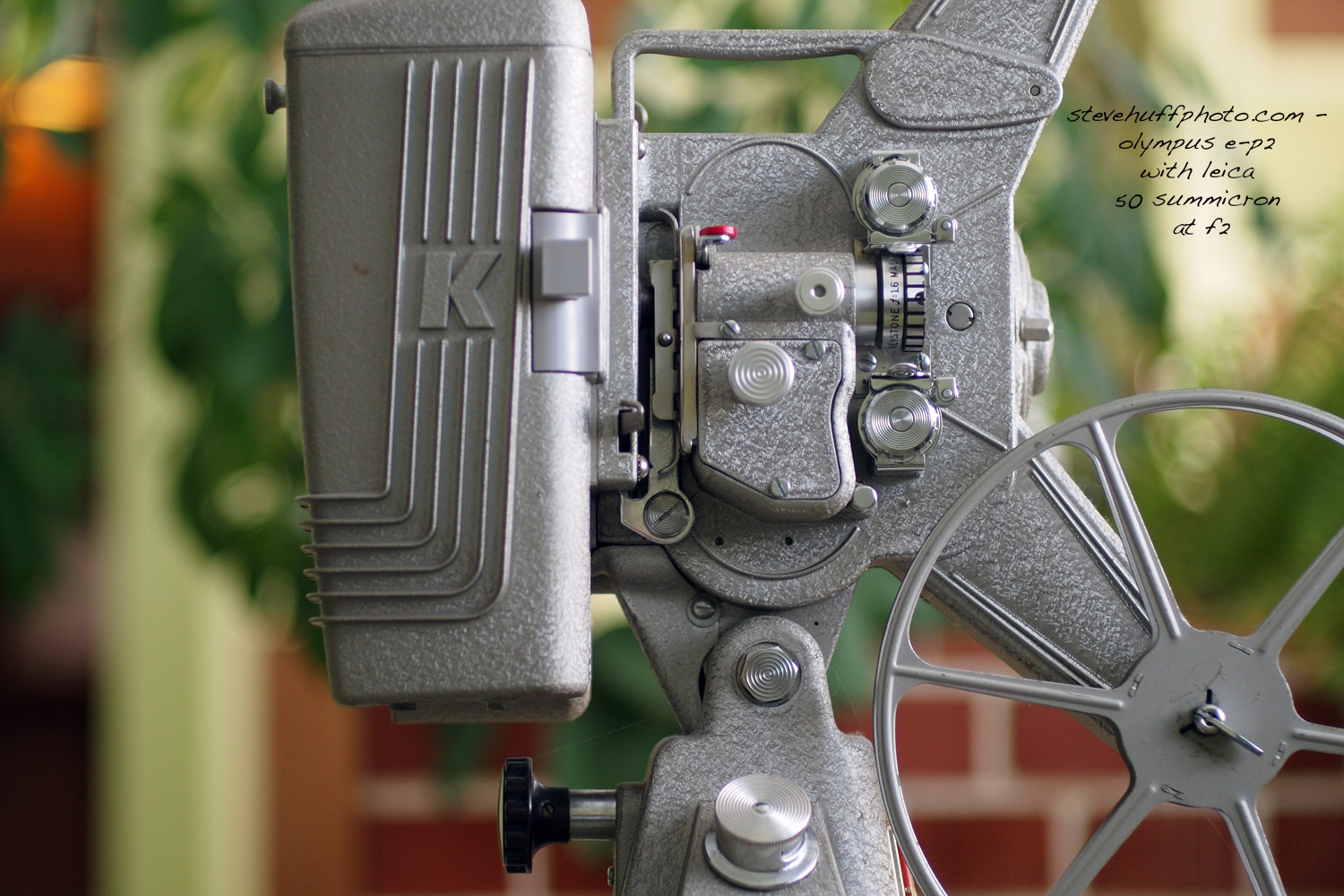
Let’s jump to a 75mm lens. On full frame this 75 Summicron is absolutely gorgeous with silky bokeh and super color. On the m4/3 it is now the equivalent of a 150mm focal length at F2. A great low light portrait lens. Again though, you will not have the depth of field and bokeh qualities of a 150 F2 but rather of a 75 F2, or as some would say a 150 F4.
LEICA M9 – 75 SUMMICRON – F2
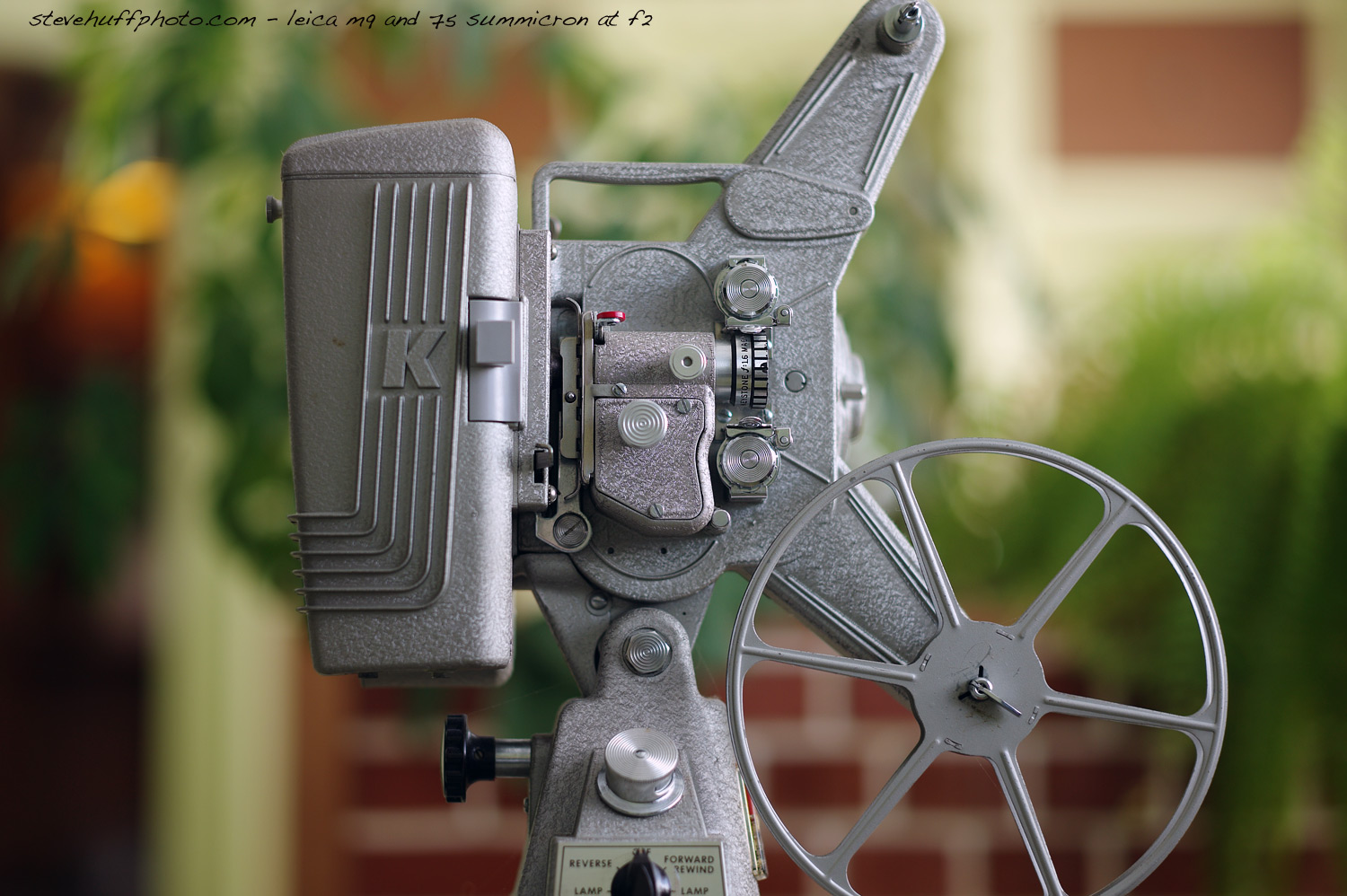
OLYMPUS E-P2 – 75 SUMMICRON – F2
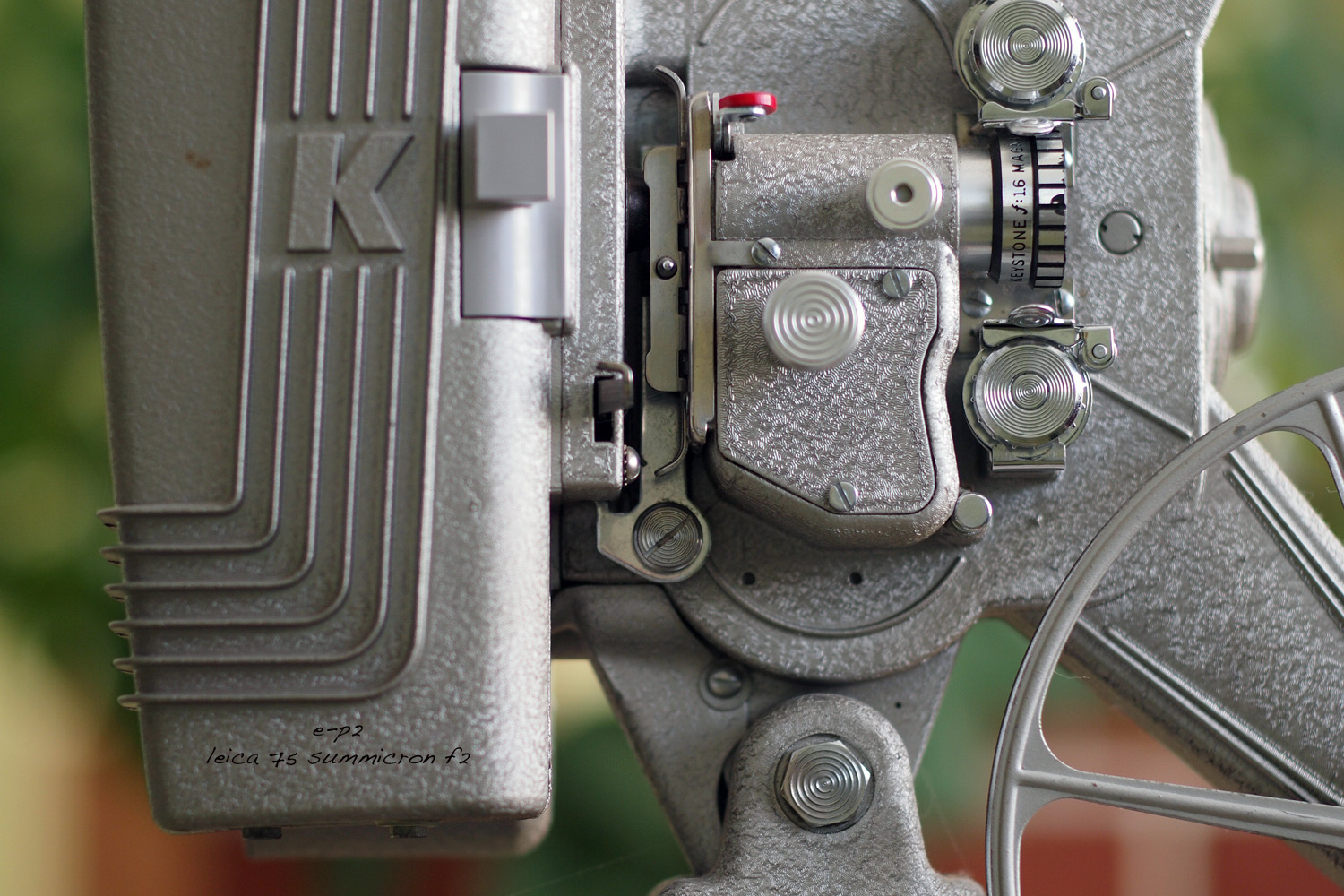
I hope this explained a few thing to those who were a little confused about the 2X crop of the m4/3 cameras and the effect it has on your images, the bokeh, and focal length equivalents! As stated earlier, I have a zip file here with these images and many more including the same test shots with a Zeiss 35 biogon and some M9 with the Zeiss 85 and Leica 90 Elmarit. I also have a couple of 100% crops in there so if you want to see them you can download the ZIP HERE! I will only leave this up for a few days due to bandwidth so if you want it, grab it now. Also, for the images in this comparison I used the Novoflex M to m4/3 adapter which can be found at B&H Photo HERE.
Thanks for looking!
Steve
UPDATE –
One final comparison to show the bokeh of a 75MM lens on a full frame M9 against a 35mm lens on the E-P2, using the above images. The E-P2 with a 35 will be a 70mm equivilant:
M9 with a 75mm at F2
E-P2 with a 35 (70 Equiv) at F2.5 (yes, its 2.5 but close enough to get the idea)
You can see the much more shallow depth of field with the 75 on the full frame M9 and shows what people mean when they complain about not getting enough shallow depth of field on a m4/3 camera.
UPDATE Feb 8th 2010 – Some of you wanted a comparison with something like a 35 F2 on the E-P2 and a 75 F4 on the M9. This is a quick shot I grabbed outside just now but this kind of testing brings in all kinds of new problems. For example, the m4/3 lens is shot at F2 so its likely it will be softer than the M9 at F4 right? The 4/3 crowd says to “fairly” test these things I needed to do this to make everything even steven, so here you go. I also shot the M9 at F2 to keep it even as far as lens aperture.
These are straight out of camera untouched files. Converted from RAW with ACR and yes, the color sucks because the light today sucks. Its winter and the light is grey. Also, this post was originally to show the DOF and “Bokeh” from a ff camera compared to a m4/3 camera. These examples will show you that the 35 at F2 does pretty much equal the 75 at F4 as far as DOF is concerned. It will also show you the sensor of the M9 is a little better 🙂 Here you go…
First, the E-P2 with Zeiss 35 Biogon at F2 which everyone says will give you a 70mm with F4 DOF (not light gathering or lens sharpness which is still F2, but this post is about DOF, not detail) in 4/3 land. This was precisely manually focused with the E-P2…but looks soft to me. I do not see 75 F4 DOF, I see 35 F2 DOF as the lens is technically still a 35. 🙂
The focus was on the van door handles, not the house. I did this for DOF reasons.
CLICK HERE FOR FULL SIZE OOC IMAGE
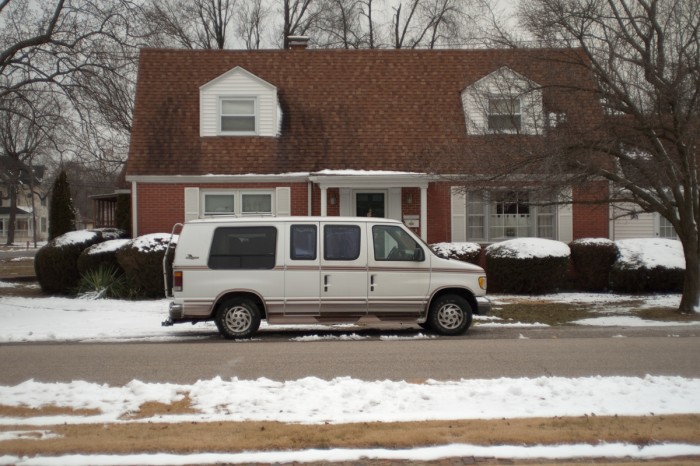
Now, the M9 with the 75 Summicron at F4 which is a “real” 75 F4, so pretty close to the above combo right? I admit the 75 cron is a much better lens than the 35 Biogon but you cannot dismiss the results. Again, focus was on van door handle.
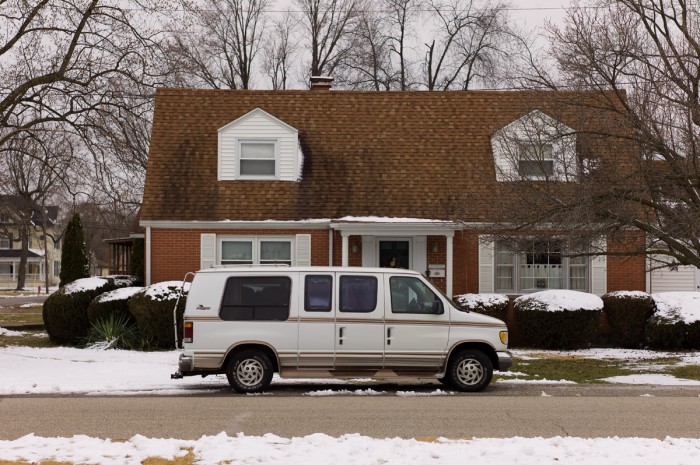
Here is the 75 cron/M9 shot but this time at F2 to see how the lens does wide open compared to the 35 at F2 for sharpness.
CLICK HERE FOR FULL SIZE OOC ORIGINAL
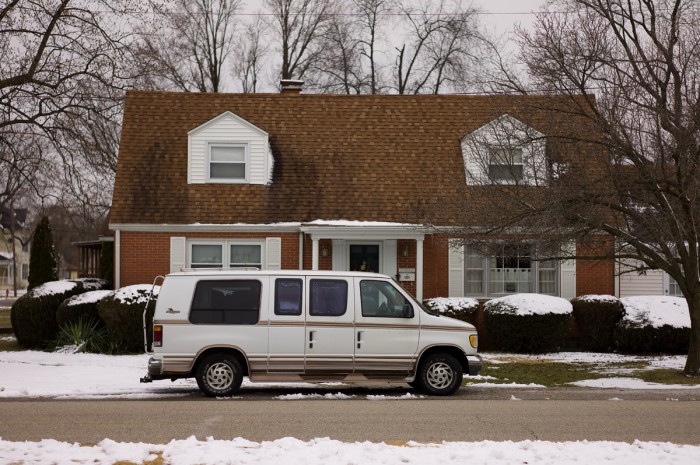
Enjoy!
HELP SUPPORT THIS SITE TO KEEP IT GOING AND GROWING!
Remember, anytime you follow my links here and buy from B&H or AMAZON,
If you enjoyed this article/review, feel free to leave a comment at the bottom of this page and also be sure to join me on twitteror facebook! Also, you can subscribe to my feed at my subscribe page HERE and read these posts in your browser or news reader! Also, interested in becoming a guest writer? Contact me! Thanks so much for visiting my site!


Except it doesn’t. You are unlikely to maintain the same distance to the subject. And if you don’t then the formulae require you to take into account the square of the focal length and the (linear) distance from the subject. So it’s really hard to figure out DOF equivalence in your head.
But as a rule of thumb, if you don’t mind getting much closer with smaller formats (and thereby dealing with distortion) then you can get very shallow DOF.
As an experiment try out some scenarios in your head where you think you will get equivalence and then plug them into the calculator. Betcha you get them wrong, not in principle – but in the detail. 🙂
I would like to add my 2cents here! I had to test this out on my own to see which side of the argument is rite. So I mounted my Konica 50mm f1.4 on my a7 took a picture and wrote down my settings and then took the lens off and put it on my nikon 1 and took the same picture with the same settings. According to my not so scientific results Steve is correct.
Hey guys quit arguing and get back to taking photo’s ok? BYE
Hello Steve,
I recently bought me an adapter for using my fathers old lenses (Leica R 35,50,80,180 and 250mm) on my Lumix G3, and I was somewhat disappointed on bokeh results. By help of your explanation above, I understand why, and I know how to work on this. Thanks for this.
I have an other question that is related to this kind of hardware setup: Every lens produces a circular picture that is projected on a rectangular film or sensor inside the camera. When combining full frame lenses with full frame camera, one can calculate that +/- 59% of the circle area is projected on the rectangle area. The remaining 41% of light is absorbed by black paint inside the camera as much as possible. In a configuration of a full frame lens with a micro 4/3 camera, one can calculate that only +/-15% of the light hits the sensor, and 85% needs to be absorbed!!!. Knowing that there is no paint yet that fully absorbs light, I wander if there is no visible bad influence of this reflecting light that is present in a quantity out of proportion inside the camera? I am wandering also if micro 4/3 camera producers design the full larger zone around the sensor for an optimal light absorbtion? It was these scientific facts that made me hesitate longtime for buying an adaptor. What is your experience or opinion in these?
Thanks,
Dominiek
Yes the lens gathers the same amount of light no matter where it is mounted on, BUT, the sensor collects different amount of light. Full frame sensor uses all light collected by the lens (forget about the area between sensor rectangle and image circle for now), but a 3/4 sensor only picks up 1/4 amount of photos! That means the signal has to be amplified 4 timers to get the correct ISO equivalent exposure. That’s another effect of larger sensors: higher signal to noise ratio. So in amount of light’s term, 50 F2 on 3/4 does equal to 100 F4 on full frame: The fact that the smaller 3/4 sensor only uses a quarter of light makes it an F4 equivalent, just like a tele converter
While the information is extremely helpful, you could make it a lot less confusing by rewriting statements like this one:
“If you slap a 25mm F2 lens on a m4/3 camera it will be like shooting with a 50mm in regards to focal length, but your depth of field will be that of a 25mm lens at F2, not a 50mm lens at F2.”
Like this:
“For 35mm film, or equivalent sensor size (full-frame), a 50mm lens has a (diagonal) angle of view of roughly 47 degrees. If you slap a 25mm f2 lens on a m4/3 camera, the angle of view would be nearly equivalent to full-frame 50mm, but the depth of field remains a function of the actual focal length of the lens at f2, and not the angle of view.”
Similarly this line would need to be rewritten:
“The sensor size turns the lens into a 50mm focal length but you are still shooting with a 25mm lens…”
To be more like this:
“While the sensor size (crop factor) gives you the equivalent field of view of a 50mm lens on a full-frame camera, you are still shooting with a 25mm lens”
Thanks! Yea, you found an old one!
I’m constantly amazed when I search for really strange things in the pursuit of learning more about photography, I indelibly arrive back at your site for some weird ass comparisons that are completely useful.
Thanks Steve.
Bob:
Exposure = amount of light delivered to the receiving medium (freq. measured in lux seconds)
lux second = 1lumen / square meter * seconds (exposure time)
Please note that 1 lux is a RATIO and as such is independent of TOTAL SURFACE AREA.
It appears that you have confused PIXEL size with SENSOR size and signal to noise ratio with exposure value. For the sake of clarity it needs to be established that they are independent concepts.
If I use an f2 lens on an imaging device and take an image of a uniformly lit white surface, when I calculate the desired exposure value when shooting at f2 1/100″ that is what I get – at ANY POINT within the image circle (ignoring vignetting problems for the sake of this discussion). Cropping the sensor IS NOT the same as using an extension tube or teleconverter because the total size of the image circle remains the same and therefore the intensity of light at any given point in that circle is not affected.
What you are probably trying to conceptualize is more of an argument related to pixel size. If all other things are equal (microlens spacing, efficiency and transmissivity, photodiode sensitivity and other circuitry) a sensor with larger PIXELS (completely independent of total sensor size) that sees the same intensity of light as a a sensor with smaller pixels will indeed collect more photons PER PIXEL (because those pixels cover a wider area). At the pixel level, we are now talking about a TOTAL # photons and not just a ratio.
To restate: Because the light INTENSITY is uniform, a larger PIXEL will be impacted by more photons than the small pixel. With more photons being “counted” by the larger pixel, the signal to noise ratio may be higher (assuming all other things being equal including ideal scalability it WILL be higher).
You are correct in stating that each sensor has the gain set for it – the manufacturers take into account the signal-to-noise ratio as well as the “well capacity” and the sensor’s response profile when determining the amount of gain to apply to the sensor (i.e. how little noise vs how easy to blow the highlights?).
The argument that you make is related to PIXEL size and not directly to sensor size (compare Nikon D3X vs D3s ISO performance) – furthermore, when you shoot a Nikon D3x in crop mode you will notice that aperture/shutter speed/ISO do NOT change to maintain the same exposure for the ‘cropped’ area (yes, that means that even behind the scenes the sensor GAIN does NOT change).
Sorry about the length of the pose but I hope this helps – more knowledge is always better IMO.
Steve: Thanks for your work in providing this great comparison for those of us who are truly interested in the topic you present (DOF comparison) and discussion you provide.
Cheers.
Here’s the film analogy. Take a picture with 35mm film. now use the exact same camera, exact same lens, but put 17mm film in it (cut a block of film half size in each direction and tape in on a piece of paper and stick it in the back of the camera.) Ok.. well you might as well just take the picture with the 35mm film (it’s easier) take the film in the dark room and then cut the negative down. It’s the same either way. That’s what a smaller sensor is on the same lens. It’s just a smaller sensor… on the same lens, at the same focal plane. That’s less light.
Ok.. I’m back (sorry :)). Jerry, yes you will get the same exposure with the same ISO and settings. Of course. That’s because ISO in a digital calibrated for a particular camera to produce the right exposure at the right ISO. The sunny 16 rule should always work. ISO 100 **IS DEFINED** for any camera as WHATEVER sensor gain makes sunny 16 work for that camera. That doesn’t mean it uses the same amount of light from one camera to another. That just means it’s the gain correction needed to compensate for whatever amount light sunny 16 happens to be on that camera. That IS ISO 100. In a cropped camera that happens to be a higher gain, because there is less light. And thus it happens to produce more noise too. I don’t care what argument you make, you can’t get around the fact, that the focal plane is where it is (unless you mess up infinity focus); the image size on that plane is what it is, ALWAYS for any given lens. You either accept the whole image and all the light in it, or you crop that image and only accept part of it and part of the light in it. Nobody has answered me, where did the light from the rest of the image go?
Light that comes from an apple on the edge of the picture physically came from that apple. It can’t be magically converted into light that came from an orange in the center of the picture. No matter what you do, if you want that photon, you’ve got to use it to show the apple. If you don’t show the apple, you don’t get to use that photon.
Of course I meant 100mm, not 10mm.
Bob – I never observed what you talk about. I used u43 since its begining, now I use M9.
With using the same lens on both, I do not have to change ISO at all. You must have misunderstood something. Or you are using incorrect words to describe somethink that is in your mind.
Let’s take example once again: FF lens 50mm f/2.0.
If it will give me EXPOSURE on M9 eg. f/2.0, 1/160 sec, ISO 200, and if I switch the lens to u43 camera – built in exposure meter will show similar aperture, speed and ISO. There may be eventually 1/3 or 1/2 differencies, as result of different measurement approach or different ISO calibration.
Now, if it is going about DOF and framing:
– M9 will give 50mm f/2.0 frame and DOF
– u43 will give 10mm f/4.0 frame and DOF
Period. DOF. Not exposure!
I’m sorry. It’s your forum, and quite a good one too. I’ll bow out and allow you the last word, because it seems clear we won’t agree on this.
yep cropped is cropped. The image is smaller and more zoomed and called “cropped” for a very simple reason, because the rest of the image, AND the light that produced it.. is just plain gone, period, not recorded. It hits those little black walls on the inside of your mirror case. where do think the rest of the image went? The image is still created. it’s there.. it doesn’t magically turn into more light for the part of the image you want to keep. No way, no how. It’s lost, forever.
The m4/3 sensors are noisy because they are smaller. Much like a small sensor camera has more noise than m4/3. So what you are saying is a d-lux 4 with its tiny sensor is not really gathering light like an F2 lens, but more like a what? F8? Nope, that is not correct.
Bob. A 35 1.4 lens on an Olympus E-P2 set to 1.4 and ISO 160 will give you the same exposure as a Leica M9 set to 1.4, ISO 160 with the same lens. When you attach the 35 1.4 to the E-P2 the lens does not change into a 2.8 lens. That is not true at all. It will gather the light just as it does on the M9. If what you say is true then the exposure would be different as the E-P2 would get less light.
Bottom line, a 35 1.4 is still a 35 1.4 no matter what format you shoot it on. The smaller sensors are using less of the lens surface so therefore your image is literally “blown up”. Same effect as cropping a FF image. So in effect you have a 70mm magnification which will act like a 70 2.8 in regards to DOF.
This does not need to be confusing because it is not. It’s a big drawback to m4/3 IMO and why I prefer to NOT use other lenses on the cameras besides those made for it.
when I say you’re fooled by ISO I mean your model will give you the correct exposure settings. But that exposure will be more noisy(ie like a higher ISO ie, like collecting less light) than an exposure with the same f stop on an ff camera, why.. because the ff actually did collect more light.
Not true.. you just think it’s true because you are fooled by ISO. The simplest and most accurate way to think of a cropped lens is as you say.. just plain cropped. Take the same exact image and crop it… becasue that’s exactly what it does. Now if you want to take your 4×6 print and just keep a 2×3 that’s fine, it will be the same 2×3 as it was. then we don’t need to talk about equivilant anything. But nobody wants to do that. You still make a 4×6 print, but using light (and noise) from the 2×3 space. The rest of the light never even hit the sensor. You can’t collect light where there is no sensor. Physically impossible. Now canon EF-S lenses are built to collect less light but put it all on the sensor, but they have the same f stop rating as their cousin that collects more light and wastes some of it. Only an ff lens on an ff camera gets to use all the light.
Hey Bob…when shooting a 35 1.4 on an E-P2 you will still have the light gathering of a 1.4 lens, NOT a 2.8 lens. The lens will effectively turn in to a 70mm but it will still be 1.4 for light, and 2.8 for DOF. Its still a 35mm lens but just cropped like in the first sample, and it’s still gathers light like a 1.4 lens.
M9 and E-P2 side by side, same ISO, same shutter speed, same lens, same light gathering and same amount of background blur. Again, its just like shooting with a FF and cropping out the middle.
being that this gets BOTH the DOF and the light collection right, it seems like the superior way to think about it.
However, I suppose cropped camera ISO’s are probably calculated to give equivalent exposure settings, not for equivalent noise. So in fact this all probably gets hidden somewhat by the probable fact that ISO 100 f2 1/60s gives the same exposure on FF as cropped, but really the cropped ISO is probably not 100, it’s really more like 400 from a noise/light collection perspective (and probably should be called 400, but probably isn’t). I don’t know but I suspect this is true, not sure though.
It really seems better to look at it as an F-stop correction. The reason being that the sensor actually does, aside from having a smaller field of view for a given depth of field.. also just plain collects less light. So for exposure calculations (give or take variations in sensors) it really is like changing a 25mm f2 to a 50mm f4. F-stop should be proportional to square root of light collection regardless of focal length. At 2x crop factor you get 4x less light collection (need to shoot 4x slower or 4x higher iso) . Sqrt of 4 is 2, so a factor of 2 f-stop correction.
@ dave H. You make good points and thats why a lot of nature photog have loved crop cameras, because a 300mm lens is way cheaper than than a 500mm lens. I believe there are two deficiancies in the u4/3s lineup
1) A fast effective normal lens- Need a panasonic or oly 25mm f/1.2 or f/1.4 and as you said
2) the equivalent of a 12-24mm zoom that isn’t 1200 dollars (like the 7-14mm f/4) – I do think that the 9-18mm Oly zoom should be a good compromise, but it is still 700 dollars. It’s tough when the dslr folks can get a Tokina 11-16mm f/2.8 (which is a great lens) for under $650 dollars… (That’s a 17-25mm equiv. on 1.6x Crop), the 9-18mm gets you there but you low a few stops of light gathering…
jimmy asked a question and got no answer so I will volunteer.
Any 35mm lens stuck on a u43 camera is equivalent to a 2x magnification. So a 50mm becomes a 100mm and behaves like a 100mm lens as far as field of view.
A 28-200 f2 full frame lens on a u43 camera becomes a 56-400 f2. And behaves like a 56-400 as far as field of view goes.
This is the cool part to me. You could get one of those cheap, but good, 135mm f4 portrait lenses and use it as a 270mm f4 telephoto. Another cool possibility is a cheap but good 75-300 f4.5-5.6 lens making a 600mm f5.6 telephoto. In the 35mm world this would cost $$$$.
Please correct me if I am wrong but I too have plans to use cheap, but good, 35mm lenses on my G1.
The real issue is getting a wide angle (true 18mm) lens for the u43 camera that is cheap, but good.
Hey John, Thanks for the comments. Hope you are enjoying the GF1. The purpose of this test was to show you the effect of the 2X crop and that the “bokeh” is the same and you are just getting a “cropped” image.
The last image of the house was added by request because some said I needed to shoot a 35 on the E-P2 and a 75 on the M9 for the same DOF, focal length, etc.
Also, even if I am stepping back the lens on the E-P2 is still a 70mm equivalent, and it would have been quite few steps back. Not enough room in my house to turn a 70 into a 35. 🙂
Beisdes, the Bokeh quality is exactly the same between the two cameras when using the same lenses. It is just magnified on the E-P2.
Great site, I really enjoy it. I am fairly new to photography as I was always wanting more than I got from a P&S but did not want to buy a DSLR. Solution for me was the GF1, which I bought a month ago.
I am finding some sites like yours very interesting and helpful.
A question on this test. Would it not have been easier to see the DOF and bokeh qualities between the two cameras if you had taken the photos with the EP2 from further back to cancel out the zoom effect on the EP2. Obviously this may not always be possible in “real life” but you could have taken the same photo in this situation for the comparison.
Lumix 7-14mm is the lens, which I miss most from u43. It’s focusing distance is only 25cm! I still can’t decide if to get CV 12mm or 15mm for M9.
Yes, it was Leica 45mm Macro. When now I compare portraits of my son, look eg. on details of hair – M9 + old, cheap 90mm tele-elmarit leaves that macro far behind..!
Old good gallery with Summi 25mm – by well known at DP Review forum – Mountain Joe :
http://mountainjoe.zenfolio.com/p200200160
Thanks to Joe’s samples, I decided to sell 5D II and enter u43. At that time – there was no M9 😉
Wow! That 7mm really gets wide. Alice in Wonderland Wide…
Is that lumix 45mm the Macro lens?
Does anyone have the 25mm Summilux 4/3s lens to try adapted on u4/3. I’d love to see a 25mm f/1.4 on u4/3s compared to a 50mm f/1.4 on M9.
Interestinig article Aaron. My analogical example, taken with u43:
Lumix 45mm f_2.8 @ 4.0
http://lh3.ggpht.com/_d9ekXogbiiA/Sw3tcuozxXI/AAAAAAAADiI/uD3Lxv-USrw/s1152/2009-11-26%20%5B04-20-29%5D.jpg
Lumix 20mm f/1.7 @ 4.0
http://lh6.ggpht.com/_d9ekXogbiiA/Sw3tgMFEDuI/AAAAAAAADik/TD9xlGz_zZY/s1152/2009-11-26%20%5B04-28-47%5D.jpg
Lumix 7-14mm f4.0 @ 4.0 & 14mm
http://lh6.ggpht.com/_d9ekXogbiiA/Sw3thH1436I/AAAAAAAADis/6LbWHGk_u-4/s1152/2009-11-26%20%5B04-31-23%5D.jpg
Lumix 7-14mm f4.0 @ 4.0 & 9mm
http://lh4.ggpht.com/_d9ekXogbiiA/Sw3thyHnjjI/AAAAAAAADiw/PUxHQms3e58/s1152/2009-11-26%20%5B04-32-02%5D.jpg
Lumix 7-14mm f4.0 @ 4.0 & 7mm
http://lh6.ggpht.com/_d9ekXogbiiA/Sw3tijzuHVI/AAAAAAAADi0/J0Zatz-ej8Q/s1152/2009-11-26%20%5B04-32-46%5D.jpg
For me some of the confusion comes from the difference between DOF and “bokeh.” In your first series of photos, with the 35mm lenses, it’s clear that they have the same DOF, but since the 4/3s image is cropped, it has more bokeh when viewed at the same size as the full-frame image. Does that make any sense?
You could get the same look by cropping the full-frame image and viewing that crop at the same size as the 4/3s image, but by viewing what is essentially a crop and enlargement of the full-frame image (that is, the 4/3s image), you magnify the effect of the out-of-focus areas, giving it stronger bokeh.
There’s another somewhat interesting article on the same subject here: http://www.luminous-landscape.com/tutorials/dof2.shtml
I will ask another theoretical, mind boggling question; what happens when you use a zoom,say a 70-200 f2.8 ? ( ~ :
Steve, perhaps another set of test is to take the same lens, e.g. 50/2 and set it at F2, and then position the camera such that the resulting images are similar sizes and do the DoF / boke comparison that way.
// richard
Yes, I agree. Thanks steve. This is always been a sticky situation but at the end of the day a 50mm f/2 is a 50mm f/2 lens it is just a matter of how much of the image circle the sensor is capturing. I think to make it more complicated does’t help, but rather it is just marketing with the “effective” business… we just need some high quality smaller-coverage lenses like a 25mm f1.4 with the optical quality of the Summilux 50mm f/1.4 (Is that asking too much??) – prob….
Fascinating discussion. I think it’s all straightened out by Steve, Amy, et al., so nothing more to contribute other than to say you all are smarter than I…hahah,..
Jerry, that is why they are called “crazy comparisons”…now where did I put my lab coat??
Hey Amy, yes, you can say that. Without this all getting really confusing…
A 50 F2 on ff is a 50 F2..this we can all agree on :()
a 50 f2 on 4/3 will give you a 100mm focal length, f2 light gathering and 50 F2 DOF but cropped to 100mm. In other words, 100 F4 DOF so you are correct. Either way it is the same, 50 F2 DOF or 100F4DOF.
The problem is getting an equivalent 50 on 4/3 with shallow DOF. To do this you would need a 25 F1 🙂
The 50 will remain a 50 in every way, with its DOF, light gathering and draw. Its only being cropped to a 100mm equivalent focal length.
“According to this article a 50mm lens @ F 2 on a 35 mm Full frame sensor should be equivalent to a 25 mm lens @ F 1 on 4/3 Sensor.”
Doesn’t it work in reverse as well?
In other words, to get a 50mm FOV with an f/2 equivalent DOF, you’d need a 25mm lens at f/1.
Meaning, by putting the 50 f/2 on the 4/3 sensor, you’re getting 100mm @ f/4?
Do you see what I’m saying? Hard to explain! LOL
(I did say that it still gathers light as an f/2 lens btw)
Thanks Steve for comparison!!
As Amy and other people stated, most of u43 users I met – always compare u43 lenses with doubled focal on 35mm and closed twice aperture.
Then you see what u43 and 35mm cameras generates – in the same, corresponding conditions. And only on top of it – you may open aperture in 35mm – so people will see what they loose.
Of course – as you say – you won’t achieve narrow DOF and wide angles using 35mm lenses on u43 cameras. I think people (at least DP Review u43 section and other u43 forums I was at) are aware of that.
What interests them most – is your last comparison – 35mm against 70mm (u43).
When I linked your earlier comparisons of 35mm vs u43 – people commented with one voice – it is wrong comparison… In terms it doesn’t give a lot to them.
And here is why – for that community – or we compare doubled focal on 35mm – OR – you should scale a subject – eg. a house or billboard with the same proportion in the scene. It means different distance to the subject.
Let’s take example:
http://www.stevehuffphoto.com/2010/01/08/quick-shots-part-2-leica-m9-olympus-e-p2-and-nikon-d3s/
M9:
http://www.stevehuffphoto.com/wp-content/uploads/2010/01/m950f2.8iso160fullfromraw1400o1.jpg
E-P2:
http://www.stevehuffphoto.com/wp-content/uploads/2010/01/ep240f2.5iso200fullfromraw1400.jpg
You then compare sharpness at 100%. But house is closer on one picture than another. So any such comparison – is only eventually inorming about focals and their coverage. Not eg. about sharpness. And if not about sharpness – then no reason to look at 100%.
Everybody is interested, how details would look like, if scale of a subject would be similar:
http://www.stevehuffphoto.com/wp-content/uploads/2010/01/threechimneycrop.jpg
plus ADDITIONALLY what they need to meet in order to achieve that. So eg. lenses focals, distance from subject, etc. Not opposite.
Similar example here:
M9:
http://www.stevehuffphoto.com/wp-content/uploads/2010/02/m950cronoocjpeg.jpg
E-P2
http://www.stevehuffphoto.com/wp-content/uploads/2010/02/ep220f2oocsign.jpg
Again, would be good to see results, when billboard would keep the same part of frame on both pictures. It would mean different distance to subject.
Pls treat my voice, as just expressing some need of another ‘crazy comparisons’ 😉
There is no single ultimate TRUTH of course 😉
And I know you never make everybody happy, so once again let me thank for your hard works Steve!!
Danny, the E_P2 is great but it has its limits. For what it is though, it is a fine camera but honestly I am not a fan of shooting M glass on it as the lenses are just too long for my tastes with the 2X crop. I’m a fan of the E-P2 and 20 1.7 though.
Steve,
Thanks for the test.In addition to the bokeh results one thing seems to leap out
in these shots,the remarkable quality of the olympus images considering its smaller sensor and price.Olympus is not a Leica,however they are to be applauded for the advancements made in their technology,wouldnt you agree?
Hi, 2x teleconverters ( and 1.4x of course) are reducing the amount of light not sensor cropping!
Exactly, you would need a 25 F1 or 1.2 to get close to a 50 F2 on a 35mm. This is what I was saying in this article. Something like a 20 1.7 will not give you the shallow depth of field of say a 50 F2 on ff 35mm due to the fact that it is still a 20mm, wide angle lens.
But also, a 50mm f2 on 35mm will still give you 50mm F2 bokeh on the M4/3 cameras but it will do it at a 100mm equivalent. You do indeed have the equivalent of a 100F2 lens as that 50 is still using an F2 aperture and you can use it in the same low light situations.
I do understand what Amy is saying now though but it sort of confused me a bit as I thought she was saying you would no longer have the F2 capability of the lens. I see now she was only referring to the Bokeh and depth of field 🙂
So…to get it straight in case anyone else was confused…
a 50 F2 on a 35mm is a 50 F2
A 50 f2 on a m4/3 is a 100mm “equivalent” F2
but, the “bokeh” you will see is that of a 50 f2, not a 100 F2.
Yes, I am talking about “bokeh”, the blur quality of the OOF areas in the image.
Furthermore, the depth of field will be that of a 50, not a 100 on an e-p2.
I think Amy was refering to ‘equivalent’ lenses – ignoring the crop to get a simmilar perspective and DOF on the finished frame. Of course as you say this has nothing to do with the light gathering capabilities of a lens…
Here is a link to an article about this topic with a calculator for ‘Depth of Field Equivalents’ (scroll down to the headline: Depth Of Field Requirements) http://www.cambridgeincolour.com/tutorials/digital-camera-sensor-size.htm
According to this article a 50mm lens @ F 2 on a 35 mm Full frame sensor should be equivalent to a 25 mm lens @ F 1 on 4/3 Sensor.
Oh yea, I forgot to add this…you said “focal length impacts DOF as well” and this is true, but again, a 50 is still a 50mm lens, even on an E-P2. You are just using the center of that lens so in fact it is like taking an M9 image with that 50 F2 and cropping out the middle. This would look EXACTLY like the E-P2 shot. Like the D3s crop mode when using a DX lens. You still get the same DOF and light gathering but your image is cropped.
Amy, I have never heard this and have to say that it makes no sense. The focal length doubles but the aperture is still F2. A 50 planar is still an F2 lens, even on a m4/3 camera. It would be like a 100 F2, not a 100 F4 lens. You will still be gathering the same amount of light and your depth of field is still F2 depth of field but 50 F2. You have the same light gathering ability as a 100F2 lens and you can not call it a 100F4 because it is F2!?!?
For example, if I put the 50 F2 summicron on the E-P2 and set the ISO to 160 I will get the same meter reading as the M9 with the 50 F2 at F2 and ISO 160. The lens is still acting like an F2 lens and you still get F2 Bokeh but with a chunk of your frame cut out. Your lens does not act like an F4 lens as the 2X crop ONLY affects focal length, not the aperture.
A 50 F2 on the M9 or E-P2 using the same shutter speed and ISO would give you the same exposure. If it was acting like an F4 lens on the E-P2 it would not.
Bottom line, a 50 F2 is a 50 F2 no matter what camera it is on. Even with it turning into a 100mm, you get 50mm f2 depth of field.
Hmm… I don’t think you are 100% accurate here Steve…
The 75 shot is not equivalent to 150 @ f2… both values need to double to account for the 2x crop… The 75/2 mimics a 150/4. The DOF visually looks the same, but it would visually look the same as a 150mm lens at f/4. Focal length impacts DOF as well. It’s essentially how you worded it near the top of your article, but less complicated, LOL)
I don’t mean to add more confusion… Simply, the way I understand it the 2x crop factor applies to both focal length and aperture. The 50mm f/2 Planar would function like a 100 f/4 lens on the E-P2 or GF1.
The only place it continues to function like an f/2 is in how much light it gathers.
I don’t know – I think we are looking at this the wrong way. With the 90mm Elmarit f/2.8 – you have basically a 200mm f/2.8 in less of a form-factor size as a d40 + 18-55mm – plus you put a lot of pixels on your subject. Wide-angles, not going to happen, the real weakness it seems is in a fast normal, which is why the kern palliard 25mm f/1.4 seems like a viable option, not Leica glass, but still high-quality and made in switzerland…
Thanks so much for this. Very helpful. The M9 at 35mm f/2 vs the E-P1 at 20mm f/1.7 is eye opening. The M9 shot has an almost 3D effect to it thanks to the soft DOF where as the E-P2 shot just looks flat and boring. The DOF differences isn’t a big of a deal to me in telephotos (I think both are soft enough), but m4/3’s is just producing way too much DOF for my liking in wide angles. Unless Olympus or Panasonic decide to produce a range of f/1.2 wide angle lenses I don’t know if that system is going to be enough for me.
sorry wanted to say decreases your focal length
This is a great test Steve. I just picked up an E-P1 to go along with my M8. I’ve also read about people using C-Mount cine lens – like the Switar 25mm f/0.95 to get the DOF they need…but that has it’s own problems, like vignetting etc. The micro 4/3s format has certainly opened up some creative opportunities regarding lenses!
Hello Steve,
Great explanation, this should clarify a lot of misconception, it is not the sensor size, it is the wide angle lense such a sensor forces you to use to have the focal length you are looking for that messes the bokeh. Therefore if anyone is looking for absolute bokeh then a medium format with a digital back get you there, your crop factor increases your focal length, so an 80mm Canon EF lense will give you on a P21+ back a FL of 62mm, but a bokeh of…an 80mm.